If you have landed on this page, you are likely trying to figure out something specific. Maybe your doctor prescribed Mounjaro, and you are looking at your medical paperwork. Perhaps you are a medical biller, a coder, or a patient trying to understand why your insurance asked for a diagnosis code.
Let’s clear one thing up right away.
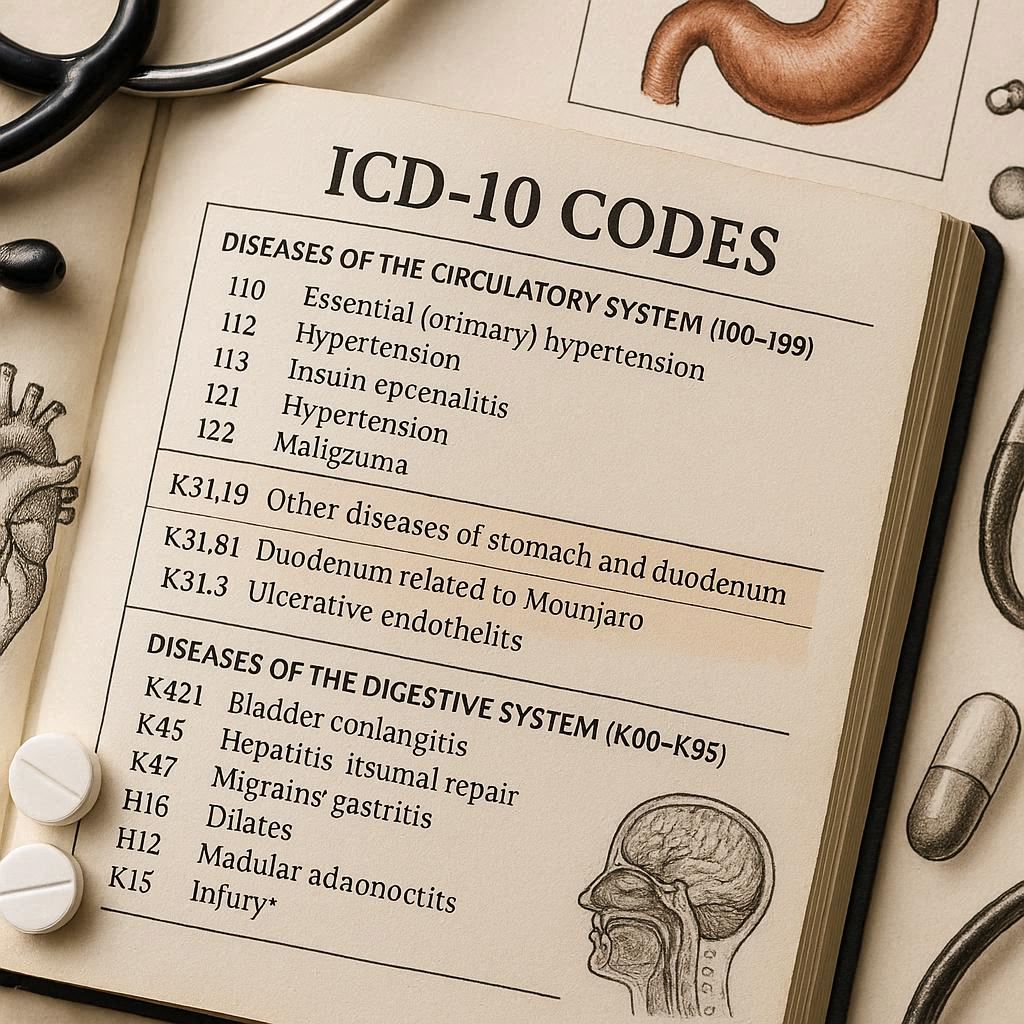
There is no single ICD 10 code for Mounjaro.
Mounjaro is a medication. It is the brand name for tirzepatide. In the world of medical billing, we do not assign codes to drugs. We assign codes to conditions, diseases, symptoms, and reasons for treatment.
So, when someone searches for the “icd 10 code for mounjaro,” what they really need is the correct diagnosis code that justifies using Mounjaro.
This guide will walk you through everything. You will learn which codes apply, how to avoid claim denials, and what your doctor is likely documenting. We will keep things simple, practical, and honest.
Understanding the Basics: What Is Mounjaro?
Before we dive into codes, let’s make sure we understand the medication itself. This context matters because the code depends entirely on why you are taking it.
Mounjaro (tirzepatide) is a once-weekly injectable medicine. It belongs to a class of drugs known as dual GIP and GLP-1 receptor agonists. In simpler terms, it helps control blood sugar and slows down digestion.
The FDA originally approved Mounjaro for type 2 diabetes. However, it has become very popular for weight management. In late 2023, the FDA also approved a related version called Zepbound specifically for chronic weight management. Still, many doctors prescribe Mounjaro off-label for obesity.
This distinction is critical. The ICD 10 code your doctor uses will change depending on whether you have diabetes, prediabetes, or obesity without diabetes.
Why the Confusion Exists
Many patients see their insurance company asking for a “diagnosis code” on a prior authorization form. They search online for “icd 10 code for mounjaro” hoping to find one simple answer. But medicine is rarely that simple.
Think of it this way. If you take ibuprofen for a headache, you do not have an “ibuprofen code.” You have a headache code. The same logic applies here.
“A medication never determines the code. The patient’s condition determines the code. Always start with the diagnosis, not the drug name.” — Professional medical coding guideline
Primary ICD 10 Codes Used With Mounjaro
Now let’s get to the heart of the matter. Here are the most common ICD 10 codes that justify a prescription for Mounjaro. These are the codes you will see on insurance claims, pharmacy records, and medical charts.
For Type 2 Diabetes (Most Common)
If you have type 2 diabetes, your doctor will use a code from the E11 category. Mounjaro is FDA-approved for this condition, so these codes rarely cause denials.
| ICD 10 Code | Description | When It Is Used |
|---|---|---|
| E11.9 | Type 2 diabetes mellitus without complications | Routine diabetes management with no organ damage |
| E11.65 | Type 2 diabetes with hyperglycemia | When blood sugar is consistently high |
| E11.8 | Type 2 diabetes with unspecified complications | Diabetes with other issues like neuropathy or kidney problems |
| E11.22 | Type 2 diabetes with diabetic chronic kidney disease | For patients with both diabetes and kidney concerns |
E11.9 is the most frequently used code. It covers basic type 2 diabetes without any major complications. Most patients starting Mounjaro for the first time will see this code on their paperwork.
For Obesity and Body Mass Index (BMI) Codes
This is where things get trickier. Mounjaro is not FDA-approved for weight loss alone. However, many doctors still prescribe it for this purpose. When they do, they rely on obesity codes.
| ICD 10 Code | Description | Notes |
|---|---|---|
| E66.01 | Morbid (severe) obesity due to excess calories | BMI of 40 or higher, or BMI 35+ with related conditions |
| E66.9 | Obesity, unspecified | General obesity without further details |
| Z68.41 | BMI 40.0-44.9, adult | This is a supplementary code used with E66.01 |
| Z68.35 | BMI 35.0-35.9, adult | Used with an obesity diagnosis |
Important note: Many insurance plans will not cover Mounjaro for obesity codes alone. They may require a type 2 diabetes diagnosis. If your doctor prescribes Mounjaro for weight management, your insurance might ask for a prior authorization or deny the claim entirely.
For Prediabetes
Some doctors prescribe Mounjaro for prediabetes. This is less common and often leads to insurance rejections. However, the code does exist.
| ICD 10 Code | Description |
|---|---|
| R73.03 | Prediabetes |
| R73.09 | Other abnormal glucose tolerance |
Insurance companies often view these codes as “experimental” for Mounjaro. Be prepared for a fight if this is your situation.
Secondary Codes: Supporting the Main Diagnosis
Sometimes your doctor will add a secondary ICD 10 code. These codes do not stand alone. They support the primary diagnosis and explain why Mounjaro is necessary.
Common Secondary Codes
| ICD 10 Code | Description | Why It Helps |
|---|---|---|
| Z79.84 | Long-term (current) use of oral hypoglycemic drug | Shows you are already on diabetes medication |
| Z79.4 | Long-term (current) use of insulin | Indicates more advanced diabetes |
| E88.81 | Metabolic syndrome | Cluster of conditions including high blood pressure and high blood sugar |
| Z68.XX | BMI codes (various) | Documents obesity severity |
Doctors often pair E11.9 (diabetes) with Z68.41 (high BMI) to show that the patient has both diabetes and obesity. This strengthens the case for Mounjaro, as the drug addresses both conditions.
Note for patients: If you see a Z code on your paperwork, do not worry. Z codes describe factors influencing health status. They are not negative or embarrassing. They simply give more detail.
ICD 10 Codes for Mounjaro Side Effects
Mounjaro has side effects like any medication. If you experience a reaction that requires medical attention, your doctor will use a different set of codes. These are not prescribing codes. They are diagnostic codes for the side effect itself.
Common Side Effect Codes
| ICD 10 Code | Side Effect | Typical Symptoms |
|---|---|---|
| R11.2 | Nausea | Feeling sick to the stomach |
| R11.10 | Vomiting, unspecified | Throwing up |
| K59.00 | Constipation, unspecified | Difficulty passing stool |
| R10.13 | Epigastric pain | Pain in the upper middle stomach |
| R12.0 | Heartburn | Acid reflux or indigestion |
| K92.0 | Hematemesis (vomiting blood) | Rare but serious |
Most side effects are mild. Nausea is the most common. If you visit an urgent care or emergency room for severe vomiting after your Mounjaro injection, they will likely use R11.10 or R11.2.
Serious but Rare Events
Mounjaro carries a black box warning for thyroid C-cell tumors in animal studies. This is very rare in humans. But if a doctor needs to code for a potential thyroid issue related to Mounjaro, they might use:
| ICD 10 Code | Description |
|---|---|
| C73 | Malignant neoplasm of thyroid gland |
| E07.8 | Other specified disorders of thyroid |
Again, these are extremely rare. Do not panic if you see these codes mentioned. They are included for completeness, not because they are common.
How to Find the Correct Code for Your Situation
Let’s walk through real-life scenarios. This will help you understand what code your doctor probably used.
Scenario 1: You Have Type 2 Diabetes and a High BMI
You were diagnosed with type 2 diabetes two years ago. Your A1C is 7.5%. You also have a BMI of 38. Your doctor prescribes Mounjaro to lower blood sugar and help with weight.
Likely primary code: E11.9 (type 2 diabetes without complications)
Likely secondary code: Z68.38 (BMI 38.0-38.9)
This combination is very strong for insurance approval.
Scenario 2: You Have Obesity But No Diabetes
You do not have diabetes. Your A1C is normal. Your BMI is 42. Your doctor prescribes Mounjaro off-label for weight loss.
Likely primary code: E66.01 (morbid obesity)
Likely secondary code: Z68.42 (BMI 40.0-44.9)
Expect possible insurance pushback. Many plans require step therapy or do not cover Mounjaro for obesity.
Scenario 3: You Have Prediabetes and Metabolic Syndrome
Your blood sugar is slightly high but not in the diabetic range. You have high blood pressure and high cholesterol. Your doctor wants to prevent diabetes.
Likely primary code: R73.03 (prediabetes)
Likely secondary code: E88.81 (metabolic syndrome)
This is a difficult coding situation. Insurance approval rates are low for Mounjaro under these codes.
Scenario 4: You Are Already on Mounjaro and Need a Refill
You have been taking Mounjaro for six months. Your diabetes is well controlled. You just need a refill.
Likely primary code: E11.9
Likely secondary code: Z79.84 (long-term use of oral hypoglycemic drug)
The Z79.84 code tells the pharmacy and insurance that this is not a new prescription. It is an ongoing treatment.
Insurance, Prior Authorizations, and Coding Mistakes
Let’s talk about the real-world problem. You have a prescription for Mounjaro. You take it to the pharmacy. The pharmacist says, “Your insurance denied it.”
What happened? Usually, one of three things.
Reason 1: Wrong ICD 10 Code
Your doctor might have used an obesity code when your insurance requires a diabetes code. This is the most common error. Insurance companies follow FDA approvals closely. If Mounjaro is not approved for your diagnosis code, they will deny payment.
Reason 2: Missing Secondary Code
Sometimes the primary code is correct, but the doctor forgot to add the BMI or medication use code. Insurance adjusters look for a complete picture. A single code can look weak. Two or three codes tell a story.
Reason 3: No Prior Authorization
Some insurance plans require a prior authorization form. This form asks for the ICD 10 code, plus notes on why other drugs failed. If your doctor never sent this form, the pharmacy will see a denial even with the correct code.
What You Can Do
If your Mounjaro prescription is denied, follow these steps:
- Call your doctor’s office. Ask what ICD 10 code they used.
- Call your insurance company. Ask what codes they cover for Mounjaro.
- Compare the two. If they do not match, ask your doctor to submit a corrected claim.
- Request a prior authorization if needed.
Do not give up on the first denial. Many approvals come after an appeal.
A Complete Reference Table of Relevant Codes
Here is a master table for quick reference. Bookmark this page or save the table for future use.
| Category | ICD 10 Code | Full Description | Common for Mounjaro? |
|---|---|---|---|
| Diabetes | E11.9 | Type 2 diabetes without complications | Yes, very common |
| Diabetes | E11.65 | Type 2 diabetes with hyperglycemia | Yes |
| Diabetes | E11.22 | Type 2 diabetes with diabetic CKD | Yes, with kidney issues |
| Diabetes | E11.40 | Type 2 diabetes with diabetic neuropathy | Yes |
| Obesity | E66.01 | Morbid obesity | Yes, but insurance may deny |
| Obesity | E66.9 | Obesity, unspecified | Less common |
| Prediabetes | R73.03 | Prediabetes | Rare |
| Side effect | R11.2 | Nausea | Common for ER visits |
| Side effect | K59.00 | Constipation | Common for clinic visits |
| Medication use | Z79.84 | Long-term use of oral hypoglycemic | Very common as secondary |
| BMI | Z68.41 | BMI 40.0-44.9 | Common as secondary |
| BMI | Z68.35 | BMI 35.0-35.9 | Common as secondary |
| Metabolic | E88.81 | Metabolic syndrome | Occasional |
Frequently Asked Questions (FAQ)
1. Is there a specific ICD 10 code for Mounjaro?
No. There is no ICD 10 code for any medication. Codes are for diseases and conditions only. The correct approach is to code the reason you take Mounjaro, not the drug itself.
2. What is the best ICD 10 code for Mounjaro for weight loss?
The most accurate code for weight loss is E66.01 (morbid obesity) or E66.9 (obesity). However, many insurance plans do not cover Mounjaro for these codes. Zepbound, a similar drug, is specifically approved for weight loss.
3. Can I use a diabetes code if I only want Mounjaro for weight loss?
No. That is insurance fraud. Your doctor must use the code that matches your true medical condition. Using a false diagnosis code is illegal and can result in penalties.
4. What ICD 10 code do doctors use for Mounjaro side effects?
For nausea, doctors use R11.2. For vomiting, R11.10. For constipation, K59.00. These are symptom codes, not treatment codes.
5. Will my insurance deny Mounjaro if the code is wrong?
Yes. An incorrect or mismatched ICD 10 code is one of the top reasons for claim denials. Always confirm that your doctor used an approved code for your specific insurance plan.
6. What is the difference between E11.9 and E11.65?
E11.9 is for stable diabetes without complications. E11.65 is for diabetes with hyperglycemia, meaning your blood sugar is currently too high. Doctors may use E11.65 to justify a stronger medication like Mounjaro.
7. Do I need a separate code for my BMI?
Not always. Some insurance plans require it. Others do not. When in doubt, including a BMI code as secondary adds useful information and rarely causes harm.
8. Can a pharmacist change my ICD 10 code?
No. Pharmacists cannot change diagnosis codes. Only the prescribing doctor or a certified medical coder can modify ICD 10 codes. If you see an error, contact your doctor’s office directly.
Additional Resource
For the most current and official ICD 10 coding guidelines, visit the Centers for Medicare and Medicaid Services (CMS) ICD-10 webpage:
https://www.cms.gov/medicare/coding/icd10
This government resource provides annual updates, official coding advice, and downloadable code lists. It is the most reliable source for medical coders and healthcare professionals.
Important Notes for Readers
- Do not self-code. Never tell a doctor or pharmacist which ICD 10 code to use. That is their professional responsibility. You can ask what code they used, but you should not demand a specific code.
- Codes change. ICD 10 codes are updated every year on October 1. A code that is valid today might be modified or replaced in the future. Always check the current year’s guidelines.
- Off-label prescribing is legal. Doctors can prescribe Mounjaro for weight loss even though the FDA approved it for diabetes. However, insurance coverage for off-label use varies widely.
- Prior authorization is normal. Do not panic if your doctor mentions a prior authorization. It is a standard process for expensive medications like Mounjaro, which can cost over $1,000 per month without insurance.
- Keep your own records. Write down your diagnosis codes. Keep a copy of your prior authorization approval. This will save you time if you switch doctors or pharmacies.
Conclusion
The search for an “icd 10 code for mounjaro” is understandable but slightly misplaced. There is no single code for the drug itself. Instead, the correct code depends entirely on your medical condition. For most patients with type 2 diabetes, E11.9 is the standard choice. For those using Mounjaro for obesity, E66.01 applies, though insurance coverage may be limited. Always work with your doctor to ensure the right diagnosis code is on your claim to avoid unnecessary denials and delays.
Disclaimer: This article is for informational purposes only and does not constitute medical advice. ICD-10 coding should always be performed by a qualified medical coder or healthcare professional based on individual patient circumstances.
Author: Technical Writing Team
Date: APRIL 13, 2026