If you have ever scheduled a bone density test, or if you bill for these scans in a medical office, you have likely run into a small but critical question: Which bone densitometry CPT code do I use?
It sounds simple. But the difference between one code and another can mean the difference between getting paid and having a claim denied.
This guide walks you through every major bone densitometry CPT code in plain, practical English. No confusing medical jargon. No unnecessary fluff. Just honest, useful information to help patients understand their bills and help billers submit clean claims.
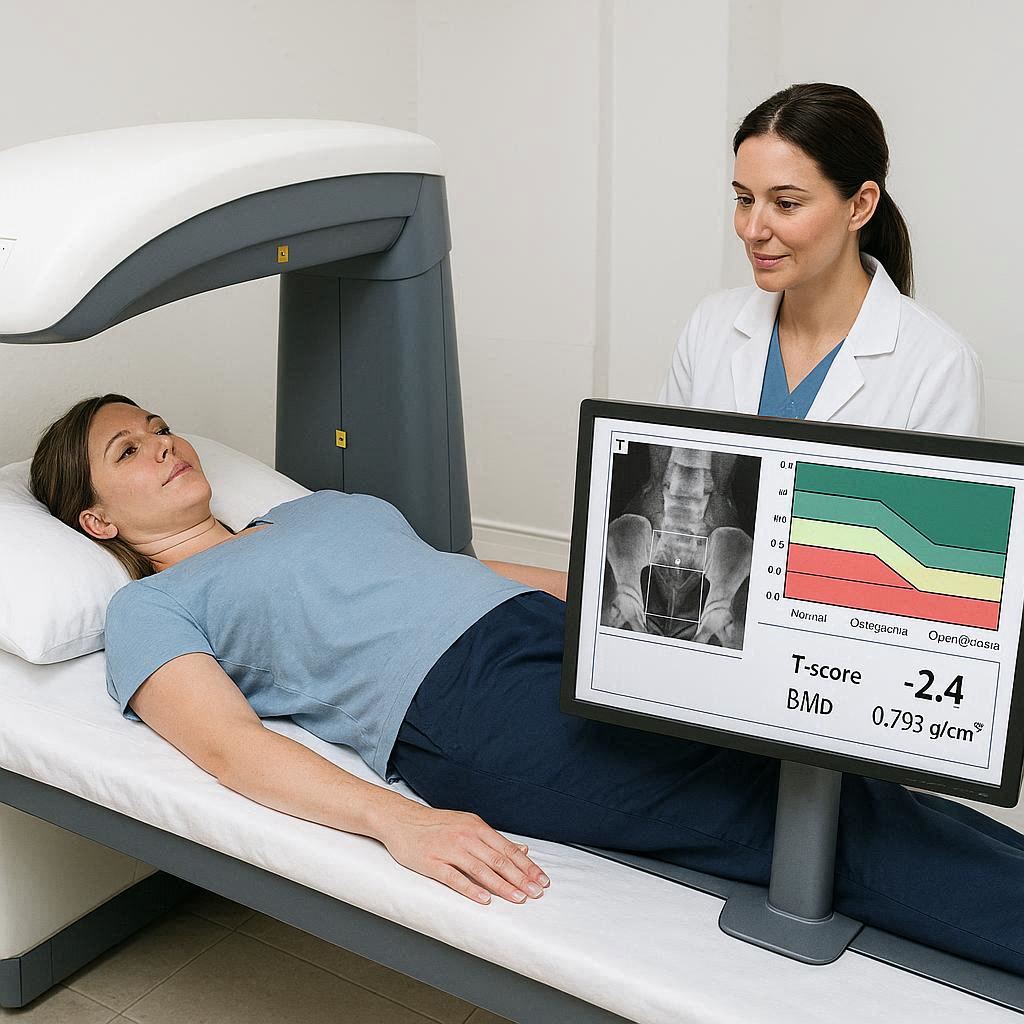
What Is Bone Densitometry?
Bone densitometry is a specialized type of medical imaging. It measures how dense or strong your bones are. Doctors use it most often to diagnose osteoporosis, assess fracture risk, and monitor treatment progress.
The most common form is called DXA (dual-energy X-ray absorptiometry). It is quick, non-invasive, and uses very low levels of radiation—far less than a standard chest X-ray.
Patients usually lie on a padded table while an arm-like scanner passes over their hips and spine. The whole process takes about 10 to 20 minutes.
But from a billing and coding perspective, the real question is: what happens after the scan is done?
That is where CPT codes come in.
Why CPT Codes Matter for Bone Density Testing
CPT stands for Current Procedural Terminology. These five-digit codes tell insurance companies exactly what medical service was performed.
If you use the wrong code, the insurance company may:
- Deny the claim entirely
- Pay less than expected
- Request additional documentation
- Flag the provider for audit
For patients, incorrect coding can lead to surprise bills or delayed coverage.
For providers, it means lost revenue and administrative headaches.
So getting the bone densitometry CPT code right is not a minor detail. It is essential.
The Main Bone Densitometry CPT Codes at a Glance
Let us look at the most common codes you will encounter. Keep this table handy.
| CPT Code | Procedure Description | Typical Use |
|---|---|---|
| 77080 | Dual-energy X-ray absorptiometry (DXA), bone density study, 1 or more sites; axial skeleton (e.g., hips, pelvis, spine) | Complete central DXA scan for osteoporosis diagnosis |
| 77081 | DXA, bone density study, 1 or more sites; peripheral skeleton (e.g., wrist, heel, finger) | Screening or monitoring using portable devices |
| 77085 | DXA, bone density study, 1 or more sites; axial skeleton with vertebral fracture assessment (VFA) | Full central scan plus spine imaging for fractures |
| G0130 | Non-invasive bone density measurement, peripheral skeleton (e.g., finger, wrist, heel), any method | Medicare screening for certain high-risk patients |
| 76977 | Ultrasound bone density measurement and interpretation, peripheral site(s) | Screening using ultrasound (no radiation) |
Note for readers: Codes with a “G” (like G0130) are temporary or procedural codes used mainly by Medicare. They are not standard CPT codes, but you will see them often.
Deep Dive into Code 77080: The Gold Standard
Let us start with the most frequently used bone densitometry CPT code: 77080.
What does 77080 cover?
CPT 77080 covers DXA of the axial skeleton. That means the central bones of your body:
- Lumbar spine (lower back)
- Hip (femoral neck or total hip)
- Pelvis
Sometimes it includes one or more sites. The code says “1 or more sites,” so whether the technologist scans one hip or both hips and the spine, 77080 is the correct code.
When do doctors use 77080?
Doctors order 77080 for:
- Initial diagnosis of osteoporosis in older adults (women over 65, men over 70)
- Fracture risk assessment in patients with risk factors
- Baseline measurement before starting certain medications
- Repeat scans every 1 to 2 years to monitor treatment
What does 77080 not include?
Here is a common point of confusion. Code 77080 does not include:
- Vertebral fracture assessment (that requires 77085)
- Peripheral scans (wrist, finger, heel – use 77081)
- Ultrasound methods (use 76977)
Reimbursement tips for 77080
Private insurers usually cover 77080 once every 24 months for patients with risk factors. Medicare covers it once every 24 months (or more frequently if medically necessary).
You must document:
- Medical necessity (why the patient needs the test)
- The specific sites scanned
- The interpretation report signed by a qualified physician
Without clear medical necessity, expect a denial.
Understanding Code 77081: Peripheral DXA
Not every bone density test requires a full hip and spine scan. Sometimes a simple peripheral scan is enough.
CPT 77081 describes DXA of the peripheral skeleton. That means:
- Wrist (distal radius)
- Heel (calcaneus)
- Finger (phalanges)
- Forearm
When to use 77081
- Large-scale community screening events
- Initial screening when a full DXA is not available
- Patients who cannot lie flat for a central DXA (severe scoliosis, recent surgery)
- Some fracture risk assessment tools for younger patients
Limitations of 77081
Peripheral DXA is convenient and portable, but it has limits. It does not predict spine or hip fracture as accurately as central DXA. Most professional guidelines recommend following an abnormal peripheral result with a full 77080 scan.
Billing note
Some payers consider 77081 a screening tool and will not reimburse it if done on the same day as a central DXA. Always check your local coverage determination (LCD).
Code 77085: Adding Vertebral Fracture Assessment
Osteoporosis often leads to small, silent fractures in the spine. Patients may not feel them. But those fractures increase future fracture risk significantly.
CPT 77085 combines a standard axial DXA (like 77080) with a vertebral fracture assessment (VFA) .
What VFA adds
VFA uses the DXA scanner to take lateral (side) images of the thoracic and lumbar spine. It looks for:
- Wedge fractures
- Crush fractures
- Loss of vertebral height
Who needs 77085
Medicare and many private insurers cover 77085 for patients who meet at least one of these criteria:
- Older women (70+) with a T-score below -1.0
- Men 70+ with a T-score below -1.0
- Patients with a documented height loss of 1.5 inches or more
- Patients on chronic corticosteroid therapy
Coding warning
Do not bill 77080 and 77085 together on the same day for the same patient. The VFA is inclusive in 77085. Billing both will trigger a denial.
| Scenario | Correct Code |
|---|---|
| Central DXA only | 77080 |
| Central DXA + VFA | 77085 |
| Central DXA + VFA + peripheral DXA (same day) | 77085 only (peripheral not separately billable) |
Medicare’s G0130: A Special Case
Medicare uses a separate code for peripheral bone density testing in specific situations.
G0130 covers non-invasive bone density measurement of the peripheral skeleton using any method (DXA, ultrasound, etc.).
Who qualifies for G0130?
Medicare covers G0130 once per lifetime for beneficiaries who:
- Are at risk for osteoporosis, and
- Have not had a previous central DXA, and
- Meet specific clinical criteria (often based on fracture risk assessment tools like FRAX)
Important distinction
G0130 is not a substitute for 77080. If a patient has already had a central DXA, Medicare will not pay for G0130. And if a peripheral G0130 result is abnormal, Medicare will cover a follow-up 77080.
Ultrasound Bone Density: Code 76977
Some clinics offer bone density screening using quantitative ultrasound (QUS). This method uses sound waves instead of X-rays.
CPT 76977 covers ultrasound bone density measurement of peripheral sites (usually the heel).
Advantages
- No radiation exposure
- Portable equipment
- Often less expensive
- Good for pediatric patients or pregnant women (though DXA is already very low radiation)
Disadvantages
- Less precise than DXA for monitoring treatment
- Not widely accepted for formal osteoporosis diagnosis
- Many private insurers do not cover it for diagnostic purposes
Billing reality
Most commercial payers consider 76977 investigational or not medically necessary. Medicare does not cover QUS for osteoporosis diagnosis in most regions. Always verify coverage before performing an ultrasound bone density test for billing purposes.
How to Choose the Correct Bone Densitometry CPT Code
Choosing the right code comes down to four questions.
Question 1: Which skeleton area did you scan?
- Axial (spine, hip, pelvis) → 77080 or 77085
- Peripheral (wrist, heel, finger) → 77081 or G0130 or 76977
Question 2: Did you perform a vertebral fracture assessment?
- Yes → 77085
- No → 77080
Question 3: What method did you use?
- DXA → 77080, 77081, 77085
- Ultrasound → 76977
- Other non-DXA peripheral → G0130 (Medicare only)
Question 4: Who is the payer?
- Medicare → Know G0130 and local coverage rules
- Commercial insurance → Usually 77080, 77081, 77085
- Medicaid → Varies by state
Common Billing Mistakes and How to Avoid Them
Even experienced billers slip up sometimes. Here are the most frequent errors with bone densitometry CPT codes.
Mistake 1: Billing 77080 and 77081 together
Some providers think scanning both central and peripheral sites on the same day justifies two codes. Most payers disagree. They consider peripheral DXA part of the central exam.
Solution: Bill only the central code (77080 or 77085).
Mistake 2: Using 77085 without documenting VFA necessity
Medical necessity is not optional. If you bill 77085, your documentation must explain why a vertebral fracture assessment was needed.
Solution: Include a brief note referencing height loss, known vertebral deformity, or prolonged steroid use.
Mistake 3: Forgetting the technical and professional components
DXA codes include both the technical part (equipment, technician, machine) and the professional part (physician interpretation). But in some settings (like mobile units), you may split them.
- TC modifier – Technical component only
- 26 modifier – Professional component only
If your facility owns the machine and employs the interpreting physician, bill the global code with no modifier.
Mistake 4: Exceeding frequency limits
Medicare and most insurers limit DXA to once every 24 months unless there is a specific medical reason (e.g., starting a new osteoporosis drug, corticosteroid use, significant weight loss).
Solution: Track dates of previous scans. If less than 23 months have passed, verify coverage in writing before scheduling.
Modifiers and Other Key Coding Details
Modifiers are two-digit add-ons that tell a more complete story.
| Modifier | When to use | Example |
|---|---|---|
| 26 | Physician interprets the scan but does not own the equipment | A radiologist reads a DXA performed at a hospital outpatient department |
| TC | Facility provides equipment and technician but not interpretation | A mobile DXA service sends the images to an external reading service |
| 76 | Same procedure repeated by same physician on same day | Unlikely for DXA – almost never appropriate |
| 59 | Distinct procedural service | Very rare for DXA. Only if two separate, unrelated DXA scans are performed on different body regions for different reasons |
Important note: Do not use modifier 59 to bypass the 77080/77081 bundling issue. It will not work and may trigger an audit.
Insurance Coverage: What Patients Need to Know
From a patient’s perspective, the CPT code determines what you pay.
Medicare coverage
Medicare Part B covers bone density testing once every 24 months (or more often if medically necessary) for beneficiaries who meet one of these conditions:
- Estrogen-deficient women at risk for osteoporosis
- People with vertebral abnormalities
- People on long-term steroid therapy
- People with primary hyperparathyroidism
- People being monitored for osteoporosis drug therapy
Patient cost: Medicare generally pays 80% of the approved amount. You pay the remaining 20% after meeting your Part B deductible.
Private insurance
Most private plans follow Medicare’s frequency limits but not always. Some cover annual scans for high-risk patients. Others require prior authorization.
Advice for patients: Call the number on your insurance card. Ask two questions:
- Do you cover CPT 77080 (or whichever code your doctor plans to use)?
- How often will you cover it?
Do this before the test, not after.
Medicaid
Medicaid coverage for bone densitometry varies significantly by state. Some states cover only CPT 77080 and only for specific diagnoses. Others follow Medicare rules. Check your state’s Medicaid provider manual.
Documentation Requirements for Clean Claims
Insurance companies do not pay based on trust. They pay based on paper. Good documentation saves denials.
What your medical record must include
For any bone densitometry CPT code, your record should contain:
- Patient history – Age, sex, menopausal status (for women), prior fractures, family history of osteoporosis
- Risk factors – Steroid use, smoking, low body weight, alcohol use, falls history
- Reason for test – Screening, diagnosis, treatment monitoring, medication initiation
- Previous DXA results – If this is a repeat scan, include prior T-scores and dates
- Technical report – Which sites were scanned, machine type, quality issues (e.g., arthritic changes interfering with spine reading)
- Interpretation – T-scores, Z-scores, WHO classification (normal, osteopenia, osteoporosis)
- Plan – Next steps based on results (repeat in 1-2 years, start medication, refer to endocrinology)
Sample medical necessity statement
“Patient is a 68-year-old postmenopausal female with no prior DXA. She has a maternal history of hip fracture and a body weight of 110 pounds. She meets Medicare criteria for initial screening DXA. CPT 77080 is medically necessary to assess fracture risk and guide possible treatment.”
That single paragraph can save a denial.
How to Appeal a Denied Bone Densitometry Claim
Denials happen. Even when you do everything right. Do not panic. Do not write off the charge. Appeal.
Step-by-step appeal process
- Read the denial reason – Was it medical necessity? Frequency limit? Missing modifier? Incorrect code?
- Gather supporting documentation – Send the DXA report, medical necessity note, and any relevant guidelines.
- Write a concise appeal letter – State the patient’s name, date of service, CPT code, and explain why the service meets coverage criteria.
- Send within the deadline – Most payers give 120 to 180 days from the date of denial.
- Escalate if needed – Level 1 appeal (payer internal review). Level 2 appeal (external review if required by state law).
Example appeal for frequency denial
“Dear [Payer],
Claim #123456 for patient Jane Doe, date of service 01/15/2025, CPT 77080 was denied as exceeding frequency limits. However, the patient initiated teriparatide therapy on 12/01/2024 following a low-trauma vertebral fracture. Current osteoporosis guidelines recommend a follow-up DXA after 12 months of anabolic therapy. Medical records are attached. Please reprocess.”
Sincerely,
[Provider Name]
Frequency limit appeals succeed often when you have a clear medical reason.
Special Situations and Exceptions
Not every bone densitometry case fits neatly into a standard coding box.
Pediatric bone density testing
Children and adolescents rarely need DXA. But when they do (e.g., chronic steroid use for juvenile arthritis, anorexia nervosa, osteogenesis imperfecta), use the same CPT codes. But Z-scores (not T-scores) are used for interpretation. Many payers require prior authorization for pediatric DXA.
Patients with spinal hardware or severe scoliosis
Sometimes a patient’s spine cannot be accurately measured due to surgical hardware, severe curvature, or compression fractures. In these cases, some payers allow a forearm DXA (distal radius) as a substitute site. Use CPT 77081 for the forearm, but document why the spine and hip were not usable.
Dual-energy CT for bone density
A newer technology called DECT (dual-energy CT) can measure bone density during a routine CT scan. This does not use DXA. Currently, there is no dedicated CPT code for DECT bone density. Most providers bill an unlisted code (e.g., 76499 for unlisted CT procedure) with supporting documentation. Expect pushback from payers.
CPT Code Comparison: When to Use Which
Let us put everything side by side for quick reference.
| Code | Body Site | Technology | Fracture Assessment | Medicare Covered | Typical Reimbursement* |
|---|---|---|---|---|---|
| 77080 | Axial (hip, spine) | DXA | No | Yes | $45-65 |
| 77081 | Peripheral (wrist, heel) | DXA | No | Limited | $25-35 |
| 77085 | Axial + spine VFA | DXA | Yes | Yes (criteria) | $65-85 |
| G0130 | Peripheral | Any method | No | Yes (once/lifetime) | $20-30 |
| 76977 | Peripheral | Ultrasound | No | No (most regions) | $15-25 |
*Reimbursement estimates vary widely by region, payer, and facility type. These are approximate Medicare facility rates for illustrative purposes only.
Future Changes in Bone Densitometry Coding
CPT codes change. The American Medical Association (AMA) updates the CPT manual every year. Keep an eye on these potential changes.
Possible consolidation
Coding experts have discussed consolidating 77080 and 77085 into a single code with a VFA add-on code. Nothing confirmed as of the latest CPT edition, but it is worth watching.
Telehealth interpretation
During the COVID-19 public health emergency, some payers allowed remote interpretation of DXA studies. That flexibility has mostly ended. Routine remote DXA reading is not separately reimbursed in most cases.
Artificial intelligence (AI) in DXA
AI algorithms that automatically measure bone density or detect vertebral fractures are emerging. Currently, AI assistance does not change the CPT code. The same codes apply whether a human or AI helped with the measurement.
Practical Tips for Patients
You do not need to memorize CPT codes. But understanding the basics helps you advocate for yourself.
Before your bone density test
- Ask your doctor: “Which CPT code will you bill?”
- Call your insurance: “Is that code covered for me?”
- Confirm frequency: “When was my last DXA?”
After your test
- Read your explanation of benefits (EOB). Does it show the correct CPT code?
- If you owe more than expected, ask for an itemized bill.
- If denied, ask your doctor’s office to appeal.
If you cannot afford a DXA
Many hospitals offer financial assistance programs. Some independent imaging centers charge as little as $100-150 for a cash-pay DXA. Ask upfront for the self-pay rate.
A Note on Medical Necessity and Honest Billing
This guide is for educational purposes. It does not replace professional coding advice.
Every patient is different. Every payer has different rules. What works for one claim may not work for another.
Never alter a medical record to fit a code. Never choose a code because it pays more. Honest, accurate coding protects your patients, your practice, and your license.
If you are unsure about a bone densitometry CPT code, consult a certified professional coder (CPC) or your local medical association.
Additional Resources for Bone Densitometry Coding
For the most current information, always refer to primary sources.
- ISCD (International Society for Clinical Densitometry) – Publishes official position statements on DXA indications and coding.
Link: www.iscd.org - CMS (Centers for Medicare & Medicaid Services) – Local Coverage Determinations (LCDs) for bone density testing by state.
Link: www.cms.gov/medicare-coverage-database - AMA CPT® Network – Official CPT code updates and guidelines.
Link: www.ama-assn.org/cpt
Reader note: CPT codes are copyright American Medical Association. This article references codes for educational purposes. Always use a current CPT manual for billing.
Frequently Asked Questions (FAQ)
1. What is the most common bone densitometry CPT code?
The most common is 77080 for a central DXA scan of the hip and spine.
2. Can I bill 77080 and 77081 together?
No. Most payers consider peripheral DXA part of the central exam. Bill only 77080.
3. Does Medicare cover bone density tests?
Yes, once every 24 months for qualifying beneficiaries. Some patients qualify more often.
4. What is the difference between 77080 and 77085?
77085 adds a vertebral fracture assessment (VFA) to the standard central DXA scan.
5. How often can I bill 77080 for the same patient?
Typically once every 24 months unless medically necessary more often (documented).
6. What modifier should I use for a DXA interpretation only?
Use modifier 26 (professional component) for physician interpretation without the technical component.
7. Is G0130 the same as 77081?
No. G0130 is a Medicare-specific code for peripheral screening. 77081 is a standard CPT code for peripheral DXA.
8. Does insurance cover ultrasound bone density (76977)?
Rarely. Most payers consider it investigational or not medically necessary for diagnosis.
9. Can a chiropractor perform and bill a DXA?
Scope of practice laws vary by state. Medicare requires the interpreting provider to be a qualified physician (MD, DO, or certified nurse practitioner in some cases). Check your state and payer rules.
10. What should I do if my claim is denied?
First, read the denial reason. Then gather supporting documentation and file an appeal within the payer’s deadline.
Conclusion
Bone densitometry CPT codes are not just administrative numbers. They affect diagnosis, treatment, reimbursement, and patient care. Choosing the right code—whether 77080, 77081, 77085, G0130, or 76977—requires understanding what was scanned, how it was done, and who is paying. By following the guidelines in this article, you can reduce denials, improve documentation, and ensure patients get the care they need without billing surprises.
Disclaimer: This content is for informational purposes only and does not constitute legal, financial, or medical advice. CPT codes and payer policies change frequently. Always verify coverage and coding requirements with the specific payer and consult a certified professional coder for individual situations.