Dry skin is one of the most common complaints heard in dermatology and primary care offices. Patients describe it as tightness, flaking, or a rough texture that simply will not go away. But when it comes time to document this condition for insurance or medical records, many healthcare professionals pause. They ask themselves: What is the exact ICD 10 code for xerosis of skin?
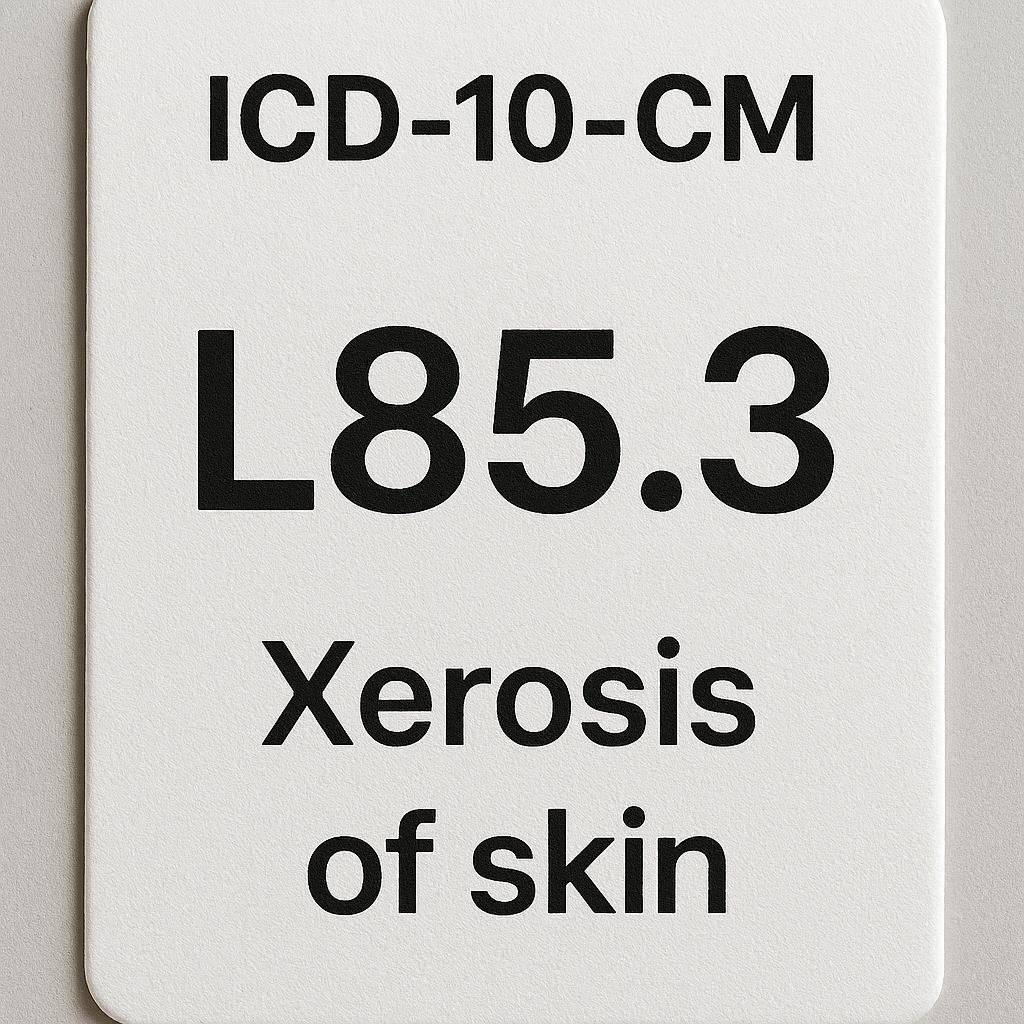
The short answer is L85.3. However, as any experienced coder knows, picking the right code is about more than just memorizing a three-character alphanumeric string. It involves understanding the clinical nuances of the condition, knowing when to use additional codes, and avoiding common documentation pitfalls.
This guide will walk you through everything you need to know about the ICD 10 code xerosis of skin. We will explore the clinical definition, the specific coding guidelines, how it differs from other dry skin conditions, and practical tips for accurate billing. Whether you are a medical coder, a dermatologist, or a curious patient, you will find clear, reliable, and useful information here.
What Exactly Is Xerosis of Skin?
Before we dive into the code itself, we need to understand the condition. The word “xerosis” comes from the Greek word xeros, which means dry. In medical terms, xerosis refers to abnormally dry skin. It is not a single disease but rather a clinical sign or symptom that can result from various underlying factors.
Clinical Features of Xerosis
Xerosis presents in a very predictable way. The skin loses its natural oils and moisture. This leads to a cascade of visible and tactile changes. Here is what a clinician typically observes:
- Rough texture: The skin feels sandpaper-like to the touch.
- Fine scaling: Small, white or gray flakes appear, especially on the legs, arms, and hands.
- Cracking (fissures): In severe cases, the dryness leads to superficial cracks. These fissures can be painful.
- Itching (pruritus): This is often the symptom that drives patients to seek medical care. The itch can range from mild to severe.
- Dull appearance: The skin loses its natural luster and looks greyish or ashy, particularly in individuals with darker skin tones.
Who Gets Xerosis?
The honest answer is almost everyone at some point. But certain groups are more vulnerable.
- Older adults: As we age, our sweat and oil glands become less active. The skin produces less sebum. This makes xerosis extremely common in the geriatric population.
- People living in dry climates: Low humidity, cold winter air, and excessive indoor heating all strip moisture from the skin.
- Individuals with certain occupations: Healthcare workers who wash their hands frequently, hairdressers, and construction workers exposed to wind and dust are at higher risk.
- Patients with underlying conditions: Hypothyroidism, diabetes, and malnutrition can all contribute to xerosis.
A Note for Readers
Important: Xerosis is generally a benign, manageable condition. However, severe xerosis can lead to complications. These include secondary bacterial infection (due to scratching) and eczematous inflammation. If your dry skin does not improve with basic moisturizers, or if you notice redness, oozing, or intense pain, consult a healthcare provider.
The Official ICD 10 Code for Xerosis of Skin
Now, let us get to the heart of the matter. The specific, official ICD 10 code xerosis of skin is L85.3.
This code falls under the broader category of “Other epidermal thickening” (L85). It is specifically designated for xerosis cutis. You will sometimes see this code referred to as “Xeroderma,” which is another medical term for the same condition.
Code Structure Breakdown
Understanding the structure of the code helps you use it correctly. Here is a simple breakdown:
| Code Component | Description | Specific to L85.3 |
|---|---|---|
| L | Chapter: Diseases of the skin and subcutaneous tissue | Indicates a dermatological condition |
| 85 | Category: Other epidermal thickening | Includes conditions like acanthosis nigricans and xerosis |
| .3 | Subcategory: Xerosis cutis | This is the specific code for dry skin |
When Is L85.3 the Correct Choice?
You should use L85.3 when the primary reason for the encounter is isolated, acquired dry skin. This means the xerosis is not better explained by another skin disease.
Examples of appropriate use:
- An elderly patient presents with generalized dry, scaly skin on both lower legs. There is no rash, just dryness. You diagnose acquired xerosis. Code: L85.3.
- A young adult comes in during winter with flaky skin on the hands and forearms. The skin is rough but not inflamed. Code: L85.3.
- A patient with a known history of dry skin returns for a routine follow-up and management. Code: L85.3.
When NOT to Use L85.3
This is just as important as knowing when to use it. Do not assign L85.3 if the dry skin is a symptom of another, more specific condition. Here are common examples:
- Atopic dermatitis (eczema): If the patient has a known history of eczema and the dry skin is part of that chronic condition, you should code the specific type of eczema (e.g., L20.82 for flexural eczema).
- Ichthyosis vulgaris: This is a genetic disorder that causes persistently dry, scaly skin. While related, it is not acquired xerosis. Code for ichthyosis (Q80.0 – Q80.9).
- Psoriasis: The scaling in psoriasis is distinct. It is caused by rapid skin cell turnover. Do not confuse it with simple xerosis. Codes for psoriasis fall under L40.
- Dehydration (E86.0): If the dry skin is a direct result of systemic dehydration due to vomiting or diarrhea, the primary diagnosis is dehydration, not xerosis.
- Contact dermatitis (L23 – L25): If a chemical irritant causes the dryness, code the contact dermatitis.
Let us make this clearer with a comparative table.
Comparative Table: Xerosis (L85.3) vs. Similar Conditions
| Condition | ICD 10 Code | Key Distinguishing Feature | Treatment Focus |
|---|---|---|---|
| Xerosis (Acquired dry skin) | L85.3 | No primary inflammation; occurs due to environmental factors or aging. | Emollients, humidifiers, lifestyle changes. |
| Atopic Dermatitis | L20.82, L20.83, etc. | Chronic, itchy inflammation with a genetic component. Often starts in childhood. | Topical steroids, immunomodulators. |
| Ichthyosis Vulgaris | Q80.0 | Genetic disorder present from early childhood. Large, dark, polygonal scales. | Keratolytics, intensive moisturizing. |
| Psoriasis | L40.0 – L40.9 | Well-demarcated, red plaques with thick, silvery scales. | Biologics, topical steroids, phototherapy. |
| Seborrheic Dermatitis | L21.9 | Greasy, yellowish scales on the scalp, face, and chest. | Antifungals, anti-inflammatory agents. |
Documentation Requirements for L85.3
Insurance companies and auditors love specificity. If your documentation is vague, your claim may be denied. To support the use of ICD 10 code xerosis of skin (L85.3) , your medical record should include the following elements.
Location of the Xerosis
Where is the dry skin? The code does not require a specific anatomical location, but good clinical practice does. Documenting the location helps justify the medical necessity of your treatment.
- Generalized (whole body)
- Localized to the lower legs
- Upper extremities only
- Trunk
Severity
Is the xerosis mild, moderate, or severe? This matters for treatment plans.
- Mild: Slight flaking, no itching or minimal itching.
- Moderate: Noticeable scaling, moderate itching that does not disrupt sleep.
- Severe: Extensive cracking (fissures), intense itching, possible excoriations from scratching.
Associated Symptoms
Always document if the patient reports itching (pruritus). If there are scratch marks or secondary infection, document those as well. You may need an additional code for the infection if it is present (e.g., L08.9 for localized skin infection).
Causative or Contributing Factors
This is not always necessary for the diagnosis, but it helps paint a complete picture. Examples include:
- “Dry skin exacerbated by winter weather.”
- “Xerosis due to frequent handwashing at work.”
- “Dry skin associated with low humidity in the home.”
A Sample Documentation Note
*”Patient is a 72-year-old female with complaints of dry, rough skin on both lower legs for the past two months. She reports mild itching but no pain. On exam, there is fine scaling and no erythema or cracking. She reports turning on the heat at home, which makes it worse. Assessment: Acquired xerosis of the lower legs.”*
This note clearly supports the use of L85.3.
Billing and Reimbursement Considerations
Using the correct code is only half the battle. You also need to understand how payers view this diagnosis. Here are some practical billing tips.
Medical Necessity for a Visit
Medicare and commercial insurers expect a certain level of severity to justify an office visit. For example, if a patient books an appointment solely for “dry skin” and the examination reveals only very mild dryness with no symptoms, the visit might not be medically necessary.
To justify the visit, the documentation must show that the xerosis either:
- Causes significant discomfort (e.g., pruritus affecting daily activities).
- Requires a prescription medication (e.g., a high-potency emollient or a topical steroid for associated inflammation).
- Has failed to respond to over-the-counter treatments.
Common Denial Scenarios
Here are a few reasons why a claim with L85.3 might be denied:
- Lack of signs/symptoms: The note says only “dry skin” with no mention of scaling, itching, or impact on the patient.
- Cosmetic exclusion: Some policies exclude treatment for conditions considered purely cosmetic. If the documentation says “for cosmetic improvement” rather than “to relieve itching or cracking,” the claim may be denied.
- Missing secondary code: If the patient has excoriations due to scratching, you need an additional code for the skin injury (L98.9 is a placeholder, but a more specific code for a skin lesion is better). Do not just list L85.3.
A Realistic Quote from a Coding Expert
*”In my ten years of auditing dermatology claims, the most common mistake with L85.3 is using it for any and all dry skin. I see it used for eczema flare-ups and even for psoriasis. It is an acquired, non-inflammatory condition. If there is redness or a clear rash, do not use L85.3. You are inviting a denial or a records request.”*
— Sarah J., CPC, Certified Professional Coder
Additional ICD 10 Codes Related to Dry Skin
Sometimes, xerosis is not the final diagnosis. It is a symptom or a related finding. Here are other codes you might use in conjunction with or instead of L85.3.
| Description | ICD 10 Code | Relationship to Xerosis |
|---|---|---|
| Pruritus, unspecified | L29.9 | Often used as a secondary code when itching is the chief complaint. |
| Other specified local infections of the skin | L08.89 | Use if the patient scratches and introduces bacteria, causing impetigo or cellulitis. |
| Other eczema | L30.9 | For eczematous changes not classified elsewhere. If xerosis becomes inflamed, it may progress to eczema. |
| Cutaneous hydration disorder | L98.9 | A less specific code. Use only when L85.3 does not apply. |
| Contact dermatitis due to other agents | L24.89 | If a specific irritant (like a harsh soap) causes the dry skin. |
Treatment Overview for Xerosis
Understanding treatment helps you code better. It also allows you to write more accurate medical necessity justifications. The cornerstone of xerosis management is restoring the skin barrier.
First-Line Treatments
- Emollients and moisturizers: Look for creams and ointments (not lotions). Lotions contain more water and evaporate quickly. Creams and ointments are thicker and trap moisture.
- Ingredients to look for: Ceramides, hyaluronic acid, glycerin, petrolatum.
- Humidifiers: Adding moisture to the air in the home or office is highly effective, especially during winter.
- Lukewarm baths and showers: Hot water strips natural oils from the skin. Limiting bath time to 5–10 minutes is recommended.
When First-Line Fails
- Topical keratolytics: For thick, rough scales, products containing urea, lactic acid, or salicylic acid help dissolve the dead skin cells. Examples include prescription-strength ammonium lactate lotion.
- Topical corticosteroids: If there is associated inflammation or itching, a low-potency steroid like hydrocortisone 2.5% cream can be used for a short period. Important: This is for xerosis with mild inflammation. If inflammation is the primary feature, reconsider the diagnosis of simple xerosis.
Patient Education Points
A good clinician always educates the patient. Here is a quick checklist you can provide.
text
✅ Apply moisturizer within 3 minutes of bathing.
✅ Use a fragrance-free moisturizer.
✅ Avoid harsh soaps with deodorants or antibacterials.
✅ Wear soft, breathable fabrics like cotton.
✅ Pat skin dry after bathing. Do not rub.
Frequently Asked Questions (FAQ)
This section addresses the most common questions about the ICD 10 code xerosis of skin.
Q1: Is L85.3 the same code for xeroderma?
A: Yes. Xeroderma is a synonym for xerosis. Both refer to abnormally dry skin. The official code descriptor for L85.3 is “Xerosis cutis.” So, whether your provider writes “xerosis” or “xeroderma,” the correct code is L85.3.
Q2: Can I use L85.3 for a newborn with dry skin?
A: It depends. Newborns often have physiological skin peeling in the first few weeks of life. This is a normal process, not a pathological condition. You would not code this. However, if the newborn has persistent dryness beyond the newborn period or if there is an underlying condition like ichthyosis, you would use a different code. For acquired xerosis in an older infant or child, L85.3 is appropriate.
Q3: What is the difference between L85.3 and L30.9 (unspecified eczema)?
A: This is a very common point of confusion. L85.3 (Xerosis) is non-inflammatory. The skin is dry and scaly but not red, swollen, or oozing. L30.9 (Eczema, unspecified) implies inflammation. If the skin is red, itchy, and has papules or vesicles, you are looking at eczema, not simple xerosis. When in doubt, look for erythema (redness). If present, avoid L85.3.
Q4: Does L85.3 require a laterality (left/right) modifier?
A: No. Laterality is not a requirement for this code. The ICD-10 system does not provide a left or right specification for L85.3. You only need to document the location in your notes, but you do not enter a modifier in the code itself.
Q5: My patient has xerosis and a secondary infection from scratching. What codes do I use?
A: You will report two codes. First, list the infection as the primary diagnosis if that is the main reason for the visit. Then, list L85.3 as a secondary code. For example:
- Primary: L08.89 (Other specified local infection of the skin)
- Secondary: L85.3 (Xerosis cutis)
This tells the payer that the infection is the main problem, and the xerosis is an underlying condition that contributed to it.
Q6: Is there a specific ICD 10 code for xerosis due to chronic kidney disease?
A: No, there is no single code for “uremic xerosis.” If a patient with chronic kidney disease (CKD) presents with xerosis that is directly caused by their uremia, you will code both conditions. The primary code would be the stage of CKD (e.g., E11.22 for Type 2 diabetes with CKD, or N18.4 for CKD stage 4). The secondary code would be L85.3 for the xerosis. This links the two conditions in the record.
Common Coding Pitfalls to Avoid
Even experienced professionals make errors. Let us review the most frequent mistakes associated with ICD 10 code xerosis of skin and how to avoid them.
Mistake #1: Coding from a Lab Result or a Symptom Alone
Do not code xerosis just because a patient mentions “dry skin” in passing. The physician must document it as a diagnosis. If the note says “patient complains of dry skin” but the assessment is “wellness visit,” you cannot code L85.3.
Mistake #2: Overlooking the “Excludes1” Note
The ICD-10 manual has “Excludes1” notes for L85.3. An Excludes1 note means that the two conditions cannot be coded together. For L85.3, the Excludes1 includes “ichthyosis congenita” and other congenital forms of dry skin. If the patient has a genetic ichthyosis, you absolutely cannot also code L85.3. The ichthyosis code is the only one you use.
Mistake #3: Using Unspecified Codes When a Specific Code Exists
There is a temptation to use L98.9 (Disorder of the skin and subcutaneous tissue, unspecified) when you are unsure. Avoid this. L85.3 is specific for acquired dry skin. If the documentation supports xerosis, use L85.3. Using an unspecified code can lead to denials, as payers view unspecified codes as lacking medical necessity.
Mistake #4: Failing to Update the Problem List
For chronic xerosis, make sure your electronic health record (EHR) problem list includes L85.3. This ensures that future visits reference the correct diagnosis. Many denials happen because the coder selects L85.3, but the patient’s active problem list shows an old, irrelevant code.
Regional Variations and Payer-Specific Policies
It would be dishonest to say that coding is uniform across all insurers. It is not. While the ICD-10 code set is standardized, coverage policies vary.
Medicare and Medical Necessity
Medicare Local Coverage Determinations (LCDs) often list specific diagnoses that justify certain procedures. For example, if you are billing for a comprehensive skin exam, L85.3 alone may not be enough. You might need to show that the xerosis is associated with a complication like pruritus or secondary infection.
Commercial Insurers
Some commercial insurers follow the American Academy of Dermatology (AAD) guidelines. Others have proprietary policies. The safest approach is to document thoroughly. Always include:
- Symptoms (itching, tightness, cracking).
- Impact on daily living (e.g., “patient cannot sleep due to itching”).
- Failure of over-the-counter treatments.
A Practical Example
Imagine two patients with xerosis:
Patient A: Comes for a routine skin check. Has mild dry skin on the shins but does not want treatment. The provider documents the dry skin but does not prescribe anything.
Best coding: This visit is not primarily for xerosis. The primary code might be Z01.89 (encounter for other specified special examination). L85.3 would not be the primary diagnosis.
Patient B: Comes specifically for dry skin. Reports intense itching and cracking. The provider prescribes a prescription emollient and gives a handout on dry skin care.
Best coding: Primary: L85.3. Secondary: L29.9 (Pruritus, unspecified). This justifies the visit and the prescription.
The Link Between Xerosis and Other Dermatoses
Xerosis is often not an isolated event. It can be a precursor to other conditions. Understanding this helps you anticipate future coding needs.
The Atopic March
Patients with atopic dermatitis often have xerosis even when they are not in an active flare. In these patients, the underlying condition is atopic dermatitis. You would code the atopic dermatitis (L20.82 for flexural eczema, for example), not the xerosis. The xerosis is considered a feature of the primary disease.
Asteatotic Eczema (Eczema Craquelé)
This is a specific type of eczema that occurs in very dry skin, most commonly in elderly patients on the lower legs. It looks like a cracked, dry riverbed. This is not simple xerosis. This is a form of eczema. The correct code is L30.0 (Numnular dermatitis) or L30.8 (Other specified eczema), depending on the presentation. Do not use L85.3 for asteatotic eczema. The presence of fissuring and inflammation changes the coding.
Keratosis Pilaris
This is a common condition that causes rough, dry bumps on the upper arms and thighs. It is caused by keratin buildup, not simple dryness. The ICD 10 code for keratosis pilaris is L11.0 (Acquired keratosis follicularis). Again, not L85.3. The bumps are the defining feature, not the dryness.
Global Perspectives on Xerosis Coding
While this guide focuses on the ICD-10 system used in the United States, it is interesting to note how other systems approach xerosis. This knowledge is helpful if you work with international records or research.
- ICD-11 (World Health Organization): The new ICD-11 system, which is slowly being adopted globally, has a code for xerosis under “Primary dermatosis characterized by dryness” (Code: EA40.0). It is more specific than the ICD-10 version.
- United Kingdom (NHS): The UK uses a modified version of ICD-10. They also use L85.3 for xerosis cutis, but their local guidance may include additional notes about prescribing emollients.
- Australia (ACHI): Australia also uses ICD-10-AM. Their coding guidelines for L85.3 are very similar to the US version, with a strong emphasis on excluding congenital ichthyosis.
Practical Resources for Medical Coders
To stay accurate and efficient, keep these resources handy. They are reliable, up-to-date, and free of biased information.
- The official ICD-10-CM code book: Published by the American Medical Association (AMA) or the Centers for Medicare & Medicaid Services (CMS). This is the definitive source.
- CMS’s online ICD-10 browser: A free, searchable tool that provides the complete code set with official guidelines.
- AAD (American Academy of Dermatology) Coding and Documentation Guides: These offer specialty-specific advice that general coding books do not provide.
- Your practice management software’s built-in encoder: Many EHRs have an encoder that guides you through a series of clinical questions to arrive at the correct code.
A Trusted External Resource
For the most current and official information on ICD-10 codes, always refer to the Centers for Medicare & Medicaid Services (CMS) ICD-10 website. You can access the official code set and guidelines at:https://www.cms.gov/medicare/coding-billing/icd-10-codes
Disclaimer: Medical coding regulations change. Payer policies vary. This article provides general guidance based on standard coding conventions as of the publication date. It is not a substitute for professional coding advice or official payer policies. Always verify codes and guidelines with your specific payer and the latest ICD-10-CM manual.
Conclusion
Let us summarize the key takeaways from this comprehensive guide.
First, the specific ICD 10 code xerosis of skin is L85.3. This code is reserved for acquired, non-inflammatory dry skin caused by environmental factors or aging. Second, accurate use of this code requires careful documentation of the location, severity, and associated symptoms like pruritus. Finally, avoid common pitfalls such as confusing xerosis with eczema, ichthyosis, or psoriasis, and always ensure medical necessity is clearly stated in the clinical notes. By following these guidelines, you will improve your coding accuracy, reduce denials, and provide better continuity of care for patients with dry skin.