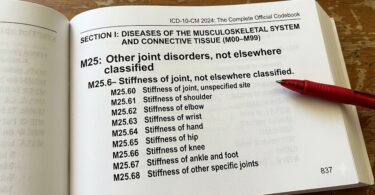
If you have ever looked at a medical report or a psychological evaluation and seen the term “Borderline Intellectual Functioning,” you might have felt a little lost. What does that label actually mean? More importantly, what is the correct ICD-10 code for borderline intellectual disability, and why does it matter?
You are not alone if this feels confusing. Many parents, caregivers, and even healthcare students struggle to understand where “low average” ends and a clinical diagnosis begins.
In this guide, we will walk through everything you need to know. We will explore the specific code, what it represents, how doctors use it, and why it is different from other intellectual or developmental disorders. By the end, you will feel confident navigating this topic.
Let us start with the most direct answer first.
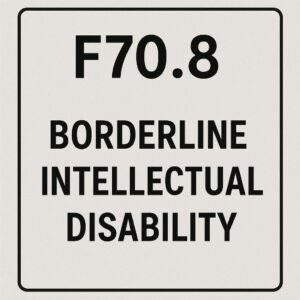
ICD-10 Code for Borderline Intellectual Disability
What is the Exact ICD-10 Code?
The direct answer is R41.83. This is the specific ICD-10-CM code for Borderline Intellectual Disability.
However, you might also see it referred to by a slightly different name in clinical notes: Borderline Intellectual Functioning. In the ICD-10 system, these two terms often refer to the same clinical situation.
Let’s break down the code:
-
R stands for “Symptoms, signs, and abnormal clinical findings.”
-
41 refers to “Cognitive functions and awareness.”
-
83 specifies “Borderline intellectual disability.”
Key Note for Readers
It is very important to understand that the letter “R” means this is a symptoms code, not a diagnosis of a chronic condition like a formal intellectual disability. This distinction matters a lot for insurance billing and treatment plans. We will talk more about why that difference is important later in this article.
Who Uses This Code and Why?
The ICD-10 code R41.83 is used by a wide range of professionals. If you work in or receive services from any of the following fields, you might encounter this code:
-
Clinical Psychologists (during cognitive testing)
-
Psychiatrists (for medication management and therapy notes)
-
Pediatricians (when monitoring child development)
-
Neurologists (when assessing brain function)
-
Social Workers (when applying for support services)
-
Insurance Adjusters (to approve or deny coverage for therapy)
Why do they use it? They use this code to create a common language. When a doctor in New York writes “R41.83” in a file, a doctor in California knows exactly what that means. It helps track health trends, approve treatments, and ensure the patient gets appropriate support.
Understanding Borderline Intellectual Disability: A Deeper Look
Before we dive further into coding, let us understand the human side of this diagnosis. A number without context is just a number.
What Does “Borderline” Really Mean?
The word “borderline” can sound scary or dismissive. It might sound like someone is saying, “You are almost disabled, but not quite.” That is not the intention.
In medicine, “borderline” means the edge of a threshold. In this case, the threshold is the cutoff for a formal diagnosis of Intellectual Disability (ID).
Imagine a spectrum of intelligence scores:
-
Average range: IQ 85 to 115
-
Borderline range: IQ 71 to 84
-
Intellectual Disability range: IQ 70 and below (with functional deficits)
So, a person with Borderline Intellectual Disability has an IQ score that is significantly below average, but not low enough to meet the strict criteria for a disability diagnosis.
The IQ Range Explained
To make this clearer, look at the table below:
| Cognitive Classification | IQ Score Range | Typical Support Needs |
|---|---|---|
| Intellectual Disability (Mild) | 50 – 70 | Requires daily support in specific areas (finance, planning). |
| Borderline Intellectual Disability | 71 – 84 | May struggle with complex tasks; needs occasional coaching. |
| Low Average | 85 – 90 | Slightly slower learning speed; generally independent. |
| Average | 90 – 109 | Typical learning and problem-solving. |
*Source: General clinical guidelines for DSM-5 and ICD-10 alignments.*
Realistic Signs and Symptoms
You cannot diagnose someone just by looking at them. However, there are common struggles associated with R41.83. A person with this condition might:
-
Learn new skills more slowly than peers, but they eventually learn them.
-
Struggle with abstract thinking. For example, they might understand that “$10 is more than $5” but struggle to calculate a 15% tip at a restaurant.
-
Have difficulty with executive function. This means planning, organizing a closet, or following a multi-step recipe might be very hard.
-
Lag in social judgment. They might trust strangers too easily or misread sarcasm.
-
Need “scaffolding” in school. They can succeed in a mainstream classroom if the teacher gives them extra visual aids or simplified instructions.
Important Note: Having a low IQ score does not mean a person cannot live a happy, successful life. Many people with borderline intellectual functioning hold jobs, raise families, and contribute to their communities. They just might work harder or use different strategies to get there.
Diagnosis Criteria: How Professionals Make the Call
Getting the code R41.83 is not as simple as taking a 10-minute online quiz. It requires a formal evaluation.
According to standard medical practice (aligned with ICD-11 preparation and current ICD-10 guidelines), a doctor looks for three specific things:
1. Standardized IQ Testing
The patient must score between 71 and 84 on a validated intelligence test. Common tests include the WAIS (Wechsler Adult Intelligence Scale) or WISC (Wechsler Intelligence Scale for Children).
2. Significant Impairment in Adaptive Functioning (But not severe)
This is the tricky part. Adaptive functioning means daily life skills. A person with borderline intellectual disability will have some difficulty here, but not enough to qualify for full disability benefits.
Examples of adaptive struggles:
-
They can cook a simple meal (eggs and toast) but cannot follow a complex recipe.
-
They can take public transit on a fixed route but get lost if there is a detour.
-
They can read a warning label but cannot understand a legal contract.
3. Onset During Development
The symptoms must have appeared during childhood or adolescence. You cannot suddenly develop borderline intellectual disability at age 40 after a head injury (that would be a traumatic brain injury, which has different codes).
R41.83 vs. Other Similar Codes: A Comparison Table
One of the biggest sources of confusion is knowing which code to use when. Let us clarify the differences.
| Condition | ICD-10 Code | Key Difference from R41.83 |
|---|---|---|
| Borderline Intellectual Disability | R41.83 | IQ 71-84; impairment exists but does not meet disability threshold. |
| Mild Intellectual Disability | F70 | IQ 50-70; significant support needed for daily living; qualifies as disability. |
| Unspecified Intellectual Disability | F79 | Used when testing is impossible, but disability is obvious. |
| Specific Learning Disorder | F81.9 | Normal IQ, but trouble with reading (dyslexia) or math (dyscalculia). |
| Developmental Delay | R62.50 | Used for children under 5; assumes they might “catch up.” |
Why does this comparison matter?
Because insurance companies and schools look at these codes differently. A child with R41.83 (Borderline) might qualify for a 504 Plan (classroom accommodations) but not an IEP (Individualized Education Program) for intellectual disability. An adult with R41.83 might not qualify for Social Security Disability Income (SSDI) because the law often requires an IQ of 70 or below.
The “R” Code Dilemma: Limitations of R41.83
This is a crucial section for honest understanding. The ICD-10 code R41.83 is a “symptom code.” In the medical world, symptom codes are sometimes seen as less specific or temporary.
The Problem with Being “Borderline”
Doctors face a practical problem. Many insurance policies will not pay for long-term therapy for an “R” code because they consider it a “rule-out” diagnosis.
For example:
-
Real patient story: A 14-year-old boy struggles in school. He gets an IQ score of 78. The psychologist uses R41.83.
-
The insurance reaction: “This is just a sign. It is not a disease. We will not pay for ongoing cognitive rehab.”
-
The result: The family must fight for coverage, or the doctor changes the code to something else (like an adjustment disorder) to get therapy approved.
Is the Code Changing in ICD-11?
The world is slowly moving to ICD-11. In the new system, the terminology shifts slightly. ICD-11 prefers “Borderline Intellectual Functioning” (Code 6A01.0) rather than “disability.”
This change reflects a modern understanding: it is a functioning issue, not a permanent disability label. However, the United States and many other countries still use ICD-10 for insurance billing as of this writing. So, R41.83 remains the king of codes for now.
Practical Guidance for Parents and Caregivers
If you have just received a diagnosis of R41.83 for your child or family member, take a deep breath. This is not a tragedy. It is a roadmap.
What To Do Next
1. Request a full psychoeducational evaluation.
Do not stop at the IQ score. You need to know specific weaknesses. Is it working memory? Processing speed? Verbal comprehension?
2. Look for “hidden” conditions.
Many people with borderline intellectual functioning also have ADHD or anxiety. Treating the anxiety can raise their functional ability by 10-20%.
3. Focus on “Executive Functioning” coaching.
This is the #1 practical help. Teach them how to use a calendar app. Show them how to break down a chore into steps. These skills are more valuable than IQ points.
4. Build a “Scaffold,” not a cage.
Do not do everything for them. If they struggle with money, do not take away their wallet. Instead, give them a prepaid card with limits. Let them fail safely so they can learn.
What to Say to the School
Advocacy is key. You need to be the polite squeaky wheel.
Quote for a meeting with teachers:
“My child has borderline intellectual functioning (Code R41.83). They need clear, written instructions. They need extra time for tests. They need us to avoid abstract language. They are capable of learning, but not in the same way as their peers.”
Detailed Breakdown of the Code in Medical Billing
For the medical coders and billers in the audience, let us get technical for a moment.
Code Specificity
-
R41.83 is a billable code. This means it is specific enough to be used for reimbursement.
-
Do not use R41.83 if the patient has a confirmed IQ below 70. That is F70 (Mild ID).
-
Do not use R41.83 for dementia or age-related cognitive decline (use F03.9 for unspecified dementia instead).
Common Billing Scenarios
Scenario A: The Initial Evaluation
A psychologist spends two hours testing a patient.
-
Primary Code: R41.83 (Borderline intellectual disability)
-
Secondary Code: Z13.4 (Encounter for screening for mental disorders)
-
Outcome: Insurance covers the testing but may deny ongoing weekly therapy.
Scenario B: The Follow-up Visit
A patient with R41.83 comes in for depression caused by social rejection.
-
Primary Code: F32.9 (Major depressive disorder, single episode)
-
Secondary Code: R41.83 (Borderline intellectual disability)
-
Why? You treat the depression first. The cognitive issue is the background context.
Medical Coding Tips
-
Never list R41.83 as the primary diagnosis if the visit is for a physical illness like a cold. That will get your claim denied immediately.
-
Always link the code to a specific service. If you bill for “Cognitive Skills Training,” R41.83 is a perfect match. If you bill for “Group Therapy,” it is less appropriate.
The Emotional and Social Impact
Let us move away from numbers for a moment. Living with borderline intellectual functioning is often described as “walking in glue.”
The “Invisible Struggle”
People with this condition look completely normal. They speak normally (usually). They hold eye contact. Because of this, society expects them to perform like everyone else.
When they fail, people assume they are lazy, stubborn, or unmotivated. They are not. Their engine is smaller, but they are revving it as hard as they can.
The Risk of Mental Health Issues
Research consistently shows that people with R41.83 have higher rates of:
-
Depression: Because they constantly compare themselves to peers who succeed easily.
-
Anxiety: Because the world feels unpredictable and confusing.
-
Conduct Disorder (in teens): Acting out because they cannot articulate their frustration.
A Word of Hope
With the right support, these risks drop dramatically. Early intervention is everything. If you help a child build coping strategies between ages 7 and 12, they enter adulthood far more prepared.
Five Common Myths About Borderline Intellectual Disability
Let us clear up some misunderstandings.
Myth 1: “It is the same as being ‘slow.'”
Reality: “Slow” is a judgment. Borderline intellectual functioning is a statistical and clinical description. Many people with this condition are very fast at physical tasks or creative work.
Myth 2: “You can cure it with brain games.”
Reality: You cannot raise a full-scale IQ by 15 points with phone apps. However, you can improve specific skills (like memory) through intense training. Manage expectations.
Myth 3: “They cannot go to college.”
Reality: They may struggle at a competitive university, but community college or vocational training is often a perfect fit. Many trades (plumbing, electrical work, culinary arts) rely on procedural memory, not abstract reasoning.
Myth 4: “It is a rare condition.”
Reality: Approximately 14% of the population scores below 85. That means roughly 1 in 7 people has either Borderline functioning or low average intelligence. It is incredibly common.
Myth 5: “Only children have it.”
Reality: Adults have it too, but they are often undiagnosed. Many adults with R41.83 simply learn to “mask” their struggles. They avoid reading, memorize scripts for conversations, and rely heavily on spouses for finances.
How To Discuss This Diagnosis With A Loved One
If you need to tell someone they have this diagnosis, choose your words carefully. Do not say, “You have a borderline disability.” That sounds harsh.
Try this instead:
“The doctor did some tests about how your brain learns. The results show that you learn some things a little differently. Your brain is like a diesel engine. It takes a second to warm up, but once you know how to do something, you do it perfectly. We just need to find the right teachers to help you.”
What to avoid:
-
Using the number 71 or 84 in a negative way.
-
Comparing them to a sibling who is “smarter.”
-
Using the diagnosis as an excuse to take away their independence.
Resources and Support Systems
Finding help for R41.83 can be frustrating because it falls into a “gray area.” You are too “high” for disability services and too “low” for gifted programs.
Where to Look
1. Vocational Rehabilitation (Voc Rehab)
This is a state-run service in the USA. They help people with disabilities find jobs. Even if you don’t have a formal disability, many Voc Rehab offices will accept clients with R41.83 because you have a “documented impairment.”
2. The Arc (Thearc.org)
This organization advocates for people with intellectual and developmental disabilities. While their main focus is F70-F79, they often have resources for “borderline” individuals too.
3. Local Community Colleges
Ask about the Disability Resource Center. Even though R41.83 is not a “traditional” disability, many colleges will provide:
-
Extended test time
-
A quiet room for exams
-
Free tutoring in study skills
4. Occupational Therapy (OT)
If you have insurance, look for an OT who specializes in “cognitive rehabilitation.” They are the best professionals for teaching real-world skills to this population.
A Sample Conversation With Your Doctor
You are in the exam room. The doctor just mentioned “R41.83.” Here is how to advocate for yourself or your child.
You: “Doctor, I see the code for borderline intellectual disability. What does that mean for treatment?”
Doctor: “It means he has some delays, but not a disability.”
You (Advocating): “I understand. Since this is an ‘R’ code, will insurance pay for cognitive therapy? If not, what code should we use to get him the speech therapy he clearly needs for language processing?”
Result: A good doctor will appreciate your knowledge and work with you to find a solution, perhaps using a secondary code like F88 (Other psychological development disorder) to open up services.
Frequently Asked Questions (FAQ)
Q1: Is R41.83 considered a mental illness?
No. It is a neurocognitive condition. It is about how the brain processes information, not a mood or personality disorder. However, it often occurs alongside anxiety or depression.
Q2: Can a child outgrow borderline intellectual disability?
No, you do not “outgrow” your natural cognitive ability. However, a child can learn so many coping skills that the functional impact of the low IQ becomes very small. They learn to work around it.
Q3: Is it the same as a learning disability?
No. A learning disability (like dyslexia) occurs in people with average or above-average IQs. Borderline functioning affects general intelligence, not just reading or math.
Q4: Does R41.83 qualify for disability benefits (SSI)?
Usually, no. The Social Security Administration requires an IQ of 70 or below plus significant functional deficits. Some people with R41.83 (IQ 71-75) get approved if they have another condition (like autism or a physical problem), but it is difficult.
Q5: Why did my doctor use a different code?
Some doctors use F81.9 (Developmental disorder of scholastic skills) for children to get school services. Others use R62.50 for toddlers. Ask your doctor for a clear explanation of why they chose a specific code.
Q6: Can stress make the symptoms worse?
Absolutely. Under extreme stress, a person with R41.83 will “drop” in functioning. They might forget basic tasks or have emotional outbursts. This is not laziness; it is a loss of cognitive reserve.
Q7: What is the best therapy for adults with this code?
Cognitive Behavioral Therapy (CBT) adapted for lower cognitive loads works best. The therapist must use concrete examples, role-playing, and handouts. Traditional “talk therapy” (psychoanalysis) is usually ineffective.
Additional Resource Link
For the most up-to-date information on ICD-10 coding guidelines and changes for the coming year, we highly recommend the official resource from the Centers for Medicare & Medicaid Services (CMS). They provide the definitive coding handbook used by hospitals.
-
Resource Link: CMS ICD-10 Official Guidelines for Coding and Reporting (Open in a new tab)
A Final Checklist for Readers
Before you leave this page, ask yourself these three questions:
-
Do I have the correct test results? (You need a real WAIS or WISC test, not a computer quiz.)
-
Is this code (R41.83) being used appropriately for my situation? (If IQ is under 70, demand F70 instead.)
-
Have I looked for secondary conditions? (Anxiety, ADHD, and specific learning disorders are common companions.)
Conclusion
In summary, the ICD-10 code for borderline intellectual disability is R41.83. This code represents a specific range of cognitive functioning (IQ 71-84) where individuals experience real challenges in learning and daily life, yet do not meet the threshold for a full intellectual disability diagnosis. While this “R” code has limitations regarding insurance coverage and disability benefits, it remains a vital tool for doctors and psychologists to document cognitive struggles and recommend appropriate supports, such as executive functioning coaching and classroom accommodations.
Remember, a code is just a label—it does not define a person’s potential, worth, or ability to live a meaningful life.
*Disclaimer: This article is for informational purposes only and does not constitute medical advice. You should always consult with a qualified healthcare professional for diagnosis and treatment regarding any medical condition or coding decision. Medical codes and guidelines change periodically; always verify with the latest ICD-10-CM manual.*