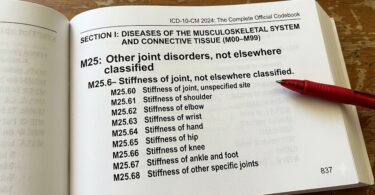
If you have ever tried to find the right diagnosis code for a deep bruise on a bone, you might have felt a bit lost. Bone contusions are common injuries, especially in active people and after falls. But the ICD-10 system does not always make them easy to locate.
The good news is that once you understand how the coding system groups these injuries, finding the right code becomes simple. This guide walks you through everything you need to know. You will learn the exact codes to use, how to document a bone contusion properly, and what to avoid when submitting claims.
Let us start with the most important question first.
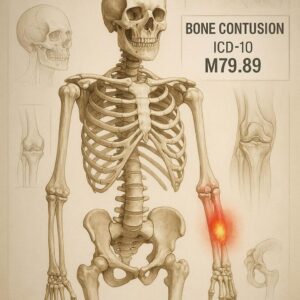
ICD-10 Code Bone Contusion
What Exactly Is a Bone Contusion?
A bone contusion is a traumatic injury to the bone tissue. It happens when a strong force hits a bone hard enough to damage the inner and outer layers, but not hard enough to cause a crack or break.
Think of it like a deep bruise on your bone. Blood and fluid collect inside the bone marrow and the tough outer covering called the periosteum. This leads to pain, swelling, and tenderness that can last for weeks.
Unlike a fracture, the bone remains structurally intact. However, a bone contusion can be just as painful. In some cases, it takes longer to heal than a simple fracture.
Common Causes of Bone Contusions
You can get a bone contusion from any sudden impact. Some of the most frequent causes include:
-
Falling onto a hard surface
-
Car accidents
-
Sports injuries, especially in football, soccer, and basketball
-
Direct blows from an object or another person
-
Twisting injuries that compress bones together
Most Frequently Affected Bones
Bone contusions appear most often in certain locations. These include:
-
The knee (especially the femoral condyles and tibial plateau)
-
The ankle and foot
-
The wrist and hand
-
The hip and pelvis
-
The ribs
-
The heel bone (calcaneus)
Now that you understand the injury itself, let us look at how the ICD-10 system handles it.
The Primary ICD-10 Code for Bone Contusion
The ICD-10 system does not have a single, all-purpose code called “bone contusion.” Instead, bone contusions fall under a broader category of superficial injuries.
The main code family you will use is S00-T88, which covers injuries, poisonings, and other external causes.
Within that family, bone contusions are typically coded using:
S90-S99: Injuries to the ankle and foot (for lower extremity contusions)
S80-S89: Injuries to the knee and lower leg
S60-S69: Injuries to the wrist, hand, and fingers
S40-S49: Injuries to the shoulder and upper arm
S50-S59: Injuries to the elbow and forearm
But here is the key detail. Most bone contusions are coded using the specific codes for contusion of a specified body region, followed by a seventh character that indicates the encounter type.
The Most Direct Code: S00.90XA
If you need a general code for a bone contusion without a more specific location, you might start with:
S00.90XA – Contusion of unspecified part of head, initial encounter
However, that only covers the head. For other body parts, you need to go deeper.
In practical terms, most coders use the contusion codes within each body region. For example:
-
S80.01XA – Contusion of right knee, initial encounter
-
S80.02XA – Contusion of left knee, initial encounter
-
S90.01XA – Contusion of right ankle, initial encounter
But wait. These codes say “contusion” without specifying “bone.” That is correct. In ICD-10, a contusion code automatically includes bruising of both soft tissue and bone unless the documentation specifies otherwise.
Important note for coders: If the physician specifically documents a “bone contusion” or “bone bruise,” you can still use the standard contusion code for that body part. There is no separate subcategory for bone-only contusions in most cases.
Detailed Code Breakdown by Body Region
Let us get specific. Below is a practical guide to the most common bone contusion codes organized by where the injury occurs.
Knee Bone Contusions
The knee is the most common site for bone contusions. These often happen alongside ligament injuries like ACL tears.
| Location | ICD-10 Code | Description |
|---|---|---|
| Right knee | S80.01XA | Contusion of right knee, initial encounter |
| Left knee | S80.02XA | Contusion of left knee, initial encounter |
| Unspecified knee | S80.00XA | Contusion of unspecified knee, initial encounter |
Ankle and Foot Bone Contusions
Ankle bone contusions are very common after rolling injuries or direct impacts.
| Location | ICD-10 Code | Description |
|---|---|---|
| Right ankle | S90.01XA | Contusion of right ankle, initial encounter |
| Left ankle | S90.02XA | Contusion of left ankle, initial encounter |
| Right foot | S90.31XA | Contusion of right foot, initial encounter |
| Left foot | S90.32XA | Contusion of left foot, initial encounter |
| Toe(s) | S90.1XXA | Contusion of toe(s) without damage to nail |
Wrist and Hand Bone Contusions
Falls on an outstretched hand often cause bone contusions in the wrist.
| Location | ICD-10 Code | Description |
|---|---|---|
| Right wrist | S60.211A | Contusion of right wrist, initial encounter |
| Left wrist | S60.212A | Contusion of left wrist, initial encounter |
| Right hand | S60.221A | Contusion of right hand, initial encounter |
| Left hand | S60.222A | Contusion of left hand, initial encounter |
| Finger(s) | S60.0XXA | Contusion of finger(s) without damage to nail |
Shoulder and Upper Arm
Direct blows to the shoulder during sports or falls can bruise the humerus or scapula.
| Location | ICD-10 Code | Description |
|---|---|---|
| Right shoulder | S40.011A | Contusion of right shoulder, initial encounter |
| Left shoulder | S40.012A | Contusion of left shoulder, initial encounter |
| Right upper arm | S40.021A | Contusion of right upper arm, initial encounter |
| Left upper arm | S40.022A | Contusion of left upper arm, initial encounter |
Rib and Chest Wall Contusions
Bone contusions of the ribs are common after falls or blunt chest trauma.
| Location | ICD-10 Code | Description |
|---|---|---|
| Chest wall | S20.20XA | Contusion of thorax, unspecified, initial encounter |
| Multiple ribs | S20.211A | Contusion of right front wall of thorax |
| Sternum | S20.20XA (use with site specifier) | Contusion of thorax |
Clinical tip: Rib contusions can be very painful but rarely show up on X-ray. MRI is the best imaging study to confirm a bone contusion of the rib cage.
Hip and Pelvis
Hip bone contusions often happen in older adults after falls or in athletes after direct impacts.
| Location | ICD-10 Code | Description |
|---|---|---|
| Right hip | S70.01XA | Contusion of right hip, initial encounter |
| Left hip | S70.02XA | Contusion of left hip, initial encounter |
| Pelvis | S30.0XXA | Contusion of lower back and pelvis |
Seventh Characters: A, D, and S Explained
Every injury code in ICD-10 requires a seventh character. This tells the insurance company where the patient is in their treatment journey.
Here is what each one means:
-
A – Initial encounter: Use this for the first time the patient receives active treatment. This includes the emergency room visit, the first office visit, or the initial surgery.
-
D – Subsequent encounter: Use this for follow-up visits while the patient is still healing. This includes routine check-ups, cast changes, and physical therapy visits during the active treatment phase.
-
S – Sequela: Use this for late effects or conditions that remain after the bone contusion has healed. For example, if a patient has chronic pain or stiffness that started after the bone bruise, you would use the S code.
Example of Proper Seventh Character Use
Visit 1: Patient falls and hurts their knee. X-ray shows no fracture, but MRI confirms a bone contusion. You use S80.01XA (A for initial encounter).
Visit 2: Six weeks later, the patient returns for a follow-up. The pain is improving but still present. You use S80.01XD (D for subsequent encounter).
Visit 3: One year later, the patient has post-traumatic arthritis in that knee directly linked to the bone contusion. You use S80.01XS (S for sequela).
Bone Contusion vs. Fracture: Why the Difference Matters for Coding
This is where many coders and clinicians make mistakes. A bone contusion is not a fracture. Using a fracture code for a bone bruise is incorrect and can lead to claim denials.
| Feature | Bone Contusion | Fracture |
|---|---|---|
| Bone integrity | Intact, no break | Broken or cracked |
| ICD-10 code family | S00-S99 (contusion codes) | S02, S12, S22, S32, S42, S52, S62, S72, S82, S92, etc. |
| Healing time | 4 to 12 weeks on average | 6 weeks to several months |
| Imaging finding | Edema on MRI only | Visible line or disruption on X-ray, CT, or MRI |
| Commonly used code | S80.01XA (knee contusion) | S82.001A (fracture of patella) |
Warning: Do not use a fracture code for a bone contusion even if the physician calls it a “microfracture.” In ICD-10, microfracture codes still require a fracture diagnosis. Without radiological evidence of a break, stick with the contusion code.
Documentation Requirements for Bone Contusion Coding
Insurance companies want to see clear documentation before they pay a claim. For a bone contusion, your documentation should include:
Five Key Elements Every Note Must Have
-
Mechanism of injury: How did it happen? Fall, car accident, sports impact?
-
Specific location: Which bone? Right or left? Which part of the bone?
-
Imaging confirmation: Bone contusions do not show on X-ray. If you are coding from a note that says “bone contusion” without MRI confirmation, be careful. Some payers require MRI evidence.
-
Severity and extent: Isolated or part of a larger injury pattern?
-
Treatment plan: Rest, ice, physical therapy, or advanced interventions?
Sample Documentation That Supports Correct Coding
“The patient is a 24-year-old male who landed directly on his right knee during a basketball game yesterday. He has point tenderness over the medial femoral condyle. X-ray shows no fracture. MRI confirms a bone contusion of the medial femoral condyle without associated ligamentous injury. Plan includes rest, ice, compression, and follow-up in two weeks.”
This documentation supports S80.01XA (contusion of right knee, initial encounter).
Bone Contusions Associated with Other Injuries
Bone contusions rarely happen alone. They often accompany more serious injuries. When that happens, you need to code both conditions.
Common Injury Combinations
-
Bone contusion + ACL tear: Code both the contusion and the ligament tear
-
Bone contusion + meniscus tear: Code both
-
Bone contusion + ankle sprain: Code both
-
Bone contusion + dislocation: Code both, noting which is the principal diagnosis
How to Sequence the Codes
If a patient has a bone contusion and a more severe injury, list the more severe injury first.
Example: Patient has a complete ACL tear and a bone contusion of the lateral femoral condyle.
-
Principal diagnosis: S83.512A (Sprain of anterior cruciate ligament of right knee)
-
Secondary diagnosis: S80.01XA (Contusion of right knee)
Healing Timeline and Its Impact on Coding
Bone contusions heal in stages. The stage of healing can affect which seventh character you use and whether the condition is still active.
Typical Healing Phases
| Timeframe | Healing Stage | Coding Considerations |
|---|---|---|
| Days 1 to 7 | Acute inflammation | Use A (initial encounter) for first visit |
| Weeks 2 to 6 | Repair and rebuilding | Use D (subsequent encounter) for follow-ups |
| Weeks 6 to 12 | Remodeling | Continue D codes while still treating |
| After 12 weeks | Resolved or chronic | Switch to S (sequela) if late effects remain |
Most simple bone contusions heal completely within 8 to 12 weeks. If symptoms last longer than that, consider other diagnoses or use the sequela code.
Common Coding Mistakes and How to Avoid Them
Even experienced coders make errors with bone contusion codes. Here are the most frequent problems and their solutions.
Mistake 1: Using a Fracture Code
Some coders see “bone” and immediately think “fracture.” Do not fall into this trap. A bruise is not a break.
Wrong: S82.001A (Fracture of patella)
Right: S80.01XA (Contusion of knee)
Mistake 2: Forgetting the Seventh Character
All injury codes need a seventh character. Missing it will cause an automatic rejection.
Wrong: S80.01
Right: S80.01XA
Mistake 3: Coding an Unspecified Site When a Specific Site Is Known
If the doctor documents “bone contusion, left knee,” do not use an unspecified code.
Wrong: S80.00XA (Unspecified knee)
Right: S80.02XA (Left knee)
Mistake 4: Using an Initial Encounter Code for a Follow-Up Visit
The A code is only for the first active treatment visit. Follow-up visits need D.
Wrong: S80.01XA for a 4-week follow-up
Right: S80.01XD
Bone Contusions in Special Populations
Coding does not change for different patient groups, but the clinical context might affect documentation and medical necessity.
Pediatric Bone Contusions
Children have softer, more flexible bones. They are less likely to get isolated bone contusions and more likely to get fractures or growth plate injuries. When a child does have a bone contusion, document clearly that the growth plate is uninjured.
Elderly Patients
Older adults with bone contusions often have underlying osteoporosis. While the contusion itself codes the same way, you should also code the osteoporosis if it affects treatment or recovery.
Example: Patient with osteoporosis and a rib bone contusion from a fall.
-
M81.0 – Age-related osteoporosis
-
S20.20XA – Contusion of thorax, initial encounter
Athletes
Athletes frequently return to play before a bone contusion has fully healed. This can lead to reinjury or progression to a stress fracture. Document return-to-play decisions carefully. The subsequent encounter code (D) remains appropriate during rehabilitation.
External Cause Codes for Bone Contusions
ICD-10 allows you to add external cause codes to describe how the injury happened. These are optional in most outpatient settings but required for some payers and for trauma registries.
Common External Cause Codes
| Event | Code | Description |
|---|---|---|
| Fall on same level | W01.0XXA | Fall on same level from slipping, tripping, or stumbling |
| Fall from stairs | W10.9XXA | Fall on or from stairs or steps |
| Sports impact | W21.89XA | Striking against or struck by other sports equipment |
| Car accident | V43.52XA | Car occupant injured in collision with car in traffic accident |
| Struck by object | W22.1XXA | Striking against or struck by another person |
Note: External cause codes never go in the first position. List them after the injury code.
Example of Complete Coding with External Cause
A 19-year-old soccer player takes a direct kick to the right shin during a game. X-ray negative. MRI confirms a bone contusion of the tibia.
-
S80.01XA – Contusion of right knee (the shin contusion falls under knee/lower leg)
-
W21.89XA – Striking against or struck by other sports equipment
-
Y93.64 – Activity, soccer
Billing and Reimbursement Considerations
Having the correct ICD-10 code is only half the battle. You also need to make sure the documentation supports medical necessity for any services you bill.
Common Services That Pair with Bone Contusion Codes
-
Office visit (99202-99215): Supported by the diagnosis of bone contusion
-
X-ray (73560-73565): Supported when ruling out fracture
-
MRI (73721-73723): Supported when X-ray is negative but clinical suspicion of bone contusion or other internal injury remains high
-
Physical therapy (97110, 97140, etc.): Supported for rehabilitation of stiffness and weakness
-
Ultrasound (76881-76882): Sometimes used to evaluate for fluid or soft tissue injury
Red Flags for Payers
Insurance companies may deny claims if they see:
-
MRI performed without a prior X-ray (in most non-emergent cases)
-
Physical therapy lasting longer than 12 weeks for an isolated bone contusion
-
Multiple follow-up visits with no change in the D code or documented progress
Frequently Asked Questions (FAQ)
1. Is there a specific ICD-10 code for bone contusion of the knee?
No single code says “bone contusion of the knee.” You use S80.01XA (right) or S80.02XA (left) for contusion of the knee. This code covers both soft tissue and bone bruising.
2. Can I use a bone contusion code if the X-ray is normal?
Yes. Bone contusions do not show on X-ray. The code is based on the clinical diagnosis, which may come from physical exam findings or MRI results.
3. How long can I use the D (subsequent encounter) code?
You can use the D code as long as the patient is receiving active treatment for the bone contusion. This includes follow-up visits, physical therapy, and medication management. Once the injury has healed, stop using injury codes unless there are late effects.
4. Do I need an MRI to code a bone contusion?
Technically, no. The provider can diagnose a bone contusion based on clinical presentation and mechanism of injury. However, some payers may require MRI confirmation for certain services like prolonged physical therapy. When in doubt, check your payer policies.
5. What is the difference between a bone contusion and a stress fracture?
A bone contusion is a bruise within the bone without a break. A stress fracture is a tiny crack in the bone. Stress fractures fall under fracture codes (Sxx.xxxA), not contusion codes. An MRI can distinguish between the two.
6. Can a bone contusion turn into a fracture?
It is possible but not common. If a patient continues to bear full weight on a severe bone contusion, the weakened bone could develop a fracture. If that happens, you would code the new fracture separately.
7. What code do I use for a healed bone contusion?
Once the bone contusion has healed without any remaining issues, you do not use an injury code at all. You would use a code for a follow-up exam (Z09) if the patient is still in your office for surveillance. If the patient has chronic pain from the healed contusion, use the sequela code with S.
8. Do I need an external cause code for every bone contusion?
No. External cause codes are optional in most outpatient settings. Use them when your payer requires them or when the mechanism of injury affects treatment (like workers’ compensation cases).
Quick Reference Table: Bone Contusion Codes by Body Part
| Body Part | ICD-10 Code (Initial Encounter) | What It Covers |
|---|---|---|
| Skull/head | S00.90XA | Contusion of unspecified part of head |
| Shoulder | S40.011A (R) / S40.012A (L) | Contusion of shoulder |
| Elbow | S50.01XA (R) / S50.02XA (L) | Contusion of elbow |
| Wrist | S60.211A (R) / S60.212A (L) | Contusion of wrist |
| Hand | S60.221A (R) / S60.222A (L) | Contusion of hand |
| Finger | S60.0XXA | Contusion of finger without nail damage |
| Rib cage | S20.20XA | Contusion of thorax |
| Hip | S70.01XA (R) / S70.02XA (L) | Contusion of hip |
| Knee | S80.01XA (R) / S80.02XA (L) | Contusion of knee |
| Lower leg | S80.11XA (R) / S80.12XA (L) | Contusion of lower leg |
| Ankle | S90.01XA (R) / S90.02XA (L) | Contusion of ankle |
| Foot | S90.31XA (R) / S90.32XA (L) | Contusion of foot |
| Toe | S90.1XXA | Contusion of toe without nail damage |
Pro tip: Bookmark this table. It will save you time during busy coding sessions.
Conclusion
Finding the right ICD-10 code for a bone contusion does not have to be complicated. Remember that standard contusion codes for each body part (like S80.01XA for the knee) are the correct choice since there is no separate bone contusion code. Always add the proper seventh character (A, D, or S), document the injury clearly, and avoid the common mistake of using fracture codes. With this guide, you can code bone contusions accurately and confidently on every claim.
Additional Resource
For the most up-to-date ICD-10 coding guidelines and official coding advice, bookmark the CMS ICD-10 website:
https://www.cms.gov/medicare/coding-billing/icd-10-codes
You can also access the full ICD-10 code set through the WHO ICD-10 online browser:
https://icd.who.int/browse10
Disclaimer: This article is for informational and educational purposes only. Coding guidelines and payer policies change frequently. Always verify codes using the current year’s ICD-10 manual and consult with a certified medical coder or your payer for specific claims questions. This content does not constitute legal or medical advice.