If you or someone you care for lives with epilepsy, you know that managing seizures is a daily priority. But what happens when a seizure breaks through despite taking medication? That event has a specific name: a breakthrough seizure. And in the world of medical billing and health records, it also has a specific code.
Finding the right ICD-10 code for a breakthrough seizure can feel confusing. You might open a coding manual or search online, only to find several different options. Which one is correct? Does it depend on the type of seizure? What if the cause is unknown?
This guide is here to clear up that confusion. We will walk through everything you need to know about coding a breakthrough seizure. We will keep the language simple and practical. By the end, you will feel confident finding and using the right code for your notes, claims, or patient records.
Let us start with the most important question.
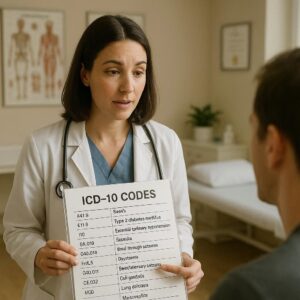
ICD-10 Code for Breakthrough Seizure
Table of Contents
ToggleWhat Exactly Is a Breakthrough Seizure?
Before we talk about codes, we need to understand the event itself. A breakthrough seizure is any seizure that occurs in a person who normally has their seizures controlled by medication or other treatments. It is called a “breakthrough” because it breaks through the protection that the treatment usually provides.
Think of it like a fence around a yard. The fence (medication) usually keeps the dog (seizure activity) inside. A breakthrough seizure happens when the dog finds a way out, even though the fence is still there.
These events are not rare. Many people with epilepsy will experience at least one breakthrough seizure at some point. They can happen for many reasons:
-
Missing a dose of medication.
-
Having an illness with a high fever.
-
Not sleeping enough.
-
Drinking alcohol.
-
Experiencing high stress.
-
Starting a new medication that interferes with seizure drugs.
For doctors and billers, the key point is this: the person already has a diagnosed seizure disorder. The breakthrough seizure is a new event within that existing condition.
The Main ICD-10 Code for Breakthrough Seizure
Now, let us answer the question you came here for. The most commonly used ICD-10 code for a breakthrough seizure is R56.9.
This code stands for “Unspecified convulsions.” Here is why it is often the right choice: a breakthrough seizure is typically documented as an acute, time-limited event. The medical record may not specify whether it is a focal (partial) seizure or a generalized seizure. When the type is not specified, R56.9 is appropriate.
However, there is an important nuance. Some coders and physicians argue that a breakthrough seizure in a patient with known epilepsy should be coded differently. They point to the epilepsy codes under G40.
Let us look at the two main options side by side.
| ICD-10 Code | Description | Best Used When |
|---|---|---|
| R56.9 | Unspecified convulsions | The seizure is a single, acute event. The specific type (focal, generalized) is not documented. |
| G40.909 | Epilepsy, unspecified, not intractable, without status epilepticus | The patient has a confirmed epilepsy diagnosis. The breakthrough seizure is part of that ongoing condition. |
Most coding experts today lean toward the epilepsy codes (G40 series) for breakthrough seizures in patients with known epilepsy. Why? Because R56.9 is intended for seizures that are not related to a pre-existing epilepsy diagnosis. For example, a child with a high fever who has a seizure would get R56.9. A person with known epilepsy who misses a dose and has a seizure should ideally get a G40 code.
Note for readers: Coding rules can vary by clinic, hospital, and insurance company. Always check your specific guidelines. When in doubt, ask your coding supervisor or the treating physician.
Other Specific ICD-10 Codes for Breakthrough Seizures
The codes above cover general situations. But breakthrough seizures come in many forms. Sometimes you need a more specific code. Let us explore the most common alternatives.
Focal (Partial) Breakthrough Seizure
If the documentation clearly states the seizure was focal (starting in one area of the brain), you will use a code from the G40.1 series.
-
G40.109 – Localization-related (focal) (partial) symptomatic epilepsy and epileptic syndromes with simple partial seizures, not intractable, without status epilepticus.
This code is for a breakthrough seizure that was a simple focal seizure. The person remains aware during the event. For a complex focal seizure (where awareness is impaired), you would look at G40.209.
Generalized Breakthrough Seizure
Generalized seizures affect both sides of the brain from the start. The most common types are tonic-clonic (what many people think of as a grand mal seizure), absence, and myoclonic.
-
G40.909 – Epilepsy, unspecified, not intractable, without status epilepticus. This remains the fallback when no specific type is given.
-
G40.409 – Other generalized epilepsy and epileptic syndromes, not intractable, without status epilepticus. Use this for conditions like juvenile myoclonic epilepsy.
Breakthrough Seizure with Status Epilepticus
Status epilepticus is a medical emergency. It means a seizure lasts longer than five minutes or the person has more than one seizure without returning to normal in between. If a breakthrough seizure progresses to status epilepticus, you must use a different code.
For status epilepticus, you add a sixth character: “1” for status.
-
G40.901 – Epilepsy, unspecified, not intractable, with status epilepticus.
-
G40.1091 – Focal epilepsy, not intractable, with status epilepticus.
This distinction is critical. Status epilepticus changes treatment, prognosis, and billing.
Intractable vs. Not Intractable
You will see the word “intractable” in many G40 codes. Intractable simply means “difficult to control.” A seizure is intractable when it does not respond well to medication.
-
Not intractable – The patient usually responds to medication. This breakthrough seizure is an exception, not the rule.
-
Intractable – The patient has frequent seizures despite multiple medications. The breakthrough is part of a pattern.
For most single breakthrough seizures, you will use the “not intractable” codes. But if the patient has drug-resistant epilepsy, you may need an intractable code like G40.919 (intractable epilepsy, unspecified).
A Simple Decision Tree for Choosing the Right Code
Let me make this easier for you. Follow these steps in order.
-
Does the patient have a confirmed epilepsy diagnosis?
-
No → Use R56.9 (Unspecified convulsions).
-
Yes → Go to step 2.
-
-
Did the seizure progress to status epilepticus?
-
Yes → Use a code ending in “1” (e.g., G40.901).
-
No → Go to step 3.
-
-
Is the seizure type documented (focal, generalized, etc.)?
-
No → Use G40.909 (Epilepsy, unspecified, not intractable, without status).
-
Yes → Go to step 4.
-
-
Choose the specific code:
-
Focal without loss of awareness → G40.109
-
Focal with loss of awareness → G40.209
-
Generalized tonic-clonic → G40.409 or G40.909
-
Absence seizure → G40.409
-
This tree works for the vast majority of breakthrough seizure cases. Keep it bookmarked for your next coding session.
Documenting a Breakthrough Seizure: What Your Notes Must Include
A code is only as good as the documentation behind it. Insurance companies deny claims when the medical record lacks detail. As a writer or coder, you cannot create what does not exist. But you can educate providers on what to write.
Here is a checklist of what a physician should document after a breakthrough seizure.
-
The patient’s baseline seizure status – “Patient has been seizure-free for 18 months on lamotrigine.”
-
Description of the event – Who saw it? How long did it last? What movements occurred?
-
Level of awareness – Was the patient confused during or after? Could they respond?
-
Duration – Every second matters, especially to rule out status epilepticus.
-
Potential triggers – Missed dose? Fever? Lack of sleep?
-
Postictal state – How long until the patient returned to baseline?
-
Any injuries – Tongue bite, falls, incontinence.
When you see these details in a note, you can confidently assign a specific G40 code. When the note says only “breakthrough seizure,” you are forced to use G40.909 or R56.9.
Important note: Never code a breakthrough seizure as “epilepsy, intractable” unless the documentation clearly states the patient has drug-resistant epilepsy. A single breakthrough does not equal intractability.
Common Mistakes to Avoid with Breakthrough Seizure Codes
Even experienced coders make errors. Here are the most frequent mistakes I see with breakthrough seizure coding.
Mistake 1: Always Using R56.9
This is the biggest trap. R56.9 is easy to find and seems to fit. But for a patient with known epilepsy, R56.9 is often incorrect. It can lead to claim denials because the insurance company sees a “new” seizure disorder instead of a complication of an existing one.
Mistake 2: Forgetting to Add Status Epilepticus Codes
A breakthrough seizure that lasts more than five minutes is status epilepticus. It requires a different code. Using a non-status code for a status event is both clinically inaccurate and financially risky.
Mistake 3: Coding Only the Seizure, Not the Underlying Epilepsy
Some coders list only the breakthrough seizure code. But for a patient with epilepsy, the epilepsy itself is the chronic condition. You should typically sequence the epilepsy code first, followed by a code for the breakthrough if needed. Check your payer guidelines.
Mistake 4: Using “Intractable” Too Soon
A patient who has one breakthrough seizure after a year of control is not intractable. Using an intractable code incorrectly can affect the patient’s record permanently. Only use intractable codes when the physician explicitly documents treatment resistance.
When to Use R56.9 for a Seizure (Non-Epilepsy)
I want to be very clear about when R56.9 is the correct choice. You should use R56.9 for breakthrough-like events in people who do not have epilepsy.
Examples include:
-
A first-time seizure in an adult.
-
A febrile seizure in a young child.
-
A seizure caused by a metabolic imbalance (low sodium, low blood sugar).
-
A seizure from alcohol withdrawal.
-
A seizure due to a brain injury or infection.
In all these cases, the person does not have an epilepsy diagnosis. The seizure is an isolated event related to another cause. R56.9 is perfect for these scenarios. But for a true breakthrough seizure in someone with epilepsy, look first to the G40 codes.
Breakthrough Seizure Coding for Different Healthcare Settings
Where you work affects which code you might prioritize. Let us look at three common settings.
Hospital Inpatient Setting
In the hospital, a breakthrough seizure often leads to an EEG and medication adjustments. Coders here should be very specific. The discharge summary will usually contain a definitive seizure type. Use the most specific G40 code available. Also, if the seizure prolonged hospital stay or required ICU care, document status epilepticus codes carefully.
Outpatient Neurology Clinic
In a neurology clinic, the patient is known to you. You have their epilepsy type on file. Here, you should almost never use R56.9. Instead, use their established epilepsy code with the appropriate sixth character for intractability and status. Add a note that this was a breakthrough event, but the code itself captures the seizure.
Emergency Department
The ED is different. The patient may not have their old records. The physician might not know if the patient has epilepsy or is having a first seizure. In this setting, R56.9 is common and acceptable as a provisional code. Once the patient’s history is known, the code can be updated. For a known epilepsy patient, the ED provider should document “breakthrough seizure in a patient with epilepsy” to allow for a G40 code.
How to Talk to Your Doctor About Coding a Breakthrough Seizure
If you are a patient or a caregiver, you might never need to enter a code yourself. But you can help your doctor document correctly. The right code affects your insurance coverage, your medication approvals, and your medical record.
Here is what you can do after a breakthrough seizure.
Write down the following details before your appointment:
-
The date and time of the seizure.
-
How long it lasted (time it if possible).
-
What you or others saw (shaking, staring, confusion).
-
Whether the person lost awareness.
-
How they felt afterward (tired, confused, headache).
-
Any possible trigger (missed pill, poor sleep, fever, alcohol).
Bring this list to your doctor. Say, “I want to make sure my medical record shows this was a breakthrough seizure related to my epilepsy, not a new problem.”
This simple step helps the physician write a precise note. And a precise note leads to the correct ICD-10 code.
Real-Life Coding Examples for Breakthrough Seizures
Let me show you three real-world scenarios. Each one uses a different code. Reading through these will help you feel more prepared.
Example 1: Simple Breakthrough, Known Epilepsy
Scenario: A 34-year-old woman with juvenile myoclonic epilepsy has been seizure-free for two years on valproate. She stays up all night studying for an exam. The next morning, her roommate sees her have a 30-second myoclonic jerk in both arms. She remains awake and aware. She comes to the clinic the next day.
What the doctor documents: “Breakthrough myoclonic seizure in patient with known juvenile myoclonic epilepsy. Trigger was sleep deprivation. No status epilepticus. Seizures are typically well-controlled.”
Correct code: G40.409 – Other generalized epilepsy and epileptic syndromes, not intractable, without status epilepticus.
Example 2: Breakthrough Seizure with Missed Medication
Scenario: A 58-year-old man with focal epilepsy takes carbamazepine. He forgets to refill his prescription and misses three days of medication. On the third day, he has a focal seizure with impaired awareness. His wife calls an ambulance. The seizure lasts 90 seconds. He is confused for 10 minutes afterward.
What the ED doctor documents: “Patient with known focal epilepsy. Breakthrough complex focal seizure following medication non-adherence. Duration 90 seconds. Postictal confusion resolved spontaneously.”
Correct code: G40.209 – Localization-related (focal) (partial) symptomatic epilepsy and epileptic syndromes with complex partial seizures, not intractable, without status epilepticus.
Example 3: Breakthrough Seizure That Becomes Status Epilepticus
Scenario: A 22-year-old man with Lennox-Gastaut syndrome (a severe form of epilepsy) has a generalized tonic-clonic seizure that lasts seven minutes. His parents call 911. Paramedics give him intravenous lorazepam. The seizure stops after eight minutes total.
What the hospital documents: “Generalized tonic-clonic status epilepticus in a patient with Lennox-Gastaut syndrome. Seizure duration eight minutes. Resolved with benzodiazepines.”
Correct code: G40.401 – Other generalized epilepsy and epileptic syndromes, not intractable, with status epilepticus. (Note: Some may use G40.419 if intractable, depending on the patient’s baseline.)
The Relationship Between Breakthrough Seizures and Intractability
I want to spend a moment on this topic because it confuses many people. A single breakthrough seizure does not make epilepsy intractable. Intractable epilepsy means seizures continue despite trying at least two appropriate medications at adequate doses.
Think of it this way:
-
Controlled epilepsy – No seizures for many months or years. A breakthrough is rare.
-
Intractable epilepsy – Seizures happen regularly (weekly or monthly) despite medication. Breakthroughs are the norm, not the exception.
The ICD-10 codes treat these differently. For controlled epilepsy with a rare breakthrough, use “not intractable” codes. For drug-resistant epilepsy, use “intractable” codes.
Here is a simple table showing the difference.
| Term | ICD-10 Code Example | Clinical Meaning |
|---|---|---|
| Not intractable, without status | G40.909 | Usually controlled. This seizure is an exception. |
| Intractable, without status | G40.919 | Difficult to control. Seizures happen despite meds. |
| Not intractable, with status | G40.901 | Usually controlled, but this seizure became an emergency. |
| Intractable, with status | G40.911 | Hard-to-control epilepsy, and this seizure became an emergency. |
Additional Codes That Often Accompany Breakthrough Seizures
A breakthrough seizure rarely happens in isolation. Often, the patient has other issues that need their own codes. You should list these as secondary diagnoses.
Common accompanying codes include:
-
Z91.830 – Medication non-adherence (if the patient missed doses).
-
G47.00 – Insomnia, unspecified (if sleep deprivation was the trigger).
-
F10.129 – Alcohol abuse with intoxication (if alcohol triggered the seizure).
-
R41.82 – Altered mental status (for the postictal period).
-
S00.XXA – Injury codes for tongue bite, falls, or head injury during the seizure.
Always code these additional conditions when documented. They tell the full story and support medical necessity for tests like EEGs or MRIs.
Special Populations: Children and Breakthrough Seizures
Coding breakthrough seizures in children follows the same rules, but there is one extra layer. Children may have epilepsy syndromes that do not exist in adults. For example:
-
G40.42 – Lennox-Gastaut syndrome.
-
G40.41 – Infantile spasms (West syndrome).
If a child with one of these syndromes has a breakthrough seizure, use the syndrome-specific code. Do not default to G40.909.
Also, febrile seizures are not breakthrough seizures. A child with epilepsy who gets a fever and has a seizure is having a breakthrough seizure (code G40.XXX). A child without epilepsy who has a seizure only due to fever has a febrile seizure (code R56.00 or R56.01). Keep these separate.
Future Changes: What to Watch For in ICD-11
The medical world will eventually move from ICD-10 to ICD-11. The new version changes how seizures are classified. In ICD-11, seizures are coded based on the specific type (focal, generalized, unknown) rather than the older epilepsy syndrome approach. Breakthrough seizures will likely fall under a concept called “epilepsy, seizure control status.”
For now, you do not need to worry. ICD-10 will be with us for several more years. But knowing that change is coming helps you stay ahead. When the transition happens, your deep understanding of seizure types will serve you well.
Practical Tips for Reducing Coding Errors
Let me leave you with a few daily practices that will improve your breakthrough seizure coding accuracy.
-
Always read the full note. Do not code from the problem list alone. The problem list may say “epilepsy, unspecified” but the note may describe focal seizures.
-
Look for the word “breakthrough.” When you see it, you know this is not a first-time seizure. That knowledge pushes you toward G40 codes.
-
Check the medication list. A patient on three anticonvulsants is more likely to be intractable than a patient on one.
-
Ask questions when documentation is unclear. A quick message to the provider can save a denial. “Was this seizure focal or generalized?” is a valid question.
-
Keep a reference card. Print the decision tree from earlier in this article. Tape it near your computer.
Answering Your Most Common Questions (FAQ)
Here are the questions I hear most often about breakthrough seizure coding.
Q1: Can I use R56.9 for a breakthrough seizure if the patient has epilepsy?
Technically, you can. But it is not best practice. Most coding guidelines recommend using the epilepsy code (G40) for patients with known epilepsy. R56.9 is better reserved for first-time or acute symptomatic seizures.
Q2: What if the doctor writes only “seizure” with no other details?
If the patient has epilepsy on their problem list, use G40.909 (unspecified epilepsy). If there is no epilepsy history, use R56.9. When documentation is poor, you code what you have. Then ask for clarification.
Q3: How do I code a breakthrough seizure that happens during sleep?
The code is the same. Sleep state does not change the seizure type code. However, you can add a secondary code for a sleep disorder if one exists (like G47.9).
Q4: Does a breakthrough seizure always require an EEG?
Not for coding purposes. The code does not depend on testing. It depends on clinical documentation. The EEG results may help specify the seizure type, but the code comes from the physician’s diagnosis.
Q5: What is the difference between G40.909 and G40.901?
The sixth character matters. G40.909 is “without status epilepticus.” G40.901 is “with status epilepticus.” Always check the seizure duration. Over five minutes means status.
Q6: Can a patient have a breakthrough seizure and a new epilepsy diagnosis at the same time?
No. A breakthrough seizure, by definition, happens in someone with an existing epilepsy diagnosis. A first seizure is not a breakthrough. It is a new diagnosis until proven otherwise.
Additional Resource for Readers
For the most up-to-date official coding guidelines, I recommend visiting the American Academy of Professional Coders (AAPC) website. They maintain a free searchable code lookup tool and publish regular articles on neurology coding. You can also find specialty-specific coding books for epilepsy and seizures.
👉 Link: www.aapc.com/code-search (Copy and paste this into your browser. Always verify codes with your current year’s manual.)
A Final Word on Honesty and Accuracy
Medical coding is not about finding a loophole or using a clever trick. It is about telling the truth of what happened to the patient. The correct ICD-10 code for a breakthrough seizure is the one that most accurately reflects the clinical documentation.
Do not use a code because it pays more. Do not use a code because it is easier to remember. Use the code that matches the facts. Your honesty protects patients, supports good medical practice, and keeps you on the right side of the law.
If you are ever uncertain, stop. Look up the code in your official manual. Ask a supervisor. Leave a query for the provider. Taking an extra five minutes now saves hours of denials and audits later.
Conclusion
Breakthrough seizures in patients with known epilepsy are best coded using the G40 epilepsy series, not R56.9. Always specify intractability, status epilepticus, and seizure type based on clear documentation. Use the decision tree and examples in this guide to choose the right code with confidence.
Disclaimer: This article is for educational purposes only. Medical coding guidelines change frequently. Always consult the current year’s ICD-10-CM official guidelines and your local coding policies before assigning any code. This content does not constitute legal or medical advice.