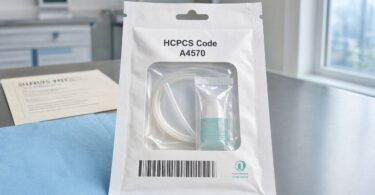
Navigating the world of medical billing can feel like walking through a maze. When a patient leaves a clinic or hospital with a temporary or permanent mobility impairment, providing them with the right walking aid is just the first step. For billing departments, durable medical equipment (DME) suppliers, and administrative staff, the critical work lies in securing proper reimbursement.
To achieve this, you need to understand the precise coding protocols established by the Centers for Medicare & Medicaid Services (CMS). Selecting the correct code determines whether an insurance claim gets approved quickly or ends up denied.
This comprehensive manual provides an exhaustive breakdown of the HCPCS code for crutches. We will look at underarm and forearm models, heavy-duty adjustments, necessary modifiers, documentation requirements, and practical tips to ensure your billing claims are accurate.

1. Understanding HCPCS Level II Codes for Mobility Aids
The Healthcare Common Procedure Coding System (HCPCS) relies on Level II codes to identify products, supplies, and services that do not fit into the CPT (Current Procedural Terminology) framework. While CPT codes describe the medical services or procedures a clinician performs, HCPCS Level II alphanumeric codes identify the specific physical equipment or supplies given to a patient.
Crutches fall under the Durable Medical Equipment (DME) category. For billing purposes, Medicare classifies these items under the E-code series (E0100–E0199), which specifically covers canes, crutches, walkers, and related accessories.
Important Regulatory Note: Every HCPCS code for mobility equipment corresponds to specific structural features, weight capacities, and material standards. Substituting a code because it has a higher reimbursement rate—without matching the exact equipment delivered—constitutes billing fraud.
2. Core HCPCS Codes for Standard and Specialized Crutches
Selecting the right code requires you to look closely at the physical design of the device, the materials used to build it, and whether it is sold as a single unit or a pair.
The following sections highlight the primary HCPCS codes used by clinics and DME providers today.
Standard Underarm (Axillary) Crutches
Axillary crutches are the most common type used for acute lower extremity injuries like ankle sprains or bone fractures. They support the patient’s weight right under the arms.
- E0110: Crutches, underarm, wood, pair, with pads, tips, and handgrips.
- E0111: Crutch, underarm, wood, each, with pad, tip, and handgrip.
- E0112: Crutches, underarm, other than wood, pair, with pads, tips, and handgrips. (Typically used for standard lightweight aluminum units).
- E0113: Crutch, underarm, other than wood, each, with pad, tip, and handgrip.
Forearm (Lofstrand or Canadian) Crutches
Forearm crutches feature an open or closed cuff that wraps around the patient’s arm, along with a handgrip. Clinicians often prescribe them for long-term or neurological conditions that require extended mobility support.
- E0114: Crutches, forearm, includes canes with multi-pronged bases, pair, with tips and handgrips.
- E0116: Crutch, forearm, includes canes with multi-pronged bases, each, with tip and handgrip.
Heavy-Duty and Bariatric Options
Standard units usually have a weight limit of 250 to 300 pounds. When a patient requires enhanced structural support, you must use specialized bariatric or heavy-duty codes.
- E0117: Crutch, underarm, articulate or spring-assisted, each.
- E0118: Crutch, substitute, webbed ligament type, each.
3. Comparative Breakdown of HCPCS Coding Options
To help your team choose the right code at a glance, this table simplifies the core options by material, design, and unit quantity.
| HCPCS Code | Description | Material Type | Quantity | Common Clinical Use Case |
| E0110 | Underarm Crutches (Pair) | Wood | Pair (2) | Acute injury, budget-conscious configurations |
| E0111 | Underarm Crutch (Single) | Wood | Single (1) | Unilateral lower limb injuries requiring single-side stabilization |
| E0112 | Underarm Crutches (Pair) | Aluminum / Non-Wood | Pair (2) | Post-surgical recovery, standard emergency room discharge |
| E0113 | Underarm Crutch (Single) | Aluminum / Non-Wood | Single (1) | Single-leg injury where a pair is bulky or unnecessary |
| E0114 | Forearm Crutches (Pair) | Aluminum / Composite | Pair (2) | Chronic neurological conditions, cerebral palsy, paraparesis |
| E0116 | Forearm Crutch (Single) | Aluminum / Composite | Single (1) | Long-term single-side weakness, advanced osteoarthritis |
4. The Critical Role of Durable Medical Equipment (DME) Modifiers
Entering the base five-character HCPCS code is rarely enough to get an insurance claim paid. Payers require specific modifiers to explain the commercial nature of the transaction and confirm the status of the equipment.
Ownership Modifiers
- NU (New Equipment): Use this when a supplier sells a brand-new pair directly to the patient.
- RR (Rental): Use this for short-term situations, such as post-operative healing periods where the patient only needs the equipment for a few weeks or months.
- UE (Used Durable Medical Equipment): Use this if the equipment is refurbished or previously rented but is now being purchased permanently by the patient.
Medical Necessity and Liability Modifiers
- KX Modifier: This indicates that the supplier keeps documentation of medical necessity on file that meets local coverage determinations (LCDs). Leaving this off when required results in an automatic system denial.
- GA Modifier: Use this when you expect Medicare will deny the item as not medically necessary, and you have a signed Advance Beneficiary Notice (ABN) on file. This allows you to bill the patient directly if the claim is rejected.
5. Medical Necessity and Documentation Standards
To defend your claims against insurance audits, your medical records must clearly support the need for a mobility aid. The patient’s chart notes should confirm the following details:
- Clear Diagnosis: The record must document a distinct physical impairment or injury affecting one or both lower extremities (such as a fracture, severe sprain, or post-operative structural restriction).
- Functional Impairment: Document how the patient’s mobility is restricted, explaining why they cannot walk safely or effectively without an assistive device.
- Correct Sizing and Safe Capacity: For heavy-duty options, the chart must explicitly list the patient’s height and weight to justify specialized equipment.
- Informed Clinician Prescription: Ensure you have a signed, dated order from a physician, physician assistant (PA), or nurse practitioner (NP) that matches the date of service.
6. Frequently Asked Questions (FAQ)
What is the primary difference between billing E0110 and E0112?
The difference comes down to materials. Use E0110 for traditional wooden models. Use E0112 for modern aluminum, composite, or lightweight metallic models.
Can I bill for a single crutch if the patient only uses one?
Yes. Use codes E0111 (wooden) or E0113 (non-wooden) to bill for a single unit. Code E0112 represents a pair; billing it when only providing one crutch can lead to compliance issues.
Does Medicare require a certificate of medical necessity for standard crutches?
While a formal Certificate of Medical Necessity (CMN) form is no longer required for simple walking aids, a valid, signed clinician prescription and detailed chart notes are mandatory.
Additional Resources
For detailed local coverage rules and updated fee schedules, review the official Centers for Medicare & Medicaid Services DME Center portal.
Conclusion
Accurate billing for mobility aids relies on selecting the right code based on design, material, quantity, and specific modifiers. By aligning your clinical documentation with CMS standards, your practice can secure proper reimbursement, speed up claim processing, and avoid costly compliance audits.
Disclaimer: Medical coding conventions and insurance rules change frequently. Always check your local Medicare Administrative Contractor (MAC) guidelines and commercial payer policies for the latest coverage determinations.