Imagine a 78-year-old patient with advanced COPD, struggling to breathe while lying flat. Now imagine a bariatric patient with pressure ulcers, unable to turn independently. Both need a hospital bed—but not the same one. The difference between a basic manual bed ($500) and a heavy-duty bariatric bed with traction ($5,000) is not just mechanical; it is codified. That codification lives inside the Healthcare Common Procedure Coding System (HCPCS).
Every year, the U.S. healthcare system processes over 1.2 million claims for durable medical equipment (DME) hospital beds. Medicare alone spends $900 million on these beds. Yet, 18% of claims are denied due to incorrect HCPCS coding. For suppliers, physicians, and billing specialists, a single misaligned code can mean the difference between full reimbursement and a write-off. For patients, it can mean delayed care.
This article is not just a list of codes. It is a deep operational and clinical guide. By the end, you will understand not only which HCPCS code to use, but why—anchored in medical necessity, payer policies, and real-world documentation. We will traverse the anatomy of hospital bed coding, from E0260 to E0328, from traction to siderails, and from local coverage determinations (LCDs) to appeals.
Part 1: The Foundation – What HCPCS Level II Codes Are
1.1 HCPCS Level II vs. CPT
The HCPCS is divided into three levels. Level I is CPT (Current Procedural Terminology), used for physician procedures. Level II is what concerns us: alphanumeric codes (A–V) for products, supplies, and DME not covered by CPT. Hospital beds fall under the E code range (DME, prosthetics, orthotics, and supplies).
1.2 The Role of the DME MAC
Medicare Administrative Contractors (MACs) for DME—Noridian, CGS, Palmetto GBA, and others—interpret national coverage determinations (NCDs) and issue local coverage determinations (LCDs). For hospital beds, the governing NCD is NCD 280.1, which states that a hospital bed is covered only when the patient has a medical condition requiring specific bed features (e.g., positioning, pressure relief, fall prevention).
1.3 Why Coding Accuracy Matters
- Medical necessity denial risk: Up to 40% of audits target DME codes.
- Fraud and abuse: Upcoding (e.g., billing a heavy-duty bed for a non-bariatric patient) triggers RAC audits.
- Patient liability: Incorrect coding can leave the patient responsible for 100% of the cost.
Graphic 1 (description): A flowchart titled “The Journey of a Hospital Bed HCPCS Code” – from patient assessment → physician order → HCPCS code assignment → claim submission → MAC adjudication → payment/denial.
Part 2: The Core HCPCS Codes for Hospital Beds (with Detailed Clinical Scenarios)
Below is the definitive list of HCPCS codes for hospital beds. Each includes the official descriptor, coverage criteria, and a clinical vignette.
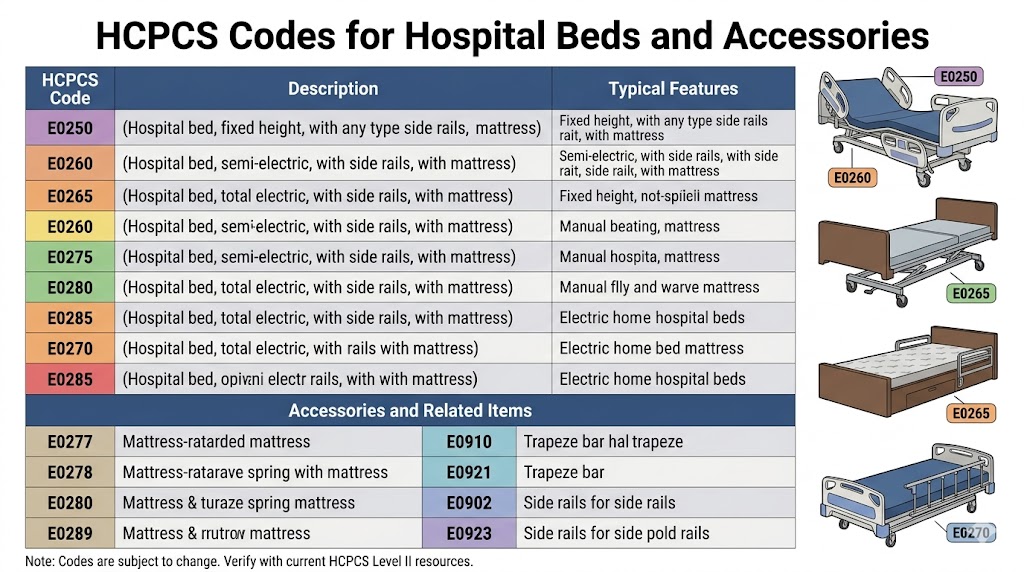
Table 1: HCPCS Codes for Hospital Beds – Full Reference
| HCPCS Code | Official Description | Typical Coverage Criteria | Average Reimbursement (Medicare) |
|---|---|---|---|
| E0250 | Hospital bed, fixed height, with side rails, mattress | Patient requires bed for positioning/safety; no height adjust needed | $240 (rental/month) |
| E0255 | Hospital bed, fixed height, without side rails | Same as above; institutional setting often | $210 |
| E0260 | Hospital bed, variable height, with side rails, mattress | Frequent transfers; caregiver back strain; standing/fall risk | $340 |
| E0265 | Hospital bed, variable height, without side rails | Same clinical need; patient prefers no rails | $310 |
| E0290 | Hospital bed, fixed height, without side rails, pediatric | Pediatric patient (<12 yrs) with medical fragility | $275 |
| E0291 | Hospital bed, fixed height, with side rails, pediatric | Pediatric + fall risk or seizures | $290 |
| E0292 | Hospital bed, variable height, pediatric | Pediatric with transfer needs | $320 |
| E0293 | Hospital bed, fixed height, heavy-duty, extra-wide | Bariatric (≥350 lbs); width ≥36 inches | $490 |
| E0294 | Hospital bed, variable height, heavy-duty, extra-wide | Bariatric + transfer assistance | $540 |
| E0301 | Hospital bed, heavy-duty, extra-wide, with wheels (semi-electric) | Patient mobility limitations + weight >350 lbs | $580 |
| E0302 | Hospital bed, extra-heavy-duty, >450 lbs, variable height | Super bariatric; reinforced frame | $720 |
| E0303 | Hospital bed, extra-heavy-duty, >450 lbs, fixed height | Institutional bariatric care | $650 |
| E0304 | Hospital bed, with side rails, pediatric, heavy-duty | Pediatric bariatric (rare, but coded separately) | $440 |
| E0328 | Hospital bed, pediatric, with side rails, variable height | Complex pediatric ortho/neuro conditions | $410 |
| E0329 | Hospital bed, bariatric, with Trapeze bar | Needs upper body mobility aid | $790 |
Note: Trapeze bar is a separate code (E0910 or E0911). Do not bundle.
2.1 Deep Dive: E0250 vs. E0260
- E0250 (fixed height): Use for patients with chronic immobility who do not require height adjustment. Example: Advanced Alzheimer’s patient who cannot operate controls.
- E0260 (variable height): Required when the patient needs the bed lowered to 14 inches from floor for safe egress or raised to 28 inches for caregiver procedures (e.g., wound care).
Documentation requirement for E0260: Must include a specific statement: “Patient requires variable height adjustment to facilitate transfers and reduce fall risk. Fixed height bed would not meet medical needs.”
2.2 Bariatric Coding Nuances (E0293–E0303)
Patients over 350 lbs require extra-wide (≥36 inches) and reinforced weight capacity. LCDs from Noridian (L33789) specify: “Heavy-duty bed is covered when patient’s weight exceeds 350 lbs AND body habitus prevents safe use of standard bed.” Do not use these codes for convenience or general obesity without comorbidities.
Case example: 410 lb patient with CHF and mobility impairment → E0302 (extra-heavy-duty, variable height). Pair with E0910 for trapeze if upper extremity strength allows.
2.3 Pediatric Hospital Beds (E0290–E0292, E0304, E0328)
Pediatric codes require age ≤12 years, or 13–21 with developmental delay. E0328 is unique: variable height, side rails, often used for home ventilation patients. Common denial reason: Using adult code for a child. Always default to pediatric subcategory if available.
Part 3: Accessories, Options, and Modifiers – The Complete Picture
A hospital bed is rarely just the bed. Accessories have their own HCPCS codes.
3.1 Mattresses
- E0271 – Hospital bed mattress (standard, foam, 4-inch)
- E0272 – Hospital bed mattress (extra-duty, heavy-duty foam for bariatric)
- E0193 – Powered pressure-reducing air mattress (alternating pressure)
- E0194 – Non-powered pressure-reducing mattress (static air or gel)
Clinical rule: If a patient has or is at high risk for pressure ulcers (Stage II or higher), use E0193 or E0194. Standard mattress (E0271) is non-covered for pressure relief.
3.2 Side Rails (Half vs. Full)
- E0310 – Full-length side rail (hospital bed)
- E0315 – Half-length side rail
Side rails are covered when the patient has a history of falls, seizures, or cognitive impairment. However, CMS has strict guidance against rails for entrapment risk. Document: “Rails are used for patient positioning and bed egress assistance, not restraint.”
3.3 Trapeze Equipment
- E0910 – Trapeze bar, freestanding, attached to bed frame
- E0911 – Trapeze bar, ceiling-mounted
Covered if the patient has significant upper body strength to reposition but lacks lower body mobility. Do not bill for trapeze in complete quadriplegia.
3.4 Bed Accessories Not Separately Billable
- Overbed tables (K0108 – patient pay usually)
- Bed rails as restraint devices (non-covered)
- Standard footboards
3.5 Modifiers
- NU – New equipment purchase (rare for beds; usually rental first)
- RR – Rental (most common for first 13 months)
- UE – Used equipment
- KH – Initial rental month, DMERC
- KI – Second or third month rental
- KJ – Fourth to fifteenth month rental
- KR – Rental partial month (e.g., 15 days)
Part 4: Medical Necessity – The Clinical Evidence Standard
Medicare’s NCD 280.1 lists five specific indications for a hospital bed:
- Positioning: Patient requires elevation of head/legs for cardiac, respiratory, or neurologic reasons (e.g., orthopnea from CHF).
- Pressure relief: Patient is immobile and requires frequent repositioning by caregiver.
- Fall prevention: Patient has cognitive or physical issues requiring siderails or low bed height.
- Transfer assistance: Patient needs bed lowered to wheelchair height.
- Caregiver safety: Caregiver has documented back injury or disability preventing use of standard bed.
4.1 The “Three-Line Rule” for Documentation
Every physician order must contain:
- Diagnosis (ICD-10-CM) linked to functional limitation.
- Specific bed feature (e.g., “Variable height to 14 inches for transfer from wheelchair”).
- Duration of need (e.g., “Minimum 6 months, likely permanent”).
4.2 Commonly Covered ICD-10 Codes for Hospital Beds
| ICD-10 Code | Condition | Justification |
|---|---|---|
| I50.9 | Heart failure, unspecified | Orthopnea; need head elevation |
| J44.9 | COPD | Breathing difficulty supine |
| M62.81 | Muscle weakness (generalized) | Transfer assistance |
| R26.2 | Difficulty walking | Fall risk |
| L89.xxx | Pressure ulcer stage II-IV | Pressure redistribution mattress |
| G20 | Parkinson’s disease | Positioning, fall prevention |
| S72.001A | Hip fracture (acute) | Immobility post-surgery |
Warning: Do not use Z codes (e.g., Z74.1 “Need for assistance with personal care”) as primary. They are only supportive.
Part 5: Billing, Reimbursement, and Appeals – A Step-by-Step Workflow
5.1 Rental vs. Purchase
- Capped rental: Most hospital beds (E0250–E0329) are capped at 13 months. After 13 continuous months, the supplier must transfer title to the patient.
- First month billing: Use modifier KH + code.
- Months 2-3: KI.
- Months 4-15: KJ.
- Purchase option: At month 10, patient may elect purchase; supplier bills with NU.
5.2 Advance Beneficiary Notice (ABN)
If coverage is uncertain, issue ABN (CMS-R-131). Without ABN, you cannot bill patient if Medicare denies.
5.3 Top 5 Denial Reasons and Corrections
- Missing physician order – Correct: Obtain retroactive order within 60 days.
- No medical necessity rationale – Correct: Add detailed narrative to chart.
- Wrong code (e.g., E0260 for E0250) – Correct: Appeal with corrected claim (CMS-1490S).
- Missing DME MAC prior authorization – Some beds require prior auth for high-cost (>$2000).
- Duplicate billing – Never bill rental and purchase same month.
5.4 The Appeals Ladder (Medicare)
- Redetermination (by DME MAC) – 120 days.
- Reconsideration (by QIC) – 180 days.
- ALJ Hearing – Amount in controversy >$180.
- Medicare Appeals Council – Rare.
- Federal District Court – >$1,660.
.
Part 6: Special Populations and Scenarios
6.1 Hospital Beds in Skilled Nursing Facilities (SNFs)
Part A covers beds as part of bundled per-diem payment. Do not bill separately using E codes unless Part B (e.g., patient in Part A SNF but bed rented from external DME supplier for home use post-discharge).
6.2 Hospice Patients
If patient elects hospice, the hospice is responsible for DME related to terminal illness. Use HCPCS codes only if bed is for non-terminal condition (rare).
6.3 VA and Workers’ Compensation
Different coding rules. VA uses E codes but without Medicare’s rental cap. Workers’ comp requires separate authorization and ICD-9/10 plus causation narrative.
6.4 Medicaid (State Variation)
Medicaid fee-for-service often follows Medicare coverage criteria, but managed care plans (MCOs) may require prior auth and preferred vendor lists.
Part 7: Compliance, Audits, and Future Trends
7.1 Targeted Probe and Educate (TPE)
CMS’s TPE program audits DME suppliers for high-error codes. In 2023, error rates for E0260 were 22% due to insufficient documentation of transfer need. Mitigation: Use a documentation checklist.
7.2 The Shift to Value-Based Coding
As Medicare moves toward value-based purchasing, hospital bed coding may integrate with functional outcome measures (e.g., FIM scores). Expect future HCPCS modifiers linked to patient functional improvement.
7.3 Telehealth and Remote Prescription
Post-COVID, some MACs permit telemedicine evaluation for hospital bed orders. Ensure the telemedicine note includes physical exam surrogates (e.g., video of patient attempting transfer).
Conclusion: Code with Precision, Heal with Purpose
Mastering HCPCS codes for hospital beds is not a bureaucratic exercise—it is an act of clinical advocacy. Correct coding ensures that a COPD patient receives a variable-height bed for orthopnea, that a bariatric patient gets an extra-wide frame to prevent falls, and that a pediatric patient with muscular dystrophy sleeps safely. Three key takeaways: (1) Always anchor codes in documented medical necessity, (2) Use modifiers (RR, KH, KJ) correctly for rental billing, and (3) Never underestimate the power of a detailed physician narrative to overturn denials.
Frequently Asked Questions (FAQs)
Q1: Can I bill E0260 and E0272 (pressure mattress) on the same claim?
Yes, if the patient meets criteria for both: variable height bed for transfer assistance AND pressure ulcer risk. Modifiers: E0260 RR, E0272 RR (or NU if purchased).
Q2: Does Medicare cover a hospital bed for home use if the patient lives alone?
Not automatically. The patient must have a specific medical condition requiring bed features AND a caregiver or safe transfer plan. Living alone is not a coverage criterion.
Q3: What is the difference between E0293 and E0302?
E0293: heavy-duty, 350-449 lbs. E0302: extra-heavy-duty, ≥450 lbs. Verify patient weight within 30 days of order.
Q4: How often can I bill for a replacement mattress?
Standard foam mattress (E0271) every 3 years. Pressure-reducing mattress (E0193) every 2 years or if damaged/incontinent.
Q5: Do I need a separate order for side rails?
Yes. The physician must specify “full-length side rails” (E0310) or “half-length” (E0315) and justify fall/seizure risk.
Q6: What HCPCS code is used for a pediatric hospital bed with an enclosed canopy (for safety)?
No specific code. Use E0290 or E0328 with modifier –XE and attach documentation. May require manual pricing.
Q7: Can a patient own a hospital bed after 13 months if they switch suppliers?
Yes. The 13-month rental cap follows the patient, not the supplier. New supplier bills NU if patient already has 13 months cumulative.
Q8: Is a trapeze bar included in E0302?
No. Bill separately E0910. Medical necessity: patient must be able to grip and pull up partially.
Q9: What ICD-10 code supports E0302 (bariatric, >450 lbs)?
Use E66.01 (morbid obesity due to excess calories) plus a functional code like M62.81 (muscle weakness) or R26.2.
Q10: How do I correct a claim with wrong HCPCS code after payment?
Submit a corrected claim (type of bill XX7) with same original ICN. Refund overpayment if code downgrades reimbursement.
Additional Resources
- CMS DME Center – https://www.cms.gov/medicare/durable-medical-equipment-dme-coverage
- Noridian DME LCD L33789 – Hospital Beds and Accessories
- Palmetto GBA DME Reference – “Hospital Bed Coverage Guidelines”
- American Association for Homecare (AAHomecare) – Coding and billing webinars.
- Medicare Benefit Policy Manual, Chapter 15 – DME coverage (Rev. 217).
- HCPCS Level II Expert 2024 (Optum360) – Full code list with modifiers.
- NCD 280.1 – Hospital Beds – National Coverage Determination.
Disclaimer: This article is for educational purposes. Always consult current CMS transmittals and local MAC policies before billing. Coding advice does not guarantee payment.