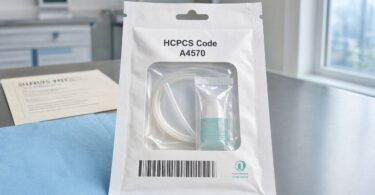
Every day in hospitals, clinics, and home care settings across America, healthcare professionals reach for a simple yet indispensable supply: the ABD pad. These thick, highly absorbent dressings manage moderate to heavy exudate from surgical wounds, traumatic injuries, and pressure ulcers. Yet behind this humble product lies a complex world of medical coding that can make or break a provider’s reimbursement.
Understanding the correct HCPCS code for ABD pads matters far more than most clinicians realize. One wrong digit on a claim form can trigger a denial, delay payment, or spark an audit. This guide walks you through everything you need to know about coding these essential supplies accurately and compliantly.

What Exactly Is an ABD Pad?
Before diving into codes, let’s clarify what we’re discussing. ABD stands for “Army Battle Dressing”—a term dating back to military medicine. Today’s ABD pads serve civilian and military patients alike. These sterile or non-sterile dressings feature multiple layers of absorbent material, typically with a non-woven outer layer that prevents lint from entering the wound.
An ABD pad combines a soft, non-adherent contact layer, a fluffy cellulose core for maximum absorption, and a hydrophobic backing to prevent strike-through. Clinicians use them for abdominal surgeries, Cesarean sections, large lacerations, and any wound producing significant drainage. They come in standard sizes, most commonly 5 inches by 9 inches and 8 inches by 10 inches.
The key distinction? ABD pads differ from standard gauze pads in thickness, absorbency, and intended use. This clinical difference drives the coding difference—a fact many billers overlook.
The Primary HCPCS Code for ABD Pads
The specific HCPCS code for ABD pads is A6257. This code falls under the surgical dressings category within the Medicare DMEPOS (Durable Medical Equipment, Prosthetics, Orthotics, and Supplies) benefit.
The official description for A6257 reads: “Gauze, sterile, pad size more than 16 sq. in. but less than or equal to 48 sq. in., with any size adhesive border, each dressing.”
Let’s unpack what this description really means for your billing team. First, the code applies specifically to sterile pads. Second, the surface area must exceed 16 square inches but not surpass 48 square inches. The typical 5×9 ABD pad gives you 45 square inches—squarely within this range. Third, the code covers dressings with or without an adhesive border.
Why A6257 Applies to ABD Pads
ABD pads are technically classified as gauze dressings under the HCPCS coding system, even though they contain more than simple woven gauze. The multilayer construction still falls within the gauze category because the primary absorbent material is cotton or cellulose fiber arranged in a gauze-like matrix.
The “sterile” qualifier matters tremendously. If you use non-sterile ABD pads—common in some wound care protocols—you need a different code entirely. We’ll address that scenario shortly.
Complete HCPCS Code Table for Wound Care Dressings
Understanding where A6257 fits within the broader coding landscape helps prevent billing errors. Here is a comprehensive reference table:
| HCPCS Code | Description | Size Parameters | Common Product |
|---|---|---|---|
| A6216 | Gauze, non-sterile, pad size ≤ 16 sq. in. | Up to 16 sq. in. | Small non-sterile gauze |
| A6217 | Gauze, non-sterile, pad size >16 ≤48 sq. in. | 16.1–48 sq. in. | Non-sterile ABD pad |
| A6218 | Gauze, non-sterile, pad size >48 sq. in. | Over 48 sq. in. | Large non-sterile combine |
| A6254 | Gauze, sterile, pad size ≤ 16 sq. in. | Up to 16 sq. in. | Sterile 4×4 gauze |
| A6255 | Gauze, sterile, pad size >16 ≤48 sq. in. | 16.1–48 sq. in. | Sterile 5×9 ABD pad |
| A6256 | Gauze, sterile, pad size >48 sq. in. | Over 48 sq. in. | Sterile combine dressing |
| A6257 | Gauze, sterile, pad >16 ≤48 sq. in., with adhesive | 16.1–48 sq. in. | Sterile ABD with border |
| A6402 | Gauze, non-impregnated, sterile | Any size | General sterile gauze |
| A6403 | Gauze, non-impregnated, non-sterile | Any size | General non-sterile gauze |
Important Note: Medicare and most commercial payers consider A6255 and A6257 mutually exclusive for the same wound on the same date. You cannot bill both codes for one dressing application. Choose the code that best matches the product actually used.
Breaking Down Size Classifications
Size drives code selection more than any other factor. The HCPCS system divides surgical dressings into three tiers based on pad surface area:
- Up to 16 square inches: Covers small dressings like 4×4 gauze pads (16 sq. in. exactly)
- Greater than 16 through 48 square inches: Captures ABD pads, including the common 5×9 (45 sq. in.) and 8×10 (80 sq. in.—but see note below)
- Greater than 48 square inches: Reserved for combine dressings, abdominal pads exceeding 48 square inches, and specialty products
Critical clarification: An 8×10 ABD pad measures 80 square inches, which places it in the “greater than 48 square inches” category. For sterile 8×10 ABD pads with adhesive borders, you would report A6258 rather than A6257. Always calculate the actual square inches before assigning a code.
How to Calculate Pad Square Inches
Multiply length by width in inches. Simple arithmetic saves thousands in audit recoveries:
- 4″ x 4″ = 16 sq. in. (A6254 or A6216)
- 5″ x 9″ = 45 sq. in. (A6257 or A6217)
- 8″ x 7.5″ = 60 sq. in. (A6256 or A6218)
- 8″ x 10″ = 80 sq. in. (A6256 or A6218)
Sterile vs. Non-Sterile: A Critical Distinction
Sterility status fundamentally changes your code selection. The HCPCS system treats sterile and non-sterile dressings as entirely separate products with distinct codes. This isn’t bureaucratic nitpicking—sterile dressings cost more to manufacture, undergo additional processing, and carry different clinical indications.
When to Use Sterile ABD Pads
Sterile ABD pads are required for:
- Post-surgical wounds with fresh incisions
- Any wound where the skin integrity is compromised and infection risk exists
- Patients with compromised immune systems
- Wounds requiring aseptic technique per facility protocol
- Home health patients with surgical wounds not yet epithelialized
For these scenarios, you’ll use A6255 (without adhesive border) or A6257 (with adhesive border).
When Non-Sterile ABD Pads Are Acceptable
Non-sterile ABD pads work for:
- Chronic wounds already colonized but not infected
- Secondary dressings over a primary sterile contact layer
- Wounds in the inflammatory phase where frequent changes are needed
- Some wound VAC (negative pressure wound therapy) applications as secondary dressings
For non-sterile ABD pads, report A6217.
Quote from a Wound Care Billing Specialist: “I’ve seen practices lose tens of thousands of dollars because their supply closet stocked sterile pads but their claims used non-sterile codes. The payers check inventory records during audits. Match your code to your actual product, every single time.”
Medicare Coverage and Documentation Requirements
Medicare Part B covers surgical dressings under the DMEPOS benefit when specific conditions are met. Understanding these requirements prevents claim denials and protects your practice during audits.
Primary vs. Secondary Dressings
Medicare distinguishes between primary and secondary surgical dressings, and this distinction directly affects reimbursement:
Primary dressings directly contact the wound. They must be sterile. Medicare covers them when used on a surgically created or modified wound, or on a wound requiring debridement.
Secondary dressings go over the primary dressing. They secure the primary layer and provide additional absorption. Medicare covers secondary dressings when the primary dressing is covered and the secondary dressing serves a therapeutic purpose (not just to hold the primary dressing in place).
An ABD pad can serve as either a primary or secondary dressing. When used as the primary contact layer, it must be sterile (A6255 or A6257). When used as a secondary absorbent layer over a non-adherent primary dressing, non-sterile pads (A6217) may be covered.
Quantity Limits and Medical Necessity
Medicare publishes utilization guidelines for surgical dressings, though these are not strict limits. Generally, Medicare considers these quantities reasonable:
- Up to 3 dressing changes per week for a wound with light exudate
- Up to 1 dressing change per day for a wound with moderate exudate
- Up to 3 dressing changes per day for heavily exudating wounds
Each change may use one or more ABD pads depending on wound size and drainage. Document the number used per change, the wound dimensions, and the exudate level. Without this documentation, even correctly coded claims face denial.
The Surgical Dressing Policy Article
Each Medicare Administrative Contractor (MAC) publishes a Local Coverage Determination (LCD) and associated Policy Article for surgical dressings. These documents detail exactly what’s covered, what documentation is required, and what quantities are considered reasonable.
Find your MAC’s policy article at the CMS website. Bookmark it. Print it. Make it required reading for every billing team member who touches wound care claims.
Commercial Payer Variations
Commercial insurers often follow Medicare guidelines for surgical dressing coverage, but exceptions abound. Some key differences to watch for:
| Payer Type | Common Variation | Action Required |
|---|---|---|
| Managed Medicaid | May require prior authorization for quantities exceeding 30 dressings/month | Submit clinical documentation with initial claim |
| Workers’ Compensation | Often follows state fee schedules with different allowable amounts | Verify fee schedule annually |
| Commercial PPO | May cover non-sterile dressings more broadly than Medicare | Document wound status clearly |
| HMO Plans | May restrict coverage to specific manufacturers or distributors | Check formulary before dispensing |
| Tricare | Generally follows Medicare rules but with distinct quantity limits | Reference Tricare policy manual |
Always verify coverage before providing large quantities of ABD pads to patients. A quick eligibility check prevents surprise bills and unhappy patients.
Documentation Essentials for ABD Pad Claims
Every ABD pad claim requires specific documentation elements. Missing even one can trigger a denial. Here’s what auditors look for:
The Core Documentation Checklist
- Wound assessment: Location, dimensions (length x width x depth in centimeters), wound bed description, exudate amount and type
- Dressing order: Specific product name, size, sterility requirement, number used per change
- Frequency: Number of dressing changes per day or week
- Rationale: Why this specific dressing is medically necessary for this wound at this time
- Plan: Expected duration of need and parameters for dressing type changes
- Clinician signature: Legible, dated, with credentials
Wound Dimensions Matter
A wound measuring 15 centimeters by 10 centimeters requires far more ABD pads than a 5-centimeter incision. Document actual measurements at every visit. Never estimate. Never copy forward measurements without verifying. Auditors compare wound dimensions to quantities billed, and discrepancies equal recoupments.
Exudate Documentation
Use descriptive, measurable terms for exudate:
- None: Wound bed dry
- Light: Wound bed moist, no measurable drainage on dressing
- Moderate: Dressing saturated but no leakage onto secondary clothing or bedding
- Heavy: Dressing saturated, leakage onto clothing or bedding, frequent changes needed
The exudate level directly supports medical necessity for highly absorbent products like ABD pads. A wound described as “dry” doesn’t need an ABD pad, and billing for one invites scrutiny.
Common Billing Errors and How to Avoid Them
After reviewing hundreds of wound care audits, certain mistakes appear repeatedly. Learn from others’ errors:
Error 1: Using the Wrong Sterility Code
Billing A6257 (sterile with adhesive) when using A6217 (non-sterile) tops the list. The codes differ in reimbursement, and sterile codes pay more. Auditors consider this an overpayment and pursue it aggressively.
Fix: Match your inventory purchase records to your billing codes. If you order non-sterile ABD pads, you cannot bill sterile codes.
Error 2: Ignoring Adhesive Border Status
A6255 and A6257 are not interchangeable. A6257 includes an adhesive border; A6255 does not. If your ABD pad has an integrated adhesive border, use A6257. If it requires separate tape or a wrap to secure it, use A6255.
Error 3: Billing Per Dressing Change Instead of Per Pad
HCPCS codes for surgical dressings are billed per individual dressing unit, not per change. If each dressing change uses three ABD pads, bill three units with the appropriate code. The quantity on the claim should reflect the total number of pads dispensed, not the number of changes.
Error 4: Insufficient Documentation of Number Used
Writing “ABD pad applied” fails to document how many. Write “Three 5×9 sterile ABD pads applied to 20cm x 8cm abdominal wound, covered with ABD pad and secured with tape.” This documentation supports billing three units of A6255.
Error 5: Billing for Dressings Used During a Procedure
When ABD pads are used during a surgical procedure or other billable service, they are typically included in the practice expense for that procedure and are not separately billable. Only dressings provided for the patient to use at home after discharge qualify for separate DMEPOS billing.
The Role of ABD Pads in Different Care Settings
Coding requirements shift slightly depending on where care is delivered. Understanding these nuances keeps your claims clean.
Hospital Outpatient Departments
In the hospital outpatient setting, surgical dressings are generally packaged into the primary service payment. However, when dressings are dispensed to the patient for use after discharge, they may be billed separately under the DMEPOS benefit if the hospital has a DMEPOS supplier number.
Physician Offices
Physician offices face unique challenges. They must determine whether the dressing is part of an E/M service or separately billable. If the physician applies the dressing during an office visit, it’s typically bundled. If the office dispenses dressings for home use, separate billing may be appropriate.
Key consideration: Physician offices need a DMEPOS supplier number to bill surgical dressings to Medicare. Without this accreditation, separate claims will be rejected.
Home Health Agencies
Home health agencies operating under consolidated billing rules must include surgical dressings in their bundled payment for episodes where wound care is a covered service. However, for patients not in a home health episode, or for dressings unrelated to the home health plan of care, separate billing under DMEPOS applies.
Skilled Nursing Facilities
For Medicare Part A residents, surgical dressings are included in the SNF consolidated billing payment. For Part B residents or those in non-covered stays, separate DMEPOS billing may be possible if the SNF has the proper supplier credentials.
Ordering and Supplier Requirements
Medicare requires that surgical dressings be provided by an enrolled DMEPOS supplier and ordered by a treating practitioner. The ordering practitioner must:
- Conduct a face-to-face encounter within six months prior to the order
- Document the wound assessment during that encounter
- Sign and date a detailed written order
- Specify the exact product, size, quantity, and frequency
- Reassess the wound at appropriate intervals
Suppliers must verify the order is complete and maintain documentation for seven years. They cannot deliver more than a one-month supply without a new order, and they cannot automatically refill surgical dressing orders without confirmation that the wound still requires the product.
ABD Pad Alternatives and Their Codes
Sometimes clinical circumstances require alternatives to traditional ABD pads. Understanding related product codes helps when ABD pads aren’t the best option:
| Product Type | HCPCS Code | When to Use |
|---|---|---|
| Foam dressing | A6209-A6214 | Wounds requiring moisture balance without bulk |
| Hydrocolloid | A6234-A6239 | Light to moderate exudate, needs occlusive seal |
| Alginate | A6196-A6199 | Heavy exudate, needs hemostatic properties |
| Composite dressing | A6200-A6205 | Multiple layers needed, convenience factor |
| Specialty absorptive | A6251-A6253 | Maximum absorption required, ABD insufficient |
| Transparent film | A6257 | Not appropriate; use A6257-A6259 for film dressings |
Note: Always select dressings based on wound assessment, not reimbursement rate. However, when two products serve equally well, understanding relative costs supports good stewardship.
Audits and Compliance: Preparing Your Practice
Wound care supplies, including ABD pads, remain a focus area for Medicare auditors. The Office of Inspector General has repeatedly identified surgical dressings as vulnerable to fraud and error. Prepare your practice with these steps:
Conduct Internal Audits Quarterly
Pull 20-30 wound care claims per quarter. Check for:
- Matching documentation for every billed code
- Accurate quantities reflecting what was actually dispensed
- Valid signed orders predating the delivery
- Wound measurements supporting the dressing sizes billed
- Reasonable quantities given the documented exudate levels
Train Staff Continuously
Coding rules change. Product classifications shift. Your billing staff needs annual training on surgical dressing codes. Include clinicians in this training—they document the wounds, and their notes must support the codes.
Maintain a Clean Order File
Every dressing order must be:
- Dated
- Signed by the ordering practitioner
- Specific to the product and quantity
- Supported by clinical documentation from the same time period
Keep electronic or physical copies organized by patient and date. During an audit, disorganized records create the impression of sloppy processes, even if every dressing was legitimately needed.
The Future of Wound Care Coding
The HCPCS system evolves continuously. Several trends affect ABD pad coding:
Potential Code Consolidation
CMS periodically reviews whether the number of surgical dressing codes could be reduced. A simplified system might combine certain size tiers or eliminate the sterile/non-sterile distinction. Stay alert to proposed rules published in the Federal Register each summer.
Value-Based Care Implications
As payment models shift from fee-for-service toward value-based arrangements, individual supply billing may become less relevant. Bundled payments for wound care episodes could replace per-dressing reimbursement entirely. For now, however, accurate per-item coding remains essential.
Technology-Enabled Documentation
Wound imaging systems, EMR-integrated measurement tools, and automated coding suggestions are changing how practices document wound care. These technologies can reduce errors but cannot replace clinical judgment. Use them as aids, not substitutes for thorough assessment.
Putting It All Together: A Practical Workflow
Here’s a streamlined workflow for accurate ABD pad billing:
Step 1: Clinician assesses wound and documents dimensions, exudate level, wound bed characteristics.
Step 2: Clinician selects appropriate dressing—consider size, sterility, need for adhesive border.
Step 3: Clinician documents exact product name, size, number used per change, and change frequency.
Step 4: Biller reviews documentation and identifies correct HCPCS code based on product attributes.
Step 5: Biller enters units based on total quantity dispensed (pads per change × changes per day × days supplied).
Step 6: Biller verifies order is current, signed, and matches the claim.
Step 7: Claim submitted with code, quantity, and all required modifiers.
Step 8: Documentation filed in organized manner for potential audit.
Special Scenarios and Edge Cases
Pediatric Patients
ABD pads designed for adults may overwhelm small pediatric wounds. However, when clinically appropriate for larger pediatric wounds, the same codes apply. Document why the adult-sized product was necessary—wound dimensions justify the selection.
Bariatric Patients
Bariatric patients with large abdominal wounds may require multiple ABD pads per change, possibly exceeding typical utilization guidelines. Document wound dimensions meticulously. Include body mass index and any complicating factors that increase exudate or slow healing.
Palliative Wound Care
Wounds at end of life may require frequent dressing changes for comfort rather than healing. Medicare still covers these supplies when documented as medically necessary for palliation. The documentation standard doesn’t change—wound characteristics, product used, quantity, and rationale all belong in the record.
Negative Pressure Wound Therapy Interfaces
When ABD pads are used as part of a wound VAC system, billing gets complicated. The VAC system has its own codes (E2402 for the pump, A6550 for the canister). Dressings used with VAC systems may be included in those codes or separately billable depending on the specific system and payer rules. Check your MAC policy for guidance.
Key Takeaways for Clinical Teams
Billers can’t code accurately without clinical input. Clinicians don’t need to memorize codes, but they do need to document in ways that support accurate coding. Share these key points with your clinical colleagues:
- Document the actual product name and manufacturer. “ABD pad” isn’t enough—specify “5×9 sterile ABD pad, non-adherent, without adhesive border.”
- Measure wounds at every visit. Wounds change, and yesterday’s 5×9 pad may be too small or too large today.
- Specify sterility in your order. Write “sterile ABD pad” or “non-sterile ABD pad,” never just “ABD pad.”
- Note the number used. “Wound dressed with ABD pad” fails to support quantity. Write “Wound packed with two sterile 5×9 ABD pads, covered with a third ABD pad as secondary dressing, secured with tape.”
Conclusion
The HCPCS code for ABD pad billing centers on A6257 for sterile products with adhesive borders, A6255 for sterile pads without adhesive, and A6217 for non-sterile variants—each selected based on the product’s sterility status, size within the 16-to-48-square-inch range, and the presence or absence of an integrated adhesive border. Successful reimbursement depends on meticulous documentation of wound dimensions, exudate levels, exact product specifications, and the number of pads dispensed per dressing change. By mastering these coding distinctions and maintaining rigorous documentation practices, healthcare providers can ensure compliant billing while focusing on what truly matters—delivering excellent wound care.
Frequently Asked Questions
What is the primary HCPCS code for a sterile ABD pad with an adhesive border?
The primary code is A6257. This code covers sterile gauze pads measuring between 16 and 48 square inches that include an adhesive border. The common 5-inch by 9-inch ABD pad falls within this size range.
Can I use the same HCPCS code for sterile and non-sterile ABD pads?
No. Sterile ABD pads use codes A6255 or A6257 depending on the adhesive border. Non-sterile ABD pads use code A6217. The codes are not interchangeable, and using a sterile code for a non-sterile product constitutes an overpayment.
How many ABD pads can I bill per dressing change?
Bill the exact number of pads used per change. If you use three pads per change and change the dressing once daily for 30 days, bill 90 units. Document the number used in the clinical record to support the quantity billed.
Does Medicare require prior authorization for ABD pads?
Generally, no. However, quantities exceeding published utilization guidelines may prompt pre-payment or post-payment review. Some Medicare Advantage plans require prior authorization for wound care supplies. Verify with each payer.
What documentation supports billing for ABD pads?
You need a signed, dated order specifying the product, size, quantity, and frequency. Clinical documentation must include wound dimensions, exudate level, and the number of pads used per change. The order must follow a face-to-face encounter within the preceding six months.
Can I bill ABD pads used during an office visit separately?
Typically, no. Dressings used during a billable office visit or procedure are included in the practice expense for that service. Only dressings dispensed for home use between visits qualify for separate billing.
What modifier should I use with ABD pad codes?
For Medicare, use the AY modifier when the dressing is used on a non-covered wound type. The LT/RT modifiers apply when the wound is on a specific limb. Otherwise, surgical dressing codes generally do not require routine modifiers.
Additional Resource
For the most current Medicare coverage policies on surgical dressings, including ABD pads, visit the official CMS Medicare Coverage Database:
https://www.cms.gov/medicare-coverage-database
Search for “surgical dressings” to find your MAC’s Local Coverage Determination and related Policy Article. These documents contain authoritative guidance on covered indications, documentation requirements, and quantity limits specific to your geographic region.
Disclaimer: This article provides general information about HCPCS coding for educational purposes only. Coding requirements change frequently and vary by payer, geographic region, and specific clinical circumstances. Always verify current codes and coverage policies with your Medicare Administrative Contractor, commercial payer representatives, and qualified coding professionals before submitting claims. The author and publisher disclaim any liability for errors, omissions, or consequences arising from the use of this information.