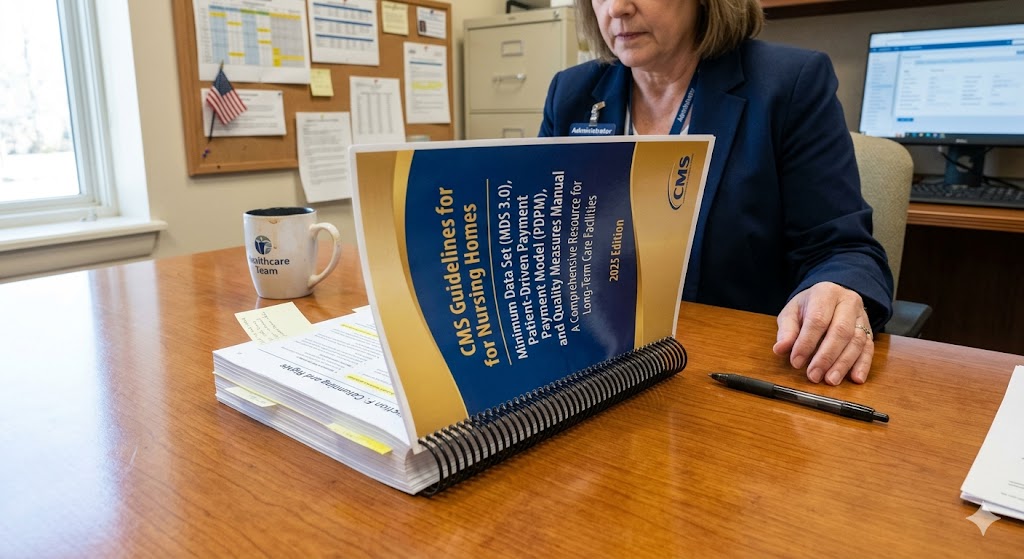
If you have a loved one in a nursing home, or if you work in one, you have probably heard about “CMS rules.” But what do these rules actually mean for daily life? And how do they keep residents safe?
The Centers for Medicare & Medicaid Services (CMS) sets the federal standards that all nursing homes must follow. These rules exist to guarantee one thing: quality care.
This guide walks you through the most important CMS guidelines for nursing homes. You will learn about resident rights, staffing requirements, inspection processes, and what to do if care falls short. No complicated legal language. Just clear, practical information you can use today.
Note to readers: This article is based on publicly available CMS information as of 2026. Always check the official CMS website for the most current updates.
CMS does not just write suggestions. It writes binding regulations. Any nursing home that accepts Medicare or Medicaid payments must follow these guidelines. Since most homes rely on this funding, almost every facility in the United States is covered.
The purpose is straightforward: protect vulnerable adults. These rules cover everything from how staff help a resident eat to how the building handles emergency evacuations.
When a nursing home follows CMS guidelines, residents are healthier, families worry less, and staff have clear procedures. When a home violates these rules, consequences can include fines, temporary bans on new admissions, or even closure.
Understanding these guidelines gives you power. You can ask better questions. You can spot warning signs. And you can advocate for yourself or your loved one.
The Core Principles Behind CMS Nursing Home Regulations
Before diving into specific rules, it helps to know the big picture. CMS organizes its guidelines around five key principles. Think of these as the foundation for everything else.
1. Resident Safety
Every rule starts with physical and emotional safety. This means preventing falls, infections, abuse, and neglect. It also means creating a secure environment where residents feel protected.
2. Quality of Life
Nursing homes are not hospitals. They are homes. CMS requires facilities to support each resident’s dignity, autonomy, and personal preferences. That includes food choices, daily schedules, and social activities.
3. Person-Centered Care
Gone are the days of one-size-fits-all routines. Modern CMS guidelines require individualized care plans. Each resident gets a written plan based on their medical needs, abilities, and personal goals.
4. Transparency and Accountability
Nursing homes must share information openly. This includes inspection results, staffing levels, and ownership details. Families have a right to see these records.
5. Continuous Improvement
CMS does not expect perfection. But it does expect facilities to learn from mistakes. Homes must track problems, investigate complaints, and make lasting changes.
Resident Rights Under CMS Guidelines
Resident rights are the heart of CMS regulations. Every nursing home must inform residents of these rights in writing and in a language they understand. Here are the most important ones.
The Right to Dignity and Respect
Staff must treat every resident as an individual. That means knocking before entering a room, using preferred names, and respecting personal belongings.
The Right to Make Choices
Residents can choose their own daily schedules. They decide when to wake up, what to eat, what to wear, and how to spend their time. The facility cannot impose rigid routines unless medically necessary.
The Right to Privacy
CMS guarantees privacy in several areas:
Medical records
Personal finances
Phone calls and mail
Visits with family or clergy
Personal care (like bathing or dressing)
The Right to Be Free from Restraints
Physical and chemical restraints are heavily restricted. A nursing home cannot use them for staff convenience or discipline. Restraints are only allowed if a doctor prescribes them for a specific medical condition, and even then, the home must try less restrictive options first.
The Right to Voice Complaints Without Fear
Residents and families can file complaints about care. The nursing home cannot retaliate. Retaliation includes eviction, reducing services, or treating the resident poorly.
The Right to Manage Your Own Money
Residents can handle their own finances. If they choose to let the nursing home manage their money, the home must provide a written agreement and a detailed monthly statement.
The Right to Leave
Any resident can leave the facility at any time, unless a court order says otherwise. The nursing home cannot hold someone against their will.
Summary of Key Resident Rights
Right Category
What It Means in Practice
Dignity
Staff respect personal preferences and boundaries
Choices
Residents control daily routines
Privacy
Medical, financial, and personal space are protected
Freedom from restraints
No sedatives or physical ties without medical necessity
Complaint without fear
No punishment for speaking up
Financial control
Resident decides how their money is handled
Leaving
Resident can discharge themselves at any time
CMS Staffing Requirements for Nursing Homes
Staffing is the number one factor in nursing home quality. CMS knows this. That is why the guidelines include detailed staffing rules.
Registered Nurse (RN) Coverage
Every nursing home must have an RN on duty for at least eight consecutive hours per day, seven days per week. That RN serves as the director of nursing. They are responsible for coordinating care and supervising other staff.
Licensed Nurse Coverage
The facility must have a licensed nurse (RN or LPN) on site 24 hours a day, seven days a week. This nurse can handle emergencies, administer medications, and monitor residents’ conditions.
Nurse Aide Training and Competency
All nurse aides must complete a state-approved training program and pass a competency exam. The training covers at least 75 hours of instruction, including 16 hours of supervised hands-on practice.
CMS requires annual in-service training for all nurse aides. Topics include infection control, resident rights, safety procedures, and communication skills.
Staffing Data Reporting
Nursing homes must submit daily staffing data to CMS. This includes:
The number of RNs, LPNs, and nurse aides working each shift
Hours worked by agency or contract staff
Resident census information
These reports are publicly available on the CMS Care Compare website. Families can see how a facility’s staffing levels compare to national averages.
Important note: Low staffing levels are a major red flag. Research shows that homes with fewer than 3.5 total nurse hours per resident per day have higher rates of pressure ulcers, infections, and hospital readmissions.
Care Plans and Assessments
Every resident gets a personalized care plan. This is not optional. It is a core CMS requirement.
The Comprehensive Assessment
Within 14 days of admission, the nursing home must complete a thorough assessment of the resident. This assessment covers:
Physical health and medical diagnoses
Mental health and cognitive status
Ability to perform daily activities (eating, bathing, dressing, walking)
Nutritional needs and swallowing ability
Skin condition and risk for pressure ulcers
Medication use
Mood and behavior patterns
Social and spiritual preferences
The assessment uses a standardized tool called the Minimum Data Set (MDS). Trained staff complete the MDS, and CMS collects the data for quality monitoring.
Developing the Care Plan
Within seven days of completing the assessment, the nursing home creates a written care plan. The resident and their family participate in the planning process. The care plan includes:
Specific problems or needs
Measurable goals
Step-by-step interventions
Who is responsible for each task
Timelines for reviewing progress
Updating the Care Plan
Care plans are living documents. CMS requires a full review at least once every three months. The home must also update the plan whenever:
The resident’s condition changes significantly
The resident or family requests a change
The resident experiences a fall, infection, or other adverse event
What a Good Care Plan Looks Like
Problem
Goal
Intervention
Responsible
Risk of pressure ulcer
No new ulcers in 30 days
Turn every 2 hours; use pressure mattress
Nurse aides
Difficulty swallowing
No choking incidents
Pureed diet; supervise all meals
Dietary and nursing staff
Social isolation
Participate in 2 group activities per week
Escort to bingo on Tuesdays and music on Fridays
Activities coordinator
Quality of Care Standards
CMS defines quality of care very specifically. Nursing homes must help residents achieve or maintain their highest possible physical, mental, and emotional well-being.
Pressure Ulcer Prevention
Facilities must identify residents at risk for bedsores and take preventive action. This includes regular skin checks, repositioning schedules, special mattresses, and nutritional support. If a pressure ulcer develops, the home must provide prompt treatment and document the wound’s progress.
Incontinence and Bowel Management
CMS does not consider incontinence a normal part of aging. Nursing homes must assess each resident’s bladder and bowel function. They must offer toileting assistance, prompted voiding, and other interventions. Indwelling catheters should only be used when absolutely necessary.
Fall Prevention
Every resident’s fall risk must be assessed. The care plan should include strategies like bed alarms, low beds, handrails, non-slip footwear, and supervised transfers. Staff must review every fall to determine the cause and prevent future incidents.
Nutrition and Hydration
Residents must receive enough food and fluid to maintain their weight and health. The nursing home must accommodate dietary restrictions, religious needs, and personal preferences. If a resident loses weight unintentionally, the facility must investigate and adjust the care plan.
Pain Management
Residents have a right to appropriate pain assessment and treatment. CMS requires regular pain screenings. The care plan must include both non-drug and drug-based approaches. Staff should ask residents about their pain levels and adjust treatment accordingly.
Medication Management
Nursing homes must follow strict rules for prescribing, storing, and administering medications. Key requirements include:
A pharmacist reviews each resident’s medication regimen monthly
Unnecessary drugs are gradually reduced or eliminated
Antipsychotic medications are only used for approved conditions (such as schizophrenia or Huntington’s disease) – not for dementia-related behaviors
All medication errors are documented and analyzed
Infection Control
Every nursing home must have an infection prevention and control program. This includes:
A designated infection preventionist
Standard precautions for all residents
Outbreak response plans
Antibiotic stewardship to reduce resistance
Regular hand hygiene monitoring
The Survey and Certification Process
How does CMS enforce its guidelines? Through unannounced inspections called surveys. Every nursing home that participates in Medicare or Medicaid gets surveyed at least once every 15 months. But surveys can happen more often if there are complaints or past problems.
What Happens During a Survey
A team of trained surveyors visits the nursing home. The team includes nurses, dietitians, social workers, and other specialists. The survey lasts several days and includes five main activities:
Entrance conference: Surveyors explain the process to facility leaders.
Resident interviews: Surveyors talk privately with residents about their daily life and care.
Family and staff interviews: Surveyors gather perspectives from family members and employees.
Record review: Surveyors examine care plans, medical records, staffing logs, and complaint files.
The Three Types of Surveys
Survey Type
Trigger
Focus
Standard survey
Scheduled every 9-15 months
Full compliance review
Complaint survey
Received complaint or self-report
Specific alleged violation
Follow-up survey
Past deficiencies found
Verify corrective actions
Deficiencies and Citations
If a nursing home violates a CMS guideline, surveyors issue a deficiency. Each deficiency gets a scope and severity rating. Scope means how widespread the problem is (isolated, pattern, or widespread). Severity means how much harm it caused (no harm, potential for harm, actual harm, or immediate jeopardy).
Immediate jeopardy is the most serious rating. It means the violation caused or is likely to cause serious injury, harm, impairment, or death. CMS will take rapid action in these cases.
Consequences for Poor Performance
Depending on the severity and history of violations, CMS can impose:
Civil money penalties: Fines from a few thousand to over one million dollars
Denial of payment: CMS stops paying for new admissions
Temporary management: An outside manager takes over the facility
Directed in-service training: Staff must complete additional education
Ban on admissions: No new residents can move in
Termination: The nursing home loses Medicare/Medicaid funding
The Special Focus Facility (SFF) Program
Some nursing homes have a long history of poor care. CMS places these facilities into the Special Focus Facility program. This is an intensive oversight track designed to force improvement.
How a Nursing Home Enters the SFF Program
CMS identifies candidates based on inspection results. Facilities with repeated, serious deficiencies across multiple surveys are placed on a candidate list. State survey agencies then select homes for the program.
What Happens in the SFF Program
Nursing homes in the SFF program receive:
Twice-yearly standard surveys (instead of once every 9-15 months)
Additional complaint surveys as needed
Closer monitoring of corrective actions
Public designation as a Special Focus Facility
The goal is to show sustained improvement over 18 to 24 months. If a home improves enough, it can graduate from the program. If it does not improve, CMS can terminate its funding.
Important note for families: You can see which nursing homes are in the SFF program on the CMS website. This is a strong warning sign. If possible, choose a facility not on this list.
Infection Control in Nursing Homes (Post-COVID Updates)
The COVID-19 pandemic changed nursing home regulations permanently. CMS added new infection control requirements that go far beyond standard precautions.
Infection Preventionist (IP)
Every nursing home must designate a qualified infection preventionist. This person is responsible for the facility’s infection control program. They must have specialized training in infection prevention and control.
COVID-19 Reporting Requirements
Nursing homes must report COVID-19 data weekly to the CDC’s National Healthcare Safety Network. This includes:
New and confirmed cases among residents and staff
Resident deaths related to COVID-19
Staff vaccination rates
Resident vaccination and booster rates
Supply levels for PPE and testing
This data is publicly available on the CMS COVID-19 Nursing Home Data website.
Outbreak Response Plan
Every facility must have a written outbreak response plan. The plan covers:
How to identify a possible outbreak quickly
Isolation procedures for infected residents
Communication with families and public health authorities
Staff sick leave policies
Contingency staffing during outbreaks
Visitation Rights
CMS rules protect residents’ right to have visitors. Nursing homes cannot restrict visitation except for very limited circumstances (such as an active outbreak in a specific unit). Even then, the facility must allow compassionate care visits for end-of-life situations.
Testing and PPE
Nursing homes must offer testing to residents and staff based on community transmission levels. They must also maintain adequate supplies of personal protective equipment for all staff.
Nursing Home Compare and Care Compare
CMS publishes a public rating system for all nursing homes. This tool has changed names over time. Currently, it is part of the Care Compare website. Families can use it to research facilities.
Each nursing home receives an overall rating from one to five stars. Five stars means much above average. One star means much below average. The rating combines three separate scores:
Health inspections: Based on the most recent three years of surveys
Staffing: Based on daily staffing reports (RN, LPN, and aide hours per resident)
Quality measures: Based on clinical data (falls, infections, pressure ulcers, hospital readmissions, etc.)
How to Use Care Compare Effectively
Looking at only the overall star rating can be misleading. Here is a better approach:
Check all three sub-ratings. A home might have five stars for staffing but two stars for quality measures.
Look at trends over time. Click on the facility’s report to see past ratings.
Read the health inspection results. Look for patterns of repeat deficiencies.
Pay attention to the staffing turnover rate. High turnover often means poor working conditions, which affects care.
Limitations of the Rating System
Care Compare is a useful starting point, but it has limitations. The data can be months old. Some nursing homes try to look good on survey days but do not maintain the same standards every day. Also, the rating system does not capture everything families care about, like kindness and emotional support.
Always combine online research with an in-person visit and conversations with current residents and families.
What to Do If You Suspect a CMS Violation
You see something that does not seem right. Maybe a loved one has a new pressure ulcer. Maybe staff seem rude or dismissive. Maybe medications are consistently late. What should you do?
Step 1: Talk to the Nursing Home First
Many problems can be resolved at the facility level. Start with the charge nurse or the social worker. Explain your concern clearly and calmly. Give them a chance to investigate and correct the issue. Document your conversation, including the date, time, and who you spoke with.
Step 2: Contact the Long-Term Care Ombudsman
Every state has a Long-Term Care Ombudsman program. Ombudsmen are advocates for nursing home residents. They investigate complaints, mediate disputes, and educate families about rights. Their services are free and confidential.
Step 3: File a Complaint with the State Survey Agency
If the nursing home does not resolve the problem, file a formal complaint with your state’s survey agency. You can usually do this by phone, online, or in writing. Include as many details as possible:
Resident’s name and room number
Dates and times of incidents
Names of staff involved (if known)
Any supporting documents (photos, medical records, witness statements)
You have the right to remain anonymous, but providing your contact information helps investigators follow up.
Step 4: Contact CMS Directly
For serious or urgent problems, you can also contact the CMS Regional Office for your state. CMS takes direct complaints seriously, especially those involving immediate jeopardy situations.
Step 5: Seek Legal Advice
If the violation caused serious harm, consider consulting an elder law attorney. You may have grounds for a lawsuit, especially in cases of abuse, neglect, or wrongful death. Many attorneys offer free initial consultations.
Complaint Checklist
Document the problem (what, when, where, who)
Take photos if applicable (wounds, environment, etc.)
Speak with nurse or social worker at the facility
Contact the Long-Term Care Ombudsman
File a written complaint with the state survey agency
Keep copies of all correspondence
Follow up if you do not hear back within 30 days
Common CMS Violations and How to Spot Them
Knowing the most frequent violations helps you spot problems early. Here are the top deficiencies cited by CMS surveyors year after year.
1. Inadequate Infection Control
This includes dirty equipment, poor hand hygiene, improper handling of soiled linens, and failure to isolate contagious residents.
What to look for: Staff not washing hands between residents. Cluttered or dirty common areas. Strong odors. Residents with diarrhea or respiratory symptoms not separated from others.
2. Insufficient Staffing
Facilities often try to operate with fewer nurse aides than needed. This leads to rushed care, missed toileting, and delayed responses to call lights.
What to look for: Long wait times for call lights. Residents in soiled briefs for hours. Meals left unfinished because no one helps residents eat.
3. Pressure Ulcers
Unprevented bedsores are almost always a sign of neglect. They occur when residents are not turned or repositioned often enough.
What to look for: Reddened areas on heels, tailbone, or hips. Residents who spend most of the day in bed or in one position. Lack of specialized mattresses for high-risk residents.
4. Medication Errors
Wrong dose, wrong time, wrong drug, or wrong resident. These errors happen more often than you might think.
What to look for: Pills left at the bedside instead of given directly. Crushed pills that should not be crushed. Residents acting drowsy or confused after medication passes.
5. Failure to Report Abuse or Neglect
Staff sometimes witness abuse or neglect but do not report it to supervisors or authorities as required by law.
What to look for: Bruises without explanations. Residents who seem fearful of specific staff members. High staff turnover or frequent call-offs.
CMS Guidelines for Nursing Home Admissions and Discharges
Many families are surprised to learn that CMS has strict rules about when a nursing home can admit or discharge a resident. These rules protect residents from being evicted unfairly.
Admission Requirements
Before admitting someone, the nursing home must:
Conduct a pre-admission screening to ensure they can meet the resident’s needs
Provide a written admission agreement that is clear and easy to understand
Inform the resident of their rights and the facility’s rules
Obtain informed consent for all services
Accept payment from Medicare or Medicaid as full payment (they cannot ask for additional private payment for covered services)
Prohibited Admission Practices
Nursing homes cannot:
Discriminate based on payer source (except for Medicare skilled nursing benefit limits)
Require residents to give up their Medicare or Medicaid benefits
Demand third-party guarantees from family members
Charge admission deposits or fees beyond the first month’s stay
Discharge and Transfer Rules
A nursing home can only discharge or transfer a resident for six specific reasons:
The resident no longer needs nursing home level of care
The resident’s needs cannot be met by this facility
The resident’s health improves enough to go home or to another setting
The resident fails to pay after reasonable notice
The resident’s behavior endangers others (after all interventions have been tried)
The facility closes
What the Nursing Home Must Do Before Discharge
CMS requires a formal process:
Provide at least 30 days written notice (or less if there is immediate danger)
State the specific reason for discharge
Explain the resident’s right to appeal
Provide contact information for the Ombudsman
Develop a safe discharge plan with necessary services or referrals
Transfer the medical record to the new provider
Residents and families can appeal a discharge notice. During the appeal, the nursing home cannot evict the resident unless a court orders it.
Quality Assurance and Performance Improvement (QAPI)
CMS requires every nursing home to have a Quality Assurance and Performance Improvement program. This sounds like administrative jargon, but it is actually one of the most important parts of the guidelines.
What QAPI Does
The QAPI program helps nursing homes find problems before surveyors do. It is a systematic approach to monitoring care, identifying weaknesses, testing solutions, and tracking results.
The Five Elements of QAPI
Design and scope: The program must be ongoing and facility-wide
Governance and leadership: Leaders must actively support the program
Feedback and data systems: The home collects and analyzes performance data
Performance improvement projects: The home tackles specific problems (like falls or infections)
Systematic analysis and action: The home learns from mistakes and changes processes to prevent recurrence
How QAPI Benefits Residents
A strong QAPI program means fewer pressure ulcers, fewer falls, better pain management, and higher satisfaction. Residents and families should be invited to participate in QAPI committees. Do not hesitate to ask if you can join.
Emergency Preparedness Requirements
Natural disasters, fires, power outages, and active shooters. Nursing homes must be ready for emergencies. CMS has specific requirements for emergency preparedness.
Written Emergency Plan
Every nursing home must have a written emergency plan based on a facility risk assessment. The plan covers:
Evacuation procedures
Sheltering in place
Communication with staff, residents, families, and authorities
Continuity of care during and after the emergency
Emergency Supplies
Nursing homes must maintain supplies for at least 96 hours during an emergency. This includes:
Food and water
Medications (including a seven-day supply for each resident)
Medical records (paper or electronic backups)
Flashlights, batteries, and charging equipment
Blankets and warmth supplies
Staff Training and Drills
All staff must receive initial emergency training and annual refreshers. The nursing home must conduct two emergency drills per year. At least one of these drills must involve an actual evacuation.
Residents who use wheelchairs, have dementia, or require oxygen have specific needs during an evacuation. The care plan must address how staff will help each resident in an emergency.
Pharmacy Services and Medication Safety
CMS has detailed pharmacy requirements to prevent medication-related harm.
Monthly Drug Regimen Reviews
A consultant pharmacist must review each resident’s medications at least once a month. The pharmacist looks for:
Unnecessary drugs (duplicate therapies, drugs without a diagnosis, excessive doses)
Potential interactions
Incorrect dosing for kidney or liver function
Drugs that should be avoided in older adults
Gradual Dose Reduction for Psychotropic Medications
Antipsychotics, benzodiazepines, and antidepressants are often overprescribed in nursing homes. CMS requires facilities to attempt gradual dose reductions at least once per year unless clinically contraindicated.
Labeling and Storage
All medications must be:
Labeled clearly with resident name, drug name, dose, frequency, and expiration date
Stored securely (locked for controlled substances)
Kept at the correct temperature
Disposed of properly when expired or discontinued
Self-Administration of Medications
Residents have the right to self-administer their own medications if the interdisciplinary team determines they are capable. The care plan must support this choice while ensuring safety.
Physical Environment and Safety Standards
The building itself must meet federal standards. CMS guidelines cover everything from water temperature to emergency lighting.
Life Safety Code
Nursing homes must comply with the National Fire Protection Association’s Life Safety Code. This includes:
Smoke detectors and sprinklers throughout the building
Clearly marked exits
Fire doors that close automatically
Fire drills at least every three months
Annual inspections by fire safety professionals
Hot Water Temperature
Water temperature at faucets and showers must be within a safe range to prevent scalding. CMS requires facilities to maintain temperatures between 105°F and 120°F.
Call System
Every resident room and bathroom must have a working call light or other signaling device. Staff must respond promptly to all call lights. CMS does not specify a time limit, but industry best practice is within five minutes.
Cleanliness and Maintenance
The facility must be clean, odor-free, and in good repair. This includes:
No pests (rodents, cockroaches, bed bugs)
Clean linens and towels
Functional heating and air conditioning
Safe flooring (no tripping hazards)
Resident Rooms
Each resident is entitled to:
A comfortable bed with clean, appropriate bedding
A closet or dresser for personal belongings
A bedside table
A chair
Adequate lighting
Privacy (a curtain or door for bathing and toileting)
Food and Nutrition Services
Meals are a highlight of the day for many nursing home residents. CMS guidelines ensure that food is safe, nutritious, and enjoyable.
Registered Dietitian Oversight
A qualified dietitian must oversee the food service program. The dietitian completes nutrition assessments, reviews care plans, and trains food service staff.
Meal Schedules and Choices
Residents must receive at least three meals per day. There should be no more than 14 hours between a substantial evening meal and breakfast. Residents have the right to choose alternative food items if they do not like what is on the menu.
Therapeutic Diets
If a resident needs a modified diet (low sodium, pureed, thickened liquids, etc.), the nursing home must provide it consistently. Staff must receive training on how to serve and assist with therapeutic diets.
Dining Assistance
Residents who cannot feed themselves must receive hands-on help. Staff should sit with the resident, offer food in small bites, and allow plenty of time. Rushing through a meal is not allowed.
Hydration Stations
Fresh drinking water must be available at all times. Nursing homes should offer fluids frequently, especially to residents with dementia who may forget to drink.
Social Services and Mental Health Support
CMS recognizes that nursing home residents have emotional and social needs, not just medical ones.
Social Services Staffing
Larger nursing homes (over 120 beds) must employ at least one full-time qualified social worker. Smaller facilities must have a social services designee. The social worker helps with:
Admission and discharge planning
Emotional support and counseling
Connecting with community resources
Resolving resident grievances
Mental Health Services
Residents with depression, anxiety, or serious mental illness must receive appropriate care. This may include:
Regular mental health assessments
Counseling (individual or group)
Psychiatric consultation
Behavioral interventions before using psychotropic medications
Dementia Care
CMS does not have a separate set of rules for dementia units, but the general guidelines apply. Facilities must train staff in dementia-specific communication and behavioral management. They must also provide meaningful activities for residents with cognitive impairment.
Activities Programs
Every nursing home must provide an ongoing activities program. The program must be:
Designed to meet each resident’s interests and abilities
Offered seven days per week
Both group and individual (for residents who cannot or will not join groups)
Led by a qualified activities professional
Grievance Procedures and Transparency
Families and residents need a clear way to raise concerns. CMS requires every nursing home to have a formal grievance procedure.
What the Grievance Procedure Must Include
A written description of how to file a grievance
The name and contact information of the person responsible for grievances
A timeline for investigation (typically 5-10 business days)
A written response to the grievant
A process for appealing the facility’s decision
Posting Requirements
Nursing homes must post the following information in a visible location:
Resident rights
Contact information for the state survey agency
Contact information for the Long-Term Care Ombudsman
The most recent survey results (including deficiencies and plans of correction)
Access to Records
Residents and their legal representatives have the right to review and copy their medical records within 24 hours of a request. The nursing home can charge a reasonable copying fee, but it cannot withhold records for nonpayment.
How CMS Guidelines Protect Against Abuse and Neglect
Abuse and neglect are strictly prohibited. CMS requires nursing homes to have zero tolerance policies.
Definitions Under CMS Rules
Physical abuse: Hitting, slapping, pinching, kicking, or restraining inappropriately
Sexual abuse: Non-consensual sexual contact of any kind
Verbal abuse: Yelling, threatening, humiliating, or insulting a resident
Mental abuse: Isolation, intimidation, or causing fear
Neglect: Failing to provide necessary care (food, water, hygiene, medications, medical treatment)
Financial exploitation: Misusing or stealing a resident’s money or property
Reporting Requirements
Any staff member who suspects abuse or neglect must report it immediately to the nursing home administrator and to state authorities. Retaliation against the reporting staff member is prohibited. Failure to report can result in criminal charges.
Background Checks
Nursing homes must conduct background checks on all potential employees. These checks include criminal history, abuse registry checks, and sometimes fingerprinting. People with a history of abuse or violent crime cannot be hired.
Prevention Training
All staff receive annual training on:
Recognizing signs of abuse and neglect
Reporting procedures
Preventing abuse through proper handling techniques
Understanding resident rights
Financial and Billing Rules
Money matters can be confusing. CMS has rules to protect residents from unfair billing practices.
Medicare Skilled Nursing Facility Coverage
Medicare Part A covers up to 100 days of skilled nursing care per benefit period. The first 20 days are fully covered. Days 21-100 require a daily coinsurance payment (adjusted annually). Medicare does not cover custodial care (help with bathing, dressing, eating) if that is the only need.
Medicaid Nursing Home Coverage
Medicaid covers long-term custodial care for low-income individuals. Eligibility rules vary by state. In all states, Medicaid pays for nursing home care for those who qualify financially.
Private Pay and Billing Transparency
Residents who pay privately must receive a clear written agreement. The nursing home must provide an itemized bill upon request. Billing errors happen. Always review statements carefully.
Medicare Appeals
If Medicare denies coverage for a nursing home stay, the resident has the right to appeal. The nursing home must provide a written notice of Medicare non-coverage. The appeal process has multiple levels, starting with a fast-track review by a Quality Improvement Organization.
The Role of the Long-Term Care Ombudsman
The Ombudsman program is one of the most valuable resources for families. Here is how it works.
What Ombudsmen Do
Investigate complaints about care, rights violations, and billing
Provide information about nursing home options
Advocate for residents without charging fees
Educate residents and families about rights
Work with nursing homes to resolve problems informally
How to Find Your Local Ombudsman
Every state has an Ombudsman office. You can find the contact information through:
Your state’s Department of Aging
The Eldercare Locator (1-800-677-1116)
The National Long-Term Care Ombudsman Resource Center
When to Call the Ombudsman
Call as soon as you have a concern that the nursing home has not resolved. Do not wait until the problem is severe. Ombudsmen are specially trained to handle difficult situations, including retaliation and intimidation.
Recent and Upcoming Changes to CMS Guidelines
CMS updates its guidelines periodically. Here are some recent and upcoming changes to watch.
New Staffing Mandate (Proposed)
CMS has proposed a federal minimum staffing standard. Under the proposal, nursing homes would need to provide at least 3.0 total nurse hours per resident per day, including 0.55 hours from RNs. As of 2026, this rule is not yet final, but it may take effect in the coming years.
Increased Civil Money Penalties
CMS has raised the maximum fines for serious violations. For immediate jeopardy situations, fines can now exceed $1 million per incident.
Enhanced Transparency Requirements
New rules require nursing homes to disclose their owners, managers, and any related parties. This is designed to prevent shell companies from hiding poor performers.
Expanded Telehealth Options
Post-pandemic, CMS has made it easier for nursing homes to use telehealth for physician visits, psychiatric consultations, and therapy services. This reduces the need to transport residents outside the facility.
Preparing for a Nursing Home Visit: A Checklist for Families
When you visit a nursing home, use this checklist to assess whether the facility follows CMS guidelines.
Before You Arrive
Check the CMS Care Compare rating
Review the most recent health inspection report
Look up the facility on your state’s survey agency website
Ask if there are any active complaints or special focus status
During Your Visit
Watch how staff interact with residents (warm? rushed? dismissive?)
Listen for call lights and see how quickly staff respond
Notice odors (urine, feces, or strong disinfectant)
Look at residents in common areas (are they engaged or staring into space?)
Check pressure points (ears, heels, tailbone) if the resident allows
Ask the resident: “Do staff treat you well? Do they come when you call?”
Ask a nurse aide: “How many residents do you care for today?”
After Your Visit
Write down your observations
Trust your gut. If something feels wrong, it probably is.
Visit again at a different time of day (evenings and weekends can look very different)
Conclusion
CMS guidelines for nursing homes exist to protect residents, ensure dignity, and hold facilities accountable. Understanding these rules helps you recognize good care, spot warning signs, and take action when something is wrong. Whether you are choosing a nursing home, advocating for a loved one, or working inside a facility, knowledge of CMS standards is your most powerful tool.
Frequently Asked Questions (FAQ)
1. Are all nursing homes required to follow CMS guidelines? Any nursing home that accepts Medicare or Medicaid payments must follow CMS guidelines. That includes nearly all certified nursing homes in the United States.
2. How often are nursing homes inspected? At least once every 9 to 15 months. However, complaint surveys and follow-up surveys can happen more frequently.
3. What is the most common CMS violation? Infection control deficiencies are consistently the most cited violation nationwide.
4. Can a nursing home evict a resident for complaining? No. Retaliation is prohibited under CMS guidelines. Residents have the right to voice complaints without fear of eviction or punishment.
5. How can I report a nursing home for neglect? Contact your state survey agency or the Long-Term Care Ombudsman. You can also file a complaint directly with CMS.
6. What does a one-star rating on Care Compare mean? It means the nursing home is rated much below average on health inspections, staffing, quality measures, or overall performance.
7. Do CMS guidelines apply to assisted living facilities? No. Assisted living facilities are regulated by states, not CMS. CMS guidelines apply only to skilled nursing facilities (nursing homes).
8. Can I see a nursing home’s inspection results before moving my loved one in? Yes. Inspection results are public records. You can find them on the CMS Care Compare website or by requesting them from the facility.
9. How long does a nursing home have to fix a violation? It depends on the severity. For immediate jeopardy violations, the home must take action within 23 days (or less if specified). For lower-level violations, the timeline is 60 to 90 days.
10. What is the difference between Medicare and Medicaid coverage for nursing homes? Medicare covers short-term skilled nursing care (up to 100 days). Medicaid covers long-term custodial care for those who meet financial eligibility requirements.
Additional Resource
CMS Nursing Home Compare & Care Compare https://www.medicare.gov/care-compare/ Use this official government tool to research nursing home ratings, staffing, inspection results, and quality measures. You can also download data for multiple facilities to compare side by side.
Disclaimer: This article provides general information about CMS guidelines for nursing homes as of 2026. It is not legal advice. Regulations may change. For specific legal or medical concerns, consult an attorney, healthcare provider, or your state’s Long-Term Care Ombudsman.