Healthcare billing and coding are complex, with thousands of codes representing medical procedures, equipment, and services. Among these, CPT Code E1399 stands out as a unique and often misunderstood code in the Durable Medical Equipment (DME) category. This code is designated for miscellaneous DME items that do not have a specific code assigned.
Understanding E1399 is crucial for healthcare providers, billers, and insurers to ensure proper reimbursement and compliance. This article provides an in-depth exploration of CPT Code E1399, including its applications, documentation requirements, billing challenges, and best practices for successful claims processing.
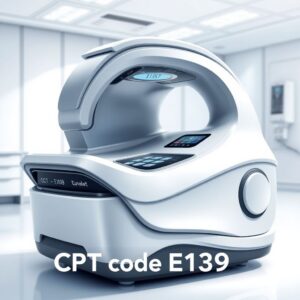
CPT Code E1399
What is CPT Code E1399?
CPT Code E1399 falls under the Durable Medical Equipment, Prosthetics, Orthotics, and Supplies (DMEPOS) category. It is classified as a “Miscellaneous DME” code, meaning it is used when no other specific code accurately describes the equipment or supply being billed.
Key Characteristics of E1399:
-
Used for DME items not listed under a more specific code
-
Requires detailed documentation to justify medical necessity
-
Often subject to higher scrutiny by payers
-
Commonly used for innovative or specialized medical devices
When is E1399 Used?
E1399 is utilized in cases where:
-
A new medical device enters the market without an assigned HCPCS code
-
Customized or modified DME is prescribed
-
Rare or specialized equipment is needed for patient care
Examples of Equipment Billed Under E1399:
✔ Advanced mobility devices not classified under standard wheelchair codes
✔ Custom orthotic supports for rare conditions
✔ Experimental or investigational devices (if covered by insurance)
✔ Adaptive tools for patients with disabilities
Documentation Requirements for E1399
Because E1399 is a “catch-all” code, insurers require strong supporting documentation to approve claims. Below are essential elements:
Table 1: Required Documentation for E1399 Claims
| Documentation Element | Purpose |
|---|---|
| Detailed Prescription | Must specify why standard DME is insufficient |
| Letter of Medical Necessity (LMN) | Explains why the device is medically necessary |
| Clinical Notes | Supports the diagnosis and treatment plan |
| Product Description | Details the device’s specifications and uniqueness |
| Cost Breakdown | Justifies the pricing if higher than standard DME |
Failure to provide adequate documentation often leads to claim denials.
Billing and Reimbursement for E1399
Reimbursement for E1399 varies by payer (Medicare, Medicaid, private insurers). Some key considerations:
Table 2: Reimbursement Challenges for E1399
| Challenge | Solution |
|---|---|
| Lack of a specific fee schedule | Submit a detailed cost comparison with similar DME |
| Increased audit risk | Maintain thorough records and prior authorization if possible |
| Delayed processing | Follow up with insurers and provide additional documentation promptly |
Medicare often requires KX modifiers to indicate that documentation is on file.
Common Reasons for E1399 Claim Denials
-
Insufficient Documentation – Missing LMN or clinical notes
-
Medical Necessity Not Proven – Insurer deems the device unnecessary
-
Coding Errors – Incorrect modifiers or mismatched documentation
-
Experimental Device Exclusion – Some insurers reject investigational devices
How to Avoid Claim Rejections
✅ Obtain Prior Authorization (if required)
✅ Submit a Detailed LMN with supporting physician notes
✅ Use Correct Modifiers (e.g., KX, GA, GZ)
✅ Appeal Denials Promptly with additional evidence
Case Study: Successful E1399 Claim
A patient with severe spinal muscular atrophy (SMA) required a customized standing frame. Since no specific code existed, the provider:
-
Submitted an LMN from the neurologist
-
Included video evidence of the patient’s mobility limitations
-
Compared costs to similar coded DME
-
Result: Full reimbursement after appeal
Comparison with Other DME Codes
| Code | Description | When to Use Instead of E1399 |
|---|---|---|
| E0100-E0199 | Canes, crutches, walkers | If the device fits a standard category |
| E0601 | Continuous glucose monitor | For diabetic patients |
| E1399 | Miscellaneous DME | Only when no other code applies |
Future Trends in DME Coding
-
AI-assisted coding may reduce E1399 usage by auto-assigning new devices
-
FDA fast-tracking may lead to quicker code assignments for innovative devices
-
Telehealth DME prescriptions could increase E1399 claims for remote patients
Conclusion
CPT Code E1399 is essential for billing unclassified DME, but it requires meticulous documentation. Providers must justify medical necessity, use correct modifiers, and prepare for audits. With proper processes, E1399 can ensure patients receive necessary equipment without reimbursement delays.
FAQs
1. Can E1399 be used for disposable medical supplies?
No, E1399 is for durable equipment. Disposable supplies fall under A-codes.
2. Does Medicare cover E1399?
Yes, but strict documentation is required.
3. How often is E1399 audited?
More frequently than standard DME codes due to its miscellaneous nature.
4. Can E1399 be used for repairs?
No, repairs have separate codes (e.g., K0739).