If you work in a clinical setting, a rehabilitation facility, or an emergency department, you’ve likely faced the challenge of ordering or billing for a breath alcohol test. While it seems straightforward—a patient blows into a device, you get a result—the coding side of things is anything but simple.
You might have searched for a standard Current Procedural Terminology (CPT) code, only to find a maze of alphanumeric codes, payer-specific rules, and medical necessity requirements. You are not alone in this confusion. The question, “What is the CPT code for a breath alcohol test?” is one of the most common—and misunderstood—queries in outpatient billing.
This guide is designed to clear up the confusion once and for all. We will explore the nuances of coding for breath alcohol testing, break down the difference between clinical and forensic testing, and provide you with the realistic, actionable information you need to ensure your claims are paid correctly.
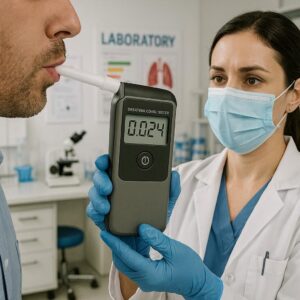
CPT Code for Breath Alcohol Test
Table of Contents
ToggleUnderstanding Breath Alcohol Testing in a Medical Setting
Before we dive into the codes themselves, it is crucial to understand the context in which a breath alcohol test is performed. The coding and billing process is not determined solely by the test itself. Instead, it hinges on why the test is being done.
In a medical environment, breath alcohol tests typically fall into one of two categories: clinical testing or forensic testing.
Clinical vs. Forensic Testing: Why the Distinction Matters
This distinction is the most important concept to grasp. It dictates which code you will use, whether the test is covered by insurance, and what documentation you must provide.
Clinical Testing is performed to diagnose and manage a patient’s medical condition. For example, if a patient arrives at the emergency department with altered mental status, confusion, or after a suspected overdose, a clinician might order a breath alcohol test to determine if alcohol intoxication is a contributing factor to the acute medical problem. The test is part of the patient’s medical evaluation and treatment.
Forensic Testing, on the other hand, is performed for legal or employment purposes. This includes tests ordered by law enforcement for DUI investigations, pre-employment screening, or random drug and alcohol testing mandated by an employer. In these scenarios, the test is not being used to diagnose or treat a medical condition, but rather to establish a legal record.
This difference is not just a matter of semantics. It is the bedrock of medical necessity, and medical necessity is what drives reimbursement.
The Role of Medical Necessity in Reimbursement
For any insurance claim to be paid, the service must be deemed “medically necessary.” This means the test is required to diagnose or treat a specific illness, injury, or symptom.
A breath alcohol test performed because a patient is exhibiting signs of acute alcohol intoxication, is involved in a motor vehicle accident with suspected impairment, or is being evaluated for alcohol withdrawal syndrome will likely be considered medically necessary.
A breath alcohol test performed because a patient needs a pre-employment physical or because a court has ordered it as a condition of probation is not considered medically necessary. In these cases, the patient (or the employer or legal entity) is typically responsible for the cost of the test.
Understanding this distinction is the first step to correct coding. Now, let’s look at the specific codes you will use.
The Primary CPT Code for Breath Alcohol Test: G0390
If there is a “go-to” code for breath alcohol testing in a medical setting, it is HCPCS Level II Code G0390.
It is important to note that this is not a traditional CPT code. CPT codes are five-digit numeric codes (like 99213 for an office visit). G-codes are temporary codes used by the Centers for Medicare & Medicaid Services (CMS) and many commercial payers to identify specific services that do not have a permanent CPT code.
What is HCPCS Code G0390?
G0390 is officially described as: “Alcohol misuse screening, including brief intervention (screening, brief intervention, and referral to treatment) and alcohol and/or substance (other than tobacco) misuse structured assessment (e.g., AUDIT, DAST), and brief intervention 15-30 minutes.”
Wait a minute. That description sounds a lot more involved than just blowing into a breathalyzer. And you are correct.
This code was designed to encompass a broader service: screening for alcohol misuse, performing a structured assessment, and providing a brief intervention. However, in many clinical settings, this code has become the primary vehicle for billing for breath alcohol testing when it is performed as part of a structured assessment and intervention for alcohol misuse.
Why is G0390 used?
The simple truth is that there is no standalone CPT code for a breath alcohol test that is universally accepted by all payers. The American Medical Association (AMA) does not have a specific CPT code that says “breath alcohol test.” As a result, providers and billers have to use other codes that best describe the service.
G0390 is frequently used when a breath alcohol test is part of a larger, medically necessary assessment for alcohol use disorder. The test provides objective data to support the assessment.
When to Use G0390
You should consider using G0390 when the breath alcohol test is part of a broader service that includes:
-
Screening: Using a validated tool like the AUDIT (Alcohol Use Disorders Identification Test) to determine a patient’s risk level for alcohol misuse.
-
Brief Intervention: If the screening indicates a problem, the provider engages in a short conversation (typically 15-30 minutes) to discuss the risks and encourage behavior change.
-
Referral to Treatment (if needed): For patients with more severe issues, the service includes a referral to specialized addiction treatment.
In this context, the breath alcohol test serves as an objective component of the assessment. It confirms recent alcohol use, which can be a critical piece of data for the clinician.
Payer Policies for G0390
This is where you must exercise extreme caution. G0390 is not universally recognized or reimbursed.
-
Medicare: While G0390 is a HCPCS code, Medicare’s coverage is complex. Medicare covers Alcohol Misuse Screening and Behavioral Counseling Interventions (SBI) under specific conditions, often using code G0442 (brief intervention) and G0443 (brief intervention, 15 minutes). Medicare generally does not reimburse for the “testing” component as a separate line item in the same way a commercial payer might. You must check your local Medicare Administrative Contractor (MAC) for specific guidance.
-
Commercial Payers: Many commercial insurance companies, such as Blue Cross Blue Shield, Aetna, and UnitedHealthcare, do recognize G0390. However, they frequently have their own specific medical policies that outline exactly when the code will be paid. Some may require the test to be performed with a specific device (e.g., an evidentiary breath testing device) or require the presence of a specific diagnosis code.
Important Note: Billing G0390 solely for a breath alcohol test, without the associated screening and brief intervention, is a recipe for a denial. The code is for the service bundle, not just the test.
The Alternative: CPT Code 82055
While G0390 is the most common code for the service bundle, there is another code that gets closer to the test itself: CPT Code 82055.
82055 is described as: “Alcohol (ethanol); breath.”
This code is the closest thing to a direct “CPT code for breath alcohol test” that exists in the AMA’s CPT manual. It is a laboratory code specifically intended for the quantitative analysis of alcohol in a breath specimen.
The Challenge with CPT 82055
At first glance, 82055 seems perfect. It directly names the analyte (alcohol) and the specimen type (breath). So why isn’t this the standard code used for all breath alcohol tests?
The challenge lies in the site of service and the complexity of the test.
In the world of laboratory coding, CPT codes are often valued based on the complexity of the test and the site where it is performed. A test performed in a high-complexity, certified lab has a different reimbursement structure than a point-of-care (POC) test performed in a physician’s office.
Many commercial payers and Medicare consider a simple, handheld breathalyzer test to be a non-covered service under CPT 82055. Their reasoning is that these devices are not considered sophisticated laboratory equipment, and the test is often performed by a non-laboratory staff member (like a nurse or medical assistant) without the oversight required for a clinical laboratory test.
Key Differences: G0390 vs. 82055
To help visualize the difference between these two primary coding options, let’s look at a comparison table.
| Feature | HCPCS Code G0390 | CPT Code 82055 |
|---|---|---|
| Code Type | HCPCS Level II (Temporary/G-code) | CPT (AMA Permanent Code) |
| Official Descriptor | Alcohol misuse screening, including brief intervention… and alcohol and/or substance misuse structured assessment… and brief intervention 15-30 minutes. | Alcohol (ethanol); breath. |
| Service Component | A bundle: screening, assessment, brief intervention. The breath test is part of the bundle. | The test itself. A quantitative analysis of alcohol in breath. |
| When to Use | When the test is part of a comprehensive, medically necessary assessment for alcohol misuse. | When a lab performs the test and bills it under a laboratory fee schedule, often in an outpatient hospital or independent lab setting. |
| Typical Site of Service | Physician’s office, clinic, outpatient rehab, emergency department (as part of E/M service). | Clinical laboratory, hospital outpatient lab. |
| Reimbursement | Reimbursement is for the intervention service. Highly variable and subject to payer-specific policies. | Often denied for simple POC tests. Reimbursed for lab-performed tests if deemed medically necessary. |
As you can see, neither code is a simple, one-size-fits-all solution. The correct choice depends entirely on your practice setting, the reason for the test, and the specific requirements of the insurance payer.
The Critical Role of Evaluation and Management (E/M) Codes
For many physicians and clinicians, the breath alcohol test is not billed as a standalone service. Instead, it is considered a supplemental service that supports a higher-level Evaluation and Management (E/M) code.
Let’s consider a common scenario: A patient is brought to the emergency department by paramedics after being found confused and disoriented. The emergency physician orders a breath alcohol test as part of the workup.
In this case, the physician would not bill G0390 or 82055 separately. Instead, the cost of the breath alcohol test is typically bundled into the facility fee or the physician’s E/M service (e.g., CPT 99281-99285 for the ED visit). The test is considered part of the diagnostic workup that justifies the level of medical decision-making (MDM) for the visit.
The same logic applies in an office setting. If a physician performs a comprehensive evaluation for alcohol use disorder, which includes a physical exam, a detailed history, a mental status exam, and orders a breath alcohol test, the primary service billed is the E/M code (e.g., 99204 for a new patient or 99214 for an established patient). The breath test is not an additional billable service; it is part of the evaluation.
The takeaway here is crucial: Do not assume that a breath alcohol test is always a separately reimbursable service. In many cases, its cost is intended to be absorbed into the payment for the more comprehensive E/M service.
Navigating Payer-Specific Policies: A Realistic View
If there is one universal truth in medical billing, it is that every payer has its own rules. Attempting to find a single, universal “CPT code for breath alcohol test” is like searching for a unicorn. What works for Medicare in Florida will not work for Blue Cross in California, and neither will align perfectly with the requirements of a local union health plan.
Your success in billing for these services will depend on your ability to navigate these specific policies. Let’s break down the different payer categories.
Medicare
As mentioned, Medicare does not have a simple, straightforward policy for standalone breath alcohol testing. Their focus is on the Screening, Brief Intervention, and Referral to Treatment (SBIRT) model.
-
G0442: Screening for alcohol misuse (15 minutes).
-
G0443: Brief intervention (15 minutes).
These codes are specifically for the counseling and intervention aspects of care. They do not typically include reimbursement for a breathalyzer test.
For Medicare patients, a breath alcohol test is rarely covered unless it is part of a medically necessary diagnostic workup for a specific condition, in which case it is bundled into the E/M service or performed in a hospital outpatient lab under a different set of rules.
Commercial Insurance Payers
This is where the landscape becomes highly variable. Many commercial payers have adopted G0390 as their code of choice for alcohol-related assessments. However, their policies often include specific requirements.
Common requirements from commercial payers include:
-
Diagnosis Code Restrictions: The claim must be submitted with a specific diagnosis code that justifies the test. For example, a diagnosis of F10.10 (Alcohol abuse, uncomplicated) or F10.20 (Alcohol dependence, uncomplicated) might be required. A diagnosis for a routine physical (Z00.00) would almost certainly result in a denial.
-
Documentation Requirements: The medical record must clearly document the screening tool used (e.g., AUDIT-C), the results of the assessment, the time spent on the intervention (often a minimum of 15 minutes), and the specific medical necessity for the breath test.
-
Specific Device Requirements: Some payers will only cover breath alcohol testing if it is performed on a specific type of device, such as an “evidentiary” device that prints a permanent record. They may view handheld, non-recording devices as “non-covered” services.
Self-Pay, Worker’s Compensation, and Auto Insurance
These scenarios exist outside the typical health insurance framework and have their own rules.
-
Self-Pay: If a patient requests a breath alcohol test for their own personal knowledge or for a legal reason (like a DUI diversion program), they will often be required to pay out-of-pocket. In this case, you would provide a superbill, but there is no insurance claim. Many practices have a set cash price for a breath test.
-
Worker’s Compensation: A breath alcohol test might be ordered after a workplace accident to determine if the employee was under the influence. Worker’s compensation laws vary by state. In some states, these tests are mandatory and are billed using specific state-approved fee schedules, often using the CPT 82055 code.
-
Auto Insurance (PIP): After a motor vehicle accident, a breath alcohol test might be part of the emergency department workup. In many states with Personal Injury Protection (PIP) or no-fault insurance, the test is billed as part of the overall emergency claim, often using the E/M code with the test bundled in.
Step-by-Step Guide to Billing a Breath Alcohol Test
To bring all of this information together, let’s walk through a realistic workflow for billing a breath alcohol test. This process will help you avoid common pitfalls and denials.
Step 1: Identify the Reason for the Test
This is your starting point. Ask the clinical team one question: Why is this test being performed?
-
Is it to diagnose a medical problem (e.g., altered mental status, suspected withdrawal)?
-
Is it to assess a patient for alcohol misuse as part of a broader intervention (SBIRT)?
-
Is it for a legal or employer-mandated reason?
The answer to this question will guide every subsequent step.
Step 2: Determine the Site of Service
Where is the test being performed? This dictates which code is even an option.
-
Physician Office (Non-Lab): If the test is performed by a nurse or medical assistant in the exam room using a handheld device, you are likely in the realm of G0390 (if part of an intervention) or the test is bundled into the E/M code.
-
Hospital Outpatient Lab: If the test is performed in the hospital’s clinical laboratory using a more sophisticated instrument, the lab may bill CPT 82055.
-
Emergency Department: The test is almost always bundled into the ED facility and professional E/M services.
Step 3: Verify Coverage with the Payer
Before you provide the service, especially if it is a planned procedure, verify coverage with the patient’s insurance. This is a critical step.
When calling the payer, ask specific questions:
-
“Does the patient’s plan cover alcohol misuse screening and testing?”
-
“Does your policy allow for the use of HCPCS code G0390 for breath alcohol testing as part of an SBIRT service?”
-
“Is CPT code 82055 a covered service in an office setting?”
-
“What diagnosis codes do you require for medical necessity?”
Document the name of the representative you spoke with, the date, and the information they provided.
Step 4: Ensure Meticulous Documentation
The medical record is your primary defense against a denial. The documentation must tell a clear story that justifies the service.
Your documentation should include:
-
Chief Complaint/Reason for Visit: Clearly state the presenting problem that prompted the test.
-
Screening Results: Document the results of any formal screening tool (e.g., “AUDIT-C score = 8”).
-
The Test Itself: Note that a breath alcohol test was performed, the time it was performed, the device used, and the result (e.g., “Positive for alcohol. Breath alcohol concentration = 0.08 g/210L”).
-
Assessment and Plan: Connect the dots for the payer. Describe how the test result informed your medical decision-making. For example: “Given the patient’s positive breath alcohol test, history of heavy alcohol use, and elevated vital signs, the patient meets criteria for alcohol withdrawal syndrome. Admit for CIWA protocol.”
-
Time (for G0390): If billing G0390, you must document the time spent on the intervention (e.g., “Spent 22 minutes providing brief intervention and discussing treatment options.”)
Step 5: Select and Submit the Correct Code
Based on your work in steps 1-4, select the appropriate code.
-
Use G0390 if the service was a structured assessment and brief intervention, you have documented the time, and you have confirmed the payer covers this code.
-
Use CPT 82055 if you are a laboratory billing for a quantitative breath alcohol test, and you have confirmed medical necessity with a compatible diagnosis.
-
Do not bill a separate code if the test was part of a higher-level E/M service. Bill the E/M code and consider the test as part of the workup.
Step 6: Prepare for and Manage Denials
Even with perfect preparation, denials happen. When you receive a denial for a breath alcohol test, look at the denial reason code.
-
Denial Code CO-50 (Non-covered): This often means the payer determined the service was not medically necessary. Review your documentation. Was there a clear diagnosis code? Was the reason for the test clearly a medical problem and not a legal or employment requirement?
-
Denial Code CO-97 (Benefit for this service is not included in the benefit plan): This is common. The patient’s specific insurance plan simply does not cover breath alcohol testing. In this case, you may need to bill the patient if you have a signed waiver.
In many cases, a well-written appeal with a copy of the medical record highlighting the medical necessity can overturn a denial.
The Human Element: Communicating with Patients
The technical side of coding is only half the battle. The other half is patient communication. Patients are often surprised to learn that a simple breath test might not be covered by their insurance or that they may be responsible for the cost.
To avoid confusion and potential payment issues, consider these communication strategies:
Discuss the Test Before You Perform It
If you are ordering a breath alcohol test for a reason that might not be clearly medical (like a pre-employment screening), have a conversation with the patient first. Explain that while the test is important, it may not be covered by their health insurance.
A simple script could be:
“I’m going to order a breath alcohol test. I want to be upfront with you: because this test is being done for [employment/a legal requirement], your health insurance may not cover it. You might receive a bill for this service. Do you still want to proceed?”
Have a Clear Self-Pay Policy
For tests that are clearly not medically necessary (like legal or employment tests), it is best practice to have patients sign a self-pay agreement before the test is performed. This agreement should state that they understand their insurance will not be billed and that they are personally responsible for the cost of the test.
Provide Accurate Estimates
If a patient will be billed, provide them with an estimate of the cost. This is not only good customer service, but it also helps prevent future billing disputes. You can base this on your practice’s established fee schedule or the negotiated rate with their insurance.
The Future of Breath Alcohol Testing and Coding
The world of healthcare coding is not static. As technology advances and the focus on substance use disorders grows, the way we code for breath alcohol testing is likely to evolve. Here are a few trends to watch.
Increased Focus on Integrated Care
The healthcare system is moving towards a more integrated model, where behavioral health and primary care are combined. In these settings, screening for alcohol use is becoming a standard quality measure. We may see the development of new, more specific codes that better capture the work of integrating breath alcohol testing into routine primary care.
Potential for New CPT Codes
The AMA’s CPT Editorial Panel regularly reviews and updates the code set. As point-of-care testing becomes more sophisticated and more widely used, there is always a possibility that a specific CPT code for breath alcohol testing (using a device) could be created. This would simplify billing, but it would also bring its own set of challenges regarding valuation and site-of-service distinctions.
Value-Based Care and Bundled Payments
As the industry shifts away from fee-for-service and towards value-based care, the focus on individual procedure codes may diminish. In a bundled payment model, a provider might receive a single payment for an entire episode of care, which includes all screening, testing, and interventions for a condition like alcohol use disorder. In this model, the question of the “CPT code for a breath alcohol test” becomes less about reimbursement and more about quality reporting.
Conclusion: Your Path Forward
The question of the correct CPT code for a breath alcohol test does not have a single, simple answer. The reality is that success depends on understanding the context of the test, the specifics of the payer’s policy, and the requirements of your own practice setting.
To summarize, your path forward involves three key principles:
-
Distinguish the purpose: Is this a medically necessary clinical test or a non-covered forensic/legal test?
-
Know your codes: Use G0390 for a comprehensive assessment and brief intervention bundle, CPT 82055 for a laboratory-performed quantitative test, and remember that in many cases, the test is bundled into an E/M service.
-
Document and verify: Meticulous documentation of medical necessity and proactive verification of payer coverage are your best tools for ensuring proper reimbursement and avoiding denials.
By moving beyond the search for a “magic code” and adopting a systematic, informed approach, you can navigate the complexities of billing for breath alcohol testing with confidence and accuracy.
Frequently Asked Questions (FAQ)
Q1: What is the most common CPT code used for a breath alcohol test in a doctor’s office?
There isn’t a specific CPT code for the test itself in a doctor’s office. The most common approach is to use HCPCS code G0390 if the test is part of a structured alcohol misuse screening and brief intervention. Otherwise, the cost of the test is typically included in the office visit (E/M) code.
Q2: Does Medicare cover breath alcohol testing?
Medicare generally does not cover standalone breath alcohol tests. Their coverage is focused on the counseling and intervention services for alcohol misuse, using codes G0442 and G0443. A breath test would only be covered if it is part of a medically necessary diagnostic workup, in which case it is bundled into the evaluation.
Q3: Can I bill a patient if their insurance denies the breath alcohol test claim?
Yes, but only if you have followed the proper protocols. You must have informed the patient that the test may not be covered and, ideally, have them sign a self-pay or advanced beneficiary notice (ABN) for Medicare patients. You cannot simply bill the patient after the fact if they had a reasonable expectation that their insurance would cover the service.
Q4: What diagnosis code should I use for a breath alcohol test?
The diagnosis code must justify medical necessity. Common codes include F10.10 (alcohol abuse), F10.20 (alcohol dependence), or R41.83 (altered mental status). A code for a routine physical (Z00.00) is not acceptable for a breath alcohol test.
Q5: Is there a difference between coding for a breathalyzer test and a blood alcohol test?
Yes, absolutely. A blood alcohol test (ethanol) has its own distinct CPT codes, such as 82055 (which is for breath) and 80320 for a blood alcohol screen. A blood alcohol test performed in a laboratory is much more likely to be reimbursed than a breath test performed on a handheld device in a doctor’s office.
Additional Resource
For the most current information on coding and billing for alcohol-related services, the American Medical Association (AMA) is the definitive source for CPT codes. Additionally, the Centers for Medicare & Medicaid Services (CMS) website provides access to Medicare coverage policies, local coverage determinations (LCDs), and the HCPCS code set.
-
Link: CMS.gov – HCPCS – General Information (Please verify the link independently, as URLs may change over time).