If you have ever looked at a billing sheet after a neurology visit, you know the feeling. There is a list of numbers, strange terms, and one question keeps coming back: what is the correct CPT code for electroencephalogram services?
You are not alone. Medical coding for EEG studies confuses many healthcare professionals, from new medical coders to seasoned neurologists. The good news is that once you understand the logic behind the codes, the entire system becomes much clearer.
In this guide, we will walk through every major EEG-related CPT code. We will explain when to use each one, how to avoid common denials, and what payers expect to see in your documentation. Let us make EEG coding simple again.
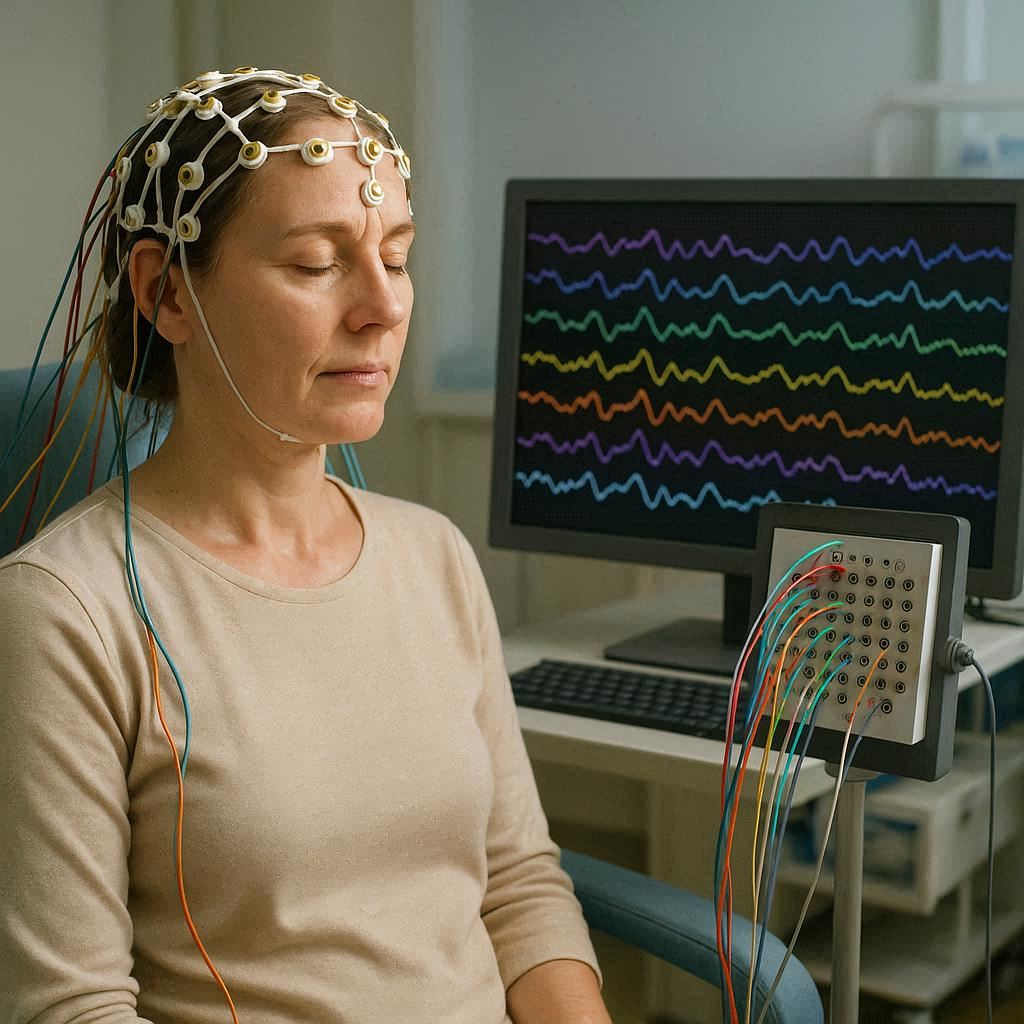
What Is an EEG and Why Do Codes Matter?
An electroencephalogram (EEG) records electrical activity in the brain. Small metal discs (electrodes) attach to the scalp. They pick up brain wave patterns. Doctors use EEGs to diagnose epilepsy, sleep disorders, brain tumors, and other neurological conditions.
Why do CPT codes matter so much? Because the wrong code leads to denied claims, delayed payments, and compliance headaches. Payers like Medicare and private insurers tie reimbursement directly to the specific code you choose. Pick the wrong one, and you might as well work for free.
CPT codes for EEG fall under the Neurology and Neuromuscular Procedures section of the CPT manual (codes 95700–95970). Each code represents a different type of study, recording time, and physician work.
The Main EEG Code Categories
Before we dive into individual codes, let us look at the big picture. EEG codes break down into three main groups:
- Routine EEG (awake and asleep)
- Prolonged EEG (without video)
- Video EEG (with or without prolonged recording)
Each group has its own set of rules. The most common mistake? Coders often confuse routine EEG codes with prolonged monitoring codes. Do not worry. We will clarify everything below.
Routine EEG CPT Codes (Standard Studies)
Routine EEGs are the bread and butter of neurodiagnostic testing. These typically last between 20 and 60 minutes. The patient may be awake, asleep, or both. Here are the standard codes you need to know.
CPT 95812: Routine EEG with Activation
Code description: Electroencephalogram (EEG) includes recording of electrical activity of the brain, with activation (e.g., photic stimulation, hyperventilation), awake and asleep.
When to use: Use 95812 when you perform a routine EEG that includes at least one activation procedure. Photic stimulation (flashing lights) and hyperventilation (deep breathing) are the most common examples. The recording must include both awake and asleep tracing.
Time requirement: There is no strict time minimum, but typical recordings run 20–40 minutes.
Documentation must show:
- Use of photic stimulation or hyperventilation
- Evidence of both wake and sleep states
- Complete interpretation and report
CPT 95816: Routine EEG Without Activation
Code description: Electroencephalogram (EEG) includes recording of electrical activity of the brain, without activation, awake and asleep.
When to use: Choose 95816 when you perform a routine EEG without photic stimulation or hyperventilation. The recording still needs both awake and asleep components.
Common scenarios: Young children who cannot cooperate with activation, patients with severe anxiety, or when activation is medically unnecessary.
CPT 95819: Routine EEG Awake Only
Code description: Electroencephalogram (EEG) includes recording of electrical activity of the brain, without activation, awake only.
When to use: This code is for patients who cannot fall asleep during the recording. Maybe they are too anxious. Maybe they slept well the night before. Whatever the reason, if you only capture awake tracing, use 95819.
Important note: Some payers reimburse 95819 at a slightly lower rate than 95816 because the study is less complete. If possible, try to capture sleep. But if the patient cannot sleep, code what you performed.
Quick Reference Table: Routine EEG Codes
| CPT Code | Activation (Photic/Hyperventilation) | Sleep State | Typical Use |
|---|---|---|---|
| 95812 | Yes | Awake and asleep | Most routine clinical EEGs |
| 95816 | No | Awake and asleep | Patients who cannot tolerate activation |
| 95819 | No | Awake only | Anxious patients, sleep-deprived failures |
Prolonged EEG Without Video (CPT 95700–95726)
Sometimes, standard routine EEG is not enough. Some patients have seizures only once every few hours. Others have events that happen during specific activities. For these cases, you need prolonged EEG monitoring.
Prolonged EEG codes changed significantly in recent years. The current system uses a set of codes that work together. This is where things get a bit more complex, but stick with me. It makes sense once you see the pattern.
Understanding the Prolonged EEG Code Set
Prolonged EEG codes use a “base code plus add-on” model. You will report one primary code and then additional codes for extra hours of recording. This is very similar to how you code prolonged services in emergency medicine.
CPT 95700: Base code for prolonged EEG (greater than 1 hour) without video. This covers setup, electrode placement, and the first hour of recording.
CPT 95705: Each additional hour of prolonged EEG recording without video (add-on code).
CPT 95707: Prolonged EEG without video, with continuous technician attendance. Use this when a technologist stays with the patient for the entire recording (common in intensive care units).
When to Use Prolonged Without Video
Prolonged EEG without video is ideal for:
- ICU patients with altered mental status
- Suspected non-convulsive seizures
- Status epilepticus monitoring
- Patients who cannot have video recording (privacy concerns)
Worked Example
Your patient needs 6 hours of EEG monitoring in the ICU. No video is used. The technologist checks equipment every 30 minutes but does not stay in the room continuously.
- Code 95700 (first hour)
- Code 95705 x 5 (hours 2 through 6)
Total reported codes: one 95700 and five units of 95705.
Video EEG CPT Codes (95717–95726)
Video EEG adds a synchronized video recording to the EEG tracing. This is the gold standard for epilepsy monitoring units (EMUs). The video allows doctors to see what the patient does during a seizure. This information is critical for diagnosis and treatment planning.
Prolonged Video EEG Codes
CPT 95717: Prolonged video EEG, first hour, with technician attendance.
CPT 95718: Prolonged video EEG, each additional hour (add-on).
CPT 95719: Prolonged video EEG, first hour, without continuous technician attendance (intermittent checks only).
CPT 95720: Prolonged video EEG, each additional hour without continuous attendance (add-on).
CPT 95721: Prolonged video EEG, first hour, with continuous technician attendance AND medical supervision by a physician.
CPT 95722: Each additional hour with continuous attendance and medical supervision (add-on).
CPT 95723: Prolonged video EEG, first hour, with continuous technician attendance only.
CPT 95724: Each additional hour with continuous attendance only (add-on).
CPT 95725: Prolonged video EEG, first hour, with continuous medical supervision and physician interpretation.
CPT 95726: Each additional hour with continuous medical supervision and interpretation (add-on).
Which Video EEG Code Do You Choose?
The answer depends on two questions:
- Is a technician continuously watching the patient?
- Is a physician continuously supervising (not just available but actively watching)?
| Level of Supervision | Continuous Technician? | Continuous Physician? | First Hour Code |
|---|---|---|---|
| Basic | No | No | 95719 |
| Standard | Yes | No | 95723 |
| Advanced | Yes | Yes (supervision) | 95721 |
| Full | Yes | Yes (interpretation) | 95725 |
Important note for readers: Do not overcode. If your facility does not have a physician watching the video feed in real time, you cannot report 95725. Choose the code that matches your actual staffing and supervision. Payer audits love to catch this mistake.
Professional vs. Technical Components
Many people miss this distinction. EEG services have two parts:
- Technical component (TC): The equipment, electrodes, technician time, and recording.
- Professional component (26): The physician’s work of interpreting the recording and writing the report.
Most codes can be billed with a modifier 26 (professional component only) or modifier TC (technical component only). If you are billing globally (both components together), submit the code without modifiers.
Example: A neurologist interprets an EEG performed at an outpatient facility. The facility bills the technical component. The neurologist bills 95812-26.
EEG Coding Pitfalls to Avoid
After speaking with hundreds of billing professionals, I see the same mistakes repeatedly. Here are the most common errors and how to fix them.
Mistake #1: Using Prolonged Codes for Routine Studies
Some coders think, “Well, the study took two hours, so I will use a prolonged code.” This is wrong. Prolonged codes are for studies that are planned as prolonged from the start, typically for seizure monitoring. A routine EEG that simply runs long because of patient issues still bills as a routine code.
Mistake #2: Reporting Activation When None Was Done
CPT 95812 requires activation. If you did not use photic stimulation or hyperventilation, you cannot use 95812. It does not matter if the patient fell asleep. Activation means activation. Use 95816 or 95819 instead.
Mistake #3: Separating Awake and Asleep Portions
Do not bill two separate codes for one EEG session. A routine EEG that includes both awake and asleep stages is one study, not two. You report a single code that describes both components.
Mistake #4: Ignoring Payer-Specific Policies
Medicare and private insurers sometimes have different rules. For example, some commercial payers require prior authorization for prolonged video EEG beyond 24 hours. Others do not cover certain add-on codes. Always check the specific policy for each patient’s plan.
Documentation Requirements for Clean Claims
Clean claims pay faster. Denied claims create headaches. Here is exactly what your documentation must include for EEG coding.
Required Elements for All EEG Claims
- Order for the test (signed and dated)
- Reason for the study (specific symptoms, not just “rule out seizure”)
- Technician notes (electrode placement, patient behavior, sleep state)
- Recording length (start and end times)
- Activation procedures (if used, describe which ones and patient response)
- Physician interpretation (signed and dated)
- Final report (filed in the patient’s medical record)
Additional Elements for Prolonged EEG
- Justification for prolonged monitoring (why a routine EEG is insufficient)
- Continuous vs. intermittent attendance documentation (time logs)
- Physician supervision logs (if billing codes with supervision)
Real-World Billing Scenarios
Let us put this knowledge to work. Here are five common clinical scenarios with the correct CPT codes.
Scenario 1: Outpatient Routine EEG
A 35-year-old woman has possible seizures. She comes to the outpatient lab. The technologist performs photic stimulation and hyperventilation. The patient falls asleep during the recording. The EEG lasts 45 minutes.
Correct coding: 95812 (routine with activation, awake and asleep)
Scenario 2: ICU Patient With Altered Mental Status
A 68-year-old man in the ICU has unexplained confusion. An order is placed for 24 hours of continuous EEG monitoring without video. A technologist sets up the study and checks equipment every two hours but does not stay in the room continuously.
Correct coding:
- 95700 (first hour)
- 95705 x 23 (additional hours)
Scenario 3: Pediatric Epilepsy Monitoring Unit
A 7-year-old boy is admitted to the EMU for 48 hours of video EEG. A technician watches the video continuously. A neurologist reviews the recording twice daily but does not watch continuously.
Correct coding:
- 95723 (first hour with technician attendance only)
- 95724 x 47 (additional hours)
Scenario 4: Routine EEG Without Sleep
A 42-year-old man cannot fall asleep during his EEG. He remains awake the entire 30-minute recording. No activation procedures are used.
Correct coding: 95819 (routine awake only, no activation)
Scenario 5: Same-Day Interpretation for Multiple Studies
A neurologist interprets three routine EEGs in the office on the same day. Each is a separate patient. Each EEG had activation and included both awake and asleep states.
Correct coding: 95812 for each patient (three units, each with modifier 26 if only professional component)
Medicare and Private Payer Policies
Medicare covers EEG studies for medically necessary indications. The National Coverage Determination (NCD) 160.14 lists approved indications. These include:
- Epilepsy diagnosis and management
- Evaluation of syncope when seizure is suspected
- Brain death determination
- Intraoperative monitoring (separate codes apply)
Medicare does not cover routine EEG for headache, dizziness without other neurological findings, or psychiatric screening.
Private insurers vary widely. Some follow Medicare rules. Others have broader coverage. Always verify coverage before scheduling prolonged monitoring.
Author’s note: Coverage policies change. The information here reflects common payer policies as of this writing. Always verify current rules for each patient’s specific plan.
How to Optimize Reimbursement for EEG Services
Getting paid fairly requires more than just picking the right code. Here are practical tips to maximize legitimate reimbursement.
Tip #1: Document Medical Necessity Explicitly
Do not assume the diagnosis code tells the whole story. In your report, state clearly why the EEG was needed. Use phrases like:
- “Patient has episodes of altered awareness concerning for focal seizures.”
- “Unexplained loss of consciousness after negative cardiac workup.”
- “Need to quantify seizure burden in patient with known epilepsy.”
Tip #2: Time Stamp Everything
For prolonged monitoring, time is money. Document:
- Start and end time of setup
- Recording start and stop
- Times of any interruptions
- Physician review times (for codes requiring supervision)
Without time stamps, you have no proof of continuous attendance or supervision.
Tip #3: Use the Right Modifiers
Common modifiers for EEG coding:
| Modifier | Meaning | When to Use |
|---|---|---|
| 26 | Professional component | Physician interpretation only |
| TC | Technical component | Facility/equipment only |
| 59 | Distinct procedural service | Two separate EEG studies on same day |
| 76 | Repeat procedure by same physician | Second EEG later same day for new condition |
Tip #4: Appeal Denials Quickly
If a payer denies your prolonged EEG claim, do not just write it off. Many denials come from simple issues like missing time logs or incorrect documentation. A single appeal with proper documentation often results in payment.
Frequently Asked Questions (FAQ)
Q1: What is the CPT code for a standard awake and asleep EEG with activation?
A: Use CPT 95812. This is the most commonly reported routine EEG code for clinical practice.
Q2: Can I bill a prolonged EEG code for a study that lasted 90 minutes?
A: Yes, if prolonged monitoring was planned from the start. Report 95700 for the first hour and 95705 for the additional 30 minutes (partial hour counts as a full additional hour).
Q3: What is the difference between CPT 95721 and CPT 95725?
A: 95721 requires continuous technician attendance AND medical supervision (physician watches but does not interpret in real time). 95725 requires continuous technician attendance AND continuous physician interpretation (physician actively interprets as recording happens). Most facilities use 95721.
Q4: Do I need a separate code for electrode placement?
A: No. Electrode placement is included in all EEG CPT codes. Do not bill separately for routine electrode application.
Q5: What diagnosis codes cover EEG testing?
A: Common ICD-10 codes include G40.909 (epilepsy, unspecified), R56.9 (unspecified convulsions), and R40.0 (somnolence). Medical necessity must be clear from the documentation.
Q6: Can an EEG technician bill directly for their services?
A: No. Only physicians, hospitals, or qualified non-physician practitioners (like nurse practitioners under certain rules) may bill for EEG services. Technicians are employees or contractors.
Q7: How do I bill for an EEG that is performed but not interpreted by the same provider?
A: The performing facility bills the technical component (modifier TC). The interpreting physician bills the professional component (modifier 26). Use the same base code for both claims.
Q8: What is the CPT code for EEG during surgery?
A: Intraoperative EEG monitoring uses different codes (such as 95940 and 95941 for continuous intraoperative monitoring). Routine EEG codes do not apply.
Additional Resource
For the most current information on EEG coding and coverage policies, visit the American Academy of Neurology (AAN) Coding Resources page. The AAN maintains up-to-date coding guides, fee schedules, and payer policy summaries specifically for neurology procedures.
Link: www.aan.com/practice/coding-and-reimbursement/ (Copy and paste this link into your browser for official resources.)
A Final Word on Honest Coding
Medical coding is not a game. It is not about finding loopholes or squeezing extra money from payers. Honest coding means reporting exactly what you did, nothing more and nothing less.
The CPT code for electroencephalogram you choose tells a story. It tells the payer what study you performed, how long it took, and what resources you used. When that story is accurate, claims get paid, patients get appropriate care, and everyone wins.
If you are ever unsure which code to use, ask a colleague. Review the official CPT manual. Call your local medical society. The few minutes you spend verifying a code now will save you weeks of denial management later.
Conclusion
In summary, routine EEGs use CPT 95812 (with activation), 95816 (without activation, awake and asleep), or 95819 (awake only). Prolonged EEG without video uses 95700 plus 95705 for each additional hour. Prolonged video EEG codes range from 95717 to 95726, depending on supervision levels and continuous attendance. Always document medical necessity, time stamps, and activation details to support your code choice and prevent denials.
Disclaimer: This article is for educational purposes only. CPT codes, payer policies, and coverage guidelines change frequently. Always consult the current CPT manual and verify coverage with each specific payer before submitting claims. The author and publisher assume no responsibility for billing errors, claim denials, or compliance issues arising from the use of this information. When in doubt, seek guidance from a certified professional coder or a healthcare compliance attorney.