If you have ever looked at a surgical operative note and felt a little lost, you are not alone. Coding for gynecological surgeries can be tricky. One procedure that often raises questions is the laparoscopic supracervical hysterectomy.
You might know it as a LSH. Or a partial hysterectomy done with a camera. But when it comes to finding the right CPT code, things get specific.
In this guide, we will walk through everything you need to know about the correct code. We will look at what the procedure includes, what it does not include, and how to avoid common claim denials.
Let us start with the short answer first.
CPT Code for Lap Supracervical Hysterectomy
The Primary CPT Code You Need
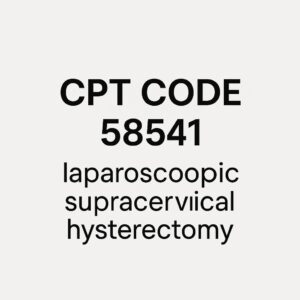
For a laparoscopic supracervical hysterectomy, the correct CPT code is 58541.
This code describes:
Laparoscopy, surgical, supracervical hysterectomy, with or without removal of tube(s), with or without removal of ovary(s)
That is the code you will use most of the time. It covers the removal of the uterus while leaving the cervix in place. The surgeon works through small incisions in the belly using a laparoscope.
But there is more to the story. You also need to know when to use other codes, what to add, and what not to bill separately.
Breaking Down Code 58541
Let us take a closer look at what code 58541 actually covers. Understanding the details will help you avoid mistakes.
What the Procedure Includes
When a surgeon performs a laparoscopic supracervical hysterectomy, several steps happen inside the operating room. The CPT code includes:
-
Gaining access to the abdomen through small ports
-
Using a laparoscope to see the pelvic organs
-
Separating the uterus from the cervix
-
Removing the uterine body but leaving the cervical stump
-
Controlling bleeding
-
Closing the incisions
The code also includes the removal of fallopian tubes if the surgeon does that during the same procedure. It also includes the removal of one or both ovaries if that happens at the same time.
That last part surprises some coders. Yes, you can remove the tubes and ovaries without adding extra codes.
What Is Not Included
Even though code 58541 is comprehensive, some services are separate. You may need to bill additional codes for:
-
Extensive lysis of adhesions (use 44180 if performed separately)
-
Removal of endometriosis implants
-
Treatment of bladder or bowel injuries
-
Any open conversion to laparotomy
Also, if the surgeon removes the cervix, that is a different procedure. A total laparoscopic hysterectomy uses a different code family (58570–58573).
When to Use Code 58541 vs Other Hysterectomy Codes
This is where many coders get confused. Laparoscopic hysterectomies have several codes depending on how much tissue the doctor removes.
Here is a quick comparison.
| Procedure | CPT Code | Cervix Removed? | Uterus Removed? |
|---|---|---|---|
| Lap supracervical hysterectomy | 58541 | No | Yes |
| Lap total hysterectomy | 58570–58573 | Yes | Yes |
| Lap radical hysterectomy | 58548 | Yes (plus more tissue) | Yes |
| Lap trachelectomy | 57531 | Part of cervix | No |
The key difference for code 58541 is that the cervix stays in place. That is what “supracervical” means. Above the cervix.
What About Robotic-Assisted Surgery?
If the surgeon uses a robotic system like the da Vinci, you still use the same code. There is no separate robotic code for supracervical hysterectomy. You just use 58541.
However, some payers may ask for a modifier or a specific diagnosis. Always check your local coverage policies.
Modifiers That May Apply
Sometimes you need to attach a modifier to code 58541. Modifiers tell the payer that something about the procedure changed without changing the basic code.
Here are the most common modifiers used with 58541.
Modifier 22 – Increased Procedural Services
You would use modifier 22 if the surgery took much longer than usual. For example, if the patient had severe scarring from previous surgeries, the doctor might need extra time and effort.
To use modifier 22, you usually need to send the operative report with your claim. The payer will then decide if they will pay extra.
Modifier 51 – Multiple Procedures
If the surgeon performs another major procedure during the same session, you may need modifier 51. For example, a laparoscopic supracervical hysterectomy with a bladder sling.
But be careful. Many payers now use the “multiple procedure” payment reduction automatically. You might not need to add modifier 51 at all. Check the rules for each payer.
Modifier 52 – Reduced Services
This modifier is rare for hysterectomies. But if the surgeon starts the procedure and stops early for a medical reason, modifier 52 could apply.
Modifier 53 – Discontinued Procedure
Use modifier 53 if the procedure is stopped due to a threat to the patient’s health. For example, if bleeding becomes uncontrollable and the surgeon cannot finish the hysterectomy.
What Not to Bill Separately
One of the biggest mistakes new coders make is unbundling. That means billing separate codes for services that are already included in the main procedure.
When you bill 58541, do not also bill:
-
Laparoscopy (49320) – It is included.
-
Removal of tubes (58700) – Included if done with the hysterectomy.
-
Removal of ovaries (58661) – Included if done with the hysterectomy.
-
Closure of the vaginal cuff – There is no vaginal cuff because the cervix is left.
The only exception is if the tube or ovary removal happens during a different surgery on a different day. Then you would bill separately.
Important Note: Some payers have their own bundling rules. Always check the National Correct Coding Initiative (NCCI) edits before you submit a claim.
Diagnosis Codes That Support Medical Necessity
You cannot bill 58541 without a solid diagnosis. The patient’s condition must justify removing the uterus. Insurance companies will deny the claim if the reason is not on their list.
Here are common ICD-10-CM codes used with laparoscopic supracervical hysterectomy.
Uterine Fibroids (Leiomyoma)
-
D25.0 – Submucous leiomyoma of uterus
-
D25.1 – Intramural leiomyoma of uterus
-
D25.2 – Subserosal leiomyoma of uterus
-
D25.9 – Leiomyoma of uterus, unspecified
Fibroids are the most common reason for this surgery.
Abnormal Uterine Bleeding
-
N92.0 – Excessive and frequent menstruation with regular cycle
-
N92.1 – Excessive and frequent menstruation with irregular cycle
-
N92.4 – Excessive bleeding in the premenopausal period
-
N93.8 – Other specified abnormal uterine and vaginal bleeding
Endometriosis
-
N80.0 – Endometriosis of uterus
-
N80.1 – Endometriosis of ovary
-
N80.3 – Endometriosis of pelvic peritoneum
Adenomyosis
-
N80.0 (same code as endometriosis of uterus – check payer rules)
Pelvic Pain
-
R10.2 – Pelvic and perineal pain
-
R10.32 – Left lower quadrant pain
-
R10.31 – Right lower quadrant pain
Important: Some payers do not cover hysterectomy for pelvic pain alone without other findings. Always verify medical necessity.
Documentation Requirements
Your claim is only as good as your documentation. The operative note must clearly support the use of 58541.
Here is what auditors look for.
Key Elements in the Operative Note
-
Approach – The note must say “laparoscopic” or “laparoscopically assisted.”
-
Cervix status – The note must state that the cervix was left in place. Words like “supracervical,” “partial hysterectomy,” or “cervical preservation” are good.
-
Uterus removed – The note should confirm that the uterine body was taken out.
-
Tube and ovary status – The note should say whether the tubes or ovaries were removed, even if they were left intact.
-
No unexpected findings – If the surgeon had to convert to an open procedure, that changes the code.
Sample Operative Note Language
“We performed a diagnostic laparoscopy followed by a supracervical hysterectomy. The uterine body was detached from the cervix using a harmonic scalpel. The cervix was left in situ. The fallopian tubes appeared normal and were not removed. Both ovaries were preserved.”
That language clearly supports 58541.
Common Billing Mistakes and How to Avoid Them
Even experienced billers sometimes slip up. Here are the most frequent errors with code 58541.
Mistake #1: Billing a Total Hysterectomy Code by Mistake
If the operative note says “supracervical” but you bill 58570 (total laparoscopic hysterectomy), you will get a denial. The codes are not interchangeable.
Fix: Read the op note carefully. Look for the word “cervix.” If the cervix is removed, it is total. If it stays, it is supracervical.
Mistake #2: Billing for Tube Removal Separately
You see “salpingectomy” in the op note. You think, “I should bill 58700.” Wrong. Code 58541 includes removal of tubes.
Fix: Only bill tube removal separately if it happens on a different day or for a different reason (like an ectopic pregnancy).
Mistake #3: Forgetting Modifier 22 for Complex Cases
The surgeon spends four hours on a difficult LSH due to dense adhesions. You bill 58541 with no modifier. The payer pays the standard rate.
Fix: Add modifier 22 and send the op note. Ask for extra payment based on increased work.
Mistake #4: Using an Unlisted Code
Some coders panic when they see a supracervical hysterectomy. They think, “This is rare. I will use an unlisted code like 58578.”
Fix: Do not do that. 58541 exists for this exact procedure. Using an unlisted code only invites a records request and a delay.
Payer Policies and Reimbursement Tips
Different insurance companies have different rules. Medicare, commercial payers, and Medicaid all handle 58541 in their own way.
Medicare and 58541
Medicare covers laparoscopic supracervical hysterectomy for most medically necessary reasons. However, Medicare does not cover this procedure for:
-
Sterilization only
-
Menstrual regulation
-
Pelvic pain without other findings
Medicare also uses the Physician Fee Schedule to set payment. The national average payment for 58541 is around $600–$800 for the surgeon, depending on your locality. Facility fees are separate.
Commercial Payers
Most large payers like UnitedHealthcare, Cigna, Aetna, and Blue Cross cover 58541. But they often require:
-
Prior authorization
-
Failed conservative treatment (like medications or endometrial ablation)
-
Documentation of symptoms
Some commercial plans also have a “site of service” restriction. They may not cover LSH in an outpatient surgery center if they think it should be done in a hospital.
Medicaid
Medicaid coverage varies by state. Most state Medicaid programs cover 58541 for the same reasons as Medicare. However, some states require second opinions or a trial of less invasive treatment first.
How to Appeal a Denial for 58541
Denials happen. But many denials for 58541 are reversible. Here is a simple appeal process.
Step 1 – Read the Denial Code
Look at your remittance advice. Common denial codes for 58541 include:
-
CO-50 – These are not covered services (payer says not medically necessary)
-
CO-97 – The benefit for this service is included in another procedure
-
PR-2 – Medical necessity documentation missing
Step 2 – Gather Your Evidence
You will need:
-
The operative note (highlight the supracervical approach)
-
The pathology report (confirms the diagnosis)
-
Clinic notes showing symptoms and failed treatments
-
Any prior authorization approval
Step 3 – Write a Clear Appeal Letter
Keep it short. State the facts:
“This appeal is for claim #123456, denied as not medically necessary. The patient had symptomatic uterine fibroids (D25.9) with menorrhagia (N92.0) despite six months of hormonal therapy. A laparoscopic supracervical hysterectomy (58541) was performed on [date]. The operative note clearly shows cervical preservation. Please reprocess this claim.”
Step 4 – Send It Fast
Most payers have strict appeal deadlines. Usually 180 days from the denial date. But some are only 30 days. Do not wait.
Frequently Asked Questions (FAQ)
Can I use 58541 for a robotic supracervical hysterectomy?
Yes. The code is the same whether the surgery is laparoscopic or robotic-assisted. No separate robotic code exists for this procedure.
Is 58541 the same as a partial hysterectomy?
Yes. “Partial hysterectomy” is an older term that means removing the uterus but leaving the cervix. That is exactly what supracervical means. However, some patients and doctors still say “partial.” As a coder, you should look for “supracervical” in the op note.
Does 58541 include a vaginal cuff closure?
No. A vaginal cuff is created when the cervix is removed. In a supracervical hysterectomy, the cervix remains, so there is no cuff to close.
Can I bill 58541 with an endometrial ablation?
It would be unusual to do both at the same time. An ablation destroys the uterine lining. A hysterectomy removes the whole uterus. If a surgeon somehow did both, you would only bill 58541. The ablation is included.
What if the surgeon starts laparoscopically but converts to open?
Then you do not use 58541. You use the open supracervical hysterectomy code: 58180 (Abdominal supracervical hysterectomy). Do not bill both codes.
Does 58541 include a diagnostic laparoscopy beforehand?
Yes. The diagnostic part is included. Do not bill 49320 separately.
Can a PA or NP assist with 58541?
Yes. If an assistant is medically necessary, you can bill for an assistant-at-surgery. Use modifier 80, 81, or 82 depending on the payer.
What is the global period for 58541?
The global period is 90 days. That means all routine postoperative care is included in the payment. You cannot bill separate E/M visits for problems related to the surgery during those 90 days.
Additional Resources
For the most current coding guidance, always refer to:
-
American College of Obstetricians and Gynecologists (ACOG) – Coding resources for gynecology
https://www.acog.org/practice-management/coding (external link, for reference) -
CMS National Correct Coding Initiative (NCCI) – Quarterly edits and policy manual
Search “NCCI” on the CMS website. -
American Academy of Professional Coders (AAPC) – Hysterectomy coding articles and forums
These resources update frequently. Bookmark them and check at least once per quarter.
Final Thoughts on Coding 58541
Coding a laparoscopic supracervical hysterectomy does not have to be stressful. The main code is almost always 58541. That code covers the uterus removal, the laparoscopic approach, and even the tubes and ovaries if the surgeon removes them.
The real work is in the details. Read the operative note carefully. Confirm the cervix is still there. Watch for unbundling traps. And always double-check medical necessity with the diagnosis code.
When in doubt, ask for the operative note before you code. A five-minute review can save you a five-week appeal process.
Conclusion
The correct CPT code for a laparoscopic supracervical hysterectomy is 58541, which covers removal of the uterine body while leaving the cervix in place. This code also includes removal of fallopian tubes and ovaries if performed during the same surgery. Always verify the operative note, use appropriate modifiers only when truly needed, and never unbundle included services.
FAQ Summary (Quick List)
-
What is the CPT code for lap supracervical hysterectomy? – 58541.
-
Can I bill separately for tube removal? – No, if done with the hysterectomy.
-
Does 58541 include robotic surgery? – Yes, same code.
-
What if the cervix is removed? – Then use total hysterectomy codes 58570–58573.
-
What diagnosis supports 58541? – Fibroids, bleeding, endometriosis, adenomyosis.
-
Does Medicare cover 58541? – Yes, for medically necessary reasons.
-
Can I use modifier 22 with 58541? – Yes, for increased complexity.
-
What is the global period? – 90 days.
-
What if the case converts to open? – Use 58180 instead.
-
Where can I find official updates? – CMS NCCI and ACOG coding resources.
Disclaimer: This information is current as of April 10, 2026. Coding rules change frequently. Always verify with the current CPT manual and your local payer’s medical policy. The author and publisher assume no responsibility for claim denials based on this guide.