If you are navigating the world of foot and ankle surgery coding, you know that precision matters. It matters for the patient’s medical record, and it certainly matters for your practice’s revenue cycle. One of the most common procedures performed by orthopedic surgeons and podiatrists is hammertoe correction.
But when the procedure involves the second digit, things can get a little tricky. Is it the same as correcting the third or fourth toe? Does the presence of a rigid deformity change the code?
In this guide, we are going to walk through everything you need to know about the correct CPT code for second hammertoe correction. We will look at the standard codes, the rules for multiple procedures, and the clinical nuances that determine whether you report one code or another. Whether you are a medical coder, a billing specialist, or a surgeon looking to understand the documentation requirements, this article is for you.
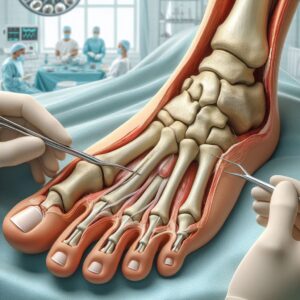
CPT Code for Second Hammertoe Correction
Table of Contents
ToggleUnderstanding the Basics of Hammertoe Deformities
Before we dive into the codes themselves, it helps to understand what the surgeon is actually doing in the operating room. Hammertoe deformities are contractures of the proximal interphalangeal (PIP) joint. This causes the toe to bend downward, resembling a hammer.
The second toe is particularly prone to this condition. Often, it is the longest toe, and it can be pushed upward by a bunion deformity on the great toe. When the second toe becomes contracted, it can rub against shoes, cause painful corns on the top of the joint, and lead to difficulty walking.
Surgical correction aims to straighten the toe, relieve pain, and restore function. The specific surgical technique used will directly guide the choice of CPT code.
Common Surgical Techniques for Hammertoe Correction
Surgeons have several tools in their arsenal to fix a hammertoe. The approach depends largely on whether the deformity is flexible (the toe can still be straightened manually) or rigid (the joint is fixed and cannot be moved).
-
Flexible Hammertoe Correction: Often involves a tendon release or transfer. This is less invasive.
-
Rigid Hammertoe Correction: Typically involves bone work. The surgeon may perform an arthroplasty (removing part of the joint) or an arthrodesis (fusing the joint).
-
Partial Amputation: In severe cases involving infection or ischemia, a partial digit amputation may be necessary.
For the second toe specifically, surgeons must also be mindful of the length of the toe. Because the second toe is often the longest, simply straightening it without addressing length can lead to a new set of problems.
The Primary CPT Code: 28285
When we talk about standard hammertoe correction, the most common code you will encounter is 28285. The official descriptor for this code is “Correction, hammertoe (eg, interphalangeal fusion, partial or total phalangectomy).”
This is the workhorse code for hammertoe surgery. It is typically used when the surgeon performs a resection of the head of the proximal phalanx (partial phalangectomy) or fuses the PIP joint (interphalangeal fusion) to correct a rigid deformity.
For a second hammertoe correction, if the surgeon is performing a typical arthroplasty or arthrodesis at the PIP joint, 28285 is almost always the correct choice.
When 28285 Applies to the Second Toe
Imagine a patient presents with a painful, rigid hammertoe of the second digit. The surgeon makes an incision over the PIP joint, releases the extensor tendon, resects the head of the proximal phalanx, and then uses a K-wire to stabilize the toe while it heals.
This scenario perfectly fits the descriptor of 28285. The code includes the bony resection, the tendon work, and the pinning if performed. You do not bill for the pin separately unless it is a more complex fixation device.
It is important to note that 28285 is assigned per toe. If the surgeon corrects hammertoes on the second, third, and fourth toes, you will report 28285 with three units of service, or with modifiers -59 or -XU to indicate distinct procedural services.
The Secondary Code: 28286
There is another code that sometimes causes confusion: 28286. This code is defined as “Correction, hammertoe (eg, interphalangeal fusion, partial or total phalangectomy), with tendon transfer.”
The key difference here is the addition of a tendon transfer. In some cases, particularly with a flexible hammertoe, the surgeon may perform a flexor tendon transfer. This involves cutting the flexor tendon and rerouting it to the extensor mechanism to actively pull the toe down and prevent recurrence.
For the second toe, this is sometimes performed to maintain dynamic stability. If the surgeon documents a tendon transfer in addition to the bony work, then 28286 is the appropriate code. However, this is less common than the standard 28285.
28285 vs. 28286: A Quick Comparison
To help clarify the difference, here is a simple table:
| Feature | CPT 28285 | CPT 28286 |
|---|---|---|
| Procedure | Arthroplasty or arthrodesis of PIP joint | Arthroplasty or arthrodesis PLUS tendon transfer |
| Bone Resection | Yes | Yes |
| Tendon Work | Simple tenotomy (cutting) | Transfer of flexor tendon to extensor mechanism |
| Common Use | Rigid hammertoe | Flexible or recurrent hammertoe |
| Complexity | Moderate | Higher |
Important Note: Do not report 28285 and 28286 together for the same toe. The tendon transfer is integral to 28286.
Coding for Multiple Hammertoe Corrections
One of the most frequent challenges in foot surgery coding is reporting multiple hammertoe corrections. If a patient has a bunion and hammertoes on the second, third, and fourth toes, how do you code that?
The CPT manual does not have a “multiple procedure” code for hammertoes. Therefore, you must report each correction separately. However, you must apply the correct modifiers to inform the payer that multiple, distinct procedures were performed on the same foot.
Using Modifiers for Multiple Toes
When you report two or more units of 28285 for the same foot, you will typically need to append modifiers to the additional units. Common modifiers include:
-
Modifier -59 (Distinct Procedural Service): This indicates that the procedure was separate and distinct from other services performed on the same day. For hammertoes, you would append -59 to the second and third code to show they are separate anatomical sites.
-
Modifier -XU (Unusual Non-Overlapping Service): This is a more specific subset of modifier -59. It is used when the procedure is distinct because it does not overlap usual components of another procedure. Many payers now prefer the -X modifiers over -59 for anatomical distinction.
Example:
If a surgeon corrects hammertoes on the second, third, and fourth toes:
-
Line 1: 28285 (for the second toe)
-
Line 2: 28285 -59 (or -XU) (for the third toe)
-
Line 3: 28285 -59 (or -XU) (for the fourth toe)
The 51 Modifier Debate
You may have heard of modifier -51 (Multiple Procedures). Historically, this was used to indicate multiple procedures performed during the same surgical session. However, in recent years, most commercial payers and Medicare have moved away from requiring modifier -51. Many payers now prefer the -59 or -X modifiers for anatomical distinction.
Important Note: Always check the specific guidelines of the payer you are billing. Some may still require modifier -51 on the secondary procedures, while others will deny the claim if -51 is used instead of -59.
Specific Considerations for the Second Toe
The second toe holds a unique position in foot surgery. It is often addressed in conjunction with a bunion procedure (hallux valgus correction). When this happens, coders must be vigilant about National Correct Coding Initiative (NCCI) edits.
Bundling with Bunion Procedures (28296, 28297, 28298, etc.)
NCCI has specific edits that bundle certain hammertoe corrections with bunion procedures. The rationale is that some of the work involved in a bunion correction (like exposing the first metatarsal) might overlap with the exposure needed for a second hammertoe correction.
However, the edits generally allow you to override the bundle with a modifier if the procedures are performed on separate, distinct anatomical sites. Since the bunion is on the first metatarsophalangeal (MTP) joint and the hammertoe is on the second PIP joint, these are considered distinct.
Example:
A patient undergoes a bunionectomy (28296) and a second hammertoe correction (28285) on the same foot. The NCCI edit pairs 28296 and 28285. To bill both, you would need to append modifier -59 or -XU to the hammertoe code (28285) to indicate it was a separate and distinct procedure.
Documentation Requirements
To support the use of modifier -59 for a second hammertoe correction performed with a bunion, the operative report must clearly describe:
-
A separate incision for the hammertoe (or a distinct extension of the incision).
-
The specific work performed on the second toe, distinct from the first ray.
-
The clinical indication for addressing the second toe separately.
Without clear documentation, payers may deny the second procedure as incidental to the primary bunion repair.
Other Related CPT Codes
While 28285 is the star of the show, there are other codes that might apply to the second toe depending on the extent of the surgery.
28280: Arthrodesis of the MTP Joint
Sometimes, a hammertoe deformity involves not only the PIP joint but also the metatarsophalangeal (MTP) joint. If the second toe is dislocated at the MTP joint, the surgeon may need to perform an arthrodesis (fusion) of that joint.
Code 28280 is used for “Arthrodesis, proximal interphalangeal joint, with or without internal fixation; first toe.” Wait—that says first toe. For the second toe, there is no specific MTP fusion code. In cases of MTP fusion of the lesser toes, you would typically use an unlisted code, or more commonly, the standard hammertoe code (28285) may be used if the work is documented. However, if the surgeon performs a resection of the base of the proximal phalanx at the MTP joint, this is often coded as 28285 as well, as it is part of the hammertoe correction.
28820: Amputation, Toe
In severe cases, such as a non-healing ulcer or osteomyelitis in a diabetic patient, the surgeon may need to perform a partial or complete amputation of the second toe. In this scenario, you would use 28820 (Amputation, toe; metatarsophalangeal joint). This is a distinctly different procedure from a hammertoe correction, as the goal is not to straighten the toe but to remove it entirely.
Common Billing Scenarios for Second Hammertoe Correction
Let’s walk through a few realistic scenarios to see how these codes come together in practice.
Scenario 1: Isolated Rigid Hammertoe, Second Toe
A 58-year-old female presents with a painful corn on the top of her second toe. Conservative care has failed. In the operating room, the surgeon performs a resection arthroplasty of the PIP joint of the second toe, using a K-wire for fixation.
Coding:
-
28285 (for the second toe)
-
No modifiers are needed if this is the only procedure.
Scenario 2: Bunion with Second and Third Hammertoes
A 45-year-old male undergoes a Lapidus bunion procedure (28297) for hallux valgus, as well as correction of hammertoes on the second and third toes using arthroplasties.
Coding:
-
28297
-
28285 -59 (for the second toe)
-
28285 -59 (for the third toe)
Why: The NCCI edit pairs 28297 with 28285. Modifier -59 is appended to the hammertoe codes to indicate they are separate, distinct services performed on different toes. Some coders may use -XU for greater specificity.
Scenario 3: Flexible Hammertoe with Tendon Transfer
A 62-year-old female has a flexible hammertoe of the second toe. The surgeon performs a flexor tendon transfer to the extensor mechanism to correct the deformity.
Coding:
-
28286 (for the second toe)
Why: The inclusion of the tendon transfer moves the procedure from the standard 28285 to the more complex 28286. Only one code is reported for the toe.
Scenario 4: Hammertoe Correction with MTP Joint Work
A 70-year-old male has a severe second hammertoe with a dorsally dislocated MTP joint. The surgeon reduces the MTP joint dislocation and performs an arthroplasty of the PIP joint.
Coding:
-
28285
-
Some coders might argue for an unlisted code, but in most cases, 28285 is accepted because the work at the MTP joint (reduction) is considered part of the overall hammertoe correction. If a formal arthrodesis of the MTP joint is performed, documentation and perhaps a query to the payer would be needed to determine if 28285 is still appropriate.
Payer Policies and Medical Necessity
No matter how accurately you code, the claim must be supported by medical necessity. Payers, especially Medicare, have strict guidelines about what constitutes a medically necessary hammertoe correction.
The Importance of Conservative Care
For a second hammertoe correction to be covered, the medical record must document that conservative measures have failed. This typically includes:
-
A trial of shoe modifications (wider toe box).
-
Padding or orthotic devices.
-
Anti-inflammatory medications.
-
Physical therapy or stretching.
If the documentation does not show that these conservative measures were attempted and failed, the claim is likely to be denied, regardless of the CPT code used.
Deformity Severity
Payers also look for evidence of the severity of the deformity. Simple cosmetic concerns are not covered. The documentation should note:
-
Pain that interferes with ambulation.
-
Presence of a hard corn or callus.
-
Ulceration or pre-ulcerative lesions.
-
Inability to wear appropriate footwear.
Tips for Clean Claims and Reduced Denials
To ensure your claims for second hammertoe correction get paid the first time, follow these best practices.
1. Be Specific in the Operative Report
The operative report is the source of truth. For the second toe, the surgeon should specify which toe was corrected. Phrases like “the second digit” are fine, but listing the toe number in the procedure title is better.
2. Justify Multiple Procedures
If you are billing for multiple hammertoes, the operative report should justify why each toe required surgical intervention. Simply stating “hammertoes of the 2nd, 3rd, and 4th toes” is acceptable, but linking each to a specific symptom (e.g., “painful corn over PIP joint of 2nd digit”) strengthens medical necessity.
3. Use the -X Modifiers
As payers shift toward greater specificity, using -XU (Unusual Non-Overlapping Service) for distinct anatomical sites like separate toes is becoming the gold standard. It reduces the likelihood of an audit or a denial compared to the broader modifier -59.
4. Watch Global Periods
Hammertoe corrections have a 90-day global period. If the patient returns for removal of K-wires, this is included in the global period. You cannot bill for the wire removal separately unless it is performed in a separate operative session beyond the global period, which is rare.
The Role of Modifier -RT and -LT
When coding for foot procedures, you will also use laterality modifiers. For a single foot, you will use -RT (right side) or -LT (left side). If the second hammertoe correction is performed on the left foot, you would append -LT to the CPT code.
If you are billing multiple procedures on the same foot, you only need to append the laterality modifier to the first code, though some practices append it to every line for clarity.
Example for multiple toes on the left foot:
-
28285 -LT
-
28285 -59 -LT
Understanding Relative Value Units (RVUs)
For those involved in practice management, understanding the financial weight of these codes is helpful. The RVU reflects the work, practice expense, and malpractice risk associated with the procedure.
As of 2026, the relative values are roughly as follows (these are approximate and subject to annual change by CMS):
-
28285: Approximately 5.50 to 6.00 total RVUs
-
28286: Slightly higher, around 6.50 to 7.00 total RVUs
When you perform multiple hammertoe corrections, Medicare and most payers apply a multiple procedure reduction. The first procedure is paid at 100% of the allowed amount. Subsequent procedures (with modifier -59 or -51) are typically paid at 50% of the allowed amount. This is a standard reimbursement rule for multiple surgical procedures performed on the same day.
Future Trends in Hammertoe Coding
Coding is not static. The American Medical Association (AMA) updates CPT codes annually. In recent years, there has been a push toward more granularity in musculoskeletal coding.
While 28285 remains stable, there is ongoing discussion in the coding community about the need for separate codes for arthrodesis versus arthroplasty of the lesser toes. Currently, 28285 covers both. However, coders should stay updated with the AMA’s CPT changes each year to ensure compliance.
Additionally, the use of newer technologies, such as implantable joint spacers or absorbable fixation devices, does not change the CPT code. The code is based on the work performed, not the implant used. However, you may be able to bill for the implant supply separately if it is not included in the procedure code.
Conclusion
Correctly coding a second hammertoe correction comes down to understanding the procedure, recognizing the distinct nature of the second digit, and applying the correct modifiers. The primary code, 28285, covers the vast majority of these cases. When tendon transfer is involved, 28286 is the appropriate choice. The most common pitfalls involve multiple procedure reductions and bundling edits with bunion surgeries.
By focusing on precise documentation, using specific modifiers like -59 or -XU, and justifying medical necessity, you can ensure accurate reimbursement and avoid the headaches of claim denials.
Frequently Asked Questions (FAQ)
1. Can I bill 28285 for a second hammertoe if the surgeon only performs a tenotomy?
Generally, no. A simple tenotomy (cutting a tendon) without bone resection is considered a lesser procedure. If no bone is resected or fused, you should look at code 28270 (Capsulotomy; metatarsophalangeal joint, with or without tenotomy). However, for a definitive hammertoe correction, bone work is typically required to qualify for 28285.
2. Do I need a separate diagnosis code for each hammertoe?
Yes, it is best practice. While you can use the same ICD-10 code (like M20.42 for hammertoe of the left foot) for multiple toes on the same foot, linking each CPT code to a distinct diagnosis in the claim form (Line 1: diagnosis pointer to M20.42; Line 2: also pointer to M20.42) is sufficient. For clarity, some practices use laterality-specific codes.
3. What is the difference between a hammertoe and a claw toe for coding purposes?
For coding purposes, the CPT codes are the same. Both conditions involve contractures, but claw toe involves contracture of both the PIP and DIP joints. The correction often still falls under 28285. The distinction is more important for diagnosis coding.
4. How many hammertoes can I bill on one foot?
You can bill for as many as were corrected. There is no limit, but each additional toe will be subject to multiple procedure payment reductions. Ensure the medical necessity for each toe is documented.
5. Is it appropriate to use modifier -51 on hammertoe codes?
While modifier -51 was historically used, many payers now prefer the -59 or -X modifiers to indicate distinct anatomical services. Check your specific payer guidelines. For Medicare, the -X modifiers are encouraged for distinct services.
Additional Resource
For the most up-to-date information on NCCI edits and Medicare payment policies for hammertoe corrections, we recommend visiting the Centers for Medicare & Medicaid Services (CMS) National Correct Coding Initiative (NCCI) webpage. Here you can download the quarterly NCCI procedure-to-procedure (PTP) edits to check for bundling pairs related to 28285 and 28286.
Disclaimer: This article is intended for educational and informational purposes only. Medical coding and billing guidelines are subject to change. Payers may have individual policies that differ from general guidelines. Always consult with a certified professional coder or your specific payer’s policy manual before submitting claims.