If you are reading this, you probably have a patient who needs a transcatheter aortic valve replacement. Or you are the medical coder trying to make sense of the paperwork. Either way, you have one simple question: What is the correct CPT code for TAVR?
The short answer is not a single code. TAVR (Transcatheter Aortic Valve Replacement) uses a family of codes. These codes range from 33361 to 33365. The exact code depends on the approach the surgeon uses.
But let us be honest. Knowing the code is only half the battle. You also need to understand moderate sedation, imaging guidance, and how to avoid denials.
This guide will walk you through everything. We will keep the language simple. We will avoid confusing jargon. And we will give you real, usable information that you can trust.
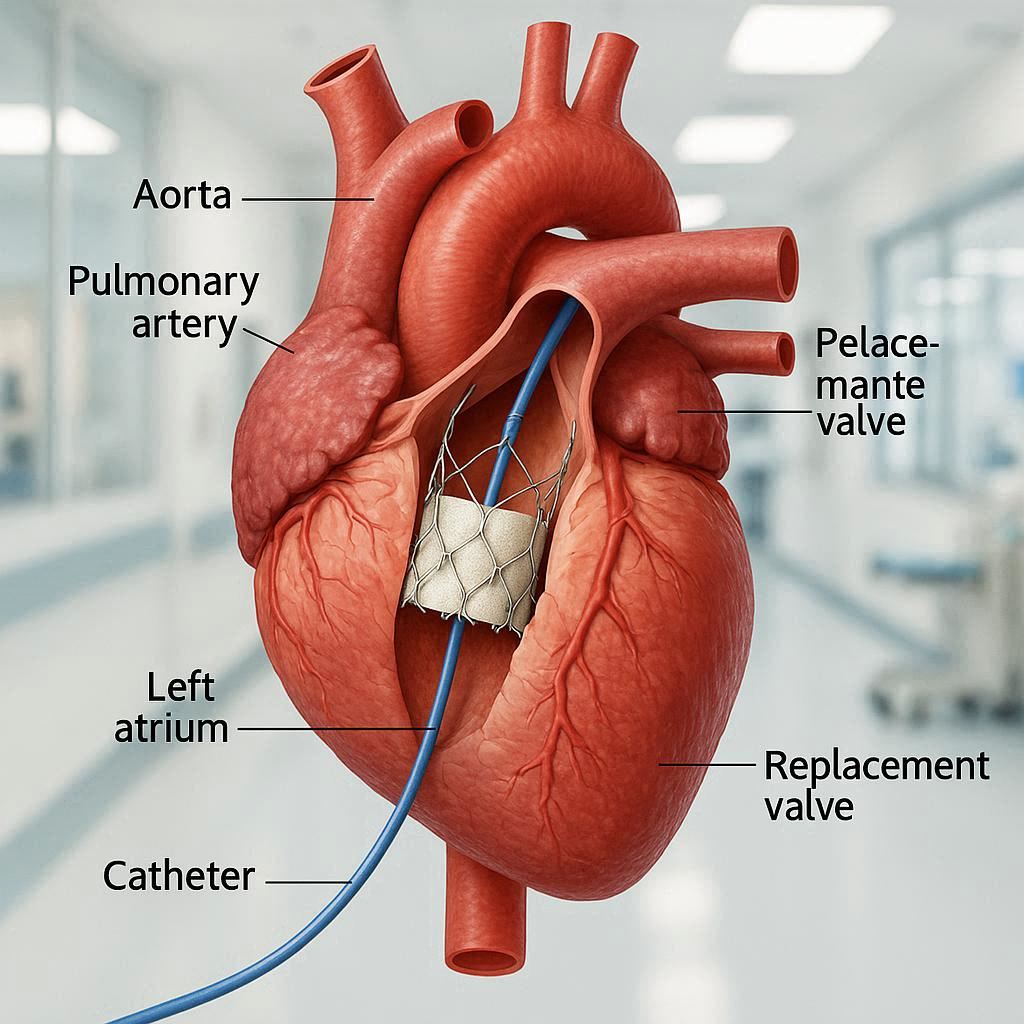
What Is TAVR? A Quick Refresher
Before we talk about codes, let us quickly explain the procedure. TAVR is a minimally invasive surgery. It fixes a tight aortic valve (aortic stenosis). Instead of opening the chest, doctors thread a new valve through a blood vessel.
The new valve is folded inside a catheter. Once it reaches the heart, it expands. The old valve pushes out of the way. The new valve takes over.
This procedure is a lifesaver for patients who are too sick for open-heart surgery.
But because there are different ways to enter the body, the codes change. That is why you need to pay close attention to the surgical approach.
The Primary CPT Code for TAVR: The 33361 – 33365 Family
The American Medical Association (AMA) created specific codes for TAVR. These codes live in the Surgery section of the CPT manual. They are all part of the 33361 to 33365 range.
Here is the important part. These codes are not interchangeable. You must choose the one that matches the access route.
Let us break down each code.
CPT 33361 – Transcatheter Aortic Valve Replacement (TAVR/TAVI)
Approach: Femoral artery (transfemoral) or other open arterial access.
This is the most common code you will use. Most TAVR procedures today use the femoral artery in the groin. The surgeon makes a small cut. Then they guide the catheter up to the heart.
If the report says “transfemoral approach” or “iliofemoral,” this is your code.
CPT 33362 – Open Femoral or Iliac Artery Approach
Approach: Open surgical exposure of the femoral or iliac artery.
Sometimes the artery is too narrow or twisted. In that case, the surgeon needs to expose the artery directly. This is still a minimally invasive approach, but it requires a larger incision in the groin or lower belly.
CPT 33363 – Transapical Approach
Approach: Through the left side of the chest (apex of the heart).
Here, the surgeon makes a small cut between the ribs. They go directly into the bottom tip of the heart. This approach avoids the leg arteries entirely.
You will see this approach when the patient has bad peripheral artery disease.
CPT 33364 – Transaortic Approach
Approach: Through the front of the chest and directly into the aorta.
The surgeon makes an upper chest incision. Then they go through the aorta (the main artery leaving the heart). This is another alternative for patients who cannot have a transfemoral approach.
CPT 33365 – Transcarotid or Other Open Arterial Approach
Approach: Through the carotid artery in the neck or another artery.
This is less common but growing. The surgeon accesses the carotid artery. Then they deliver the valve down toward the heart.
Important note for readers: Always check the operative report for the exact approach. Do not guess. If the report says “transfemoral,” use 33361. If it says “transapical,” use 33363. Guessing leads to denials.
Quick Reference Table: TAVR CPT Codes at a Glance
| CPT Code | Approach | Access Site | Most Common? |
|---|---|---|---|
| 33361 | Transfemoral or open arterial | Femoral artery (groin) | Yes (over 80% of cases) |
| 33362 | Open femoral/iliac | Exposed femoral or iliac artery | Less common |
| 33363 | Transapical | Left chest (heart apex) | Yes, common alternative |
| 33364 | Transaortic | Upper chest (aorta) | Rare |
| 33365 | Transcarotid or other | Neck (carotid) or other artery | Emerging |
Save this table. Pin it to your wall. It will save you time.
What Is Included in the TAVR CPT Code? (The Bundle)
Here is something many coders get wrong. The TAVR code is not just the valve placement. It includes several key steps.
When you bill 33361–33365, the following services are bundled:
- Accessing the artery or heart
- Guiding the catheter to the valve
- Deploying the new valve
- Removing the delivery system
- Closing the access site (if simple)
But wait. Some things are not included. You may be able to bill them separately.
Separate Services (Potentially Billable)
- Moderate or monitored anesthesia care (billed by anesthesia provider)
- Transesophageal echocardiography (TEE) if done for guidance (CPT 93312–93318)
- Intraprocedural imaging like intravascular ultrasound (IVUS)
- Permanent pacemaker placement if needed after TAVR (CPT 33206–33208)
- Vascular closure device (if not included in the primary code – check your payer)
Always check your specific payer policy. Medicare has rules about what is bundled.
Moderate Sedation and TAVR: A Common Confusion
Many TAVR procedures use moderate sedation (sometimes called conscious sedation). The patient is sleepy but breathing on their own.
If your physician provides moderate sedation, you might think you can bill 99152 or 99153. But be careful.
For TAVR, the primary surgical code (33361–33365) already includes the work of administering sedation when done by the same provider. You cannot add moderate sedation codes on top of the TAVR code if the same doctor does both.
However, if a different provider (like a separate anesthesiologist or nurse anesthetist) gives the sedation, then they bill their own codes.
Real talk from a coder: Many practices try to add sedation codes to TAVR. Most commercial payers and Medicare deny them. Save yourself the headache. Do not bill moderate sedation with 33361 unless you have a very specific payer policy allowing it.
Imaging Guidance: What Can You Bill Separately?
TAVR requires imaging. The doctor needs to see where the catheter is going. Common imaging methods include:
- Fluoroscopy (real-time X-ray)
- Angiography
- Transesophageal echocardiography (TEE)
Here is the rule. Fluoroscopy and angiography are bundled into the TAVR code. You cannot bill them separately.
But TEE is often separate. If the doctor performs TEE for guidance during the valve deployment, you can bill:
- 93312 – TEE for guidance (complete procedure)
- 93314 – TEE for guidance (limited)
However, some payers bundle TEE into TAVR. Check your local coverage determination (LCD).
ICD-10 Codes for TAVR: You Cannot Bill Alone
A CPT code without a diagnosis code is incomplete. For TAVR, you need an ICD-10 code that supports medical necessity.
The most common primary diagnosis is:
- I35.0 – Nonrheumatic aortic (valve) stenosis
Other supportive diagnoses may include:
- I35.2 – Nonrheumatic aortic valve stenosis with insufficiency
- I50.9 – Heart failure, unspecified (if the patient has symptoms)
- Z95.2 – Presence of prosthetic heart valve (for repeat procedures)
Medicare also requires documentation of frailty or surgical risk. You may need to add codes like:
- R54 – Age-related physical debility
- Z99.11 – Dependence on supplemental oxygen
Always link your ICD-10 code to the TAVR code on the claim form.
A Real-World Example: How to Choose the Correct Code
Let us walk through a typical patient.
Patient case:
Mr. Jones is 82 years old. He has severe aortic stenosis (I35.0). He is too weak for open surgery. The heart team decides on TAVR. The surgeon uses the right femoral artery. There is no open cutdown. Just a small puncture.
What is the CPT code?
Transfemoral approach without open arterial exposure. That is 33361.
What if the same patient had a calcified femoral artery?
The surgeon makes a small incision in the groin to expose the artery. That is open femoral exposure. Now the code changes to 33362.
See the difference? One word in the operative report changes everything.
How to Avoid TAVR Coding Denials: 5 Practical Tips
Denials are frustrating. But most TAVR denials happen for the same five reasons. Here is how to avoid them.
1. Read the Operative Report Carefully
Do not just skim. Look for the specific approach. The surgeon will usually write: “We used a transfemoral approach” or “transapical approach.” Highlight that sentence.
2. Document Medical Necessity
Medicare requires proof that the patient cannot have open surgery. Make sure the notes include:
- Surgical risk score (like STS score)
- Frailty assessment
- Why TAVR is the best choice
3. Do Not Unbundle Services
Do not try to bill fluoroscopy, angiography, or moderate sedation separately. They are part of the TAVR code. Unbundling is a fast track to an audit.
4. Check for Separate TEE Billing
If TEE was performed by a different physician (like a cardiologist doing the echo while the surgeon does the valve), you may bill TEE separately. But if the same doctor does both, check payer policy.
5. Use Modifiers When Needed
If a second procedure happens during the same session (like a pacemaker), use modifier -59 (Distinct Procedural Service). But only when appropriate.
TAVR Coding for Hospital Outpatient vs. Inpatient
Where does the TAVR happen? That changes how you bill.
Inpatient hospital:
The hospital bills TAVR using the same CPT codes (33361–33365). The physician bills professional fees separately. The hospital may also use APC (Ambulatory Payment Classification) codes for reimbursement.
Hospital outpatient:
TAVR is often performed as an inpatient procedure. Outpatient TAVR is rare. If it happens, the hospital bills under the outpatient prospective payment system (OPPS). But most payers expect TAVR to be inpatient because of the recovery needs.
Physician office:
Never. TAVR is never done in a private physician office. It requires a hybrid operating room, a heart team, and intensive care recovery.
Medicare and TAVR: What You Must Know
Medicare covers TAVR for patients with symptomatic severe aortic stenosis. But there are conditions.
Medicare requires:
- The patient is ineligible for open surgery OR high risk.
- The procedure is done at a certified TAVR center.
- The heart team includes cardiac surgeons, cardiologists, and anesthesiologists.
- Data is entered into a national registry (like STS/ACC TVT Registry).
From a coding perspective, Medicare follows the same CPT codes. But they have specific National Coverage Determination (NCD) rules.
Always check the latest NCD for TAVR (NCD 20.35). It changes occasionally.
Private Payers: Do They Follow the Same Codes?
Most commercial payers (UnitedHealthcare, Cigna, Aetria, Humana, etc.) accept the same 33361–33365 codes. However, they may have different coverage policies.
Some private payers require pre-authorization. Others may bundle more services than Medicare. A few still ask for older unlisted codes (like 33999).
Pro tip: Call the payer’s provider line before the procedure. Ask: “Do you accept 33361 for TAVR, or do you want an unlisted code?” Get a reference number for the call.
What About the Balloon Valvuloplasty Code? (CPT 33360)
You might see 33360 in the same section of the CPT book. That code is for balloon aortic valvuloplasty (BAV). That is a different procedure.
In BAV, the doctor inflates a balloon to stretch the valve open. No new valve is placed. BAV is temporary. It is sometimes done as a bridge to TAVR or surgery.
Do not confuse 33360 with 33361. One is a balloon. The other is a valve replacement. They are not the same.
Unlisted Codes: When Should You Use Them?
In very rare cases, none of the 33361–33365 codes fit. Maybe a new experimental approach is used. Or the surgeon combines techniques in a unique way.
Then you would use an unlisted code:
- 33999 – Unlisted procedure, cardiac surgery
But be warned. Unlisted codes are denial magnets. You will need to send a cover letter with the operative report, a cost breakdown, and a comparison to a similar existing code.
Only use an unlisted code as a last resort.
Documentation Requirements for TAVR Coding
Good documentation equals good reimbursement. For TAVR, your operative report must include:
- The specific access approach (e.g., transfemoral, transapical)
- Whether the access was percutaneous or open cutdown
- The type and size of the valve used
- Imaging guidance used (fluoroscopy, TEE, etc.)
- Any complications or additional procedures (e.g., pacemaker)
- The patient’s risk status (high risk, intermediate risk, or inoperable)
If any of these details are missing, the coder cannot choose the correct code. And the claim may be delayed or denied.
Example of an Operative Report Snippet (Good Documentation)
“After informed consent, the patient was brought to the hybrid operating room. Under moderate sedation, we accessed the right common femoral artery percutaneously. A 26mm SAPIEN 3 valve was advanced over a wire and deployed across the native aortic valve under fluoroscopic and TEE guidance. Final angiography showed no paravalvular leak. The access site was closed with a suture-mediated device.”
Coder’s takeaway: Transfemoral, percutaneous, no open exposure. That is 33361. TEE was used but by a different cardiologist? Possibly bill TEE separately.
Common TAVR Coding Mistakes (And How to Fix Them)
Let us look at the top five mistakes I see from coders and billers.
| Mistake | Why It Happens | How to Fix |
|---|---|---|
| Billing 33361 for transapical | Misreading approach | Check for “apex” or “chest wall” |
| Adding moderate sedation codes | Assuming it is allowed | Know it is bundled |
| Billing fluoroscopy separately | Unbundling | Stop. It is included. |
| Forgetting ICD-10 for frailty | Rushing | Add R54 or Z99.11 |
| Using unlisted code unnecessarily | Fear of wrong code | Use 33361–33365 family |
The Future of TAVR Coding: What to Watch
TAVR is evolving. New access routes are being developed. For example, transcaval (through the vein) and trans-subclavian approaches.
The CPT coding committee updates the manual every year. Watch for potential new codes or revisions to 33361–33365.
Also, as TAVR moves to lower-risk patients, coding guidelines may change. Medicare may relax some coverage requirements.
Stay current. Join a coding listserv. Read the CPT changes every September.
Conclusion (Three Lines)
TAVR coding relies on the 33361–33365 code family based on surgical access. Always read the operative report for the specific approach, and never unbundle bundled services like fluoroscopy or moderate sedation. Use this guide as your daily reference to reduce denials and bill with confidence.
Frequently Asked Questions (FAQ)
1. What is the most common CPT code for TAVR?
The most common code is 33361 for transfemoral approach. About 80–90% of TAVR procedures use this code.
2. Can I bill moderate sedation with TAVR?
Generally no. Moderate sedation is bundled into the TAVR code when performed by the same physician. Separate providers may bill their own codes.
3. Is TEE included in the TAVR CPT code?
Sometimes yes, sometimes no. Many payers bundle TEE into TAVR, but others allow separate billing with modifier -59. Check your local payer policy.
4. What ICD-10 code do I use for TAVR?
The primary code is I35.0 (nonrheumatic aortic valve stenosis). Add frailty codes like R54 when documented.
5. What is the difference between 33361 and 33362?
33361 is percutaneous (needle puncture). 33362 requires an open surgical cutdown to expose the artery.
6. Does Medicare cover TAVR?
Yes, but only for patients with symptomatic severe aortic stenosis who are at high or intermediate surgical risk, performed at a certified center.
7. Can I bill a TAVR code for a valve-in-valve procedure?
Yes. If a prior bioprosthetic valve fails, replacing it with a transcatheter valve uses the same 33361–33365 codes.
8. What if no code fits?
Use unlisted code 33999 and submit a cover letter with the operative report. But first, double-check that 33361–33365 really does not fit.
Additional Resource
For the most up-to-date Medicare National Coverage Determination for TAVR, including facility requirements and registry mandates, visit the official CMS website:
🔗 www.cms.gov/ncd/view-ncd.aspx?ncdid=355
(Copy and paste this link into your browser. Always verify you are on the official .gov site.)
Final Note from the Author
Coding for TAVR does not have to be painful. Yes, the codes are specific. Yes, the rules are strict. But once you understand the 33361–33365 family, you will breeze through these claims.
Remember: approach is everything. Transfemoral = 33361. Open femoral = 33362. Transapical = 33363. Keep this guide nearby. And when in doubt, read the operative report one more time.
You have got this.
Disclaimer: This article is for educational purposes only. Coding and billing rules change frequently. Always verify current codes and payer policies before submitting claims. This content does not constitute legal or medical advice.