In the complex ecosystem of modern healthcare, few things are as universally fundamental yet intricately nuanced as medical coding. It is the language that translates a clinician’s skilled work into data, driving reimbursement, informing research, and shaping patient records. For procedures as common as a paracentesis—the drainage of fluid from the abdominal cavity—this translation is not merely administrative; it is a critical function that ensures medical practices can sustain the vital services they provide. A miscoded paracentesis can lead to significant financial loss, compliance risks, and even audits that threaten the stability of an entire organization.
This comprehensive guide delves deep into the world of CPT codes for paracentesis, moving far beyond a simple definition of 49082 and 49083. We will explore the clinical context that dictates code selection, dissect the documentation required to support it, and navigate the complex rules of modifiers and payer policies. Whether you are a seasoned coder, a new biller, a practicing physician, or a healthcare administrator, this article aims to be your definitive resource. Our goal is to equip you with the knowledge not just to code correctly, but to code confidently, ensuring that your practice is compensated accurately and compliantly for the essential care it delivers.
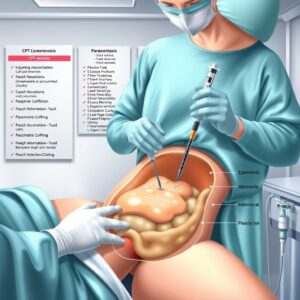
CPT codes for paracentesis
2. Understanding the Procedure: What is a Paracentesis?
To code a procedure accurately, one must first understand its medical purpose, its execution, and its nuances. Paracentesis, also known as an abdominal tap, is a percutaneous procedure performed to remove fluid from the peritoneal cavity, the space between the abdominal wall and the organs it contains.
Indications: Why is it Performed?
The accumulation of fluid in the abdomen, known as ascites, is the primary reason for performing a paracentesis. The causes of ascites are varied, and the reason for the tap often directly determines whether it is coded as diagnostic or therapeutic.
-
Diagnostic Indications: The goal is to obtain a small sample of fluid (often 50mL or less) for laboratory analysis to determine the cause of the ascites.
-
New-onset ascites of unknown origin.
-
Suspected spontaneous bacterial peritonitis (SBP), a dangerous infection.
-
Evaluating for malignant or cancerous cells (cytology) in a patient with a known malignancy.
-
Differentiating causes (e.g., portal hypertension vs. other causes).
-
-
Therapeutic Indications: The goal is to remove a large volume of fluid to relieve patient symptoms.
-
Respiratory distress or discomfort due to abdominal pressure and distension.
-
Pain and abdominal tightness.
-
Improved mobility and quality of life for patients with chronic, recurrent ascites.
-
Contraindications and Risks
While generally safe, paracentesis is not without risks. Coders should be aware of these, as they can sometimes be documented and impact coding (e.g., use of Modifier -22).
-
Contraindications: Severe coagulopathy (bleeding disorders), thrombocytopenia (very low platelet count), bowel obstruction, and infection in the intended needle path.
-
Risks and Complications: Bleeding, infection, perforation of a bowel loop, persistent fluid leak from the puncture site, and hypotension (low blood pressure) after large-volume drainage.
The Procedure Step-by-Step: A Clinical Overview
-
Consent and Preparation: The patient is consented for the procedure. They are positioned supine, and the preferred puncture site (often midline or lateral lower quadrants) is identified.
-
Asepsis and Anesthesia: The area is cleaned with an antiseptic solution. Local anesthetic (e.g., lidocaine) is injected to numb the skin and tissue down to the peritoneum.
-
Needle Insertion: A specialized needle or catheter (often a trocar or a commercially available paracentesis kit) is advanced through the anesthetized track into the peritoneal cavity. A “pop” or give is often felt upon entry.
-
Fluid Management:
-
Diagnostic: A syringe is attached, and a small amount of fluid is aspirated and sent to the lab in various tubes (e.g., red-top for cell count, purple-top for culture, etc.).
-
Therapeutic: The needle is connected to tubing and a vacuum bottle or bag, and large volumes (often liters) of fluid are drained. The flow may be controlled to prevent hypotension.
-
-
Completion: The needle or catheter is removed. Pressure is applied, and a bandage is placed over the site. The patient is monitored for any immediate complications.
(Image: A diagram showing the anatomical location of a paracentesis needle insertion in the lower abdomen, with an inset showing fluid drainage into a collection bag.)
[Image Placeholder: Paracentesis Procedure Diagram]
3. The Foundation: An In-Depth Look at CPT Codes 49082 and 49083
The Current Procedural Terminology (CPT) code set, maintained by the American Medical Association (AMA), provides two distinct codes for paracentesis. The choice between them is not based on the volume of fluid removed but on the intent of the procedure.
CPT 49082: Paracentesis, abdominal; diagnostic
This code is used when the primary purpose of the procedure is to obtain a sample of ascitic fluid for laboratory analysis. The volume removed is typically small (e.g., 20-50mL), just enough to fill the necessary specimen tubes. It is crucial to understand that if only a diagnostic paracentesis is performed, you must report 49082, even if a few hundred milliliters are removed to get a good sample. The code encompasses the entire procedure: local anesthesia, needle insertion, aspiration of fluid, and withdrawal of the needle.
CPT 49083: Paracentesis, abdominal; therapeutic
This code is used when the primary purpose is the drainage of a large volume of fluid to alleviate patient symptoms. The diagnostic component is secondary. If a provider drains a significant volume for therapeutic relief and also sends a sample to the lab, the procedure is still coded as 49083. The therapeutic intent drives the code selection. This code includes all elements of 49082 but is valued higher due to the increased work, time, and monitoring often required for large-volume paracentesis (LVP).
The Critical Difference: Intent and Documentation
The cornerstone of correct coding lies in the physician’s documentation of intent. The coder must review the procedure note, the patient’s history, and the reason for the procedure as stated by the provider.
-
Clues for Diagnostic (49082): Phrases like “tap for diagnosis,” “rule out SBP,” “send fluid for cell count and culture,” “evaluate for malignancy,” “etiology of ascites unknown.”
-
Clues for Therapeutic (49083): Phrases like “symptomatic relief,” “respiratory compromise,” “abdominal discomfort,” “drainage for comfort,” “large volume paracentesis,” and documentation of the volume removed (e.g., “4.5L of clear yellow fluid removed”).
Coding Tip: The volume itself is not the deciding factor, but it is a strong indicator. A removal of 100mL is almost certainly diagnostic. A removal of 4000mL is almost certainly therapeutic. A removal of 500mL could be either, making the documented intent paramount.
4. Coding in Practice: Real-World Scenarios and Documentation Requirements
Let’s apply these principles to realistic patient encounters.
**Scenario 1: The Diagnostic Tap
-
Patient Presentation: A 55-year-old male with a history of alcohol use presents to the clinic with new abdominal distension and early satiety. The physician suspects ascites secondary to liver disease but wants to confirm and rule out infection.
-
Procedure: After informed consent, the patient is prepped and draped. Local anesthetic is administered. Using ultrasound guidance, a needle is inserted into the peritoneal cavity. 40mL of straw-colored fluid is aspirated and sent to the lab for cell count, albumin, culture, and cytology. The needle is removed, pressure is applied, and a bandage is placed. The patient tolerated the procedure well.
-
Correct Coding: 49082. The intent is clearly diagnostic (“wants to confirm and rule out infection”). The volume removed is small and consistent with a diagnostic tap.
**Scenario 2: The Therapeutic Drainage
-
Patient Presentation: A 62-year-old female with known end-stage liver disease and chronic ascites presents to the ED with severe abdominal distension, pain, and shortness of breath. She has had therapeutic taps every 2-3 weeks for the past year.
-
Procedure: The procedure is explained and consent obtained. The site is prepped and anesthetized. A catheter is inserted, and 5.5 liters of ascitic fluid are slowly drained over 90 minutes with concurrent IV albumin administration. A 20mL sample is also sent for cell count and culture per protocol. The patient reports immediate relief of her dyspnea.
-
Correct Coding: 49083. The intent is therapeutic, driven by the patient’s symptoms (pain, shortness of breath). The large volume removed and the clinical context of recurrent therapeutic taps confirm this. Sending a sample for analysis is a standard of care and does not change the primary therapeutic intent.
**Scenario 3: The Conversion (Diagnostic to Therapeutic)
-
Patient Presentation: A 70-year-old male with metastatic pancreatic cancer is admitted with mild abdominal distension. The oncology team orders a paracentesis to send fluid for cytology to assess for disease progression.
-
Procedure: The physician begins the procedure with a diagnostic intent. After aspirating 50mL for the lab, the patient asks, “While you’re in there, can you take more off? This is really uncomfortable.” The physician assesses the patient and agrees. An additional 3 liters of fluid are drained for symptomatic relief.
-
Correct Coding: 49083 only. CPT guidelines state that when a diagnostic paracentesis evolves into a therapeutic one, only the therapeutic code (49083) is reported. It would be incorrect to report both 49082 and 49083. The therapeutic code encompasses the diagnostic aspiration.
The Role of the Procedure Note: Key Elements for Coders
A robust procedure note is the coder’s best friend. It should include:
-
Indication: The medical reason for the procedure (e.g., “therapeutic drainage for symptomatic ascites” or “diagnostic tap to rule out SBP”).
-
Informed Consent: A note that risks and benefits were discussed.
-
Details of the Procedure: Site of needle insertion, use of local anesthetic, use of imaging guidance (e.g., ultrasound).
-
Description of Fluid: The character (clear, cloudy, bloody) and the exact volume removed.
-
Specimens Sent: A list of what tests were ordered on the fluid.
-
Tolerance and Outcome: How the patient tolerated the procedure and the immediate outcome (e.g., “symptoms improved”).
-
Physician’s Signature.
5. Modifiers and Their Powerful Impact on Reimbursement
Modifiers provide a way to indicate that a service or procedure was altered in some way without changing the definition of the code itself. Their correct use is essential for accurate reimbursement and compliance.
Modifier -59: Distinct Procedural Service
This is one of the most important and misused modifiers in coding. It indicates that a procedure or service was distinct or independent from other services performed on the same day.
-
Application to Paracentesis: If a paracentesis is performed on the same day as another procedure (e.g., a thoracentesis – drainage of lung fluid), Modifier -59 would be appended to the secondary procedure to indicate it was a separate site, separate session, and distinct service. Without the modifier, National Correct Coding Initiative (NCCI) edits may bundle the services, causing a denial.
-
Example: 49083 (paracentesis) and 32554 (thoracentesis). Without -59 on the secondary code, the payer may assume it was part of the same service. Documentation must clearly support that they were separate and distinct procedures.
Modifier -51: Multiple Procedures
This modifier is used when multiple procedures are performed by the same provider during the same surgical session. The primary procedure is listed first at full fee, and subsequent procedures are appended with -51, which typically reduces their reimbursement rate.
-
Application: If a physician performs a paracentesis and an unrelated procedure (e.g., a bone marrow biopsy) during the same encounter, -51 would be appended to the lesser-valued procedure.
Modifier -76: Repeat Procedure by Same Physician
This modifier is critical for repeat paracenteses. It indicates that the same procedure was repeated by the same physician or qualified healthcare professional on the same day.
-
Application: A patient may have a therapeutic paracentesis in the morning, and due to re-accumulation or incomplete drainage, requires a second tap in the evening. To report the second procedure, you would use 49083-76. This signals to the payer that it is a distinct, repeat service and not a duplicate bill.
Modifier -77: Repeat Procedure by Another Physician
Similar to -76, but used when the repeat procedure is performed by a different physician than the one who performed the original procedure. This is common in large hospitals with different teams on day and night shifts.
Modifier -22: Increased Procedural Services
This modifier indicates that the work required to perform a service was substantially greater than typically required.
-
Application to Paracentesis: This could be used in rare cases where the procedure is exceptionally difficult due to factors like extreme obesity, extensive scarring from previous surgeries, or a loculated ascites (where fluid is trapped in pockets) requiring multiple needle passes or extended time. Documentation must be superb, detailing the specific factors that made the procedure unusually complex. Append 49083-22 and submit a special report.
A Note on Modifier -25: Significant, Separately Identifiable E/M Service
This modifier is appended to an Evaluation and Management (E/M) service (e.g., an office visit, 99214) when it is performed on the same day as a procedure like a paracentesis. It indicates that the E/M service was above and beyond the usual pre-and post-procedure work and was a separately identifiable service.
-
Example: A patient is seen for a scheduled follow-up for cirrhosis (coded with an E/M code). During the visit, they develop acute shortness of breath, and the physician decides to perform a therapeutic paracentesis in the office. The E/M service for the cirrhosis management is separate from the decision to perform the paracentesis. You would report the E/M code with modifier -25 and the 49083 separately. The documentation must support that the E/M was significant and separate.
6. Navigating the Financial Landscape: RVUs, Reimbursement, and Payer Policies
Understanding the financial value of codes is crucial for practice management.
Understanding Relative Value Units (RVUs)
The Centers for Medicare & Medicaid Services (CMS) uses the Resource-Based Relative Value Scale (RBRVS) to determine physician payment. Each CPT code is assigned three types of RVUs:
-
Work RVU (wRVU): Reflects the physician’s time, skill, effort, and stress.
-
Practice Expense (PE) RVU: Covers overhead (e.g., staff, equipment, supplies).
-
Malpractice (MP) RVU: Covers the cost of professional liability insurance.
The total RVU is multiplied by a geographic practice cost index (GPCI) and a conversion factor (CF) to determine the final payment.
Medicare National Physician Fee Schedule RVUs for Paracentesis (Non-Facility setting)
| CPT Code | Description | Work RVU | PE RVU | MP RVU | Total RVU | National Avg. Reimbursement* |
|---|---|---|---|---|---|---|
| 49082 | Paracentesis, diagnostic | 1.10 | 1.97 | 0.09 | 3.16 | ~$118.00 |
| 49083 | Paracentesis, therapeutic | 1.69 | 2.36 | 0.12 | 4.17 | ~$156.00 |
**Estimated based on the 2023 CF of $33.8872. Actual payment varies by locality.*
This table clearly shows the higher valuation of the therapeutic procedure, reflecting its increased work and resource use.
National and Local Payer Variations
While Medicare sets a national standard, private payers (e.g., Blue Cross, Aetna, UnitedHealthcare) often have their own fee schedules and policies. Some may bundle the payment for ultrasound guidance; others may have specific medical necessity requirements for therapeutic paracentesis (e.g., requiring a trial of diuretics first). It is imperative to check with individual payers.
Common Denial Reasons and How to Appeal
-
Denial: “Bundled with another service on the same day.”
-
Appeal: Check NCCI edits. If the services are truly distinct, append the appropriate modifier (e.g., -59) and send copies of the procedure notes highlighting the separate indications, sites, and times.
-
-
Denial: “Medical necessity not met for therapeutic paracentesis.”
-
Appeal: Submit the patient’s history and the procedure note that documents the symptoms (e.g., “patient with dyspnea and abdominal pain at rest”).
-
-
Denial: “Incorrect code billed. Diagnostic code should be used.”
-
Appeal: This is a documentation challenge. Appeal with the specific portion of the procedure note that states the therapeutic intent (e.g., “for symptomatic relief”) and the volume of fluid removed.
-
7. Beyond the Basics: Associated Codes and Bundling Considerations
Paracentesis is rarely performed in isolation. Coders must understand how to handle frequently associated services.
Ultrasound Guidance (76942, 49083-26)
Ultrasound is routinely used to identify a safe needle entry point and avoid organs. It is reported separately.
-
CPT 76942: Ultrasonic guidance for needle placement (e.g., biopsy, aspiration), imaging supervision and interpretation.
-
Coding: Report 76942 in addition to 49082 or 49083. Because ultrasound guidance is a radiology service, if the same physician performs both the paracentesis and the ultrasound, they are reporting the “global” service (technical and professional component). If a radiologist performs only the guidance and interpretation, they would report 76942. The performing physician would report the paracentesis code. NCCI edits allow these to be billed together without a modifier in most cases.
Fluid Analysis (Code Range 80000-89999)
The analysis of the ascitic fluid is billed separately by the laboratory. These are numerous and depend on the tests ordered. Common examples include:
-
Cell Count: 85025 (Blood count; complete (CBC))
-
Albumin: 82040 (Albumin; serum, plasma or whole blood)
-
Culture: 87101 (Culture, fungi, isolation; with presumptive identification of isolates), 87102 (… with definitive identification)
-
Cytology: 88112 (Cytopathology, selective cellular enhancement technique with interpretation (e.g., liquid based slide preparation method)), 88160-88162 (Cytopathologic exam of fluids, washings, or brushings).
Anesthesia Services (00740)
While paracentesis is typically performed under local anesthesia, some patients (e.g., uncooperative pediatric patients) may require sedation administered by an anesthesiologist.
-
CPT 00740: Anesthesia for intraperitoneal procedures in upper abdomen including laparoscopy; not otherwise specified.
-
Coding: This would be reported by the anesthesia provider. The surgeon’s paracentesis code is reported separately.
Evaluation and Management (E/M) Codes (99202-99255, etc.)
As discussed with Modifier -25, an E/M service on the same day may be separately reportable if it is significant and separately identifiable from the procedure. The documentation must support that the E/M was for a different problem or required additional work beyond the typical pre-procedure evaluation.
8. Compliance and Audit-Readiness: Mitigating Risk in Your Practice
Incorrect coding for paracentesis is a known audit risk area. Proactive compliance is the best defense.
The OIG Work Plan and Paracentesis
The U.S. Department of Health and Human Services Office of Inspector General (OIG) publishes an annual Work Plan outlining its audit and enforcement priorities. While not always explicitly listed, procedures like paracentesis fall under broader categories like “Evaluation of E/M Services Billed with Procedures” and “Duplicate Payments.” Upcoding a diagnostic tap to a therapeutic one without documentation is a common error they would target.
Creating an Internal Audit Checklist
Every practice should periodically self-audit their paracentesis coding.
-
Does the procedure note clearly state the intent (diagnostic/therapeutic)?
-
Is the volume of fluid removed documented?
-
If 49083 is billed, are there documented symptoms justifying medical necessity?
-
If an E/M code is billed with -25, does the note support a separate service?
-
If modifier -59 is used, does the documentation support a distinct procedural service?
-
Is ultrasound guidance documented and billed correctly?
Educating Clinicians for Better Documentation
Coders and clinicians must be partners. Hold brief educational sessions with your providers. Explain the difference between 49082 and 49083 and show them examples of strong documentation. A simple phrase like “therapeutic large-volume paracentesis for symptomatic relief of dyspnea” in their note makes the coder’s job accurate and audit-proof.
9. The Future of Paracentesis Coding: Trends and Technological Advancements
The field of medical coding is dynamic. Several trends could impact paracentesis coding:
-
Automated Coding: AI and Natural Language Processing (NLP) are being integrated into Electronic Health Records (EHRs) to suggest codes based on chart documentation. While helpful, human review remains essential to capture nuance like “intent.”
-
Value-Based Care: The shift from fee-for-service to value-based reimbursement may change how such procedures are bundled into episode-based payments.
-
New Technologies: The development of new, implanted catheters for chronic ascites management (e.g., Alfapump® system) introduces new procedural and supply codes that coders will need to learn.
10. Conclusion: Mastering the Nuances for Optimal Patient Care and Practice Health
Accurate coding for paracentesis hinges on a deep understanding of clinical intent, captured through robust documentation and translated precisely using CPT codes 49082 and 49083. Mastering the application of modifiers, navigating payer-specific policies, and maintaining a vigilant compliance posture are not just administrative tasks—they are essential practices that ensure financial stability and allow healthcare providers to focus on their primary mission: delivering exceptional patient care. By treating coding as a critical clinical partnership, practices can optimize reimbursement and mitigate risk with confidence.
11. Frequently Asked Questions (FAQs)
Q1: Can I bill both 49082 and 49083 if the physician removes a small amount for diagnosis and then a large amount for therapy?
A: No. According to CPT guidelines, if a diagnostic paracentesis is performed and it is followed by a therapeutic paracentesis at the same session, only the therapeutic procedure (49083) is reported. Code 49083 includes any diagnostic aspiration.
Q2: How much fluid removal qualifies as “therapeutic”? Is there a specific volume threshold?
A: No, there is no official volume threshold in the CPT manual. The code selection is based on intent, not volume. However, in practice, a removal of less than 100mL is almost always diagnostic, while a removal of over 500mL is almost always therapeutic. The physician’s documented intent is the ultimate deciding factor.
Q3: A patient had a paracentesis in the morning and another one 8 hours later due to rapid re-accumulation. How do I code the second one?
A: You would report the therapeutic paracentesis code (49083) for the first procedure. For the second procedure, report 49083 with modifier -76 (Repeat Procedure by Same Physician) to indicate it was a distinct, repeat service on the same day.
Q4: Is ultrasound guidance always separately billable with a paracentesis?
A: Generally, yes. CPT code 76942 (ultrasound guidance) is typically separately reportable as it is not considered an integral part of the paracentesis procedure itself. However, you must ensure that the procedure note documents the use of ultrasound for guidance. Be aware that some payers may have specific policies, so it’s always best to verify.
Q5: What is the most common mistake practices make when coding paracentesis?
A: The most common mistake is automatically coding based on volume removed instead of the physician’s documented intent. Another frequent error is failing to append modifier -25 to a significant, separately identifiable E/M service provided on the same day, leading to a denial, or appending it when the documentation does not support a separate service, leading to an audit risk.
12. Additional Resources
-
American Medical Association (AMA): For the official CPT® code set and guidelines. https://www.ama-assn.org/
-
Centers for Medicare & Medicaid Services (CMS): For the Physician Fee Schedule Look-Up Tool and NCCI edits. https://www.cms.gov/
-
American Academy of Professional Coders (AAPC): For coding training, certifications, and industry updates. https://www.aapc.com/
-
American Health Information Management Association (AHIMA): For resources on health information management and compliance. https://www.ahima.org/
13. Disclaimer
This article is for informational and educational purposes only and is based on guidelines and information available as of the publication date. It does not constitute legal, medical, or coding advice. Medical coding is complex and subject to change with updates from the AMA, CMS, and other regulatory bodies. The author and publisher disclaim any liability for any loss or damage caused by the use or misuse of this information. It is the responsibility of the user to consult current, official coding guidelines, payer-specific policies, and their own legal/compliance counsel to ensure accurate and compliant coding and billing practices.