
In pediatric dentistry, preserving the structural integrity of a child’s mouth after the early loss of a primary tooth is critical. This is where space maintainers come in. Among the various dental procedure codes, D1575 specifically relates to distal shoe space maintainers, which play a vital role in guiding proper tooth eruption. This article delves into the D1575 dental code, its application, billing nuances, clinical relevance, and how dental professionals can use it effectively to improve outcomes for young patients.
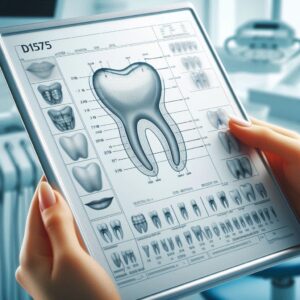
D1575 Dental Code
2. What is the D1575 Dental Code?
The D1575 dental code refers to:
“Distal shoe space maintainer – fixed – unilateral”.
This is a Current Dental Terminology (CDT) code used for a specific type of fixed appliance that extends into the alveolus (bone socket), guiding the eruption of a permanent molar where a primary molar was prematurely lost.
-
CDT Definition: Fixed appliance extending intra-alveolarly and designed to guide the eruption of the first permanent molars.
-
Placement: Typically placed when a primary second molar is lost before the eruption of the first permanent molar.
-
Category: Prosthodontics – removable and fixed appliances for children.
3. Importance of Space Maintainers in Pediatric Dentistry
Premature tooth loss in children can lead to misalignment, crowding, and bite problems later in life. Space maintainers help:
-
Preserve the space required for permanent teeth.
-
Prevent adjacent teeth from shifting.
-
Reduce the need for future orthodontic treatment.
-
Promote proper jaw development and oral function.
The distal shoe appliance is unique because it helps guide a molar that hasn’t yet erupted—a proactive approach rather than a reactive one.
4. When is D1575 Used?
The D1575 code is specifically used in scenarios where:
-
A primary second molar is extracted or lost early.
-
The first permanent molar has not yet erupted.
-
There’s a need to guide proper eruption of that permanent molar.
-
The appliance must be placed intra-alveolarly (into the gum tissue or alveolus).
⚠️ Note: It’s not applicable when the permanent molar has already erupted.
5. Materials and Types of Space Maintainers
Space maintainers come in various forms and materials. The distal shoe appliance often involves:
-
Stainless steel crowns (SSC) for anchorage
-
Metal extension that fits into the socket
-
Acrylic base (occasionally used)
Types of Space Maintainers:
-
Distal Shoe (D1575) – for unerupted permanent molars
-
Band and Loop (D1510) – for one missing tooth
-
Lingual Holding Arch (D1515) – for bilateral loss
-
Nance Appliance (D1515) – palatal support
6. Procedure Overview and Billing with D1575
Step-by-Step Process:
-
Clinical evaluation and radiographs
-
Impression of the arch
-
Fabrication of the appliance (in-office or lab)
-
Placement of the distal shoe into the extraction site
-
Follow-up appointments to monitor eruption
Billing Notes:
-
Code: D1575
-
Type: Fixed prosthetic appliance
-
Documentation: Include radiographs, tooth loss documentation, and reason for appliance
-
Claim Tip: Attach detailed clinical notes and intraoral images to insurance claims
📌 Pro Tip: Always submit with diagnostic code Z46.89 (fitting/adjusting other devices) for medical crossover if applicable.
7. Clinical Scenarios and Case Studies
Case Study 1:
Patient: 6-year-old male
Condition: Severe caries on primary second molar (#T)
Action: Tooth extracted; D1575 appliance placed
Outcome: First permanent molar guided successfully; no misalignment observed after 12 months.
Case Study 2:
Patient: 5-year-old female
Condition: Trauma resulting in early loss of molar
Action: Radiographs showed unerupted permanent molar; distal shoe placed
Outcome: Proper eruption path maintained; future orthodontic needs minimized.
8. Insurance and Reimbursement Guidelines
Insurance carriers vary, but many cover D1575 under preventive or prosthetic services if justified.
| Insurance Considerations | Details |
|---|---|
| Pre-authorization Required? | Often, especially for Medicaid |
| Reimbursement Rate | $150–$350 depending on plan |
| Claim Denials | Often due to lack of radiographic proof |
| Frequency Limitations | One per site per lifetime usually |
📝 Be thorough with documentation to ensure reimbursement.
9. Common Challenges and Best Practices
Challenges:
-
Soft tissue irritation if not fitted correctly
-
Misdiagnosis of timing for placement
-
Insurance denial due to poor documentation
Best Practices:
-
Use panoramic or periapical radiographs
-
Monitor closely post-placement
-
Educate parents on the importance of follow-ups
-
Collaborate with orthodontists for long-term planning
10. Comparison Table: Fixed vs. Removable Appliances
| Feature | Fixed Appliance (D1575) | Removable Appliance |
|---|---|---|
| Compliance | High (cannot be removed) | Low to moderate |
| Cost | Moderate to High | Low to moderate |
| Maintenance | Minimal | Requires daily cleaning |
| Indication for D1575 | Unerupted permanent molar | Fully erupted teeth |
| Durability | Long-lasting | Prone to loss/breakage |
11. Tips for Dental Practices Using D1575
-
Train staff on documentation protocols.
-
Keep templates for insurance notes handy.
-
Schedule periodic reviews and patient recalls.
-
Use patient education materials and visuals.
📷 Graphic Suggestion: Diagram showing the appliance inside the child’s gum with an arrow pointing to where it guides the molar eruption.
12. Conclusion
The D1575 dental code is more than just a billing entry—it represents a crucial clinical intervention that guides the eruption of permanent molars and prevents long-term complications. By understanding the application, insurance strategies, and procedural steps, dental professionals can offer high-quality pediatric care and optimize outcomes.
13. FAQs
Q1: Is D1575 covered by Medicaid?
Yes, in most states, but pre-authorization and justification are often required.
Q2: What is the average lifespan of a distal shoe space maintainer?
Typically, 6 to 12 months, until the permanent molar erupts and is monitored.
Q3: Can general dentists place a D1575 appliance?
Yes, but it requires proper training and should ideally be done in collaboration with pediatric specialists.
Q4: Is anesthesia required for placing D1575?
Local anesthesia is generally required during extraction and initial placement.
Q5: Are there risks involved in using a distal shoe?
Minor risks include irritation, overgrowth of tissue, or dislodgement, all of which can be mitigated by proper follow-up.
14. Additional Resources
-
CDT Code Lookup – ADA
https://www.ada.org -
Space Maintainers in Pediatric Dentistry – Journal Articles
PubMed Search


