
If you’ve recently been told you need a gingivoplasty, or if you’re just doing some research before a dental visit, you’ve likely stumbled upon a confusing string of numbers. What exactly is the dental code for gingivoplasty? Is it the same as a gum lift? And why does it matter which code your dentist uses?
Let’s be real: dental insurance codes aren’t exactly light reading. They can feel like a secret language designed to keep patients in the dark. But understanding these codes—specifically for a gingivoplasty—can be the difference between a smooth treatment plan and an unexpected bill.
In this guide, we’re going to pull back the curtain. We’ll explore the most common dental procedure codes for gum reshaping, specifically D4240 and D4241. We’ll talk about what they mean, how they differ from gum disease treatments, and what you can expect to pay. By the end, you’ll be equipped with the knowledge to talk confidently with your dentist and your insurance company.
Let’s dive in.
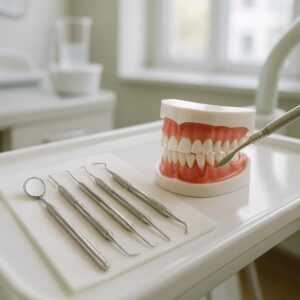
Dental Code for Gingivoplasty
What Exactly is a Gingivoplasty? (And Why It’s Not Just a “Gum Lift”)
Before we get into the weeds of billing codes, we need to be crystal clear on what the procedure actually is.
In the simplest terms, a gingivoplasty is the surgical reshaping of the gum tissue (the gingiva) to create more natural, functional, and aesthetic contours. Think of it as sculpting. Your gums are the frame, and your teeth are the picture. Sometimes, the frame needs a little adjustment to make the picture look its best.
The Functional Side of Gingivoplasty
While many people seek out gum reshaping for cosmetic reasons, it isn’t just about looks. There are functional reasons a dentist might recommend this procedure:
-
Improving Oral Hygiene: If your gum tissue has thick, irregular ledges or craters (often caused by certain medications or genetics), it can be a nightmare to keep clean. Food particles and plaque can hide in these crevices, leading to further decay or inflammation. Reshaping the tissue makes cleaning easier and more effective.
-
Preparing for Restorations: Before placing a crown or bridge, the dentist needs a healthy, properly shaped foundation. Excess or bulky gum tissue can interfere with the fit of a dental restoration.
-
Correcting Tissue Irregularities: Sometimes, after gum disease treatment or an injury, the gum tissue heals unevenly. A gingivoplasty can smooth out these irregularities.
The Cosmetic Side: The “Gummy Smile”
This is the most common reason people search for the dental code for gingivoplasty. A “gummy smile” is when a significant amount of gum tissue shows above the teeth when you smile. A gingivoplasty, often combined with a gingivectomy (removal of tissue), can expose more of the tooth structure, creating a longer, more balanced smile.
Note: It’s important to distinguish this from a gingivectomy. A gingivectomy is specifically the removal of gum tissue, often to eliminate periodontal pockets. A gingivoplasty is the reshaping of existing tissue. In many cosmetic procedures, they happen simultaneously.
Decoding the Numbers: The Primary Dental Codes for Gingivoplasty
Now, for the main event. When you sit down in the consultation chair, the dentist or treatment coordinator will write up a plan. That plan will include a specific Current Dental Terminology (CDT) code. These codes are maintained by the American Dental Association (ADA) and are used universally by insurance companies to determine coverage and payment.
For gingivoplasty, you will almost exclusively encounter two codes: D4240 and D4241.
Here is a quick overview before we get into the details.
Comparison: D4240 vs. D4241
| Feature | D4240 | D4241 |
|---|---|---|
| Full Description | Gingivoplasty – four or more contiguous teeth or tooth bounded spaces per quadrant | Gingivoplasty – one to three contiguous teeth or tooth bounded spaces per quadrant |
| Scope of Work | A larger procedure, reshaping gum tissue across a wider area of the mouth (a full quadrant or more). | A smaller, more targeted procedure focusing on a specific area. |
| Common Use Case | Full smile makeover for a “gummy smile,” reshaping an entire section of the mouth for functional reasons. | Reshaping gums around a single crown, fixing a small irregularity from past dental work. |
| Typical Cost | Generally higher due to the time and complexity. | Generally lower as it is a more minor procedure. |
Let’s break these down further.
D4240: The Comprehensive Reshaping Code
Gingivoplasty – four or more contiguous teeth or tooth bounded spaces per quadrant.
This is the heavy lifter of gum reshaping codes. If you are looking to address a “gummy smile” that involves most of your front teeth, or if you need functional reshaping across a significant section of your upper or lower jaw, your dentist will likely use D4240.
The key phrase here is “four or more contiguous teeth.” This means the procedure covers at least four teeth that are next to each other. It is billed “per quadrant.” Your mouth is divided into four quadrants:
-
Upper Right Quadrant
-
Upper Left Quadrant
-
Lower Right Quadrant
-
Lower Left Quadrant
If you are having your entire upper arch reshaped to fix a gummy smile, that involves two quadrants (upper right and upper left). You would likely see two lines on your treatment plan, one for D4240 on the upper right and another for D4240 on the upper left.
What this means for you: This code signals to the insurance company that this is a significant, planned procedure. It usually commands a higher reimbursement rate (if covered) and represents a more substantial time investment from the dental team.
D4241: The Targeted, Minor Procedure Code
Gingivoplasty – one to three contiguous teeth or tooth bounded spaces per quadrant.
As the description suggests, D4241 is the code for smaller jobs. It’s for when the work is limited to a specific, small area.
Imagine you had a crown placed on a single tooth a few years ago, and the gum tissue around it has healed in a way that creates a small pocket or an uneven line. The dentist might perform a minor gingivoplasty on just that one tooth and the one next to it to smooth things out.
Because the scope of work is smaller, the cost associated with this code is generally lower than D4240.
What this means for you: This code is excellent news if your issue is localized. It’s less invasive, heals faster, and is easier on your wallet. It also tells the story of a precise, targeted treatment rather than a full-scale surgical event.
Less Common Codes: D4245 and D4210
While D4240 and D4241 are the primary codes for reshaping, you might see other related codes on your treatment plan. It’s vital to understand the difference so you can ask the right questions.
-
D4245 (Apically positioned flap): This is a different beast entirely. This code is for a surgical procedure where the dentist cuts the gum tissue, lifts it as a “flap,” and then repositions it lower on the tooth or bone. This is usually done to expose more tooth structure for a crown or to treat severe gum disease by gaining access to the root. It is far more invasive than a gingivoplasty and involves cutting and suturing the tissue in a new location.
-
D4210 (Gingivectomy or gingivoplasty – four or more contiguous teeth or tooth bounded spaces per quadrant): This code is often used interchangeably, but it specifically mentions gingivectomy first. Historically, D4210 was the go-to code for both removal and reshaping. However, the ADA introduced D4240 and D4241 to create more specificity for pure reshaping procedures. Some older insurance plans or offices might still default to D4210. If you see this, ask for clarification on whether the plan is for removal, reshaping, or both.
The Insurance Puzzle: Will Your Plan Cover Gingivoplasty?
Here’s where things get a little tricky. You know the dental code for gingivoplasty, but knowing the code doesn’t guarantee your insurance will pay for it.
Insurance companies operate on a simple principle: Is this procedure medically necessary, or is it cosmetic?
Medical Necessity vs. Cosmetic Procedure
This is the single biggest factor in determining coverage.
-
Medical Necessity: If your dentist can prove the gingivoplasty is needed to improve your oral health (e.g., removing tissue traps that cause decay, preparing for a necessary crown, correcting a deformity that hinders chewing), there is a good chance your insurance will cover a significant portion of the cost.
-
Cosmetic: If the primary goal is to improve the appearance of your “gummy smile” and there is no functional or health-related reason to do it, the procedure is almost always classified as elective and cosmetic. In this case, most standard dental insurance plans will offer $0 coverage. You will be responsible for the full fee.
How to Talk to Your Insurance Company
Arm yourself with the code (D4240 or D4241) and ask the following questions:
-
“Does my plan cover code D4240 if it is deemed medically necessary?”
-
“What percentage of the cost is covered, and does it apply to my annual maximum?”
-
“Do I need a pre-treatment estimate (predetermination) to know my out-of-pocket costs before we start?”
-
“Is there a clause excluding cosmetic procedures that would apply here?”
Important Note: Always get a pre-treatment estimate. This is a formal document your dentist sends to the insurance company outlining the planned procedure with the specific codes. The insurance company will send back an explanation of what they will pay. This protects you from any surprises down the road.
The Real Cost of Gum Reshaping (Without Insurance)
If your procedure is cosmetic, or if your insurance has a waiting period or low coverage limits, you’ll want to know the out-of-pocket cost.
Because this is a surgical procedure, prices vary widely based on your geographic location, the dentist’s experience, and the complexity of your case. However, you can expect a general range.
-
For a minor procedure using D4241 (1-3 teeth): You might pay anywhere from $200 to $600.
-
For a full quadrant using D4240 (4+ teeth): The cost typically ranges from $600 to $1,500 per quadrant.
-
For a full smile makeover (multiple quadrants): The total cost can range from $1,500 to $4,000 or more.
These fees usually include the local anesthetic, the procedure itself, and post-operative instructions. They may not include any necessary pre-op X-rays or follow-up appointments.
The Gingivoplasty Procedure: A Step-by-Step Walkthrough
Knowing the dental code is one thing, but knowing what happens when you’re in the chair is another. Here’s a realistic look at the process.
1. The Consultation and Diagnosis
Your dentist will perform a full periodontal exam, measuring the pockets around your teeth to ensure you have healthy gums. They’ll take X-rays to check the bone level and the length of your tooth roots. They need to ensure there’s enough tooth structure underneath before reshaping the gum. You’ll discuss your goals, and they’ll show you a simulation or digital mock-up of your new smile.
2. The Day of the Procedure
-
Anesthesia: The area will be numbed with a local anesthetic. You are awake and aware, but you will feel no pain.
-
The Reshaping: The dentist will use a scalpel, a laser, or an electrosurgery device to carefully trim and sculpt the gum tissue.
-
Scalpel: Offers the most precision but involves more bleeding.
-
Laser: (Diode or soft-tissue laser) is becoming increasingly popular. It cauterizes as it cuts, resulting in very little bleeding, less discomfort, and faster healing times.
-
-
Shaping and Contouring: The dentist will meticulously shape the tissue to create a harmonious, even gum line that follows the natural curvature of your teeth.
3. Recovery and Aftercare
-
Immediately After: You’ll leave with gauze over the area to control any minor bleeding.
-
First 24-48 Hours: Expect some soreness and sensitivity. Stick to soft foods (yogurt, soup, smoothies). Avoid hot foods and drinks. Rinse gently with warm salt water.
-
Healing: The tissue will be fully healed in 3-4 weeks, though the initial soreness subsides in a few days.
Gingivoplasty vs. Other Procedures: A Quick Reference
It’s easy to confuse these terms. Here’s a simple list to keep them straight.
-
Gingivoplasty (D4240/D4241): Reshaping healthy gum tissue. Goal: Contour.
-
Gingivectomy: Removal of gum tissue, often diseased or pocketed. Goal: Eliminate.
-
Crown Lengthening: A procedure that involves removing both gum and bone tissue to expose more of the tooth structure for a crown. This is more involved than a gingivoplasty.
-
Periodontal Flap Surgery: Lifting the gum to clean the root and bone, then suturing it back. Goal: Treat advanced gum disease.
Reader’s Tip: If a dentist recommends “crown lengthening” but you only want a “gum lift” for a gummy smile, clarify whether bone needs to be removed. If they only need to reshape gum, it’s a gingivoplasty.
Conclusion
Navigating the world of dental codes doesn’t have to be a headache. Understanding that the primary dental code for gingivoplasty is either D4240 for larger areas or D4241 for minor touch-ups empowers you to have an informed conversation with your dental provider. Remember that insurance coverage hinges on the concept of medical necessity, while purely cosmetic gum reshaping is typically an out-of-pocket investment in your smile’s appearance.
Frequently Asked Questions (FAQ)
1. Is the dental code for gingivoplasty the same as for a gingivectomy?
No, they are different. While they are related, a gingivectomy (removal) uses codes like D4210 or D4211. Gingivoplasty (reshaping) specifically uses D4240 and D4241. However, many procedures combine both actions.
2. Will my insurance cover D4240 for a gummy smile?
Usually not, if the gummy smile is purely cosmetic. However, if the excess gum tissue causes chronic inflammation, traps food, or makes cleaning impossible, your dentist can document “medical necessity,” which may lead to partial coverage. It depends entirely on your specific plan and the dentist’s justification.
3. Why are there two different codes for gum reshaping?
The two codes, D4240 and D4241, allow for accurate billing based on the size of the procedure. D4241 is for small, localized areas (1-3 teeth), while D4240 is for larger, more comprehensive reshaping (4+ teeth). This ensures you are charged fairly for the time and complexity of your specific case.
4. How long does it take to heal from a gingivoplasty?
Initial healing from the soreness takes just a few days. The gum tissue will look and feel completely normal within 3 to 4 weeks. If a laser was used, healing is often faster and more comfortable.
5. Can I use my FSA or HSA to pay for a gingivoplasty?
Yes, in most cases. Both Flexible Spending Accounts (FSAs) and Health Savings Accounts (HSAs) can be used to pay for dental procedures, including cosmetic ones like gingivoplasty, as they are qualified medical expenses.
Additional Resource
For the most authoritative and up-to-date information on dental procedure codes, you should always refer to the source. The American Dental Association (ADA) maintains the CDT (Current Dental Terminology) code set.
[Link to the American Dental Association (ADA) – CDT Code Information](https://www.ada.org/en/publications/cdt)
(Note: This link leads to the official ADA page where you can find information about the CDT manual and code set.)
Disclaimer: This article is for informational purposes only and does not constitute medical or financial advice. Dental procedures, insurance coverage, and coding practices vary. You should always consult with a licensed dental professional regarding your specific dental condition and with your insurance provider regarding your coverage details.
Author: AI Content Specialist
Date: March 09, 2026


