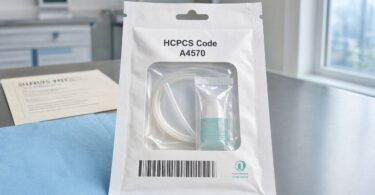
Medical billing requires precision. When you file a claim for a biologic drug like Botox, a single digit or a missing modifier can lead to a costly denial. If your clinic treats patients using botulinum toxin injections, you must master the Healthcare Common Procedure Coding System (HCPCS).
This comprehensive guide breaks down everything you need to know about the hcpcs code for botox. We will explore the exact codes, dosage units, wasting protocols, and corresponding administration codes to ensure your claims process smoothly.

1. What is the Core HCPCS Code for Botox?
The most critical piece of information for billing Botox is identifying the correct J-code. HCPCS Level II codes, often called J-codes, track drugs that medical providers administer non-orally.
For standard Botox (onabotulinumtoxinA), the primary HCPCS code is J0585.
Official HCPCS Description for J0585: Injection, onabotulinumtoxinA, 1 unit.
The Importance of the Billing Unit
The description highlights a fundamental rule of medical billing: 1 billing unit equals 1 unit of the drug.
- If you inject 50 units of Botox into a patient, you must enter 50 in the “Units” field (Box 24G on the CMS-1500 form).
- If you inject 100 units, you enter 100 in the units field.
Failing to multiply your units correctly will cause massive underpayments, as insurance companies will pay you for a single unit instead of the full vial.
2. Botox and Its Competitors: Comparative HCPCS Codes
Not all botulinum toxins use the same code. The medical market includes several formulations, each derived differently and possessing distinct potencies. You cannot swap these codes interchangeably.
The table below outlines the core HCPCS codes for the most common botulinum toxin brands in clinical use today:
| Brand Name | Generic/Chemical Name | Primary HCPCS Code | Billing Unit Definition |
| Botox / Botox Cosmetic | OnabotulinumtoxinA | J0585 | 1 Unit = 1 Billing Unit |
| Dysport | AbobotulinumtoxinA | J0586 | 5 Units = 1 Billing Unit |
| Xeomin | IncobotulinumtoxinA | J0588 | 1 Unit = 1 Billing Unit |
| Myobloc | RimabotulinumtoxinB | J0587 | 100 Units = 1 Billing Unit |
| Jeuveau | PrabotulinumtoxinA-xvfs | J0584 | 1 Unit = 1 Billing Unit |
Look Closely at Dysport and Myobloc
Notice the differences in billing units:
- For Dysport (J0586), if you administer 300 units to a patient, you divide 300 by 5. You would write 60 in the billing units box.
- For Myobloc (J0587), if you administer 2,500 units, you divide by 100 and bill for 25 units.
- For Botox (J0585), the math is straightforward: 100 units administered equals 100 units billed.
3. Medical vs. Cosmetic Botox Billing
Insurance carriers do not view all Botox treatments equally. The distinction between medical necessity and cosmetic preference completely dictates your billing pathway.
Therapeutic/Medical Botox
When a physician uses Botox to treat chronic, debilitating conditions, insurance companies frequently cover the drug and the injection procedure. Common covered medical indications include:
- Chronic Migraines (15 or more days per month)
- Cervical Dystonia (severe neck muscle spasms)
- Axillary Hyperhidrosis (excessive underarm sweating)
- Overactive Bladder / Urinary Incontinence
- Upper or Lower Limb Spasticity
To receive reimbursement for J0585, you must pair the code with an appropriate, highly specific ICD-10-CM diagnosis code that proves medical necessity.
Cosmetic Botox
When patients seek Botox to soften forehead lines, crow’s feet, or frown lines, insurance will not pay.
- Do not submit a CMS-1500 insurance claim for cosmetic treatments.
- Clinics charge patients directly out-of-pocket for cosmetic services.
- While the clinical records still track the usage of J0585 internally for inventory control, it skips the insurance billing cycle completely.
4. CPT Administration Codes: Mapping How It Is Injected
Billing for Botox requires two components on your claim: the drug itself (the HCPCS code) and the work of injecting it (the CPT code). You must pair J0585 with the correct Current Procedural Terminology (CPT) code based on the anatomical site.
Here is a breakdown of common CPT codes used alongside the hcpcs code for botox:
For Chronic Migraines
- CPT 64615: Chemodenervation of muscle(s) innervated by facial, trigeminal, cervical spinal and accessory nerves, bilateral (chronic migraine).
- Note: This code covers the entire standard injection protocol for migraines (typically 31 injection sites across the head and neck). Do not bill this per injection.
For Neuromuscular Conditions & Spasticity
- CPT 64612: Chemodenervation of muscle(s); muscle(s) innervated by facial nerve (e.g., for blepharospasm or hemifacial spasm).
- CPT 64616: Chemodenervation of muscle(s); neck muscle(s), excluding muscles innervated by facial nerve (e.g., for cervical dystonia).
- CPT 64617: Chemodenervation of muscle(s); larynx muscles.
- CPT 64642: Chemodenervation of one extremity; 1-4 muscles.
For Hyperhidrosis
- CPT 64650: Chemodenervation of eccrine glands; axillae (underarms).
- CPT 64653: Chemodenervation of eccrine glands; other areas (like hands or feet).
For Bladder Dysfunctions
- CPT 52287: Cystourethroscopy, with injection(s) for chemodenervation of the bladder.
5. Documenting and Billing Wasted Botox (JW and JZ Modifiers)
Botox comes as a single-use vial containing powder that requires reconstitution with saline. Once mixed, a vial must be used within a short period or thrown away. Because Botox vials usually contain 100 units or 200 units, clinics often face scenarios where a patient only needs a partial vial.
How do you bill for the rest of the vial that you must discard? You use the Medicare-mandated JW and JZ modifiers.
The JW Modifier (Drug Wastage)
If you open a 100-unit vial of Botox, inject 80 units into a patient for a medical condition, and discard the remaining 20 units because no other patient can safely use it, you can bill for the wasted portion.
You must report this on two separate lines on your claim form:
- Line 1:
J0585with 80 units in the unit box. - Line 2:
J0585appended with the JW modifier (e.g.,J0585-JW) with 20 units in the unit box.
Important Documentation Rule: Your medical record must explicitly state the exact amount administered and the exact amount wasted. For example: “80 units of Botox administered, 20 units wasted and discarded due to single-dose vial limitations.”
The JZ Modifier (Zero Wastage)
If you open a 100-unit vial and administer all 100 units to the patient, there is no waste. For Medicare and many private payers, you must declare this clear use by appending the JZ modifier to the single billing line:
J0585-JZwith 100 units in the unit box.
Failing to append the JZ modifier when there is zero waste can result in claims being sent back or rejected entirely.
6. Checklist for a Clean Botox Insurance Claim
To minimize claim denials, your billing team should verify this checklist before submission:
- [ ] Verify the Base Code: Ensure you selected J0585 specifically for Botox (and not a competitor’s code).
- [ ] Calculate the Unit Multiplier: Check that the billing units match the exact number of units injected plus any documented waste.
- [ ] Review Modifier Usage: Confirm that either the JW modifier (wastage line) or JZ modifier (zero wastage line) is attached.
- [ ] Match the CPT Code: Ensure the injection site CPT code matches the clinical note (e.g., 64615 for migraines).
- [ ] Link the Diagnosis Code: Verify that the primary ICD-10 code explicitly validates the medical necessity of the treatment.
- [ ] Confirm Prior Authorization: Check if the payer required a prior authorization number and ensure it is placed in Box 23 of the CMS-1500 form.
7. Frequently Asked Questions (FAQ)
What is the specific HCPCS code for Botox Cosmetic?
There is no separate HCPCS code for Botox Cosmetic. Both therapeutic Botox and Botox Cosmetic utilize code J0585. However, because cosmetic procedures are not covered by health insurance, you will rarely submit J0585 to an insurance company for aesthetic treatments.
Can I bill for Botox using an unclassified drug code like J3490?
No. You should only use unclassified drug codes (like J3490) when a specific code does not exist for a medication. Because Botox has a dedicated, long-standing permanent code (J0585), using J3490 will result in an immediate claim denial.
Does Medicare pay for Botox treatments?
Medicare covers Botox injections when they meet strict criteria for medical necessity. Common covered conditions include chronic migraines, severe muscle spasticity, and cervical dystonia. Medicare will look for a documented history showing that the patient tried and failed more conservative treatments before approving Botox.
What happens if I forget to add the JZ modifier to a zero-waste Botox claim?
Since recent policy updates, many insurance companies—especially Medicare Administrative Contractors (MACs)—will reject or return claims that lack the required JZ modifier for single-dose vials with no waste. If your claim is rejected, you must correct it by adding the JZ modifier and resubmitting it.
8. Conclusion and Summary
This guide details how to use HCPCS code J0585 to bill for Botox injections cleanly and accurately. It highlights the importance of multiplying dosage units correctly, pairing the drug code with anatomical CPT codes, and using JW and JZ modifiers to track product waste. Following these medical billing standards prevents claim denials and protects your practice's bottom line.
Additional Resources
For official updates on drug pricing files, medical policy updates, and modifier rules, please consult the official Centers for Medicare & Medicaid Services (CMS) HCPCS General Information Portal.
Disclaimer: Medical coding and billing guidelines change frequently based on payer policies, regional rules, and annual updates. The information provided in this article serves an educational purpose and does not guarantee insurance coverage or reimbursement. Always check your local Medicare Administrative Contractor (MAC) guidelines and individual commercial insurance provider policies for up-to-date coding frameworks.