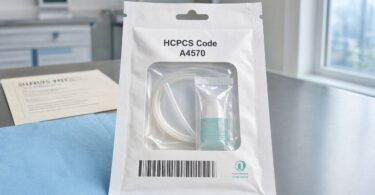
The world of medical coding is filled with codes that represent both modern, high-cost biologics and time-tested, foundational medications. HCPCS code J2440 belongs to the latter category. It is the billing code for an injection of papaverine hydrochloride, a smooth muscle relaxant with a long history of use in medicine. While not as commonly used as it once was, papaverine still plays a specific and important role in certain diagnostic and therapeutic procedures. This comprehensive guide will explore J2440 in detail, explaining what it is, when it is used, and the critical billing and coding rules that apply to it.

HCPCS Code J2440
What Exactly is HCPCS Code J2440?
In simple terms, HCPCS code J2440 is the billing code for an injection of papaverine hydrochloride (HCl) . For billing purposes, one unit of J2440 represents up to 60 milligrams (mg) of the medication. As with many other drug codes, the unit of measure is a key detail that must be understood to avoid billing errors.
Papaverine HCl is a non-narcotic opium alkaloid. While it is derived from the opium poppy, it is chemically distinct from opiates like morphine and codeine and has no pain-relieving or addictive properties. Instead, its primary action is to relax smooth muscles. Smooth muscle is the type of muscle found in the walls of blood vessels, the intestines, the bladder, and other internal organs, which is not under voluntary control.
This medication is not a common oral pill. It is an injectable solution that is administered by a healthcare professional in a clinical setting, most often in a hospital or specialized clinic.
Key Details at a Glance
Here is a quick reference table summarizing the essential facts about this HCPCS code.
| Feature | Description |
|---|---|
| HCPCS Code | J2440 |
| Descriptor | Injection, papaverine HCl, up to 60 mg |
| Drug Class | Smooth Muscle Relaxant / Vasodilator |
| Common Routes of Administration | Intravenous (IV), Intramuscular (IM), Intracavernosal (IC) |
| Billing Unit | Up to 60 mg |
| Typical Billing Setting | Hospital, Outpatient Clinic, Urology Clinic |
The Drug Behind the Code: Papaverine Hydrochloride
To fully understand this code, it is helpful to understand the drug and its specific, targeted clinical applications.
How Does Papaverine Work?
Papaverine works by directly relaxing the smooth muscles in the body. Specifically, it inhibits an enzyme called phosphodiesterase, which leads to an increase in a chemical messenger called cyclic AMP (cAMP). High levels of cAMP cause smooth muscle cells to relax.
This relaxation has several key effects:
-
Vasodilation: When the smooth muscle in the walls of blood vessels relaxes, the vessels widen. This increases blood flow and lowers blood pressure in that area.
-
Relaxation of Other Organs: It can also relax the smooth muscle in the gastrointestinal tract, bile ducts, and ureters, helping to relieve spasms.
What Conditions Does J2440 Treat?
The clinical applications for papaverine are quite specific and have evolved over time.
-
Diagnosis of Erectile Dysfunction (ED): This is perhaps the most well-known modern use. Papaverine is injected directly into the erectile tissue of the penis (intracavernosal injection). It causes an immediate erection by relaxing the blood vessels and allowing blood to flow in. This test helps a physician determine if the cause of a patient’s ED is due to a vascular problem (blood flow) or a psychological issue. If a patient gets a normal erection from the injection, the blood vessels are working, and the cause may be psychological.
-
Treatment of Erectile Dysfunction: While less common now due to oral medications like Viagra (sildenafil) and Cialis (tadalafil), papaverine, often in combination with other drugs, is still used as a treatment option for men who do not respond to or cannot take oral ED medications.
-
Vasospasm: In rare cases, it is used to treat vasospasm, a sudden constriction of a blood vessel that reduces blood flow. This can occur during certain surgical procedures or in conditions like Raynaud’s phenomenon.
-
Mesenteric Ischemia: Historically, it was used to treat non-occlusive mesenteric ischemia, a condition where blood flow to the intestines is reduced due to spasms of the mesenteric arteries.
A Note on Intracavernosal Injections
The use of papaverine for ED is a specialized procedure. The dose is carefully calculated by the physician. The injection is given using a very small needle into the side of the penis. The patient is often taught to self-inject at home if it is used as an ongoing treatment. However, when it is used for diagnostic testing in a clinic, it is billed using J2440.
Administration and Dosing of Papaverine
The route of administration and dose depend entirely on the clinical indication.
1. Intracavernosal Injection (IC)
This is the most common route for erectile dysfunction diagnosis and treatment.
-
Process: A small dose is injected directly into the corpus cavernosum of the penis.
-
Typical Setting: Urology clinic or physician’s office.
-
Common Doses: The dose for diagnostic testing is often 10-30 mg. For therapeutic use, doses can vary but are typically kept low to minimize side effects. A dose of 30 mg or less is common.
2. Intravenous (IV) or Intramuscular (IM) Injection
These routes are used for other, less common indications like vasospasm or mesenteric ischemia.
-
Process: A dose is given slowly via an IV or injected into a large muscle.
-
Typical Setting: Hospital setting, often in a critical care or surgical unit.
-
Common Doses: IV doses are often in the range of 30-60 mg.
Important Note on Dosing and Billing
As mentioned, the billing unit for J2440 is “up to 60 mg.” This is a key detail. Let’s look at how this translates to real-world billing scenarios.
Billing and Coding: A Practical Guide for J2440
Accuracy in billing for J2440 is crucial. The most common source of error is calculating the number of units based on the total dosage administered. Since one unit covers up to 60 mg, the calculation is straightforward but must be done correctly.
Deconstructing the Billing Unit
Here is a table that clarifies how to bill for J2440 based on different doses.
| Example Scenario | Description | Total Dose Administered | Units of J2440 Billed |
|---|---|---|---|
| Standard ED Diagnostic Dose | A patient receives a 20 mg intracavernosal injection for ED testing. | 20 mg | 1 unit |
| Maximum Unit Dose | A patient receives a 60 mg IV injection for vasospasm. | 60 mg | 1 unit |
| Higher Dose | A patient receives a 120 mg IV injection for a rare, severe case. | 120 mg | 2 units |
| Smaller Dose | A patient receives a 10 mg therapeutic IC injection. | 10 mg | 1 unit |
Coding Scenarios and Best Practices
As with all drug codes, J2440 must be submitted with the proper accompanying codes to create a complete and compliant claim.
-
Diagnosis Codes (ICD-10-CM): The diagnosis code must clearly establish the medical necessity for the papaverine injection. Common examples include:
-
N52.9: Male erectile dysfunction, unspecified.
-
F52.21: Male erectile disorder.
-
I73.00: Raynaud’s syndrome without gangrene.
-
-
Administration Codes (CPT): The method of administration must be coded. For an intracavernosal injection, there is a specific code:
-
CPT 54235: Injection of corpora cavernosa with pharmacologic agent(s) (e.g., papaverine, phentolamine).
For an IV or IM injection, you would use: -
CPT 96374: Therapeutic, prophylactic, or diagnostic injection; intravenous push, single or initial substance/drug.
-
CPT 96372: Therapeutic, prophylactic, or diagnostic injection; subcutaneous or intramuscular.
-
-
The -JW Modifier: Papaverine comes in single-dose vials. If a provider draws up a dose from a vial but does not use the entire contents, the discarded amount should be documented and billed with the -JW modifier for many payers, particularly Medicare.
A Note on Self-Administered Medication
When papaverine is prescribed for a patient to self-inject at home for the treatment of ED, it is typically billed under a pharmacy benefit, not a medical benefit. The HCPCS code J2440 is used when the drug is purchased and administered by a provider in an outpatient setting.
Understanding the Cost and Reimbursement
Compared to many other injectable medications, papaverine is very inexpensive. This places the financial focus on the service of administration, not the drug itself.
A Financial Perspective for Providers
-
Very Low Drug Cost: The cost of a vial of papaverine HCl is minimal, often less than $10 per vial.
-
Reimbursement is Service-Driven: The total reimbursement for the visit is primarily driven by the administration service (the CPT code) and the evaluation and management (E/M) service provided by the physician. The drug itself is not a major source of revenue, but failing to bill for it is a direct loss on a supply cost.
For Patients
-
Minimal Financial Burden: For insured patients, the out-of-pocket cost for the drug itself is negligible. Under Medicare Part B, the patient’s 20% co-insurance on the small allowed amount for the drug is minimal. The larger cost will come from the procedure (CPT 54235) and the office visit.
Medicare Coverage for Papaverine (J2440)
Coverage for this drug under Medicare is straightforward.
Medicare Part B (Medical Benefit)
This covers papaverine when it is administered by a healthcare professional in a medical setting, which is the case for diagnostic testing for ED.
-
Coverage: Yes, Medicare Part B covers papaverine when it is administered incident to a physician’s service and is deemed medically necessary. However, it is important to note that Medicare has specific rules regarding coverage for treatments related to sexual dysfunction. While diagnostic testing to determine the cause of ED is generally covered, the therapeutic use of drugs for ED (like self-injected papaverine) may not be covered under Part B. Providers should verify coverage with their local Medicare Administrative Contractor (MAC).
-
Patient Cost: The patient is responsible for their standard Part B co-insurance (typically 20% of the Medicare-approved amount) for the drug and its administration, after meeting their annual Part B deductible.
Medicare Part D (Pharmacy Benefit)
If a patient is prescribed papaverine for self-injection at home, it would be covered under their Medicare Part D plan, subject to that plan’s formulary and rules.
Clinical Safety and Potential Side Effects
While generally safe when used correctly, papaverine is not without risks. The side effect profile depends heavily on the route of administration.
Side Effects of Intracavernosal Injection
-
Priapism: This is the most serious risk. It is a prolonged, painful erection lasting more than four hours. If not treated promptly, it can lead to permanent tissue damage and long-term erectile dysfunction. Patients must be instructed to seek emergency care if this occurs.
-
Pain or Bruising at the Injection Site: This is common and usually mild.
-
Fibrosis: Repeated injections can sometimes lead to the formation of scar tissue in the penis.
Side Effects of IV or IM Administration
-
Dizziness and Lightheadedness: Due to its vasodilating effect.
-
Flushing and Sweating.
-
Headache.
-
Nausea.
-
Low Blood Pressure (Hypotension): Can occur, especially with rapid IV administration.
-
Cardiac Arrhythmias: Rare, but can occur, particularly with high doses.
Contraindications
Papaverine should not be used in patients with:
-
Known hypersensitivity to the drug.
-
Complete heart block: A serious electrical problem in the heart.
Important Note: The antidote for a papaverine-induced priapism is an injection of a drug like phenylephrine, which constricts blood vessels. This treatment is typically administered in an emergency department.
Frequently Asked Questions (FAQ)
1. What is the unit of measure for HCPCS code J2440?
The billing unit for J2440 is “up to 60 mg.” This means you bill one unit for any dose from 1 mg up to 60 mg. You bill two units for a dose from 61 mg to 120 mg, and so on.
2. Is papaverine an opioid?
No. While it is derived from the opium poppy, papaverine is chemically distinct from opioid painkillers like morphine or codeine. It has no pain-relieving or addictive properties and is not a controlled substance.
3. What is the most common use for J2440?
The most common modern use for this code is for the diagnostic testing of erectile dysfunction via intracavernosal injection. The injection helps determine if the cause is vascular or psychological.
4. Is J2440 used for self-injected medication at home?
No. J2440 is used when the drug is purchased and administered by a provider in a clinical setting. If a patient is prescribed papaverine to self-inject at home, it is billed under their pharmacy benefit.
5. How do I bill for a 100 mg IV dose of papaverine?
You would bill 2 units of J2440 (1 unit for the first 60 mg, and a second unit for the remaining 40 mg).
6. Does Medicare cover papaverine injections for erectile dysfunction?
Medicare generally covers the diagnostic use of papaverine to determine the cause of ED. Coverage for the ongoing therapeutic use of the drug is less certain and may not be covered under Part B. Providers should verify with their local MAC.
Additional Resources
-
MedlinePlus (National Library of Medicine): A reliable source for patient-friendly information on papaverine. Learn more about Papaverine here.
-
American Urological Association (AUA): Provides information on the diagnosis and treatment of erectile dysfunction. Visit auanet.org.
Conclusion
HCPCS code J2440 represents an injection of papaverine HCl, a smooth muscle relaxant with a specialized role in modern medicine, primarily for the diagnosis of erectile dysfunction. The key to accurate billing is understanding its “up to 60 mg” unit definition, which requires careful calculation. While the drug itself is very inexpensive, its administration is a billable service that, when coded correctly, ensures providers are properly reimbursed. Understanding its targeted uses and specific safety profile is essential for both clinical and billing teams.