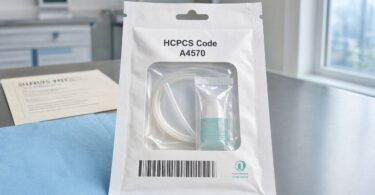
The landscape of medical coding is filled with codes that are critical for patient care and the financial health of medical practices. Among these, HCPCS code J2930 represents a common yet powerful medication used across a wide spectrum of medical specialties. This code is for an injection of methylprednisolone sodium succinate, a corticosteroid that plays a vital role in treating inflammation and various acute conditions. Whether you are a healthcare provider, a medical biller, or a patient trying to understand a medical bill, a clear comprehension of J2930 is essential. This guide offers a deep, practical, and reliable overview of this important code.

HCPCS Code J2930
What is HCPCS Code J2930?
In the simplest terms, HCPCS code J2930 is the billing code for an injection of methylprednisolone sodium succinate. For billing purposes, one unit of J2930 represents up to 125 milligrams (mg) of the medication. This is a crucial detail that distinguishes it from many other drug codes that are billed per 1 mg.
Methylprednisolone sodium succinate is the generic name for a potent anti-inflammatory medication. The most recognized brand name for this drug is Solu-Medrol. It belongs to a class of drugs known as corticosteroids, often simply called “steroids.” It is important not to confuse these with anabolic steroids used by athletes. Corticosteroids are synthetic versions of cortisol, a hormone naturally produced by the adrenal glands. Cortisol plays a key role in managing stress, regulating the immune system, and reducing inflammation.
This medication is fast-acting and is typically used in situations where a rapid and powerful anti-inflammatory response is needed. It is available as a powder that must be mixed with a liquid before injection, and it can be administered in several ways.
Key Details at a Glance
Here is a quick reference table summarizing the essential facts about J2930.
| Feature | Description |
|---|---|
| HCPCS Code | J2930 |
| Descriptor | Injection, methylprednisolone sodium succinate, up to 125 mg |
| Common Brand Name | Solu-Medrol |
| Drug Class | Corticosteroid (Glucocorticoid) |
| Common Routes of Administration | Intravenous (IV), Intramuscular (IM) |
| Billing Unit | Up to 125 mg |
| Typical Billing Setting | Hospital, Emergency Department, Physician Office, Urgent Care |
The Drug Behind the Code: Methylprednisolone Sodium Succinate
To truly understand this code, you must understand the drug it represents. Methylprednisolone is a workhorse in medicine because of its rapid action and broad applications.
How Does Methylprednisolone Work?
When the body is under attack from an injury, infection, or an autoimmune response, it triggers inflammation. While inflammation is a natural defense mechanism, it can sometimes be excessive and harmful. This is where corticosteroids like methylprednisolone come in.
Methylprednisolone works by entering cells and altering the production of proteins that drive the inflammatory process. Think of it as a “mute button” for the immune system’s alarm. It suppresses the activity of white blood cells and reduces the release of chemicals that cause swelling, redness, heat, and pain. By doing so, it rapidly reduces inflammation and provides relief, especially in acute, severe situations. It also has an effect on the immune system, making it useful for treating autoimmune conditions where the body mistakenly attacks its own tissues.
What Conditions Does J2930 Treat?
The applications for methylprednisolone are incredibly diverse. It is used for its rapid anti-inflammatory and immunosuppressant effects in many scenarios, including:
-
Acute Exacerbations of Chronic Conditions: Severe flare-ups of Multiple Sclerosis (MS), asthma, COPD, and rheumatoid arthritis.
-
Allergic Reactions: Treating severe, acute allergic reactions, including anaphylaxis (as an adjunct to epinephrine) and angioedema (severe swelling).
-
Inflammatory Bowel Disease (IBD): Managing acute, severe flares of Crohn’s disease and ulcerative colitis.
-
Neurological Conditions: Reducing cerebral edema (swelling in the brain) associated with brain tumors or after neurosurgery.
-
Endocrine Disorders: Treating acute adrenal insufficiency (adrenal crisis).
-
Oncologic Conditions: Used as part of some chemotherapy protocols and to manage symptoms like nausea or inflammation related to cancer.
Because it treats such a wide variety of issues, J2930 is a code billed by many different types of providers, from oncologists and neurologists to emergency medicine doctors and rheumatologists.
Administration and Dosing of Methylprednisolone
Methylprednisolone sodium succinate is highly versatile in how it can be administered. The chosen method and dose depend heavily on the condition being treated and its severity.
1. Intravenous (IV) Injection or Infusion
This is a common route in hospitals and emergency departments for severe, acute conditions.
-
Process: The powder is reconstituted with a sterile liquid and then injected directly into a vein over a period of minutes (IV push) or diluted in a bag of fluids and given as a slower IV infusion.
-
Typical Setting: Hospital inpatient units, emergency rooms, and infusion centers.
-
Common Doses: For acute flares of MS, doses of 500 to 1000 mg per day for several days are common. A severe asthma attack in the ER might involve an IV dose of 60 to 125 mg every 6-8 hours.
2. Intramuscular (IM) Injection
This route is often used in doctor’s offices or urgent care settings when immediate but not critical access is needed.
-
Process: The medication is injected deep into a large muscle, such as the buttock or thigh. The drug is then slowly absorbed into the bloodstream.
-
Typical Setting: Physician offices, urgent care clinics.
-
Common Doses: This method is useful for conditions like a severe poison ivy outbreak or an acute asthma flare, where a dose of 40 to 80 mg might be given as a one-time “depot” injection to provide relief over several days.
Important Note on Dosage and Billing
The billing unit for J2930 is “up to 125 mg.” This means that if a patient receives a 100 mg injection, you bill 1 unit. If a patient receives a 125 mg injection, you also bill 1 unit. However, if a patient receives a 250 mg injection, you must bill 2 units.
This is in stark contrast to codes like J3385 (vedolizumab), which are billed per 1 mg. Understanding these unit distinctions is the single most important factor in accurate billing.
Billing and Coding: A Practical Guide for J2930
Accurate billing for J2930 is generally straightforward, but common pitfalls can and do occur. Here is a focused look at how to bill this code correctly.
Deconstructing the Billing Unit
As noted, the defining feature of J2930 is its unit definition: up to 125 mg. This leads to specific coding scenarios that billing staff must master.
Let’s break down common dosing scenarios:
| Example Scenario | Description | Units of J2930 Billed |
|---|---|---|
| Standard In-Office Dose | A patient receives a 80 mg IM injection for an acute asthma flare. | 1 unit |
| Maximum Unit Dose | A patient receives a 125 mg IV push in the emergency department for a severe allergic reaction. | 1 unit |
| Double Dose | A patient receives a 250 mg IV infusion as part of a pulse regimen for a lupus flare. | 2 units |
| High-Dose MS Protocol | A patient receives a 1000 mg IV infusion daily for an acute MS exacerbation. | 8 units |
Coding Scenarios and Best Practices
When submitting a claim for methylprednisolone, it is not just about the HCPCS code. A complete and compliant claim includes several other elements.
-
Diagnosis Codes (ICD-10-CM): You must link J2930 to a valid ICD-10 code that establishes the medical necessity for the drug. This code will vary widely based on the condition. For example:
-
J45.901: Unspecified asthma with acute exacerbation.
-
G35: Multiple sclerosis.
-
T78.3XXA: Angioneurotic edema, initial encounter.
-
-
Administration Codes (CPT): You must also report the service of administering the injection. The CPT code depends on the route.
-
CPT 96374: Therapeutic, prophylactic, or diagnostic injection; intravenous push, single or initial substance/drug.
-
CPT 96372: Therapeutic, prophylactic, or diagnostic injection; subcutaneous or intramuscular.
-
CPT 96365: Intravenous infusion, for therapy, prophylaxis, or diagnosis; initial, up to 1 hour.
-
-
National Drug Code (NDC): Many payers, especially Medicaid and some commercial insurers, now require the NDC on the claim form. The NDC identifies the specific manufacturer and package size of the drug used.
A Note on the -JW Modifier
Methylprednisolone sodium succinate comes in single-dose vials. If a provider prepares a vial of a certain size but does not use the entire contents, they may be required to bill for the discarded amount using the -JW modifier. For example, if a 125 mg vial is used to draw up an 80 mg dose, the remaining 45 mg is wasted. Many payers, including Medicare, will reimburse for this waste if it is properly documented and billed with the -JW modifier on a separate line.
Understanding the Cost and Reimbursement
Compared to biologic therapies, methylprednisolone is a very inexpensive drug. However, efficient billing is still necessary for proper practice management.
A Financial Perspective for Providers
-
Low Drug Cost: The cost of a vial of methylprednisolone sodium succinate is relatively minimal, often ranging from just a few dollars to around $15-$20 per vial, depending on the dose and manufacturer.
-
Reimbursement is Service-Driven: The total reimbursement for the visit is primarily driven by the administration service (the CPT code) and the evaluation and management (E/M) service provided by the physician. The drug itself is not a major source of revenue, but failing to bill for it represents a direct loss on a supply cost.
For Patients
-
Minimal Out-of-Pocket Costs: For most insured patients, the out-of-pocket cost for the drug itself is negligible, especially when compared to the cost of the visit or procedure. Medicare Part B covers this medication, and the patient is typically responsible for the standard 20% co-insurance on the small amount allowed for the drug.
Medicare Coverage for Methylprednisolone (J2930)
Coverage under Medicare for this drug is straightforward.
Medicare Part B (Medical Benefit)
This covers methylprednisolone when it is administered by a healthcare professional in a medical setting, which is almost always the case for this injectable form. This is the scenario where HCPCS code J2930 is used.
-
Coverage: Yes, Medicare Part B covers methylprednisolone when it is deemed medically necessary for a covered indication.
-
Patient Cost: The patient is responsible for the standard Part B co-insurance (typically 20% of the Medicare-approved amount) for the drug and its administration, after meeting their annual Part B deductible.
Medicare Part D and Self-Administration
This is not applicable to J2930. Injectable methylprednisolone is not a self-administered drug. Medicare Part D would only cover oral forms of methylprednisolone (like a Medrol dose pack) that a patient picks up from a pharmacy.
Clinical Safety and Potential Side Effects
While effective, methylprednisolone is not without potential side effects. The risk profile depends heavily on the dose and duration of therapy. Short-term, high-dose use has different risks than long-term, chronic use.
Common Short-Term Side Effects
When used for a few days, side effects are usually mild and temporary. They can include:
-
Increased appetite
-
Insomnia or difficulty sleeping
-
Mood changes, such as anxiety or irritability
-
Elevated blood sugar levels (especially important for patients with diabetes)
-
Fluid retention and swelling
-
Increased blood pressure
Serious Risks with Long-Term Use
The main concerns arise with prolonged or repeated use of high-dose steroids. These can include:
-
Immunosuppression: Increased susceptibility to infections.
-
Osteoporosis: Weakening of the bones.
-
Adrenal Suppression: The body’s own production of cortisol can be suppressed, which is why the medication should never be stopped abruptly.
-
Cataracts and Glaucoma: Eye problems can develop.
-
Peptic Ulcers: Especially when taken with NSAIDs like ibuprofen.
Important Note: While J2930 is an injectable, patients often receive it as a “bridge” before being transitioned to an oral steroid like prednisone to complete a course of therapy. This allows for a rapid initial response followed by a managed taper.
Frequently Asked Questions (FAQ)
1. What is the unit of measure for HCPCS code J2930?
The billing unit for J2930 is “up to 125 mg.” This is different from many other drug codes that are billed per 1 mg.
2. Can J2930 be used for an IM injection?
Yes, J2930 describes the drug itself, not the route. It can be billed for both intravenous (IV) and intramuscular (IM) injections of methylprednisolone sodium succinate.
3. What is the difference between J2930 and J1030?
J2930 is for methylprednisolone sodium succinate (Solu-Medrol), which is a fast-acting injectable form. J1030 is for methylprednisolone acetate (Depo-Medrol), which is a long-acting suspension designed for slow absorption after an IM or intra-articular (into a joint) injection.
4. How many units do I bill for 500 mg of Solu-Medrol?
You would bill 4 units of J2930 (500 mg / 125 mg per unit = 4 units).
5. Does Medicare cover J2930?
Yes, Medicare Part B covers this medication when it is administered in a medical setting and is deemed medically necessary.
6. Is methylprednisolone the same as prednisone?
They are both corticosteroids, but they are different drugs. Methylprednisolone is often given IV or IM for its rapid effect, while prednisone is an oral medication used for longer treatment courses.
Additional Resources
-
MedlinePlus (National Library of Medicine): A reliable source for patient-friendly information on methylprednisolone. Learn more about Methylprednisolone here.
-
American Academy of Allergy, Asthma & Immunology (AAAAI): Provides information on the use of systemic steroids for allergic conditions. Visit aaaai.org.
Conclusion
HCPCS code J2930 represents a vital, widely used injectable corticosteroid, methylprednisolone sodium succinate. The defining feature for billing is its “up to 125 mg” unit, which requires careful calculation to avoid claim errors. It is a low-cost drug, but its administration is a critical service for treating a vast array of acute and severe inflammatory conditions. Understanding its uses, proper coding, and its minimal financial impact on patients makes it a straightforward but essential component of medical practice.