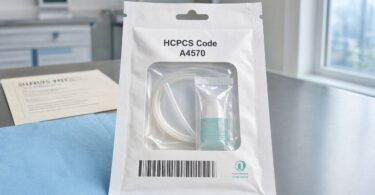
Managing incontinence is a daily reality for millions of adults. It affects dignity, comfort, and overall health. For those who rely on absorbent products, understanding how these supplies fit into the medical billing and insurance world can unlock significant financial relief. You might be a caregiver looking for answers, a medical supplier trying to bill correctly, or an individual navigating your own coverage. The process often starts with a simple question. What is the correct HCPCS code for adult diapers?
This guide serves as your comprehensive resource. We will walk through every aspect of this topic. You will learn the specific codes, how to use them, which payers cover what, and how to avoid common billing mistakes. Our goal is to make a complex system clear and approachable. We avoid jargon where possible and explain terms when they appear. Think of this as a conversation with a trusted expert who wants you to succeed.
We built this guide to be practical. You will find tables that compare codes at a glance. You will see step-by-step instructions. You will read realistic scenarios that mirror your own situation. By the end, you will have a firm grasp on billing for incontinence products and a clear path forward.

Understanding HCPCS Codes and Why They Matter
Before we dive into specific numbers, let’s establish a solid foundation. You encounter HCPCS codes every time you deal with medical supplies or services, even if you do not realize it. Pronounced “hick-picks,” this acronym stands for the Healthcare Common Procedure Coding System. It is a standardized language that medical providers, suppliers, and insurance companies use to describe specific items and services on claims.
What Exactly Is a HCPCS Code?
Think of a HCPCS code as a universal product number for the medical world. When a supplier gives an adult diaper to a patient, they cannot simply write “diaper” on a claim form and expect payment. An insurance processor might interpret “diaper” in a dozen different ways. One person thinks of a reusable cloth product. Another pictures a baby diaper. A third might not understand the medical necessity.
The HCPCS code removes all ambiguity. A single alphanumeric code tells the payer exactly what the supplier provided. It specifies the type of product, its features, and sometimes even the quantity. This standardization speeds up processing and reduces errors.
Level I vs. Level II Codes
HCPCS divides into two main levels. Understanding this split helps you navigate the system more confidently.
- Level I Codes: These are the Current Procedural Terminology (CPT) codes. Medical professionals use them for procedures and services, like a doctor’s visit or a surgical operation. They do not apply to adult diapers.
- Level II Codes: These are the codes we focus on in this article. They identify products, supplies, and services not covered by CPT codes. This includes ambulance services, durable medical equipment, prosthetics, orthotics, and the supplies we care about right now: incontinence products.
Level II codes use a letter followed by four digits. The letter indicates the general category. For incontinence supplies, we mainly work with codes that start with the letter “A” (Medical and Surgical Supplies) or sometimes “T” (for state Medicaid agency codes, though less common for basic diapers).
The Critical Role of HCPCS Codes in Billing
Without the correct code, a claim will deny. It really is that simple. Payers do not guess what you intended. They match the code against their list of covered items. If the code does not match or the documentation does not support it, the claim goes unpaid. A denied claim means the patient may receive a bill, or the supplier absorbs the cost. Neither outcome is desirable.
Correct coding also protects against audits. Payers review claims to ensure accuracy and medical necessity. Using a vague or incorrect code can trigger an investigation. Consistent, proper coding builds a clean billing history that benefits both the supplier and the patient.
The Primary HCPCS Code for Adult Diapers: T4521
Let’s get directly to the core answer. The primary HCPCS code you need for standard, disposable adult diapers is T4521. When you look at a claim form, this is the code you will see most often for the basic, pull-on style or brief-style incontinence product that many people simply call an adult diaper.
“T4521: Adult sized disposable incontinence product, brief/diaper, pull-on, any size, each.”
This official description tells you several important things. The product is adult-sized, not for children. It is disposable, not reusable cloth. It is a brief or diaper in a pull-on style. The code covers any size, meaning you do not need separate codes for small, medium, large, or extra-large. Finally, the unit of measure is “each,” which means you bill one unit for one diaper.
Decoding the T4521 Description
Let’s break down the description further because each word matters during an audit.
- Adult sized: This is a key differentiator. Products for children fall under entirely different codes and policies. This code clearly marks the patient as an adult.
- Disposable: The product is single-use and not laundered. Reusable cloth products take a different code.
- Brief/Diaper: The code covers the traditional diaper form with tabs, often called a brief, and the pull-on style that resembles underwear. Both are absorbent undergarments designed for full incontinence protection.
- Pull-on: This indicates the garment is pulled up like regular underwear rather than fastened with tabs. However, in practice, many payers and suppliers use T4521 for tab-style briefs as well, though a separate code technically exists for those. We will discuss this nuance shortly.
- Any size: The supplier does not need a separate code for the waist measurement. One code fits all.
- Each: The billing unit is a single diaper. If a patient receives 200 diapers per month, the supplier bills 200 units of T4521.
T4521 and Government Payers: Medicare and Medicaid
Medicare’s Stance on T4521
Here is a vital reality check. Original Medicare (Part B) does not cover adult diapers. Medicare considers them personal care items, not medical necessities under their durable medical equipment benefit. The program draws a firm line. Even though incontinence is a medical condition, Medicare policy classifies absorbent products as excluded from coverage.
You might see T4521 on a Medicare claim, but do not expect payment. Some Medicare Advantage (Part C) plans offer an over-the-counter (OTC) benefit that includes incontinence supplies. In that case, the plan may use T4521 to track the item and deduct it from the member’s allowance, but this is not standard Medicare coverage. The member uses a plan-issued card to purchase supplies at participating retailers. The transaction resembles a retail sale more than a traditional insurance claim.
Medicaid Coverage and T4521
Medicaid tells a very different story. State Medicaid programs do cover adult diapers when medically necessary, though policies vary widely by state. T4521 is the most commonly used code across state Medicaid programs. However, many states have quantity limits, preferred product lists, and specific prior authorization requirements.
For example, a state Medicaid program might cover up to 200 units of T4521 per month for an adult. Another state might limit coverage to 180 units. Some states require the patient to try a less expensive product first. Always check your state’s specific Medicaid provider manual. Relying on a national assumption leads to denied claims.
Real-World Billing with T4521
Imagine a home health agency providing care to a Medicaid patient with severe incontinence. The patient requires approximately six diapers per day. The physician documents the medical necessity. The supplier submits a monthly claim with 180 units of T4521.
The claim includes:
- The patient’s Medicaid ID.
- A valid prescription or Certificate of Medical Necessity (CMN).
- The date of service.
- The quantity of 180.
- The HCPCS code T4521.
- The supplier’s National Provider Identifier (NPI).
The state Medicaid system processes the claim. It checks the quantity against the monthly limit. It verifies the prior authorization if required. If everything aligns, the claim pays. This smooth process relies entirely on the correct use of T4521.
Other HCPCS Codes for Incontinence Products: A Comparative View
T4521 is not the only code in the incontinence supplies family. The HCPCS system includes several codes for different types of absorbent products. Using the correct code for the specific product is non-negotiable. Let’s examine each relevant code, its description, and when to use it.
T4520: Reusable Diapers and Briefs
Code: T4520
Description: Adult sized disposable incontinence product, brief/diaper, reusable, any size, each.
Notice the single word difference from T4521: “reusable.” This code describes cloth diapers that the user washes and wears again. Some patients prefer reusable products for environmental reasons, cost savings over time, or skin sensitivity. Medicaid programs may cover a set of reusable briefs with a different dispensing frequency. Instead of a monthly shipment of disposables, the patient might receive six or twelve reusable briefs every six months. The unit of measure remains “each.”
T4522: Insert or Pad Without Backsheet
Code: T4522
Description: Adult sized disposable incontinence product, insert/pad, without backsheet, any size, each.
This code covers the rectangular pad that a patient places inside a reusable or disposable pant. The pad has no waterproof backing. It relies on the outer garment for moisture protection. These products often provide a more discreet option or work for light to moderate incontinence. They cost less per unit than a full brief. Billing T4522 requires clarity that the product is indeed a pad and not a full brief.
T4523: Insert or Pad With Backsheet
Code: T4523
Description: Adult sized disposable incontinence product, insert/pad, with backsheet, any size, each.
Here we have a pad that includes a waterproof layer on one side. The patient can wear this inside a standard underwear or a mesh pant. The backsheet provides an extra barrier against leaks. This product bridges the gap between a full brief and a simple pad. Payers may have specific preferences between T4522 and T4523. Some may only cover one of the two. Verify coverage before dispensing.
T4524: Underpad or Chux
Code: T4524
Description: Adult sized disposable incontinence product, underpad, any size, each.
Underpads are large, rectangular absorbent sheets. The patient lies or sits on them to protect bedding, furniture, or wheelchairs. They are sometimes called “chux” or blue pads. These are not worn on the body. Billing T4524 for a worn product constitutes a coding error. Payers often limit the number of underpads per month separately from the limit for briefs. A patient might receive 150 briefs and 60 underpads per month.
T4525: Protective Underwear Not Meeting Brief Definition
Code: T4525
Description: Adult sized disposable incontinence product, protective underwear/pull-on, any size, each.
This code creates some confusion because T4521 also mentions “pull-on.” The distinction lies in the absorbency and design. T4525 typically describes lighter absorbency protective underwear designed for moderate leakage, not full bladder loss. These products resemble regular underwear with some absorbent padding. T4521 describes a product with the full absorbency of a traditional brief. Payers may distinguish between the two based on the patient’s assessed level of incontinence. A patient with stress incontinence might receive T4525. A patient with functional or total incontinence likely needs T4521.
T4526 to T4544: Specialty Products
The HCPCS system reserves a range of codes for specialized incontinence management. These are less common but crucial for specific patient needs.
- T4526 to T4538: These codes describe various fecal incontinence collection devices, pouches, and skin barriers. They serve patients with ostomies or severe fecal incontinence that requires a device beyond a pad.
- T4539 to T4544: These codes cover incontinence supplies like clamps, compression devices, and other appliances for male urinary incontinence.
While you are unlikely to bill these for standard adult diapers, knowing they exist helps you steer patients to the right specialist when needed.
Comparative Table of Incontinence HCPCS Codes
To make this information easy to scan, we have compiled a direct comparison.
| HCPCS Code | Product Type | Key Feature | Unit | Typical Use |
|---|---|---|---|---|
| T4521 | Brief/Diaper | Disposable, pull-on | Each | Full incontinence, moderate to heavy loss |
| T4520 | Brief/Diaper | Reusable, washable | Each | Full incontinence, patient preference for cloth |
| T4522 | Insert/Pad | No backsheet (waterproof layer) | Each | Light to moderate loss, used inside holder |
| T4523 | Insert/Pad | With backsheet | Each | Moderate loss, worn with standard underwear |
| T4524 | Underpad | Disposable bed/chair protector | Each | Surface protection, any incontinence level |
| T4525 | Protective Underwear | Light absorbency, pull-on | Each | Light leakage, stress incontinence |
| T4526-T4538 | Fecal Devices | Pouches, barriers, collectors | Each | Fecal incontinence, ostomy management |
| T4539-T4544 | Male Devices | Clamps, compression | Each | Male urinary incontinence |
This table serves as a quick reference. Post it near your billing station or save it to your desktop. Before submitting any claim, confirm that the product in your hand matches the code description perfectly.
Navigating Billing Procedures and Documentation
Knowing the codes is half the battle. The other half involves following the correct procedures and providing bulletproof documentation. Payers require proof that the patient needs the supplies and that the supplier dispensed exactly what the prescription ordered.
The Prescription and Certificate of Medical Necessity
A valid prescription stands as the cornerstone of any incontinence supply claim. The physician or nurse practitioner must write an order that specifies the product type, quantity, frequency, and duration of need. A vague prescription like “incontinence supplies as needed” will not hold up.
A strong prescription includes:
- Patient name and date of birth.
- Diagnosis with ICD-10 code (e.g., R32 Unspecified urinary incontinence, N39.3 Stress incontinence).
- Specific product description (e.g., “Disposable adult brief with tabs”).
- Quantity per day and per month.
- Duration of need (e.g., “12 months”).
- Prescriber signature and date.
Some payers, particularly Medicaid programs, require a Certificate of Medical Necessity (CMN) in addition to the prescription. The CMN is a more detailed form where the provider documents the patient’s functional limitations, the type and severity of incontinence, and why the specific product is necessary. The provider may need to explain why a less expensive option is not appropriate. For example, a patient with severe dementia and total incontinence may not be a candidate for a pull-on product that they could remove at inappropriate times. The CMN justifies the need for a tab-style brief.
The Prior Authorization Process
Many state Medicaid programs and some private insurers mandate prior authorization (PA) for incontinence supplies. This means the supplier must obtain approval from the payer before dispensing the product and submitting the claim. Skipping this step is a guaranteed way to have a claim denied.
The prior authorization process typically follows these steps:
- Obtain the prescription and CMN from the provider.
- Complete the payer’s specific PA form. This form asks for the patient’s information, the provider’s information, the requested HCPCS codes, quantities, and medical justification.
- Submit the PA request via fax, online portal, or mail with all supporting documentation.
- Receive a determination. The payer issues an approval with a specific authorization number, a start date, and an end date, or they issue a denial with reasons.
- If approved, dispense the product and include the authorization number on the claim.
- If denied, review the reason, adjust the request if possible, or help the patient understand alternative options.
The PA process takes time, sometimes up to two weeks. Plan ahead so the patient does not run out of supplies while waiting for approval. Submit the PA request well before the current authorization expires.
Submitting the Claim: Data Entry Essentials
When the time comes to submit the claim, accuracy in every field is critical. A single transposed digit in the patient’s ID number stops the entire process.
Essential claim fields include:
- Patient demographics: Name, date of birth, address, insurance ID number.
- Provider/Supplier information: Legal business name, NPI, address, Tax ID.
- Date of service: The date the patient received the supplies. For mailed supplies, this is typically the shipping date. For in-store pickup, it is the pickup date.
- Procedure code: The correct HCPCS code (e.g., T4521).
- Modifiers: Payers may require modifiers to indicate additional information. For example, the RT (right) and LT (left) modifiers do not apply to diapers, but a KX modifier might be required to certify medical necessity is documented. Always check the payer’s billing guide for required modifiers.
- Diagnosis code: The ICD-10 code that supports medical necessity.
- Units: The number of items dispensed. For T4521, this is the number of diapers.
- Charge amount: The retail price or the usual and customary charge, even if the payer will adjust it according to a fee schedule.
- Prior authorization number: If applicable.
Managing Denials and Appeals
Even with perfect preparation, denials happen. A denial is not the end of the road. It is a notification that something needs correction. Common denial reasons for incontinence claims include missing prior authorization, quantity exceeding the limit, unproven medical necessity, or the use of an incorrect code.
When a claim denies:
- Read the denial reason carefully. The remittance advice or explanation of benefits will include a code and a brief description.
- Match the reason to the issue. Does the claim lack a PA number? Did you bill for 250 units when the limit is 200?
- Correct the error if possible. Some denials allow a corrected claim submission.
- If the denial is incorrect, file an appeal. The appeal process requires you to write a letter explaining why the claim should be paid and include all supporting documentation: the prescription, CMN, medical records, and any other evidence. Meet all appeal deadlines. A missed deadline means the denial stands permanently.
Persistence pays off in the appeals process. Many legitimate claims are paid after a well-supported appeal.
Coverage Across Different Payers
Not all insurance works the same way. Understanding the payer landscape helps you set realistic expectations for yourself and for the patient. Let’s break down how different types of insurance handle adult diapers.
Original Medicare: A Firm Exclusion
We touched on this earlier, but it bears repeating as a central point. Original Medicare Part B excludes incontinence supplies. The Medicare National Coverage Determination (NCD) for Durable Medical Equipment Reference List (280.1) does not list briefs, diapers, pads, or underpads as covered items. The program views them as non-medical comfort items.
What does this mean for a Medicare beneficiary? The patient pays 100% out of pocket for adult diapers if they only have Original Medicare. Some beneficiaries purchase a separate Medigap policy. Medigap plans do not cover items that Medicare does not cover. Even with a supplement, the diapers remain uncovered.
There is a small exception for patients in hospice. If a patient elects the Medicare hospice benefit, the hospice provider must cover all services and supplies related to the terminal illness, which may include incontinence supplies for comfort. This is a specific and limited circumstance.
Medicare Advantage (Part C): The OTC Benefit
Medicare Advantage plans, offered by private insurers approved by Medicare, have changed the landscape. Many Part C plans now include an Over-the-Counter (OTC) benefit. This benefit provides a quarterly or monthly allowance on a prepaid card. The member uses the card to purchase eligible health and wellness items at participating retailers, which often include Walmart, Walgreens, CVS, and others.
Adult diapers are frequently on the list of eligible OTC items. The member selects the products they need, swipes the plan-issued card, and the cost is deducted from the allowance. This process bypasses traditional HCPCS billing and claims. The supplier rings up the sale as a retail transaction. The code T4521 may still appear on the receipt for inventory tracking, but the patient is not filing a medical claim. This is the most common way that Medicare-eligible individuals get assistance with incontinence supplies.
Medicaid: State-by-State Variability
Medicaid programs cover adult diapers, but the details depend entirely on the state. You cannot assume that what works in Florida will work in Oregon. However, some common patterns exist.
Most state Medicaid programs:
- Cover a set number of units per month, typically between 180 and 200 for briefs.
- Require a prescription and documentation of medical necessity.
- Use HCPCS code T4521 as the primary code for diapers.
- May require prior authorization, especially for higher quantities.
- Pay a fixed fee schedule rate for each unit.
- Distinguish between adults and children with separate codes and policies.
A deep understanding of your state’s Medicaid provider manual is essential. The manual outlines every requirement, from covered diagnosis codes to the specific claim form to use. Most states publish these manuals online. Bookmark the page and check it regularly for updates. A change in state policy can take effect with little notice.
Private Commercial Insurance: A Mixed Bag
Private insurance plans, often through an employer, vary widely. Some plans offer limited coverage for incontinence supplies. Others mirror Medicare and exclude them entirely. Even when coverage exists, it often comes with a high deductible, coinsurance, or restrictive network.
When verifying benefits with a private insurer, ask specific questions:
- Are disposable incontinence briefs a covered benefit under the plan’s durable medical equipment or medical supplies provision?
- What HCPCS codes are covered? Is it limited to T4521, or are other codes like T4523 included?
- Is prior authorization required?
- What is the quantity limit per month?
- Does the patient need to use a specific in-network supplier?
- What is the patient’s cost-share (deductible, coinsurance, copay) for these supplies?
Always get the answers in writing or document the call thoroughly, including the representative’s name and the reference number for the conversation. If a claim denies later, this documentation supports your appeal.
The VA and Other Government Programs
The Department of Veterans Affairs (VA) provides incontinence supplies to enrolled veterans who receive care through the VA system. The VA has its own formulary and distribution system, which may not use standard HCPCS codes in the same way as Medicare or Medicaid. A VA provider assesses the veteran’s need and places an order through the VA’s internal system. The products are shipped directly to the veteran’s home. Veterans should contact their VA primary care team or prosthetic and sensory aids service for information.
Other government programs, like TRICARE for military families, may offer coverage. TRICARE covers incontinence supplies under its durable medical equipment benefit with specific conditions. The patient must have a medical condition causing incontinence, and the supplies must be medically necessary. TRICARE uses the same HCPCS codes and requires a prescription. Always verify the specific TRICARE policy for the patient’s plan.
Choosing the Right Code: Practical Scenarios
Theory becomes clear when applied to real situations. Let’s walk through some realistic scenarios that a supplier, caregiver, or biller might face.
Scenario 1: The Family Caregiver with a Mother on Medicaid
Situation: Mary cares for her mother, who has advanced dementia and total urinary incontinence. The mother is eligible for Medicaid. The physician has written a prescription for “adult diapers.”
Analysis: The caregiver contacts a Medicaid-enrolled medical supplier. The supplier must translate the generic prescription into a specific HCPCS code. The mother’s condition makes her totally dependent on a full absorbency product. A pull-on style might be removed by the patient at inappropriate times due to the dementia. The supplier recommends a tab-style brief. While T4521 technically says “pull-on,” it is the most appropriate and widely accepted code for a full brief of any style. The supplier uses T4521. They verify that the state Medicaid limit is 200 briefs per month. The physician completes a CMN to document the need for a tab-style brief over a pull-on. The supplier obtains prior authorization and begins monthly shipments of 200 units of T4521. The claim is submitted and paid correctly.
Scenario 2: The Medicare Advantage Member with an OTC Card
Situation: John is a 72-year-old with a Medicare Advantage plan that includes a $50 quarterly OTC benefit. He needs protective underwear for light to moderate leakage when he coughs or sneezes.
Analysis: John does not need a full brief. T4521 would be too heavy and bulky. His product of choice is a discreet pull-on with moderate absorbency, like Depend for Men. He goes to a participating pharmacy. The pharmacy’s point-of-sale system recognizes the product as an OTC-eligible item. The transaction uses the plan’s OTC network, not HCPCS billing. John swipes his plan card, and the cost is deducted from his $50 allowance. No claim is submitted to Medicare. The product might ring up under T4525 if the pharmacy’s system maps it to a HCPCS code for reporting, but John never sees that side of the transaction.
Scenario 3: The Patient with Private Insurance Denial
Situation: Sarah works for a large company and has private insurance. She has severe incontinence after a surgery. Her doctor prescribes 150 disposable briefs per month. The supplier bills T4521 to her insurance. The claim denies with reason “Not a covered benefit.”
Analysis: The supplier reviews Sarah’s plan documents, which unfortunately mirror Medicare’s exclusion. The plan does not cover incontinence supplies. The supplier informs Sarah that she can either pay out of pocket or explore other options. The supplier provides Sarah with a list of product names and styles (T4521 equivalents) available for cash purchase. They also suggest she check if her employer offers a Health Savings Account (HSA) or Flexible Spending Account (FSA). Sarah can use her HSA/FSA debit card to pay for the diapers with pre-tax dollars, providing some financial relief even without insurance coverage.
Scenario 4: The Supplier Facing an Audit
Situation: A medical supply company receives a letter from a state Medicaid program requesting records for claims submitted with HCPCS code T4521 over a six-month period.
Analysis: The supplier’s billing team pulls every record associated with those claims. For each patient, they must produce the signed prescription, the detailed CMN, the proof of delivery (signed by the patient or caregiver with the date of delivery), the prior authorization approval, and a copy of the claim that matches exactly. The auditor compares the product description on the CMN to the HCPCS code. If the CMN says “absorbent pad” but the supplier billed T4521, that is a discrepancy that could lead to a repayment demand. Because the supplier was meticulous, they can defend every claim. The audit concludes with no findings. This scenario underscores the non-negotiable importance of documentation.
Common Billing Errors and How to Avoid Them
Even experienced billers make mistakes. The key is to learn from common errors so you do not repeat them. Here are the most frequent pitfalls in billing for adult diapers, along with clear strategies to avoid them.
Error 1: Using the Wrong HCPCS Code
A supplier picks up a product, guesses at the code, and submits the claim. The product is a pad with a backsheet, but they bill T4521. The claim denies or pays incorrectly, and an audit would reveal the error.
How to Avoid It: Build a reference library. Keep the comparison table from this guide handy. Match every product’s packaging description to the official HCPCS description. When a new product enters inventory, assign its HCPCS code in your system before the first sale. Train all staff to check and recheck.
Error 2: Missing or Expired Prior Authorization
The supplier ships three months of supplies. The prior authorization expired after one month. The claims for months two and three deny.
How to Avoid It: Create a tickler system. Track each patient’s PA start and end dates in a calendar or software. Set an alert to begin the renewal process 30 days before expiration. Verify the PA number and date range on every claim before submission. Never assume.
Error 3: Quantity Billed Exceeds Payer Limit
A state Medicaid program limits T4521 to 200 units per month. A supplier bills for 220. The claim might deny entirely or pay only 200 units, leaving the supplier to write off 20.
How to Avoid It: Know the limits. Build payer-specific quantity limits into your billing software so it flags an error when you enter a number over the limit. If a patient genuinely needs more, do not just bill more. Seek a medical necessity exception through the PA process with documentation from the physician explaining the extraordinary need. Obtain written approval for the higher quantity before dispensing.
Error 4: Insufficient Medical Necessity Documentation
The prescription says “incontinence supplies.” No diagnosis code. No quantity. No duration. The payer has nothing to support the claim.
How to Avoid It: Return incomplete prescriptions to the provider. Use a standardized prescription form that prompts for all required information. Build relationships with local physicians so they understand the documentation standards. A well-designed form gets a well-documented prescription back.
Error 5: Billing Medicare for T4521
A supplier unknowingly submits a claim to Original Medicare for a patient who only has Part B. The claim denies as a non-covered service. The supplier wasted time and effort on a guaranteed denial.
How to Avoid It: Verify coverage before the first shipment. Check the patient’s Medicare status online or via the interactive voice response system. Explain the exclusion clearly to the patient upfront. If they wish to proceed with cash, have them sign an Advance Beneficiary Notice (ABN), though technically ABNs are for items that might not be medically necessary, not for statutory exclusions. A clear waiver stating the patient understands they are financially responsible for a non-covered service protects everyone.
Error 6: Modifier Misuse or Omission
A payer requires the KX modifier on incontinence claims to certify that medical necessity documentation is on file. The supplier omits it. The claim denies.
How to Avoid It: Create a payer-specific billing cheat sheet. For each major payer in your area, list the required modifiers for T4521 and related codes. Program these into your billing system as defaults where appropriate, but always review each claim. A single missing letter stops a claim cold.
Real-World Perspectives from the Field
We spoke with billing managers and suppliers who handle incontinence claims every day. Their insights ground this guide in real experience.
“The biggest frustration I hear from new suppliers is that they think a code is all they need. The code is just the starting line. The documentation, the authorization, the proof of delivery, that’s the whole race. You can have the right code and still lose if you don’t have a prescription that says the exact same thing.” – Mary, Billing Manager for a Midwestern DME Supplier
“I tell my team to treat every claim like it will be audited. If you wouldn’t be comfortable sitting across from an auditor and explaining why you billed what you billed, don’t submit it. That mindset changes your behavior. You double-check the code. You make sure the delivery ticket is signed. You get the CMN updated.” – David, Owner of a Regional Incontinence Supply Company
“For families, the OTC card from a Medicare Advantage plan is a lifeline. But they need help understanding how to use it. They don’t know what ‘OTC’ means. They think it’s a discount card or a scam. I spend as much time educating families on how to swipe the card at the pharmacy as I do on anything else.” – Lisa, Customer Service Supervisor at a Home Medical Equipment Company
These voices highlight a central theme: correct coding is part of a larger system of care and compliance. Technical knowledge must pair with patient education and rigorous process.
Looking Ahead: Trends in Incontinence Billing
The landscape for incontinence supplies and their billing codes is not static. Several trends point toward changes in the coming years.
The Rise of the OTC Model for Medicare Advantage
The OTC benefit is rapidly expanding. More plans offer higher allowances and a wider range of eligible products. This trend shifts incontinence supplies further away from traditional fee-for-service billing and toward a consumer-driven retail model. Suppliers who adapt to accept these cards and help members navigate their benefits will thrive.
Increased Scrutiny and Audits
Government payers, especially Medicaid, are investing heavily in program integrity. Incontinence supplies represent a high-volume, high-dollar category that attracts scrutiny. Expect audits to become more common and more detailed. Artificial intelligence and data analytics allow payers to spot unusual billing patterns instantly. Suppliers must maintain flawless records to survive this environment.
Potential for Code Updates
The HCPCS code set undergoes annual review. Stakeholders can request code additions, deletions, or modifications. As product technology improves, we may see new codes that distinguish between skin-safe products, ultra-absorbent materials, or eco-friendly options. Currently, T4521 covers a wide range of products. A push for more granular coding could split the category, requiring billers to learn new codes and distinctions.
Value-Based Care and Incontinence
The broader shift to value-based care could eventually touch incontinence supplies. Payers may link payment to outcomes, such as reduced skin breakdown or urinary tract infections, rather than simply paying for the volume of supplies. This could lead to new billing models and additional coding requirements. A supplier that can demonstrate that its high-quality products reduce overall healthcare costs will have a competitive advantage.
Practical Tips for Caregivers and Patients
If you are a caregiver or a patient, navigating this system can feel overwhelming. You are not a billing expert, but you need supplies. Here are some practical steps to help you succeed.
- Call your insurance company first. Do not rely on a supplier to know your benefits. Ask your plan directly: “Are adult incontinence briefs a covered medical supply? What is the process to obtain them? Is there a specific supplier I must use?”
- Get a specific prescription from your doctor. A vague note will not work. Ask the doctor to write the exact product type (e.g., “disposable adult brief, tab-style, for total urinary incontinence”) and the monthly quantity.
- If you have a Medicare Advantage plan, check your OTC catalog. You may have a benefit you did not know about. The catalog, available online or by calling your plan, lists every eligible item and the retailers where you can use the card.
- If you pay out of pocket, use your HSA or FSA. Adult diapers are an eligible medical expense. Keep your receipts. Using pre-tax dollars saves you roughly 20-30%, which adds up significantly over a year.
- Do not be afraid to ask for help. Medical suppliers, your doctor’s office, or a local senior advocacy group can often guide you. This system is complex. Needing help is normal.
Building a Successful Incontinence Billing Program
For medical suppliers and providers, building a successful incontinence billing program is a strategic decision. It is not a sideline. It requires dedicated attention to policy, training, and compliance.
Step 1: Designate an Incontinence Billing Specialist
Incontinence billing has unique rules that differ from respiratory medications, mobility equipment, or diabetes supplies. Assign a team member to own this area. This person becomes the expert on state Medicaid policies, Medicare Advantage OTC networks, and the specific documentation requirements for each payer. They monitor policy changes and train the rest of the team.
Step 2: Invest in Payer-Specific Guidelines
Do not rely on general knowledge. Create digital or physical binders for your top five payers. Each binder contains the current provider manual section on incontinence supplies, the fee schedule, the prior authorization form, sample prescriptions, and contact information. When a question arises, the answer is at your specialist’s fingertips.
Step 3: Automate Where Possible, Verify Always
Billing software can automate many tasks. It can pre-populate HCPCS codes, flag missing prior authorizations, and check quantities against limits. However, automation is a tool, not a replacement for human review. Build a daily or weekly claim review process where a human looks at every claim before submission. This catches the errors that automation misses, like a diagnosis code that doesn’t match the narrative.
Step 4: Master the Art of Delivery Documentation
Proof of delivery is a common audit focus. For shipped items, keep the tracking number and a delivery confirmation from the carrier. For hand-delivered items, use a delivery ticket that the patient or caregiver signs and dates. The ticket should list each item and the quantity delivered. A signature with no date is a red flag for an auditor. A date with no signature is useless.
Step 5: Create a Culture of Compliance
Compliance is not a department; it is a mindset. From the owner to the delivery driver, everyone understands that we follow the rules, even when a shortcut seems easy. Celebrate when an audit results in no findings. Treat a billing error as a learning opportunity, not a punishment. A positive compliance culture protects the company and, most importantly, the patients who depend on us to get it right.
Conclusion
The correct HCPCS code for a standard disposable adult diaper is T4521, but successful billing demands much more than entering a number on a claim form. This guide has walked you through the entire landscape: the meaning of T4521 and related codes, the critical role of prescriptions and prior authorizations, the varied coverage policies across Medicare, Medicaid, and private insurers, and the common mistakes that lead to denied claims. We have provided practical strategies, real-world scenarios, and a framework for building a compliant and patient-focused billing program.
Ultimately, behind every code is a person who deserves dignity and comfort. Whether you are a caregiver navigating Medicaid rules, a supplier building a billing process, or an individual using an OTC card, your efforts remove barriers to essential care. The healthcare billing system is complex, but a methodical, well-informed approach ensures that those who need these products can access them. Use this guide as your map. Refer to it often. Share it with your team. Let it help you turn a confusing process into a reliable pathway that serves patients well.
Frequently Asked Questions (FAQ)
What is the main HCPCS code for adult diapers?
The primary HCPCS code for a standard, disposable adult diaper or brief is T4521. The official description is “Adult sized disposable incontinence product, brief/diaper, pull-on, any size, each.”
Does Medicare pay for adult diapers with code T4521?
No. Original Medicare (Part B) does not cover adult diapers or incontinence briefs. Medicare classifies them as personal care items, not medical equipment. Medicare Advantage (Part C) plans often offer an over-the-counter (OTC) benefit that can be used to purchase these supplies, but this is not a claim billed to Medicare.
Does Medicaid cover adult diapers?
Yes, all state Medicaid programs cover adult diapers when they are medically necessary and properly documented. Coverage amounts, prior authorization requirements, and specific policies vary by state. T4521 is the most common code used for Medicaid billing.
What is the difference between HCPCS codes T4521 and T4525?
T4521 describes a full absorbency adult brief or diaper, typically for moderate to heavy incontinence. T4525 describes a lighter absorbency protective underwear or pull-on, more appropriate for light leakage or stress incontinence. The choice between them depends on the patient’s assessed level of incontinence.
What documentation is needed to bill for adult diapers?
A valid prescription specifying the product, quantity, and diagnosis is essential. Many payers also require a Certificate of Medical Necessity (CMN) and prior authorization. You must also keep signed proof of delivery for every shipment.
Can I use my HSA or FSA to buy adult diapers?
Yes. Adult incontinence products, including diapers and pads, are eligible medical expenses under Health Savings Accounts (HSAs) and Flexible Spending Accounts (FSAs). You can use your plan’s debit card to purchase them at eligible retailers and pharmacies. Keep your receipts for record-keeping.
Additional Resource
To find the most current official alpha-numeric HCPCS file and annual updates, visit the Centers for Medicare & Medicaid Services (CMS) HCPCS Quarterly Update page. This primary source ensures you always reference the latest code set directly from the governing body.