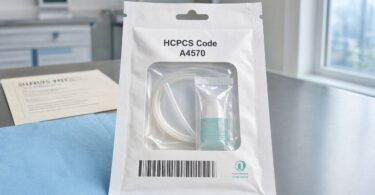
Healthcare billing is a complex process that relies on standardized coding systems to ensure accuracy and efficiency. One of the most critical coding systems in the United States is the Healthcare Common Procedure Coding System (HCPCS). These codes are used by Medicare, Medicaid, and private insurers to classify medical procedures, supplies, and equipment for reimbursement.
Understanding HCPCS codes is essential for healthcare providers, billers, and coders to avoid claim denials, ensure timely payments, and comply with regulatory requirements. This guide provides an in-depth exploration of HCPCS codes, their structure, applications, and best practices for accurate coding.

HCPCS Codes
2. What Are HCPCS Codes?
HCPCS (Healthcare Common Procedure Coding System) is a standardized coding system used to describe medical procedures, services, and supplies. Developed by the Centers for Medicare & Medicaid Services (CMS), HCPCS codes are divided into two main levels:
-
Level I: Current Procedural Terminology (CPT) codes, maintained by the American Medical Association (AMA), covering medical procedures and services.
-
Level II: National codes for non-physician services, medical equipment, and supplies.
These codes ensure uniformity in billing and facilitate seamless communication between healthcare providers and insurers.
3. History and Evolution of HCPCS Codes
HCPCS was established in the 1970s to standardize billing for Medicare and Medicaid services. Over time, it expanded to include:
-
1983: Introduction of Level II codes for durable medical equipment (DME).
-
1996: HIPAA mandated the use of HCPCS for electronic healthcare transactions.
-
2003: Retirement of Level III (local) codes to reduce inconsistencies.
Today, HCPCS is updated annually to reflect advancements in medical technology and services.
4. Levels of HCPCS Codes
Level I: CPT Codes (Current Procedural Terminology)
Managed by the AMA, CPT codes describe medical, surgical, and diagnostic services.
Example:
-
99213: Office visit for an established patient (15 minutes).
Level II: National Codes
These codes cover supplies, equipment, and non-physician services.
Example:
-
A4253: Test strips for blood glucose monitoring.
Level III: Local Codes (Discontinued in 2003)
Previously used by state Medicaid programs, these were phased out to standardize coding.
5. Structure of HCPCS Codes
HCPCS codes follow a specific format:
| Code Type | Format | Example |
|---|---|---|
| Level I (CPT) | 5 digits (numeric) | 99213 |
| Level II | 1 letter + 4 digits | A4253 |
| Modifiers | 2 digits/letters | -25 (Significant, separately identifiable service) |
6. Importance of HCPCS Codes in Healthcare Billing
HCPCS codes are crucial for:
✔ Accurate billing and reimbursement
✔ Preventing claim denials
✔ Regulatory compliance (HIPAA, CMS)
✔ Data tracking for public health research
7. How HCPCS Codes Are Assigned
New codes are proposed by stakeholders (hospitals, manufacturers) and reviewed by CMS. Criteria include:
-
Medical necessity
-
FDA approval (for devices)
-
Distinctive clinical benefit
8. Key Differences Between HCPCS and CPT Codes
| Feature | HCPCS Level II | CPT (Level I) |
|---|---|---|
| Managed by | CMS | AMA |
| Covers | Supplies, DME, non-MD services | Physician services |
| Format | Letter + 4 digits | 5 digits |
9. Common HCPCS Code Categories
| Category | Example Codes |
|---|---|
| DME (Durable Medical Equipment) | E0601 (CPAP device) |
| Ambulance Services | A0428 (Advanced life support) |
| Drugs & Biologicals | J3420 (Vitamin B12 injection) |
10. HCPCS Modifiers: Their Role and Usage
Modifiers provide additional information about a service.
Example:
-
-LT: Left side of the body
-
-RT: Right side of the body
11. Updates and Revisions to HCPCS Codes
CMS releases updates annually. Key changes in 2024 include:
-
New codes for telehealth services
-
Revised codes for COVID-19 testing
12. Challenges in HCPCS Coding
-
Frequent updates require continuous education.
-
Denials due to incorrect modifiers.
-
Vague code descriptions leading to misuse.
13. Best Practices for Accurate HCPCS Coding
✅ Regular training for coders
✅ Use of certified coding software
✅ Auditing claims before submission
14. HCPCS Codes in Medicare and Medicaid
Medicare relies heavily on HCPCS for DME and outpatient services. Medicaid programs may have state-specific variations.
15. Case Studies: Real-World Applications
Case 1: A hospital reduced claim denials by 30% after HCPCS training.
Case 2: A DME supplier improved reimbursements by using correct modifiers.
16. Future of HCPCS Codes
-
AI-driven coding assistance
-
Expanded telehealth codes
-
Global standardization efforts
17. Conclusion
HCPCS codes are the backbone of medical billing, ensuring accurate reimbursement and compliance. Staying updated with annual changes, using modifiers correctly, and continuous training are key to success.
18. FAQs
Q1: Who maintains HCPCS Level II codes?
A: CMS (Centers for Medicare & Medicaid Services).
Q2: Can HCPCS codes be used for private insurance?
A: Yes, many private insurers adopt HCPCS for billing.
Q3: How often are HCPCS codes updated?
A: Annually, with quarterly changes if necessary.