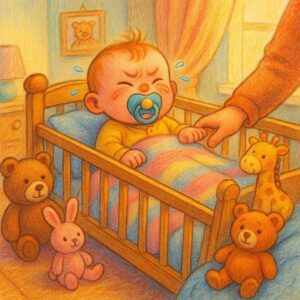
The piercing, inconsolable cry of a fussy baby is a sound that resonates with profound urgency—in the hearts of exhausted parents and in the corridors of pediatric clinics worldwide. It is one of the most common, yet most complex, presenting complaints in early childhood medicine. For the healthcare provider, this cry is not merely noise; it is a cryptic signal, a primal SOS that demands translation. It represents a clinical puzzle where the pieces can range from the benign and self-limiting to the signs of a serious underlying condition. For the medical coder, this puzzle extends into the realm of classification: How do you accurately capture this nebulous yet distressing symptom in the precise, alphanumeric language of the ICD-10-CM?
This article delves deep into the intersection of clinical pediatrics and diagnostic coding, specifically addressing the challenge of the “fussy baby.” We will move far beyond a simple lookup of a code. Our journey will explore the philosophy of symptom coding in ICD-10-CM, unravel the most relevant codes—with R68.12 as our central focus—and dissect the vast differential diagnosis that must guide both clinical thinking and code assignment. We will provide a structured framework for transforming a subjective parental concern into a clear, compliant, and clinically accurate medical record. With detailed explanations, practical workflows, and essential tables, this guide aims to be an indispensable resource for pediatricians, family physicians, nurse practitioners, physician assistants, and medical coders alike.
ICD-10-CM Code for the Fussy Baby
2. The Clinical Conundrum: Fussiness as a Symptom, Not a Diagnosis
“Fussiness” is a lay term encapsulating a behavioral state of irritability, excessive crying, difficulty in consoling, and apparent discomfort. Clinically, it is a non-specific symptom, analogous to “fever” or “pain.” The paramount task of the clinician is to act as a detective, gathering clues from the history, physical exam, and possibly targeted investigations to determine its etiology.
Coding must mirror this clinical process. The ICD-10-CM system is designed to classify diagnoses, not just symptoms, whenever possible. Therefore, while a code for the symptom of excessive crying exists and is often necessary for an encounter, the ultimate goal is to identify and code the underlying cause. This dual-layered approach—symptom and etiology—is central to accurate medical record-keeping, reimbursement, and population health tracking.
3. Navigating the ICD-10-CM Landscape: Foundational Principles
Before addressing specific codes, understanding three core principles is essential:
-
Specificity is Paramount: ICD-10-CM thrives on detail. “Colic” is not enough; is it infantile colic? “GERD” is not enough; is it with or without esophagitis? Always code to the highest level of detail supported by the documentation.
-
The “Rule of Out” and “Rule in”: Codes should reflect medical certainty. Do not code a condition the physician is “ruling out.” Code the signs, symptoms, or reason for encounter (like fussiness) and any confirmed diagnoses.
-
Sequencing Matters: The primary reason for the encounter is sequenced as the first-listed (outpatient) or principal (inpatient) diagnosis. This is often the symptom (e.g., excessive crying) unless a definitive diagnosis is established during that encounter.
4. The Primary Code: R68.12 – Excessive Crying of Infant (Baby)
This is the most direct ICD-10-CM code for the symptom of a fussy baby. It resides in Chapter 18: Symptoms, Signs, and Abnormal Clinical and Laboratory Findings, Not Elsewhere Classified (R00-R99).
-
Code: R68.12
-
Description: Excessive crying of infant (baby).
-
Clinical Context: This code is used when the infant’s crying is perceived as prolonged, frequent, or intense enough to prompt medical evaluation, and no immediate cause is identified at the start of the encounter. It is the appropriate code for the initial complaint.
-
Key Consideration: R68.12 is a symptom code. If during the evaluation a definitive cause is identified (e.g., acute otitis media), that causal code generally takes precedence as the primary diagnosis, and R68.12 may be listed as a secondary code if the symptom remains relevant to care.
5. The Critical Role of Differential Diagnosis & Etiological Coding
The true art of coding fussiness lies in accurately capturing its cause. Here are major diagnostic categories and their corresponding codes.
Gastrointestinal Culprits
-
Infantile Colic (R10.83): This is a diagnosis of exclusion, characterized by paroxysms of irritability, fussing, or crying in an otherwise healthy infant, lasting >3 hours/day, >3 days/week, for >3 weeks. R10.83 is specifically for colic. It’s crucial to note this is under “Abdominal pain,” emphasizing the presumed but not fully understood gastrointestinal component.
-
Gastroesophageal Reflux (GER) and GERD (K21.-):
-
K21.00 – GERD without esophagitis.
-
K21.01 – GERD with esophagitis.
-
P78.83 – Neonatal vomiting (often used for simple, uncomplicated reflux in newborns).
-
-
Constipation (K59.0-): K59.00 (Constipation, unspecified) or K59.02 (Slow transit constipation).
-
Lactose Intolerance (E73.-): E73.9 (Lactose intolerance, unspecified) or more specific congenital forms.
-
Infantile Dyschezia (P92.5): This code is for the normal, non-pathological grunting and straining in infants learning to coordinate bowel movements.
Infectious Causes
-
Acute Otitis Media (H66.9-): A very common cause. Use H66.90 (unspecified) or specify laterality (H66.91-H66.93).
-
Urinary Tract Infection (N39.0):
-
Viral Illnesses (e.g., B34.9 for viral infection unspecified): Often coded with the specific virus if known.
-
Oral Thrush (B37.0): Candida infection in the mouth can cause pain during feeding.
Neurological and Developmental Considerations
-
Migraine (G43.-): Can present as episodic fussiness/headache in young children.
-
Infantile Spasms (G40.4-): While not typical fussiness, subtle seizures can manifest as brief spasms and irritability.
-
Sensory Processing Differences: While not a direct ICD-10 “diagnosis,” underlying factors like F98.2 (Other feeding disorders of infancy and childhood) or codes for developmental concerns may be relevant.
Dermatological Discomforts
-
Severe Diaper Dermatitis (L22):
-
Eczema (L20.-): L20.9 (Atopic dermatitis, unspecified).
-
Candidal Intertrigo (B37.2):
The Subtleties of Food Protein Allergies
-
Allergic Colitis (K52.2): A common code for non-IgE mediated reactions (like Cow’s Milk Protein Allergy) causing fussiness, blood in stool, etc.
-
Food Protein-Induced Enterocolitis Syndrome (FPIES) (K52.21): A more severe subtype.
-
Anaphylaxis (T78.0-): For immediate IgE-mediated reactions.
6. The Mother-Baby Dyad: Coding Related Maternal Factors
Sometimes, the infant’s fussiness is linked to maternal health or feeding issues.
-
Breastfeeding Difficulties:
-
O92.79 – Other lactation difficulties (e.g., poor latch, inefficient transfer leading to underfeeding and fussiness).
-
P92.0 – Vomiting of newborn (can be related to feeding issues).
-
-
Maternal Drug Exposure: Codes from P04.14 (Newborn affected by maternal use of tobacco) or P04.49 (Newborn affected by maternal use of other drugs of addiction) may be relevant in certain contexts.
7. A Step-by-Step Clinical and Coding Workflow
-
Document the Chief Complaint: “Excessive crying/fussiness” should be clearly stated.
-
Conduct and Document a Thorough H&P: Detail the history (onset, pattern, associated symptoms, feeding, sleep, bowel habits) and physical exam (including thorough otoscopic, abdominal, and dermatological exams).
-
Establish a Clinical Impression: Based on findings, state whether this is likely:
-
Idiopathic (R68.12) +/- Infantile Colic (R10.83)
-
Secondary to a Specific Diagnosis (e.g., Acute Otitis Media)
-
A mixed picture
-
-
Assign Codes Based on Impression:
-
Scenario A (No Cause Found): R68.12 (primary), potentially followed by R10.83 if criteria for colic are met.
-
Scenario B (Cause Found): Definitive Diagnosis (e.g., H66.90) as primary, R68.12 as secondary if documenting the symptom that led to discovery.
-
Always: Add any other relevant codes (e.g., feeding difficulty, constipation).
-
8. Differential Diagnosis & Corresponding ICD-10-CM Codes for the Fussy Infant
| Diagnostic Category | Specific Condition | ICD-10-CM Code(s) | Clinical Notes for Coding |
|---|---|---|---|
| Symptom Code | Excessive Crying | R68.12 | Primary code for the symptom when cause is unknown or not yet determined. |
| Gastrointestinal | Infantile Colic | R10.83 | Use when diagnostic criteria are met (Rule of 3’s). Often paired with R68.12. |
| Gastroesophageal Reflux Disease (GERD) | K21.00 (without esophagitis) K21.01 (with esophagitis) |
Specify based on endoscopic findings if available. | |
| Constipation | K59.00 (unspecified) | ||
| Allergic Colitis / Food Protein Allergy | K52.2 | Common for cow’s milk protein allergy presentations. | |
| Infectious | Acute Otitis Media | H66.90 (unspecified) H66.91-H66.93 (by laterality) |
A leading cause of acute, new-onset fussiness. |
| Urinary Tract Infection | N39.0 | Requires urinalysis/culture for diagnosis. | |
| Oral Candidiasis (Thrush) | B37.0 | ||
| Dermatological | Severe Diaper Dermatitis | L22 | |
| Atopic Dermatitis (Eczema) | L20.9 | ||
| Other/Miscellaneous | Neonatal Abstinence Syndrome | P96.1 | History of maternal substance use is key. |
| Feeding Difficulty of Newborn | P92.5 (Dyschezia) P92.8 (Other) |
||
| Maternal Factors | Lactation Difficulty | O92.79 | Coded on the mother’s record, not the infant’s. |
9. Ethical Coding: Specificity, Sequencing, and the Danger of Assumption
Coding must be driven by the provider’s documentation. Never assume a diagnosis. If the provider documents “fussiness, likely due to gas,” but does not document a definitive diagnosis of colic, code R68.12, not R10.83. Clarification may be needed. Sequencing impacts reimbursement and data integrity. Ensuring the first-listed code truly reflects the main reason for the resource-intensive encounter is a professional and ethical obligation.
10. The Holistic Approach: When There is “No Code” for Nurture
It is vital to acknowledge that some causes of infant distress exist outside the current ICD-10-CM framework. Overstimulation, temperamental variations, and subclinical imbalances in the gut microbiome are areas of growing research. Furthermore, parental anxiety and postpartum mood disorders can profoundly affect the perception of the infant’s fussiness and the caregiver-infant bond. While these may not have direct infant codes, supporting the family with resources—and in the mother’s case, using codes like F53.0 (Postpartum depression) on her record—is part of comprehensive care. The coder’s role is to accurately reflect the medical diagnoses made, while the clinician’s role encompasses this broader, holistic view.
11. Conclusion
Accurately coding the fussy infant requires a partnership between clinician and coder, rooted in precise documentation and a deep understanding of ICD-10-CCM principles. Begin with R68.12 for the symptom, but relentlessly pursue the underlying etiology, coding it specifically when confirmed. Remember that fussiness is a puzzle with many potential pieces, from common K21.00 to infectious H66.90. By following a structured clinical and coding workflow, professionals ensure accurate reimbursement, robust data for population health, and most importantly, a medical record that truly tells the story of the child’s care.
12. Frequently Asked Questions (FAQs)
Q1: Can I use both R68.12 and R10.83 together?
A: Yes, absolutely. This is a common and appropriate combination. R68.12 documents the presenting symptom (excessive crying), and R10.83 provides the more specific clinical diagnosis (infantile colic) if the physician has made that assessment.
Q2: What is the single most important factor in coding fussiness correctly?
A: The physician’s documentation. The codes must directly reflect the diagnoses and clinical impressions written in the medical record. Clear documentation leads to accurate coding.
Q3: How do I code a fussy baby who is simply diagnosed with “gas”?
A: “Gas” is not a billable diagnosis in ICD-10-CM. You would use the symptom code R68.12 (Excessive crying of infant). If the physician documents a related condition like “infant dyschezia” (P92.5) or “abdominal pain” (R10.8-), those could be used if supported.
Q4: When does a code from the mother’s record come into play?
A: Codes for maternal lactation difficulties (O92.79) or postpartum depression (F53.0) are placed on the mother’s medical record, not the infant’s. They are relevant to the infant’s care context but are not assigned to the baby’s encounter.
Q5: Is there a time limit on using the newborn (P) codes?
A: Codes from Chapter 16 (P00-P96) are for conditions originating in the perinatal period (before birth through the first 28 days after birth). For a 6-month-old with fussiness, you would not use a P code (like P92.5) unless the condition originated in the newborn period and is still relevant.
Date: December 28, 2025
Author: Pediatric Coding & Clinical Insights Team
Disclaimer: This article is for informational and educational purposes only. It is not a substitute for professional medical advice, diagnosis, or treatment. ICD-10-CM coding is complex and subject to change. Always consult the latest official ICD-10-CM code set, payer-specific guidelines, and clinical documentation to ensure accurate coding. The author and publisher are not responsible for any errors, omissions, or consequences resulting from the use of this information.