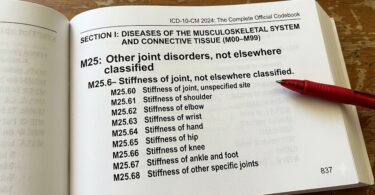
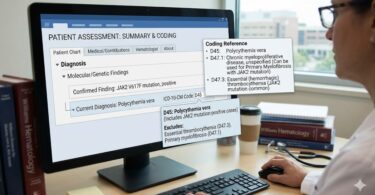
Coughing is one of the most common symptoms prompting patients to seek medical attention. Whether it’s a minor irritation or a sign of a serious underlying condition, accurately diagnosing and coding a cough is crucial for effective treatment, billing, and healthcare data tracking. The International Classification of Diseases, 10th Revision (ICD-10), provides specific codes for different types of coughs, ensuring uniformity in medical records.
This guide explores the ICD-10 code for cough (R05), its subcategories, related conditions, and best practices for documentation. Whether you’re a healthcare provider, medical coder, or student, this article will help you navigate cough-related diagnoses with precision.

icd 10 code for cough
Understanding ICD-10 Codes
What Are ICD-10 Codes?
The ICD-10 is a globally recognized system used to classify diseases, symptoms, and medical procedures. It ensures standardized communication among healthcare providers, insurers, and researchers.
Importance of Accurate Coding
-
Ensures proper reimbursement from insurance companies.
-
Facilitates epidemiological research and public health tracking.
-
Reduces claim denials and compliance risks.
ICD-10 Codes for Cough
The primary ICD-10 code for cough is R05, but additional specificity is often required. Below is a breakdown:
| ICD-10 Code | Description |
|---|---|
| R05.1 | Acute cough (lasting less than 3 weeks) |
| R05.2 | Subacute cough (3-8 weeks) |
| R05.3 | Chronic cough (lasting more than 8 weeks) |
| R05.4 | Cough syncope (fainting due to severe coughing) |
| R05.8 | Other specified cough |
| R05.9 | Cough, unspecified |
When to Use Each Code
-
R05.1 (Acute cough): Common cold, flu, or acute bronchitis.
-
R05.3 (Chronic cough): Asthma, GERD, or chronic obstructive pulmonary disease (COPD).
-
R05.4 (Cough syncope): Rare but serious, often seen in pertussis or severe COPD.
Common Related Conditions and Their Codes
Infectious Causes
-
J18.9 – Pneumonia, unspecified
-
J20.9 – Acute bronchitis, unspecified
-
A37.90 – Whooping cough (pertussis)
Non-Infectious Causes
-
J45.909 – Asthma, unspecified
-
K21.9 – GERD (gastroesophageal reflux disease)
-
J44.9 – COPD, unspecified
Coding Guidelines for Cough
Documentation Requirements
-
Specify duration (acute, subacute, chronic).
-
Note associated symptoms (fever, wheezing, sputum).
-
Identify underlying causes (infection, allergy, smoking).
Combining Codes for Comorbidities
Example:
-
R05.3 (Chronic cough) + J44.9 (COPD) if the cough is due to COPD.
Differential Diagnoses Linked to Cough
| Condition | ICD-10 Code |
|---|---|
| Upper Respiratory Infection (URI) | J06.9 |
| Postnasal Drip | R09.82 |
| Lung Cancer | C34.90 |
| Heart Failure | I50.9 |
Clinical Documentation Tips
-
Avoid unspecified codes (R05.9) when possible.
-
Link cough to definitive diagnoses (e.g., “Chronic cough due to asthma”).
-
Use additional codes for symptoms like hemoptysis (R04.2).
Impact of Incorrect Coding
-
Claim denials due to lack of specificity.
-
Audit risks from Medicare/private insurers.
-
Misleading data for public health tracking.
Case Studies
Case 1: Acute Cough in a Child
-
Symptoms: Fever, runny nose, cough (3 days).
-
Diagnosis: Acute upper respiratory infection (J06.9).
-
ICD-10: R05.1 + J06.9.
Case 2: Chronic Cough in an Adult Smoker
-
Symptoms: Persistent cough (>8 weeks), wheezing.
-
Diagnosis: COPD (J44.9).
-
ICD-10: R05.3 + J44.9.
FAQs on ICD-10 Codes for Cough
Q1: What is the ICD-10 code for a persistent cough?
-
R05.3 (Chronic cough).
Q2: Can I use R05.9 if the cause is unknown?
-
Yes, but further testing is recommended for accurate coding.
Q3: How do I code a cough with blood (hemoptysis)?
-
Use R04.2 (Hemoptysis) alongside the cough code.
Conclusion
Accurate ICD-10 coding for cough ensures proper diagnosis, billing, and data integrity. Always document duration, associated symptoms, and underlying causes. Using specific codes (e.g., R05.1, R05.3) minimizes claim denials and improves patient care.