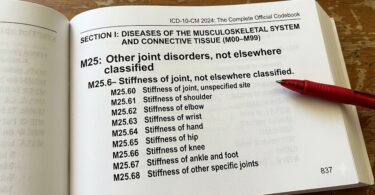
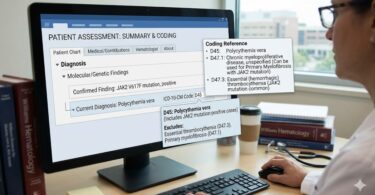
If you work in occupational therapy—whether as a new graduate, a seasoned clinician, or a billing specialist—you already know one thing for certain. The right diagnosis code changes everything. It can mean the difference between a paid claim and a denied one. It can also determine whether your patient receives the continued care they actually need.
But here is the honest truth. There is no single “ICD-10 code for occupational therapy” that covers every situation. Occupational therapy is incredibly diverse. You might work with a child who struggles with handwriting due to developmental coordination disorder. You might help a stroke survivor relearn how to button a shirt. Or you could be adapting a workspace for someone with chronic back pain.
Each of these scenarios requires a different code. And that is exactly what this guide will help you navigate.
We will walk through the most common ICD-10 codes used in OT practice. We will talk about how to match codes to functional goals. We will also cover documentation tips that keep auditors happy and patients safe.
Let us get started.
ICD-10 Code for Occupational Therapy
Why the Right ICD-10 Code Matters for Occupational Therapy
Many therapists feel that coding is just administrative paperwork. Something that takes time away from direct patient care. But accurate coding serves a much bigger purpose.
First, it justifies medical necessity. Insurance companies need to see a clear link between the diagnosis and the therapy you provide. If you treat a patient for shoulder pain but the code says “general weakness,” the claim may raise red flags.
Second, it protects your license. Fraudulent or careless coding can lead to audits, fines, or even legal action. Staying honest and accurate is not just good business. It is ethical practice.
Third, it helps track public health data. ICD-10 codes are used for research, disease tracking, and healthcare planning. When you code correctly, you contribute to a bigger picture.
Important Note: ICD-10 codes change regularly. Always check the latest version from the CDC or your billing department before submitting claims. This guide reflects common codes as of April 2026, but updates do happen.
Understanding the Structure of ICD-10 Codes
Before we jump into specific codes, let us quickly review how these codes are built. This will help you understand why certain codes exist and how to find new ones when needed.
An ICD-10 code typically has three to seven characters. The first character is always a letter. The second and third characters are numbers. Characters after the decimal point add more detail.
For example:
-
M54.5 – Low back pain
-
M54.50 – Low back pain, unspecified site
-
M54.51 – Low back pain, vertebral column
The more characters you add, the more specific the diagnosis becomes. In occupational therapy, specificity is your friend. A vague code often leads to a denied claim. A precise code tells the payer exactly what is going on.
The Most Common ICD-10 Codes Used in Occupational Therapy
Let us get into the practical part. Below are the diagnosis codes you will likely use every week as an OT practitioner. We have organized them by body system and condition type.
Musculoskeletal System Codes (M00-M99)
This is probably the largest category for outpatient occupational therapy. Think of hand therapy, shoulder rehab, and post-surgical recovery.
| Condition | ICD-10 Code | Clinical Example |
|---|---|---|
| Rotator cuff tear | M75.1 | Patient post-arthroscopic repair needing range of motion and strengthening |
| Carpal tunnel syndrome | G56.0 | Patient with numbness and weakness affecting grasp and pinch |
| De Quervain’s tenosynovitis | M65.4 | New mother with thumb pain unable to lift her baby |
| Osteoarthritis of the hand | M19.0 | Older adult with joint pain and difficulty opening jars |
| Lateral epicondylitis | M77.1 | Tennis elbow affecting work tasks like typing or lifting |
| Fracture of radius/ulna | S52.9 | Post-casting or post-surgical patient needing splinting and ADL retraining |
Neurological System Codes (G00-G99)
Neurological conditions are a major part of OT practice. These codes often cover long-term rehabilitation and chronic management.
| Condition | ICD-10 Code | Clinical Example |
|---|---|---|
| Cerebral infarction (stroke) | I63.9 | Patient with left-sided weakness needing dressing and feeding retraining |
| Parkinson’s disease | G20 | Patient with tremors and bradykinesia affecting handwriting and meal prep |
| Multiple sclerosis | G35 | Fatigue and coordination issues impacting work endurance |
| Traumatic brain injury | S06.9X9 | Cognitive retraining for memory and sequencing after a car accident |
| Spinal cord injury | S14.109A | Wheelchair mobility and pressure relief training |
| Polyneuropathy | G62.9 | Diabetic patient with loss of sensation affecting safety in the kitchen |
Mental and Behavioral Health Codes (F00-F99)
Occupational therapy in mental health is growing fast. These codes help you bill for services that address daily living skills, emotional regulation, and social participation.
| Condition | ICD-10 Code | Clinical Example |
|---|---|---|
| Major depressive disorder | F32.9 | Low motivation and energy affecting hygiene and housekeeping |
| Generalized anxiety disorder | F41.1 | Avoidance of public spaces and difficulty concentrating on tasks |
| Autism spectrum disorder | F84.0 | Sensory processing challenges and social skill deficits in a child |
| ADHD, combined type | F90.2 | Poor task initiation and time management affecting school or work |
| Schizophrenia | F20.9 | Disorganized behavior requiring support with medication management |
Developmental and Pediatric Codes
Pediatric OTs see a unique set of codes. These often focus on delays in fine motor, visual motor, or sensory integration.
| Condition | ICD-10 Code | Clinical Example |
|---|---|---|
| Developmental coordination disorder | F82 | Child struggling with cutting, drawing, and catching a ball |
| Sensory processing disorder | (No specific code; use R29.1 or F88) | Over-responsivity to tags and sounds affecting school participation |
| Fine motor delay | R27.8 | Four-year-old unable to hold a crayon or use utensils |
| Cerebral palsy | G80.9 | Positioning, self-feeding, and adapted computer access |
| Down syndrome | Q90.9 | Cognitive and motor delays requiring school-based support |
Important Note: There is no official ICD-10 code for “sensory processing disorder” alone. Most therapists pair a code like R29.1 (unspecified neurological abnormality) with a developmental or autism code. Always check payer guidelines.
How to Match an ICD-10 Code to Occupational Therapy Goals
Here is where many therapists get stuck. You have a patient with low back pain. But your occupational therapy goals are about bending to put on socks or sitting comfortably to cook dinner. The connection between diagnosis and treatment must be crystal clear in your documentation.
Think of it this way. The ICD-10 code answers the question “What is the medical problem?” Your OT goals answer the question “How does this problem affect daily life?” The payer needs to see both.
Let us look at an example.
Patient: Maria, 58 years old
Medical diagnosis: Osteoarthritis of both knees (M17.0)
OT evaluation findings: Difficulty rising from a low toilet seat, unable to carry laundry baskets upstairs, and pain when standing to chop vegetables.
Your goal statement might read:
“Patient will demonstrate safe transfer from a standard toilet to standing using a raised seat within 3 weeks to improve bathroom independence.”
The link is clear. The knee osteoarthritis (M17.0) limits the activity (transfers). The OT intervention directly addresses that limitation. That is medical necessity.
Billing Tips for Occupational Therapy Practitioners
Let us talk about real-world billing. You can have the perfect code, but if your documentation is weak, you still risk a denial.
Always Use the Highest Specificity
Do not stop at three characters if a four or five character code exists. For example, instead of M54.5 (low back pain), use M54.51 (low back pain, vertebral column) if that matches your findings. Every extra character tells a more complete story.
Link the Code to Functional Limitations
Medicare and most private insurers want to see functional limitation reporting. That means you must connect the ICD-10 code to specific problems like:
-
Mobility (walking, transfers)
-
Self-care (bathing, dressing, feeding)
-
Household tasks (cleaning, laundry, cooking)
-
Work duties (lifting, typing, standing)
Write one sentence that connects the diagnosis to the functional problem. For example: “Due to G20 (Parkinson’s disease), the patient presents with bradykinesia affecting buttoning and handwriting.”
Watch for “Z” Codes
Z codes describe factors influencing health status. They are not primary diagnoses, but they provide useful context. Common Z codes in OT include:
-
Z74.1 – Need for assistance with personal care
-
Z73.6 – Limitation of activities due to disability
-
Z50.8 – Encounter for other specified rehabilitation procedure
Use Z codes as secondary codes only. They support medical necessity but do not replace a primary medical diagnosis.
Common Documentation Mistakes That Lead to Denials
Let me share some mistakes I see over and over again. Avoid these, and you will save your clinic time and money.
Mistake #1: Using the same code for every patient visit without updating.
A patient’s condition changes. If you treated a rotator cuff repair (M75.1) for eight weeks, the code should shift to aftercare or a residual weakness code later. Do not copy and paste from the initial evaluation.
Mistake #2: Failing to justify why OT is needed versus PT or speech.
Occupational therapy is unique. Your documentation should highlight occupation-based activities. Cooking, dressing, working, playing. If your notes sound like a physical therapy note, payers may question the discipline.
Mistake #3: Using “unspecified” codes when a more specific code exists.
Codes like M54.5 (low back pain, unspecified) should be temporary. Work with the referring physician to get a more precise diagnosis like M54.51 or M51.1 (lumbar disc disorder).
ICD-10 Codes for Common Occupational Therapy Settings
Different settings require different coding strategies. Let us break it down.
Outpatient Private Practice
You will use mostly M (musculoskeletal) and G (neurological) codes. You also need to track functional limitations closely. Payers often require re-assessment of these limitations every 10 visits or 30 days.
Skilled Nursing Facilities (SNFs)
In SNFs, you see more debility codes, post-surgical fractures, and neurological decline. Common codes include:
-
I69.354 – Hemiplegia following stroke affecting left dominant side
-
M62.81 – Muscle weakness (generalized)
-
R26.2 – Difficulty walking, not elsewhere classified
School-Based OT
Schools do not bill insurance the same way medical clinics do. However, you still need a medical or developmental diagnosis for an Individualized Education Program (IEP). Common school codes include F82 (developmental coordination disorder), F84.0 (autism), and G80.9 (cerebral palsy).
Home Health OT
Home health requires a face-to-face encounter with a physician. The ICD-10 code must come from that physician’s plan of care. Common codes include:
-
I69.30 – Unspecified sequelae of cerebral infarction
-
M19.90 – Osteoarthritis, unspecified site
-
R29.6 – Repeated falls
How to Find a New ICD-10 Code When You Need One
You will eventually treat a condition you have not seen before. Do not guess. Use these reliable resources:
-
The CDC’s official ICD-10 website – Free and updated yearly.
-
Your electronic medical record (EMR) search tool – Most EMRs have a built-in code lookup.
-
AAPC Coder – A paid tool but very reliable for private practices.
-
Your billing department or consultant – They see denials every day and know what works.
Avoid random internet forums. People mean well, but outdated or incorrect codes can cause major problems.
Real-Life Case Studies: Coding in Action
Let us put theory into practice with three realistic patient scenarios.
Case 1: Post-Stroke Hand Rehabilitation
Patient: Robert, 72 years old
Diagnosis from physician: Left hemiparesis due to ischemic stroke (I63.9)
OT evaluation findings: Robert cannot open his left hand to wash his palm. He cannot grip a cup handle. He also struggles to hold a fork.
Primary code: I69.354 (Hemiplegia following cerebral infarction affecting left dominant side)
Secondary code: Z74.1 (Need for assistance with personal care)
Goal: Robert will independently wash his left palm using a soap pump and adaptive mitt within 4 weeks.
Case 2: Child with Sensory Challenges
Patient: Leo, 5 years old
Diagnosis from physician: Autism spectrum disorder (F84.0)
OT evaluation findings: Leo covers his ears in the cafeteria. He refuses to wear long sleeves or socks. He also bites his hand when overwhelmed.
Primary code: F84.0
Secondary code: R29.1 (Unspecified neurological abnormality – used here for sensory processing)
Goal: Leo will tolerate wearing a long-sleeved shirt for 10 minutes during morning circle time without removing it within 6 weeks.
Case 3: Office Worker with Wrist Pain
Patient: Priya, 34 years old
Diagnosis from physician: Right carpal tunnel syndrome (G56.01)
OT evaluation findings: Priya cannot type for more than 15 minutes without numbness. She also drops her coffee mug occasionally.
Primary code: G56.01
Goal: Priya will type 40 words per minute for 30 minutes using a neutral wrist position and an ergonomic keyboard within 5 weeks.
Frequently Asked Questions (FAQ)
Q1: Can I use a pain code like M79.1 (myalgia) as the primary diagnosis for OT?
Generally, no. Most payers expect a more specific medical diagnosis. Pain codes are often denied as primary diagnoses unless the pain is the only identifiable condition. Work with the referring physician to find an underlying cause.
Q2: What ICD-10 code should I use for “maintenance therapy”?
Maintenance therapy requires a different approach. Use the same primary medical code, but your documentation must explain why function would decline without ongoing OT. Codes like Z74.1 (need for assistance) or Z73.6 (limitation of activities) can support medical necessity.
Q3: How often do I need to update the ICD-10 code in the plan of care?
Update the code whenever the diagnosis changes. Also update it if the original code becomes outdated or if a payer denies the current code. In long-term cases, review the code every 30 to 60 days with the physician.
Q4: Can an occupational therapist assign an ICD-10 code without a physician’s diagnosis?
In most settings, no. OT is a distinct discipline, but you typically need a physician’s order or referral that includes a medical diagnosis. Some states allow direct access, but even then, payers often require a physician’s diagnosis code for reimbursement.
Q5: What is the difference between a primary and a secondary ICD-10 code?
The primary code is the main reason for the OT visit. It is the condition that most directly causes the functional problem. Secondary codes add context, like a Z code for assistance needs or another condition that complicates treatment.
Additional Resources for Occupational Therapy Coding
Staying current on coding rules is an ongoing responsibility. Here are two highly reliable places to continue learning:
-
American Occupational Therapy Association (AOTA) Coding and Billing Page – AOTA members get access to regular updates, webinars, and coding fact sheets. Visit aota.org and search for “coding and billing.”
-
Centers for Medicare & Medicaid Services (CMS) ICD-10 Portal – This government site offers the official coding guidelines, yearly updates, and downloadable code files. Use it to verify any code before submitting high-risk claims.
Final Thoughts: Coding with Confidence
Coding does not have to be stressful. Yes, it takes time to learn. Yes, the rules change. But once you understand how to match a diagnosis to a functional problem, the process becomes much clearer.
Remember these three things:
-
Specificity is your best defense. Use the most detailed code available.
-
Document the link between diagnosis and daily function. That is what makes OT unique.
-
Stay curious. When you are unsure about a code, look it up. Ask a colleague. Call the payer.
You became an occupational therapist to help people live better lives. Accurate coding supports that mission. It ensures your patients get the care they need. It also protects your practice and your profession.
Now go ahead and document that next evaluation with confidence. You have got this.
Conclusion
Finding the right ICD-10 code for occupational therapy is not about memorizing every number—it is about understanding how a medical diagnosis limits a person’s daily function. Use specific codes, link them clearly to occupational performance, and document with honesty and detail. When you do that, you protect your patients, your practice, and the future of occupational therapy.
Disclaimer: This article is for educational purposes only and does not constitute legal or billing advice. Coding rules vary by payer, region, and date of service. Always verify codes with your billing department or a certified medical coder before submitting claims. The author and publisher assume no responsibility for claim denials or penalties resulting from the use of this information.