If you are reading this, you are likely navigating the complex world of medical coding, specifically looking for the ICD 10 code for palliative care. Whether you are a medical coder, a nurse, a case manager, or a family caregiver trying to understand a bill, you have come to the right place.
Let’s be honest right from the start: medical coding can feel like learning a foreign language. And when it comes to palliative care—a service focused on comfort and quality of life—finding the right code is crucial. It ensures that the incredible work palliative teams do is recognized, reimbursed, and, most importantly, that patients can continue to receive the care they need.
In this guide, we will strip away the jargon and look at the reality of how palliative care is coded. We will explore the primary code used, why it isn’t always straightforward, and how it differs from hospice billing. Think of this as a friendly chat over coffee, but one that leaves you with the clear, actionable information you need.
ICD 10 Code for Palliative Care
What Exactly is Palliative Care?
Before we dive into the numbers and letters of the ICD-10 system, it is vital to understand what we are actually coding for. This understanding makes choosing the right code much easier.
Palliative care is specialized medical care for people living with a serious illness. It focuses on providing relief from the symptoms and stress of the illness. The goal is to improve quality of life for both the patient and the family.
It is a common misconception that palliative care is the same as hospice care. While they share a philosophy of comfort, they are different.
-
Palliative Care: Is appropriate at any age and at any stage in a serious illness, and it can be provided alongside curative treatment.
-
Hospice Care: Is specifically for people with a life-limiting illness who are no longer seeking curative treatments and are expected to have six months or less to live.
Understanding this distinction is the first step in accurate coding.
The Primary ICD 10 Code for Palliative Care
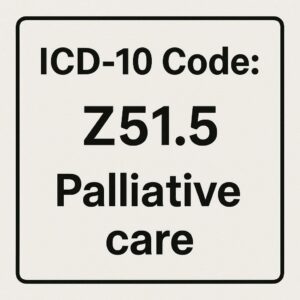
So, what is the code you are looking for? The ICD-10-CM (Clinical Modification) code specifically designated for encounters for palliative care is Z51.5.
Z51.5 stands for “Encounter for palliative care.”
This code falls under the category of “Factors influencing health status and contact with health services.” It is what we call a “Z code,” which is used to describe a circumstance or reason for a patient encounter that isn’t itself a current illness or injury, but a factor that influences their health.
When you see Z51.5 on a medical record, it is essentially stating: “The primary reason for this healthcare visit, admission, or encounter is to receive palliative care services.”
When to Use Z51.5
You should use Z51.5 when the purpose of the encounter is specifically for palliative care. This could include:
-
A patient being admitted to the hospital for pain and symptom management by the palliative care team.
-
An outpatient visit to a palliative care clinic to discuss goals of care and manage side effects of treatment.
-
A consultation by a palliative care specialist requested by the primary physician.
Important Note: Z51.5 is never the only code. It is an accompaniment to the code(s) describing the serious illness the patient is living with. You must code the underlying condition first.
Why Z51.5 is Rarely Used Alone
Here is where things get realistic. If you look at a claim form, you will rarely, if ever, see just Z51.5. Insurance companies and Medicare need to know why the patient needs palliative care.
Think of it this way: Z51.5 explains the type of service, but the other codes explain the medical necessity.
Medical necessity is the most critical part of any claim. It is the justification that proves the healthcare service provided was appropriate and necessary for the patient’s specific condition. To establish medical necessity for palliative care, you must code the serious illness that is causing the suffering.
The “Code First” Rule
The ICD-10 manual has a “Code First” instruction under Z51.5. This means you must list the underlying disease or condition first, followed by Z51.5.
For example:
-
C34.90 (Lung cancer, unspecified) would be listed first.
-
Z51.5 (Encounter for palliative care) would be listed second.
This sequence tells the full story: “This patient has lung cancer, and the reason for this specific encounter is to manage symptoms and provide palliative support related to that cancer.”
Common Underlying Conditions Paired with Z51.5
Palliative care is for any serious illness. Here is a table showing common diagnoses and their corresponding ICD-10 codes that are frequently paired with Z51.5.
| Condition Category | Specific Diagnosis | Typical ICD-10 Code |
|---|---|---|
| Cancer | Malignant neoplasm of breast | C50.911 |
| Malignant neoplasm of lung | C34.90 | |
| Malignant neoplasm of prostate | C61 | |
| Heart Disease | Chronic systolic heart failure | I50.22 |
| Hypertensive heart disease with heart failure | I11.0 | |
| Lung Disease | Chronic obstructive pulmonary disease (COPD) | J44.9 |
| Idiopathic pulmonary fibrosis | J84.112 | |
| Neurological | Alzheimer’s disease (with dementia) | G30.9 + F02.80 |
| Parkinson’s disease | G20 | |
| Amyotrophic Lateral Sclerosis (ALS) | G12.21 | |
| Other | End stage renal disease (ESRD) on dialysis | N18.6 |
| Cirrhosis of the liver | K74.60 | |
| Failure to thrive (adult) | R62.7 |
This is not an exhaustive list, but it highlights the variety of conditions that warrant palliative care.
Palliative Care vs. Hospice: The Coding Difference
Confusing palliative and hospice care is the most common mistake in this area. Because the services overlap in philosophy, the coding can seem similar, but it is distinct.
Hospice Care Code: Z51.5 is NOT for Hospice
The ICD-10 code for hospice care is Z51.5? Wait, no—this is where the confusion peaks. Actually, historically, Z51.5 was used for both. However, current coding guidelines and best practices for billing make a clear distinction based on the type of encounter.
While the ICD-10 diagnosis code might still be Z51.5 for a hospice patient, the real distinction happens with:
-
Procedure Codes (CPT/HCPCS): Hospice services are billed under specific Medicare hospice benefits using different codes (e.g., G9473-G9479 for hospice care supervision).
-
Place of Service: Hospice care is often identified by the specific hospice benefit election and the type of care (routine home care, continuous home care, general inpatient care, respite care).
For the diagnosis, a hospice patient will also have their terminal illness coded first (e.g., C34.9 for lung cancer), followed by Z51.5. However, some coders and guidelines suggest using Z51.5 specifically for palliative care encounters and other codes for end-of-life or hospice encounters, though Z51.5 remains the most commonly cited code in literature for both, provided the underlying condition is clearly stated.
To keep it simple:
-
Palliative Care (Z51.5): Focus is on symptom management, can be alongside curative treatment.
-
Hospice Care (Terminal Illness + Z51.5?): Focus is on end-of-life care, with no curative intent, under a specific benefit plan.
Reader Note: Always check with your specific payer (Medicare, Medicaid, private insurance) as their coverage policies and preferred coding for palliative vs. hospice care can vary. Payer policies trump general guidelines.
Symptom Management: Coding the “Why”
Palliative care is all about managing the burdensome symptoms of a serious illness. Often, the specific symptom is the reason for the visit. In these cases, you might code the symptom first, followed by the chronic condition, and then Z51.5.
For example, if a patient with advanced COPD comes in for severe shortness of breath (dyspnea), the coding order might be:
-
R06.02 (Shortness of breath) – The symptom.
-
J44.9 (Chronic obstructive pulmonary disease) – The underlying condition.
-
Z51.5 (Encounter for palliative care) – The type of service.
This provides a crystal-clear picture of the medical necessity for that specific visit.
Common symptom codes used in palliative care include:
-
R52 (Pain, unspecified)
-
R11.2 (Nausea with vomiting)
-
R53.81 (Malaise and fatigue)
-
F32.9 (Major depressive disorder, single episode, unspecified) – Addressing psychological suffering.
-
G47.00 (Insomnia, unspecified)
Practical Tips for Accurate Coding
To ensure your claims are clean and reflect the excellent care provided, keep these tips in mind.
-
Be Specific: Don’t just code “heart failure.” Code “acute on chronic diastolic heart failure.” Specificity is your friend.
-
Document the Goals: The physician’s or nurse’s notes should clearly state the goals of the palliative care encounter. Words like “pain management,” “goals of care discussion,” “symptom control,” and “advanced care planning” support the use of Z51.5.
-
Link Your Codes: Ensure there is a logical connection between the diagnosis code (the illness) and the Z code (the service). The symptom or illness must justify the need for palliative intervention.
-
Stay Updated: ICD-10 codes are updated annually on October 1st. Always ensure you are using the most current version for the date of service.
-
Use All Available Codes: Don’t be shy about using multiple codes to paint a full picture. If a patient has pain, nausea, and anxiety, code all three.
A Helpful List: Key Takeaways for Coders and Clinicians
-
The Primary Code: Z51.5 is the dedicated ICD-10 code for encounters for palliative care.
-
It’s Not a Standalone Code: Z51.5 must always be sequenced after the code for the underlying serious illness.
-
Medical Necessity is King: The combination of the illness code and the Z code must tell the story of why palliative care is needed.
-
Distinguish from Hospice: While the diagnosis code may appear similar, the billing and benefits for hospice are completely different. Know the difference.
-
Code the Symptoms: Don’t forget to code the specific symptoms (pain, dyspnea, fatigue) being managed to add further justification and detail.
-
Payer Policies Vary: Always verify specific coding requirements with the insurance company to avoid claim denials.
Why This Matters
Accurate coding is not just about getting paid (though that is important for keeping palliative programs running). It is about data. When we accurately code palliative care encounters using Z51.5 and the associated diagnoses, we are painting a real-world picture of the need for these services.
This data helps healthcare systems:
-
Justify the funding and expansion of palliative care teams.
-
Track the quality and effectiveness of symptom management.
-
Demonstrate the value of palliative care in improving patient outcomes and reducing hospital readmissions.
By taking the time to code correctly, you are an advocate for the patient and the specialty.
Conclusion
Finding the right ICD 10 code for palliative care leads you to Z51.5, a small code with a big responsibility. It signifies a shift in focus from curing to caring, from prolonging life to enriching the days a person has. Remember that this code is never alone; it works hand-in-hand with the diagnosis of the serious illness to tell a complete and necessary story. By mastering its use, you ensure that patients receive the compassionate, comfort-focused care they deserve.
Frequently Asked Questions (FAQ)
1. Is Z51.5 only for hospital inpatient palliative care?
No. Z51.5 can be used for any setting where palliative care is provided, including outpatient clinics, nursing homes, assisted living facilities, and home health, provided the encounter is specifically for palliative care services.
2. Can I use Z51.5 for a patient who is also receiving chemotherapy?
Yes, absolutely. This is a key distinction between palliative care and hospice. If a patient is receiving chemotherapy (curative or life-prolonging treatment) but also requires symptom management from a palliative care team, Z51.5 is the correct code for the palliative care encounter.
3. What is the difference between using Z51.5 and a code for “adult failure to thrive”?
They describe different things. Z51.5 describes the service (palliative care). R62.7 (Adult failure to thrive) describes a condition or syndrome. A patient with failure to thrive may receive palliative care, in which case you would code R62.7 first, followed by Z51.5.
4. Will my claim get denied if I only use Z51.5?
Most likely, yes. As discussed, Z51.5 is an accompanying code. It does not, on its own, establish medical necessity. You must include the code for the underlying serious illness (and symptom codes, if applicable) for the claim to be considered complete and for the necessity to be justified.
5. Where can I find the official guidelines for using Z51.5?
The official guidelines are published by the CDC (National Center for Health Statistics) in the official ICD-10-CM coding guidelines. Your facility’s coding department or a professional coding manual will have the most up-to-date information.
Additional Resource
For the most current updates on ICD-10-CM codes and official coding guidelines, you can visit the Centers for Disease Control and Prevention (CDC) – National Center for Health Statistics website. They provide the official, publicly available files and addenda.
[Access the Official ICD-10-CM Files Here] (https://www.cdc.gov/nchs/icd/icd-10-cm.htm)
Disclaimer:
This article is for informational purposes only and does not constitute legal or billing advice. Medical coding guidelines, payer policies, and regulations are subject to change. While we strive to provide accurate and up-to-date information, readers should always consult with qualified coding professionals, their billing department, and the specific policies of relevant payers (including Medicare Administrative Contractors) to ensure compliance and accuracy for their specific situations.