In the intricate world of modern healthcare, few areas demonstrate the vital link between clinical medicine and administrative precision as powerfully as medical coding. At the heart of this intersection lies a common, yet complex cardiac arrhythmia: Paroxysmal Atrial Fibrillation (AFib). For physicians, it represents a clinical challenge of symptom management and stroke prevention. For coders, billers, and healthcare administrators, it translates into a specific alphanumeric string within the ICD-10-CM system—a code that must be selected with unerring accuracy to ensure appropriate reimbursement, support quality reporting, and contribute to valuable population health data. A single misplaced character can trigger claim denials, audits, and compliance risks. This article is a masterclass, designed to dissect the ICD-10 code for Paroxysmal Atrial Fibrillation, moving beyond a simple code lookup to a deep, nuanced understanding that empowers clinicians, coders, and students alike. We will embark on a detailed journey through the anatomy of the code, the critical importance of clinical documentation, the management of complex comorbidities, and the strategic workflow that turns accurate data into financial stability and improved patient outcomes.
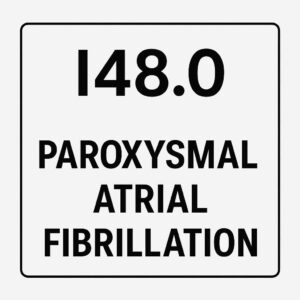
ICD-10 Code for Paroxysmal Atrial Fibrillation
2. Understanding the Beast: What is Paroxysmal Atrial Fibrillation?
Before a single code can be assigned, one must first grasp the clinical entity it represents. Atrial Fibrillation (AFib) is the most common sustained cardiac arrhythmia worldwide, characterized by rapid, disorganized electrical activity in the atria—the heart’s upper chambers. This chaotic activity replaces the coordinated sinus rhythm, leading to ineffective atrial contractions and a rapid, irregular ventricular response.
Paroxysmal Atrial Fibrillation is a specific subtype defined by its self-terminating nature. According to the most recent clinical guidelines from the American Heart Association (AHA), American College of Cardiology (ACC), and Heart Rhythm Society (HRS), paroxysmal AFib is diagnosed when episodes terminate spontaneously or with intervention within 7 days of onset. Episodes may last from a few seconds to several days and can recur with varying frequency. Patients may experience palpitations, dizziness, shortness of breath, fatigue, or chest pain, while some remain entirely asymptomatic—a particularly dangerous scenario as the first sign may be a debilitating stroke.
The pathophysiology involves multiple mechanisms, but often centers on triggers from the pulmonary veins and a substrate of atrial fibrosis and electrical remodeling. This understanding is crucial because the “paroxysmal” nature directly dictates the specific ICD-10 code used, distinguishing it from its more persistent counterparts: Persistent AFib (episodes lasting longer than 7 days or requiring cardioversion to terminate) and Permanent AFib (a decision has been made by the physician and patient not to pursue restoration of sinus rhythm).
3. The ICD-10-CM System: A Primer for Precision
The International Classification of Diseases, Tenth Revision, Clinical Modification (ICD-10-CM) is the standardized system used in the United States to classify and code all diagnoses, symptoms, and procedures recorded in conjunction with hospital and outpatient care. It serves several critical functions:
-
Reimbursement: It is the foundation of the billing process, justifying the medical necessity of services provided to payers like Medicare, Medicaid, and private insurance companies.
-
Epidemiology and Research: It provides data for tracking disease prevalence, treatment outcomes, and public health trends.
-
Quality Measurement: It feeds into quality reporting programs that assess the performance of hospitals and providers.
Unlike its predecessor, ICD-9-CM, ICD-10 is vastly more detailed, allowing for greater specificity. This specificity is both a blessing and a challenge. It enables a more accurate picture of a patient’s condition but demands a higher level of detail from clinical documentation.
4. The Core Code: I48.0 – Paroxysmal Atrial Fibrillation
The fundamental ICD-10-CM code for Paroxysmal Atrial Fibrillation is I48.0. Let’s deconstruct this code:
-
Chapter I: Diseases of the Circulatory System (Codes I00-I99)
-
Category I48: Atrial Fibrillation and Flutter
-
Subcategory I48.0: Paroxysmal Atrial Fibrillation
This code resides within a family of codes for atrial fibrillation and flutter:
-
I48.1: Persistent atrial fibrillation
-
I48.2: Chronic atrial fibrillation
-
I48.3: Typical atrial flutter
-
I48.4: Atypical atrial flutter
-
I48.5: Unspecified atrial fibrillation and flutter
-
I48.8: Other specified atrial fibrillation and flutter (e.g., Perioperative AFib)
-
I48.91: Unspecified atrial fibrillation
-
I48.92: Unspecified atrial flutter
It is absolutely critical to select the code that matches the physician’s specific documentation. Coding from a problem list or a presumptive diagnosis without clear provider documentation is a compliance risk.
5. Beyond the Basics: The Imperative of the 5th and 6th Characters
Here is where the precision of ICD-10 becomes paramount. The code I48.0 is incomplete. It requires additional characters to be valid.
5.1. I48.0X – Unraveling the 5th Character
The 5th character is a placeholder (X) that, in the case of I48.0, is always followed by a 6th character. The structure is I48.0XX. This placeholder exists to maintain consistency with the coding structure for other forms of AFib that may have different 5th character requirements.
5.2. I48.0X1 and I48.0X9 – The Critical 6th Character
The 6th character provides essential clinical detail regarding the patient’s anticoagulant status. This is a direct reflection of the major clinical concern in AFib management: stroke prevention.
-
I48.0X1 – Paroxysmal atrial fibrillation, with anticoagulant:
-
Usage: This code is used when the patient has paroxysmal AFib and is currently using an anticoagulant medication. This includes:
-
Warfarin (Coumadin)
-
Direct Oral Anticoagulants (DOACs) like Apixaban (Eliquis), Rivaroxaban (Xarelto), Dabigatran (Pradaxa), and Edoxaban (Savaysa)
-
Heparins (Unfractionated and Low Molecular Weight)
-
-
Documentation Cue: The medical record must clearly state the patient is on, taking, or using an anticoagulant. A prescription alone is not sufficient; the documentation must confirm the patient is actively taking the medication.
-
-
I48.0X9 – Paroxysmal atrial fibrillation, without anticoagulant:
-
Usage: This code is used in three primary scenarios:
-
The patient is not on any anticoagulant therapy.
-
The patient is on an antiplatelet agent (like Aspirin or Clopidogrel) but not an anticoagulant. Antiplatelets are not anticoagulants.
-
The medical record does not specify the patient’s anticoagulation status. In the absence of specific documentation, the coder must default to “without anticoagulant.”
-
-
Why This Matters: The distinction is crucial for risk adjustment and quality reporting. Patients on anticoagulants are managed differently, and their risk profiles are distinct. Accurate coding ensures that healthcare organizations are reimbursed appropriately for the complexity of caring for these patients and are not penalized in quality metrics for apparent “gaps” in care that are, in fact, documented and coded correctly.
6. Clinical Documentation Improvement (CDI): The Bedrock of Accurate Coding
The coder is entirely dependent on the quality of the physician’s documentation. Vague or inconsistent terms lead to coding errors, denials, and an inaccurate patient record. A robust CDI program is essential.
Key Documentation Requirements for Paroxysmal AFib:
-
Specific Type: The physician must explicitly document “Paroxysmal.” Terms like “AFib,” “a-fib,” or “atrial fib” are ambiguous and default to the unspecified code I48.91.
-
Current Status: Is the patient in AFib at the time of the encounter, or is it a history of paroxysmal AFib with the patient currently in normal sinus rhythm? This can affect sequencing (see below).
-
Anticoagulation Status: A clear statement regarding the patient’s use (or non-use) of anticoagulant medication.
-
Context: Is the AFib related to another acute condition, such as a postoperative state or thyrotoxicosis?
Examples of Strong vs. Weak Documentation:
-
Weak: “Patient with AFib here for follow-up.”
-
Coding Impact: I48.91 (Unspecified AFib) – lower reimbursement, poor data quality.
-
-
Strong: “Patient with a history of paroxysmal atrial fibrillation, currently in normal sinus rhythm. Continues on Apixaban 5mg twice daily for stroke prophylaxis. CHA₂DS₂-VASc score of 3.”
-
Coding Impact: I48.0X1 (Paroxysmal AFib, with anticoagulant) – accurate, higher-weighted code.
-
7. Navigating Comorbidities and Complex Coding Scenarios
Patients rarely have only one condition. Correctly sequencing and coding for comorbidities is a advanced skill.
7.1. Heart Failure and Atrial Fibrillation
AFib and Heart Failure (HF) often coexist in a vicious cycle. The coding priority depends on the reason for the encounter.
-
Scenario A: A patient is admitted for an acute exacerbation of systolic heart failure, and during the stay, they have recurrent paroxysmal AFib episodes that are managed as part of the heart failure treatment.
-
Principal Diagnosis: I50.21 (Acute systolic heart failure)
-
Secondary Diagnosis: I48.0X1 (or I48.0X9)
-
-
Scenario B: A patient is admitted for rapid ventricular response due to a persistent paroxysmal AFib episode, and this acute arrhythmia precipitates acute pulmonary edema (heart failure).
-
Principal Diagnosis: I48.011 (or I48.019) (The AFib with RVR is the reason for admission)
-
Secondary Diagnosis: I50.21 (Acute systolic heart failure)
-
7.2. Hypertension and Hypertensive Heart Disease
Hypertension is a common risk factor. Coding guidelines are specific:
-
If a patient has hypertension and AFib, and the hypertension is routinely managed, code both (e.g., I10 for essential hypertension and I48.0X1).
-
If the patient has hypertensive heart disease with heart failure, and the AFib is present, code a combination code from category I11 (Hypertensive heart disease) and I48.0X1. The I11 code includes both hypertension and the heart failure.
7.3. Postoperative and Post-Infarction Atrial Fibrillation
A common challenge is AFib that occurs in the context of another acute illness.
-
Postoperative AFib: If AFib occurs immediately after surgery (e.g., cardiac surgery) and is a new finding, it is coded as a complication. The code is I48.8 – Other specified atrial fibrillation and flutter, often with a secondary code from Chapter 19 (Injury, poisoning, and certain other consequences of external causes) to identify the specific procedure.
-
Post-Infarction AFib: If AFib occurs during the acute phase of a myocardial infarction (within 4 weeks), it is coded as I21.- or I22.- (the MI code) with I48.0X as a secondary code. The MI is the principal diagnosis.
7.4. Anticoagulation Management and Associated Conditions
Managing anticoagulation is a key part of AFib care. Encounters for monitoring (e.g., INR checks for warfarin) are coded with Z79.01 (Long-term (current) use of anticoagulants) in addition to the I48.0X1 code. If a patient has a complication, such as a bleeding ulcer, the code for the bleed (e.g., K25.0 for acute gastric ulcer with hemorrhage) would be sequenced first, followed by I48.0X1 and Z79.01.
ICD-10-CM Coding Scenarios for Paroxysmal Atrial Fibrillation
| Clinical Scenario | Physician Documentation | Principal/First-Listed Diagnosis | Secondary/Other Diagnoses | Rationale |
|---|---|---|---|---|
| Routine Follow-up | “Paroxysmal AF, stable on rivaroxaban.” | I48.0X1 | Z79.01 (if the encounter focus is anticoagulant management) | The AFib is the chronic condition being managed. |
| Admission for AFib with RVR | “Admitted with rapid AFib. Rate controlled with IV metoprolol. Patient takes apixaban at home.” | I48.0X1 | I49.02 (Ventricular tachycardia, if documented) | The acute exacerbation of the arrhythmia is the reason for admission. |
| AFib during CHF Admission | “Admitted with acute decompensated heart failure. Patient has known paroxysmal AFib, which has been active during this stay.” | I50.23 (Acute on chronic systolic heart failure) | I48.0X1 | The heart failure is the reason for admission; AFib is a co-existing, managed condition. |
| Post-CABG AFib | “Post-op day 2 from CABG. Patient developed new-onset atrial fibrillation.” | I97.1XXA (Postprocedural cardiac functional disturbances, initial encounter) | I48.8 (Other specified atrial fibrillation) | The AFib is a direct complication of the surgery. |
| AFib with Unspecified Type | “Patient has atrial fibrillation. Status post catheter ablation.” | I48.91 (Unspecified atrial fibrillation) | Z98.81 (Status post catheter ablation) | The type of AFib is not specified, so the unspecified code must be used. |
8. The Coding Workflow: From Patient Chart to Clean Claim
A disciplined workflow minimizes errors.
-
Abstract: Review the entire medical record—history & physical, progress notes, consultation reports, discharge summary, diagnostic tests (ECG, Holter monitor).
-
Analyze: Identify the principal reason for the encounter and all secondary conditions that coexist or require treatment.
-
Query: If documentation is unclear, conflicting, or incomplete, initiate a formal physician query to obtain clarification.
-
Assign: Select the appropriate codes based on official guidelines and complete documentation.
-
Sequence: Order the codes correctly, placing the reason for the encounter first.
-
Verify: Perform a final review to ensure accuracy and compliance before claim submission.
9. Common Pitfalls and How to Avoid Them: An Auditor’s Perspective
-
Pitfall 1: Defaulting to Unspecified Codes. Using I48.91 when the record contains clues or prior history indicating a paroxysmal pattern.
-
Solution: Look for key terms in past notes: “self-terminating,” “comes and goes,” “episodic.” If a Holter monitor report shows recurrent, self-limited episodes, a query may be warranted.
-
-
Pitfall 2: Misinterpreting Anticoagulation Status. Confusing antiplatelets (aspirin, clopidogrel) with anticoagulants.
-
Solution: Know the difference. If the record only says “on aspirin,” code I48.0X9.
-
-
Pitfall 3: Incorrect Sequencing. Listing AFib as the principal diagnosis when the patient was admitted for another, more acute condition.
-
Solution: Ask the question: “What was the circumstance of the admission?” The answer determines the principal diagnosis.
-
-
Pitfall 4: Ignoring Coding Guidelines. Failing to apply the specific rules for postoperative AFib or AFib with acute MI.
-
Solution: Keep a copy of the official ICD-10-CM Coding Guidelines readily available and refer to them frequently.
-
10. The Future of Coding: ICD-11 and Beyond
The World Health Organization (WHO) has already released ICD-11, which will eventually be adopted in the US as ICD-11-CM. It offers even greater granularity. For atrial fibrillation, it introduces codes based on more specific anatomical and pathological concepts. While the US implementation is years away, understanding the trajectory towards more precise, data-rich coding systems is essential for long-term career preparedness in healthcare administration.
11. Conclusion
Accurately coding Paroxysmal Atrial Fibrillation with ICD-10-CM is a multifaceted process that extends far beyond memorizing I48.0. It demands a deep understanding of the clinical disease, a meticulous approach to documentation review, a firm grasp of coding guidelines for complex scenarios, and a disciplined workflow. The correct application of the 5th and 6th characters, particularly regarding anticoagulant status, is not a minor detail but a critical component of accurate risk adjustment and reimbursement. By bridging the gap between clinical care and administrative data, precise coding for conditions like paroxysmal AFib ensures financial integrity for healthcare providers and, most importantly, contributes to the high-quality, data-driven care that patients deserve.
12. Frequently Asked Questions (FAQs)
Q1: What is the difference between I48.0X1 and I48.0X9?
A1: I48.0X1 is used for a patient with paroxysmal AFib who is actively taking an anticoagulant medication (e.g., warfarin, DOACs). I48.0X9 is used if the patient is not on an anticoagulant, is only on an antiplatelet like aspirin, or if the medical record does not specify their anticoagulation status.
Q2: A patient’s problem list says “Paroxysmal AFib,” but the physician’s note for today’s encounter only states “AFib.” Which code do I use?
A2: You must code based on the physician’s documentation for that specific encounter. If the current note only states “AFib” without specifying the type, you are required to use the unspecified code I48.91. You cannot code from the problem list alone. This is a prime opportunity for a compliant physician query.
Q3: How do I code a patient who has paroxysmal AFib but is currently in normal sinus rhythm during the encounter?
A3: You still code I48.0X1 or I48.0X9. The code represents the patient’s active, ongoing diagnosis, not their rhythm at a single moment in time. The “paroxysmal” descriptor implies that the patient moves in and out of AFib.
Q4: When should I use a code from category I48.8 (Other specified atrial fibrillation)?
A4: The most common use for I48.8 is for postoperative atrial fibrillation that occurs as a direct complication of a surgery. Always follow the ICD-10-CM Official Guidelines for Coding and Reporting for specific instructions.
Q5: Is the Z79.01 code always required with I48.0X1?
A5: No. Use Z79.01 as an additional code when the long-term use of the anticoagulant is a relevant factor in the patient’s care or management for that encounter (e.g., an encounter for an INR check). It is not mandatory to report Z79.01 every single time you report I48.0X1, but it is often appropriate and provides additional context.
Date: October 22, 2025
Author: Dr. Eleanor Vance, MD, CPC, CCS-P
Disclaimer: This article is intended for educational and informational purposes only and does not constitute medical or legal advice. While every effort has been made to ensure accuracy, medical coding guidelines are subject to change. Always consult the most current official ICD-10-CM coding manuals, payer-specific policies, and clinical documentation for definitive guidance.