Spinal stenosis is not merely a diagnosis; it is a narrative of constriction, a story of the central nervous system’s vital pathways being encroached upon. For millions of patients worldwide, it translates to a life punctuated by pain, numbness, and a frustrating limitation of mobility. For the healthcare provider, it represents a complex clinical challenge requiring precise diagnosis and tailored treatment. And for the medical coder and biller, spinal stenosis is a labyrinth of alphanumeric codes, where a single misplaced character can mean the difference between a clean, reimbursed claim and a denied, audited one.
The International Classification of Diseases, Tenth Revision, Clinical Modification (ICD-10-CM) was implemented to bring a new level of specificity to medical coding. Gone are the days of vague descriptors. In the world of ICD-10, “spinal stenosis” is no longer sufficient. Where is the stenosis? Is it cervical or lumbar? What is the underlying cause? Is it causing debilitating neurogenic claudication or painful radiculopathy? The answers to these questions are not just clinical details; they are the very fabric of accurate code assignment. This article serves as a definitive guide, a detailed map through the intricate terrain of ICD-10 coding for spinal stenosis. We will journey from the basic anatomy of the spine to the advanced nuances of code combination, empowering you with the knowledge to code with confidence, accuracy, and compliance.
ICD-10 Code for Spinal Stenosis
2. Understanding the Clinical Landscape of Spinal Stenosis
What is Spinal Stenosis? The Pathophysiology of a Narrowed Canal
At its core, spinal stenosis is a condition characterized by the abnormal narrowing of the spinal canal. This bony tunnel, formed by the stacked vertebrae, houses and protects the delicate spinal cord and nerve roots. Think of the spinal canal as a highway, and the spinal cord and nerves as the vital traffic flowing through it. Spinal stenosis is the construction, the accident, the fallen debris that narrows the lanes, impeding this crucial flow.
This narrowing can be absolute, referring to a specific measurement of the canal’s diameter, or relative, meaning the canal is narrow compared to the size of the spinal cord or nerves within it. The pathophysiology involves a cascade of degenerative changes, most commonly:
-
Bone Overgrowth: Osteoarthritis can lead to the formation of bone spurs (osteophytes) that project into the canal.
-
Ligament Thickening: The ligaments that help stabilize the spine, such as the ligamentum flavum, can become stiff and hypertrophied (thickened), bulging into the canal space.
-
Herniated Discs: The soft, gel-like cushions between vertebrae can bulge or rupture, pressing on nerves.
-
Facet Joint Arthropathy: Degeneration of the small joints at the back of the spine can lead to enlargement and instability, contributing to narrowing.
This encroachment compresses the neural elements, leading to inflammation, ischemia (reduced blood flow), and the classic symptoms of spinal stenosis.
The Three Anatomical Classifications: Cervical, Thoracic, and Lumbar
The location of the stenosis is the single most important factor in ICD-10 code selection. The spine is divided into three main regions, each with distinct clinical presentations and coding pathways.
-
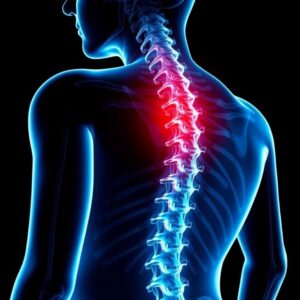
Cervical Spinal Stenosis: This occurs in the neck (C1-C7). Compression here can affect the spinal cord itself (myelopathy) and the nerves leading to the shoulders, arms, and hands. Symptoms often include neck pain, numbness or weakness in the arms and hands, difficulty with balance and walking, and in severe cases, bowel or bladder dysfunction. The consequences of cervical stenosis can be particularly severe due to the high density of critical neural structures.
-
Lumbar Spinal Stenosis: This is the most common form, occurring in the lower back (L1-L5). It typically compresses the cauda equina (the bundle of nerve roots resembling a horse’s tail) and the exiting nerve roots. The hallmark symptom is neurogenic claudication—pain, cramping, numbness, or weakness in the buttocks, thighs, or calves that is provoked by walking or standing upright and is relieved by sitting down or bending forward (flexion). This is often contrasted with vascular claudication, which is pain from poor circulation that is relieved by stopping walking, regardless of posture.
-
Thoracic Spinal Stenosis: This is the rarest form, occurring in the mid-back (T1-T12). Its symptoms can be variable, including mid-back pain, numbness or tingling radiating around the chest or abdomen, and leg weakness. Its relative rarity does not diminish its clinical significance or the need for precise coding.
Etiology: Unraveling the Causes (Degenerative, Congenital, Acquired)
Understanding the “why” behind the stenosis is crucial for both treatment and coding.
-
Degenerative (Acquired): This is the predominant cause, accounting for the vast majority of cases. It is a wear-and-tear process associated with aging. The cumulative effects of disc desiccation, facet joint arthritis, and ligamentous thickening over decades lead to a gradual narrowing of the canal. Codes for this type fall primarily under the M54.5- and M48.0- series.
-
Congenital (Developmental): Some individuals are born with a naturally narrow spinal canal. This is a pre-existing anatomical predisposition. While they may not have symptoms in youth, the minor degenerative changes of aging can more readily lead to symptomatic stenosis compared to someone with a roomy canal. This type is coded from the Q76.- series (Congenital malformations of the spine).
-
Other Acquired Causes: These are less common but important to recognize. They include:
-
Spondylolisthesis: A condition where one vertebra slips forward over the one below it, narrowing the canal.
-
Traumatic: A fracture or dislocation of a vertebra from an injury can compromise the canal.
-
Post-surgical: Scar tissue (epidural fibrosis) or instability following spinal surgery can cause secondary stenosis.
-
Metabolic: Conditions like Paget’s disease of bone can cause enlarged, misshapen bones that narrow the canal.
-
Pathologic: Tumors or other space-occupying lesions within or near the spinal canal.
-
The Patient’s Journey: Common Signs, Symptoms, and Diagnostic Pathways
A patient’s path to diagnosis typically begins with a detailed history and physical examination. The clinician will listen for the characteristic story of posture-dependent pain, particularly in the case of lumbar neurogenic claudication. The physical exam may reveal weakness, sensory deficits, and abnormal reflexes.
Imaging is the cornerstone of confirmation. X-rays can show bone spurs and narrowing of the disc spaces but are poor at visualizing soft tissues and nerves. Magnetic Resonance Imaging (MRI) is the gold standard, providing exquisite detail of the spinal cord, nerve roots, discs, and ligaments, clearly showing the location and severity of the compression. Computed Tomography (CT) scans, sometimes with a myelogram (injection of contrast dye), are also used, especially if MRI is contraindicated.
This clinical picture—the history, the exam, and the imaging findings—forms the foundation upon which the medical coder builds an accurate diagnosis code.
3. Navigating the ICD-10-CM Code Set for Spinal Stenosis
The M54 Series: Your Starting Point
The primary codes for spinal stenosis reside in Chapter 13 of ICD-10-CM, “Diseases of the Musculoskeletal System and Connective Tissue.” The most frequently used category is M54.5- (Spinal stenosis). This code requires a fifth character to specify the region of the spine.
-
M54.50: Spinal stenosis, site unspecified
-
M54.51: Spinal stenosis, occipito-atlanto-axial region
-
M54.52: Spinal stenosis, cervical region
-
M54.53: Spinal stenosis, cervicothoracic region
-
M54.54: Spinal stenosis, thoracic region
-
M54.55: Spinal stenosis, thoracolumbar region
-
M54.56: Spinal stenosis, lumbar region
-
M54.57: Spinal stenosis, lumbosacral region
-
M54.59: Spinal stenosis, other region
Crucial Note: M54.5- is generally used for acquired spinal stenosis, not otherwise specified as being due to spondylosis.
The Crucial Fifth and Sixth Characters: A Deep Dive into Specificity
The power of ICD-10 is in its granularity. For lumbar and cervical stenosis—the two most common types—a sixth character is required to provide even more clinical detail.
For Lumbar Stenosis (M54.56):
-
M54.560: Stenosis of lumbar region without neurogenic claudication.
-
M54.561: Stenosis of lumbar region with neurogenic claudication.
The presence or absence of neurogenic claudication is a major differentiator in the patient’s functional status and treatment plan. Coding it correctly reflects the severity of the condition.
For Cervical Stenosis (M54.52):
-
M54.520: Stenosis of cervical region without myelopathy.
-
M54.521: Stenosis of cervical region with myelopathy.
The distinction of myelopathy (spinal cord dysfunction) is critically important. Cervical stenosis with myelopathy is a more serious condition, often requiring more urgent surgical intervention. Using M54.521 instead of M54.520 accurately conveys the heightened clinical complexity and risk.
Code M48.0: The Critical Case of Spinal Stenosis in Spondylosis
This is one of the most important and sometimes confusing distinctions in spinal stenosis coding. M48.0 (Spinal stenosis in spondylosis) is a more specific code that should be used when the medical documentation explicitly links the stenosis to spondylosis.
What is Spondylosis? It is a broad term synonymous with spinal osteoarthritis. It encompasses the degenerative changes of the vertebrae and facet joints, including the formation of bone spurs (osteophytes).
Coding Logic:
-
If the documentation states “spinal stenosis” without specifying a cause, use the appropriate M54.5- code.
-
If the documentation states “spinal stenosis due to spondylosis,” “degenerative spinal stenosis with spondylosis,” or “spondylosis with spinal stenosis,” you must use M48.0-.
Like M54.5-, M48.0- requires fifth and sometimes sixth characters for location.
-
M48.00: Spinal stenosis in spondylosis, site unspecified
-
M48.02: Spinal stenosis in spondylosis, cervical region
-
M48.020: … without myelopathy
-
M48.021: … with myelopathy
-
-
M48.06: Spinal stenosis in spondylosis, lumbar region
-
M48.060: … without neurogenic claudication
-
M48.061: … with neurogenic claudication
-
-
… and other sites (thoracic, etc.).
Why does this matter? Using the more specific M48.0- code when indicated demonstrates a higher level of coding expertise and aligns more precisely with the physician’s clinical diagnosis, which can be important for data analytics and reimbursement in certain contexts.
The Q76 Series: Addressing Congenital Spinal Stenosis
When the stenosis is documented as being congenital (present from birth), the codes shift entirely out of the musculoskeletal chapter and into Chapter 17: “Congenital Malformations, Deformities, and Chromosomal Abnormalities.”
The relevant code is Q76.49 (Other congenital malformation of spine). This code is used for a range of congenital spinal anomalies, including but not limited to congenital spinal stenosis. The documentation must clearly state “congenital stenosis” for this code to be assigned. It is not used for acquired stenosis, even in a patient who may have had a congenitally narrow canal that later became symptomatic.
4. The Art of Code Assignment: From Documentation to Billing
The Importance of Specificity: Laterality, Neurogenic Claudication, and More
ICD-10 craves detail. While the spinal stenosis codes themselves do not specify laterality (left/right), the associated radiculopathy codes do. A complete coding picture often involves multiple codes.
Example Scenario: A patient has lumbar spinal stenosis with neurogenic claudication due to spondylosis, causing compression of the left L5 nerve root resulting in radiculopathy.
The coder would assign:
-
M48.061: Spinal stenosis in spondylosis, lumbar region with neurogenic claudication (The primary diagnosis).
-
M54.16: Radiculopathy, lumbar region. (While M54.16 does not specify laterality, the clinical detail is captured in the linkage to the procedure and the provider’s notes. For greater specificity, some coding systems may allow for laterality, but the standard ICD-10 code for lumbar radiculopathy is M54.16).
The coder must read the entire diagnostic statement and the body of the report to capture all relevant elements.
Documenting for Dollars: What Clinicians Must Include
Accurate coding is impossible without clear, complete clinical documentation. Physicians and other providers must be educated to document the following elements explicitly:
-
Exact Location: “Lumbar,” “Cervical,” “L4-L5,” “C5-C6,” etc.
-
Etiology (if known): “Degenerative,” “due to spondylosis,” “congenital,” “post-traumatic.”
-
Associated Neurological Deficits: “With neurogenic claudication,” “with myelopathy,” “with L5 radiculopathy.”
-
Laterality of Symptoms: “Left-sided radicular pain,” “right lower extremity numbness.”
Vague terms like “spinal stenosis” or “back pain” force the coder to use unspecified codes (e.g., M54.50), which are often viewed less favorably by payers and can lead to claim denials or audits.
Case Studies: Applying Codes in Real-World Scenarios
Case Study 1: The Classic Lumbar Stenosis
-
Presentation: A 68-year-old male presents with a 2-year history of low back pain and bilateral buttock and calf pain that comes on after walking two blocks and is completely relieved by sitting in a chair and leaning forward. MRI shows severe central canal stenosis at L3-L4 and L4-L5 due to facet hypertrophy and ligamentum flavum thickening.
-
Diagnosis: Lumbar spinal stenosis with neurogenic claudication.
-
ICD-10 Code: M54.561 (Stenosis of lumbar region with neurogenic claudication). Note: Since the cause is not specified as “spondylosis,” we use the M54.5- series.
Case Study 2: Cervical Myelopathy
-
Presentation: A 72-year-old female presents with neck pain, progressive difficulty with fine motor skills in her hands (buttoning shirts, writing), and an unsteady gait. Physical exam reveals hyperreflexia in her lower extremities and a positive Hoffman’s sign. MRI shows severe cervical stenosis at C5-C6 with signal change in the spinal cord, consistent with myelopathy. The radiology report describes degenerative disc disease and osteophyte formation.
-
Diagnosis: Cervical spinal stenosis with myelopathy due to spondylosis.
-
ICD-10 Code: M48.021 (Spinal stenosis in spondylosis, cervical region with myelopathy). Here, the degenerative changes (osteophytes) point to spondylosis as the cause, necessitating the M48.0- code.
Case Study 3: Post-Surgical Stenosis
-
Presentation: A 55-year-old male status post L4-L5 laminectomy 5 years ago presents with recurrent right leg pain. MRI reveals significant scar tissue (epidural fibrosis) at the L4-L5 level causing recurrent stenosis and compression of the right L5 nerve root.
-
Diagnosis: Post-laminectomy syndrome with recurrent lumbar stenosis and right L5 radiculopathy.
-
ICD-10 Codes:
-
M96.1: Postlaminectomy syndrome (This is the primary diagnosis capturing the etiology).
-
M54.561: Stenosis of lumbar region with neurogenic claudication (to specify the current condition).
-
M54.16: Radiculopathy, lumbar region (to specify the nerve involvement).
-
Linking Diagnosis to Procedure: The Key to Clean Claims
The ultimate purpose of a diagnosis code is to justify medical necessity for a procedure, test, or service. The link between the ICD-10 code and the CPT (Current Procedural Terminology) code must be clear and logical.
Example: A claim is submitted for a lumbar epidural steroid injection (CPT 62323) with a diagnosis code of M54.50 (Spinal stenosis, unspecified). This claim is vulnerable to denial because the unspecified code does not strongly justify the need for a targeted lumbar injection. A payer may question, “How do you know the injection was in the lumbar spine if the diagnosis is unspecified?”
A much stronger claim would use M54.561 (Stenosis of lumbar region with neurogenic claudication), which directly and logically links to a lumbar procedure.
5. Avoiding Common Pitfalls and Ensuring Compliance
The “Unspecified” Code (M54.50): When to Use It and When to Avoid It
Unspecified codes are legitimate and necessary in certain situations, such as:
-
When a patient is transferred from another facility and the complete medical record is not yet available.
-
When a diagnostic workup is still in progress and the specific type of stenosis has not been confirmed.
However, using an unspecified code as a default due to poor documentation or coder inertia is a major compliance risk. It suggests a lack of clinical specificity and can be a red flag for auditors. The goal should always be to code to the highest level of specificity documented.
Differentiating Radiculopathy from Myelopathy
Confusing these two can lead to incorrect code assignment, particularly for cervical stenosis.
-
Radiculopathy: Dysfunction of a spinal nerve root. It causes pain, numbness, or weakness in a specific pattern down an arm or leg (e.g., “sciatica” is a lumbar radiculopathy). Code category is M54.1- (Radiculopathy).
-
Myelopathy: Dysfunction of the spinal cord itself. It causes more global problems like balance issues, coordination loss, bowel/bladder changes, and weakness in both arms and/or legs. It is indicated by the sixth character “1” in codes like M54.521 and M48.021.
Mixing these up (e.g., coding cervical stenosis with myelopathy as stenosis with radiculopathy) misrepresents the patient’s serious condition.
Coding Co-morbidities: The Impact of Spondylolisthesis, Scoliosis, and Herniated Discs
Spinal stenosis rarely exists in a vacuum. It is often part of a complex of degenerative spinal conditions.
-
Spondylolisthesis: Code M43.1- (Spondylolisthesis). If the documentation states the stenosis is due to the spondylolisthesis, the spondylolisthesis may be sequenced first as the underlying cause.
-
Scoliosis: Code M41.- (Scoliosis). Degenerative scoliosis in adults can be a direct cause of foraminal stenosis.
-
Herniated Disc: Code M51.2- (Other specified intervertebral disc displacement). A herniated disc is a common acute cause of nerve root compression (radiculopathy) and can contribute to canal stenosis.
The coder must follow the ICD-10 guidelines and the physician’s documentation to determine the principal diagnosis and sequence additional codes appropriately.
Auditing Your Own Work: A Self-Check Protocol
Before submitting a claim, every coder should perform a quick internal audit:
-
Specificity Check: Is this the most specific code available based on the documentation?
-
Etiology Check: Have I used M54.5- or M48.0- correctly?
-
Manifestation Check: Have I captured the neurologic deficits (claudication, myelopathy)?
-
Linkage Check: Does the diagnosis code logically justify the procedure or service being billed?
-
Guideline Check: Have I reviewed the official ICD-10-CM guidelines for the current fiscal year?
6. The Future of Spinal Stenosis Coding
The Transition to ICD-11: What to Expect
The World Health Organization (WHO) has already released ICD-11, which will eventually be adopted in the US as ICD-11-CM. It introduces a more logical, digital-friendly structure. In ICD-11, the code for spinal stenosis will be FA80.0 (Spinal stenosis). It will be possible to add multiple “extension codes” to specify the location, severity, and etiology with even greater detail in a single code string. This will further enhance clinical accuracy and data granularity, though it will require a significant learning curve for coders.
The Role of AI and Automated Coding Assistants
Artificial Intelligence (AI) and Natural Language Processing (NLP) are already being integrated into coding software. These tools can scan clinical documentation and suggest potential codes. However, the nuanced clinical judgment required to distinguish between M54.52- and M48.02- means the human coder’s role will evolve from simple code-lookup to that of a clinical data analyst, verifying, refining, and ensuring the context behind the AI’s suggestions. The expertise outlined in this article will remain invaluable.
7. Conclusion
Accurate ICD-10 coding for spinal stenosis is a critical skill that bridges clinical care and healthcare administration. It demands a thorough understanding of spinal anatomy, pathology, and the intricate structure of the code set itself. By moving beyond generic codes and embracing the required specificity—for location, etiology, and neurological impact—coders ensure accurate reimbursement, support robust clinical data, and maintain compliance in an increasingly complex regulatory environment. Mastery of this topic is not just about assigning codes; it is about accurately telling the patient’s clinical story in a language the healthcare system understands.
8. Frequently Asked Questions (FAQs)
Q1: What is the difference between M54.56 and M48.06?
A: M54.56 is for general “Spinal stenosis, lumbar region,” while M48.06 is the more specific “Spinal stenosis in spondylosis, lumbar region.” Use M48.06 when the physician’s documentation explicitly links the stenosis to the degenerative process of spondylosis (spinal osteoarthritis).
Q2: My physician’s note says “spinal stenosis,” but the MRI report says “severe facet arthropathy and ligamentum flavum hypertrophy causing stenosis.” What code should I use?
A: You must code based on the physician’s diagnostic statement. If the physician only documents “spinal stenosis,” you should query the physician for clarification. Ideally, they would update the diagnosis to “lumbar spinal stenosis due to spondylosis/degenerative changes,” allowing you to use the more specific M48.06- code. Without clarification, you would default to M54.5-.
Q3: How do I code “foraminal stenosis”?
A: Foraminal stenosis is a type of spinal stenosis that specifically affects the neuroforamen, the openings where nerve roots exit the spinal canal. It is coded exactly the same way as central canal stenosis, using the M54.5- or M48.0- series based on the documented cause and location. The ICD-10 code set does not currently differentiate between central and foraminal stenosis at the code level.
Q4: Can I code both spinal stenosis and a herniated disc?
A: Yes, if both conditions are documented and are both being addressed in the current encounter. You would sequence them based on the reason for the encounter. For example, if the encounter is for a epidural injection primarily to treat radiculopathy from a herniated disc, but the patient also has underlying stenosis, the herniated disc code (M51.-) might be sequenced first. The medical record must support the medical necessity of coding both.
Q5: What is the correct code for “degenerative disc disease with spinal stenosis”?
A: “Degenerative disc disease” is a common but nonspecific term. If the documentation states only this, you would use the M54.5- code for the stenosis. However, if the physician equates “degenerative disc disease” with spondylosis or documents “spondylosis,” then the M48.0- code would be appropriate. Again, clarity in the physician’s diagnostic statement is key.