Navigating the world of medical billing and coding can often feel like trying to read a map in a foreign language. If you are a healthcare professional, a medical coder, or even a patient trying to understand a recent lab bill, you have likely encountered a specific term: the ICD-10 code.
Today, we are putting a spotlight on a very common lab test. We are talking about the ICD-10 code for vitamin D 25-hydroxy. This isn’t just a random string of numbers and letters; it is a crucial piece of information that tells an insurance company why a test was performed.
In this guide, we will break down everything you need to know. We will look at the standard codes for deficiency, the codes for routine screening, and how to code for patients who are already taking supplements. Our goal is to make this technical topic as simple and clear as a sunny afternoon.
Let’s get started.
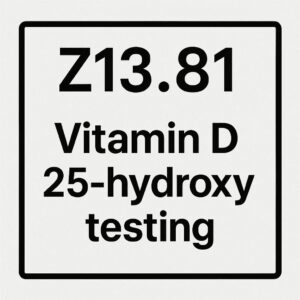
ICD-10 Code for Vitamin D 25-Hydroxy Testing
What is ICD-10 and Why Does It Matter for Vitamin D?
Before we dive into the specific digits, it is important to understand the system itself. ICD-10 stands for the International Classification of Diseases, 10th Revision. Think of it as a dictionary of diseases, symptoms, and health-related issues. Every health condition, from a common cold to a chronic illness, has its own unique code.
When a doctor orders a blood test to check your Vitamin D levels, they are looking for the “25-hydroxy” test. This is the most accurate way to measure the vitamin D stored in your body. For the lab to run the test and for the insurance company to consider paying for it, a valid ICD-10 code—a “reason code”—must be attached to the order.
Using the correct code is vital for a few key reasons:
-
Insurance Reimbursement: If the code doesn’t match the patient’s symptoms or history, the insurance claim can be denied. This leaves the patient with a surprise bill.
-
Medical Records Accuracy: Proper coding creates a clear medical history. It shows that the patient had a deficiency, which can be important for future healthcare decisions.
-
Legal Compliance: Accurate coding is a legal requirement. It ensures that healthcare providers are billing honestly for the services they provide.
The Primary Code: ICD-10 Code for Vitamin D Deficiency
If a patient has been diagnosed with low vitamin D, the most common code you will use is the one for the deficiency itself. This is the workhorse of vitamin D coding.
E55.9: Vitamin D Deficiency, Unspecified
The most frequently used code in this family is E55.9.
This code falls under the broader category of “Endocrine, nutritional and metabolic diseases” (E00-E89). Specifically, it sits within “Other nutritional deficiencies” (E50-E64).
E55.9 is defined as “Vitamin D deficiency, unspecified.” It is used when a patient has a confirmed diagnosis of vitamin D deficiency, but the medical record does not specify a particular type, such as adult osteomalacia.
When should you use this code? Here are some common scenarios:
-
A patient comes in for a routine physical, mentions they feel tired and have bone aches. The doctor orders a 25-hydroxy vitamin D test. The results come back low (e.g., below 20 ng/mL). The diagnosis is vitamin D deficiency. You would use E55.9.
-
A patient with a history of gastric bypass surgery is at high risk for malabsorption. The doctor proactively checks their vitamin D level, and it is low. You would use E55.9.
-
An elderly patient who is homebound and has limited sun exposure is tested and found to be deficient. You would use E55.9.
Important Note: While E55.9 is the most common code, always check the specific lab results and the doctor’s note. Sometimes, a more specific code might be needed, which we will discuss next.
Related Codes Under E55
The E55 category is actually a small family of codes related to vitamin D. Here is a quick look at them:
| ICD-10 Code | Description | When to Use It |
|---|---|---|
| E55.9 | Vitamin D deficiency, unspecified | Most common scenario. Used when a patient is low in vitamin D, and no other specific condition (like rickets) is mentioned. |
| E55.0 | Rickets, active | This is a specific condition resulting from severe vitamin D deficiency in children, causing bone softening and deformities. It is rarely used in adults. |
| E64.3 | Sequelae of rickets | This code is used for the long-term effects or residual conditions left behind after rickets has been treated and is no longer active. |
As you can see, for the vast majority of adults getting a routine vitamin D test, E55.9 is the correct and most accurate code.
Coding for Other Scenarios: Screening and High-Risk Patients
Sometimes, a doctor orders a vitamin D test not because the patient has symptoms, but because they want to check if they are at risk. This is called screening. Coding for screening is different from coding for a suspected deficiency.
Z13.29: Encounter for Screening for Other Nutritional Disorder
This code is used for screening encounters. A screening is performed in the absence of signs or symptoms. The purpose is to catch a potential problem early.
Here is when you might use Z13.29:
-
A patient with dark skin (which produces less vitamin D from sunlight) has no symptoms, but the doctor, knowing they are at higher risk, orders a screening test.
-
A patient who is obese (vitamin D is stored in fat cells and is less bioavailable) comes in for a wellness visit. The doctor orders a vitamin D screening as a preventative measure.
-
A patient who always wears full-coverage clothing for religious or cultural reasons, limiting sun exposure, is screened for deficiency.
Crucial Note: Many insurance companies have strict rules about covering screening tests. They may only cover vitamin D screening for patients with specific risk factors. If you use Z13.29 for a patient who has symptoms like bone pain or fatigue, the claim might be denied because the code doesn’t match the reason for the visit. If symptoms are present, you should use a code that describes those symptoms or the suspected deficiency (E55.9).
Coding for Patients on Vitamin D Supplements
This is a very common scenario that often causes confusion. A patient is already taking over-the-counter vitamin D. Why would a doctor re-test them? And what code should you use?
Doctors re-check vitamin D levels in patients on supplements for several reasons:
-
To Ensure the Dose is Working: The doctor wants to see if the current supplement dose is enough to bring the patient’s levels into a normal range.
-
To Check for Toxicity: Though rare, it is possible to take too much vitamin D, which can lead to toxicity. A test ensures the level is safe.
-
For Routine Monitoring: For patients with conditions like malabsorption or chronic kidney disease, regular monitoring is part of their ongoing care.
Z79.899: Other Long-Term (Current) Drug Therapy
When a patient is on a long-term medication or supplement that requires monitoring, you can use a “Z code” to indicate this. For patients taking vitamin D supplements, the appropriate code is often Z79.899 (Other long-term (current) drug therapy).
You would typically use this code alongside a code for the condition being monitored.
Example Scenario:
A patient has a history of vitamin D deficiency (E55.9). They have been taking a high-dose vitamin D supplement prescribed by their doctor for the past six months. The doctor wants to re-check their 25-hydroxy level to see if it has normalized.
-
Primary Diagnosis: Z79.899 (Long-term drug therapy) – This explains why the test is being done: to monitor the effects of the medication/supplement.
-
Secondary Diagnosis: E55.9 (Vitamin D deficiency, unspecified) – This provides the history and the reason the therapy was started.
This combination of codes tells a clear story to the insurance company: “We are monitoring this patient’s response to treatment for their previously diagnosed vitamin D deficiency.”
Coding for Vitamin D in Specific Conditions
Vitamin D levels are often checked because they are linked to other health problems. In these cases, you will usually code the primary condition first, and then the vitamin D deficiency, if present.
M89.9: Disorder of Bone, Unspecified
If a patient complains of bone pain, the doctor might order a vitamin D test to investigate the cause. In this case, the symptom (bone pain) is the reason for the test.
-
Primary Diagnosis: M89.9 (Disorder of bone, unspecified) – This codes for the symptom of bone pain.
-
Secondary Diagnosis: E55.9 (Vitamin D deficiency, unspecified) – This is used after the test confirms the deficiency.
Linking to Malabsorption Syndromes (K90.-)
Patients with conditions that affect the gut’s ability to absorb nutrients are at very high risk for vitamin D deficiency. This includes celiac disease, Crohn’s disease, cystic fibrosis, and short bowel syndrome.
When coding for a vitamin D test in these patients:
-
Primary Diagnosis: The specific malabsorption disorder (e.g., K90.0 for Celiac disease).
-
Secondary Diagnosis: E55.9 (Vitamin D deficiency, unspecified) – if the test confirms the deficiency, or Z13.29 if it is a routine screening.
How to Choose the Right Code: A Simple Guide
Choosing the right code can feel overwhelming, but it really comes down to answering a few simple questions about the patient’s visit.
Decision Tree for Coders
Here is a simple flowchart to help you decide:
-
Does the patient have symptoms suggestive of low vitamin D (fatigue, bone pain, muscle weakness)?
-
Yes: Use a code for the symptom (e.g., M89.9 for bone pain) or if the doctor has explicitly diagnosed deficiency based on a previous test, use E55.9.
-
No: Proceed to question 2.
-
-
Is this a routine screening for an asymptomatic patient with risk factors (dark skin, obesity, limited sun exposure)?
-
Yes: Use Z13.29 (Encounter for screening for other nutritional disorder).
-
No: Proceed to question 3.
-
-
Is the patient already on vitamin D supplements and the doctor is checking their level to monitor therapy?
-
Yes: Use Z79.899 (Other long-term (current) drug therapy) as the primary code, and add the condition being treated (e.g., E55.9) as a secondary code.
-
No: Proceed to question 4.
-
-
Does the patient have a specific condition known to cause vitamin D malabsorption (e.g., Crohn’s, celiac)?
-
Yes: Code the specific condition first. If the test is to screen for an expected deficiency, add Z13.29. If the deficiency is confirmed, add E55.9.
-
No: If none of the above apply, but the doctor has diagnosed a deficiency, use E55.9.
-
Common Coding Pitfalls to Avoid
Even experienced coders can make mistakes. Here are a few things to watch out for:
-
Using a “screening” code for a symptomatic patient. This is the most common error. If a patient complains of fatigue, it is not a screening; it is a diagnostic workup. Using Z13.29 in this case is incorrect.
-
Not linking the diagnosis to the test order. The ICD-10 code on the lab order must match the doctor’s note in the medical record. If the note says “fatigue,” the lab order shouldn’t just say E55.9 without explanation.
-
Forgetting the “unspecified” rule. E55.9 is “unspecified,” which is perfectly fine for most vitamin D deficiency diagnoses. You do not need to force a more specific code if it doesn’t exist.
-
Ignoring insurance medical policies. Some insurance companies have specific guidelines for how often they will cover vitamin D testing. Coding correctly is the first step, but you also need to be aware of frequency limits.
The Importance of Accurate Documentation
At the end of the day, the best coder in the world is only as good as the documentation they receive from the healthcare provider. The ICD-10 code is a translation of the doctor’s clinical judgment and the patient’s story.
Clear documentation should always include:
-
The specific reason for the test. (“Patient reports bone pain and fatigue,” or “Routine screening due to high-risk status.”)
-
The results of the test. (The specific 25-hydroxy vitamin D level).
-
The diagnosis. (“Patient is vitamin D deficient,” or “Levels are within normal range.”)
-
The plan. (“Will start supplementation with 2000 IU vitamin D3 daily,” or “Continue current therapy and re-check in 6 months.”)
When the doctor provides this level of detail, finding the correct ICD-10 code for vitamin D 25-hydroxy testing becomes a straightforward task.
Conclusion
Finding the right code doesn’t have to be a headache. For most patients with a confirmed diagnosis, E55.9 is your go-to code for vitamin D deficiency. For those without symptoms who are simply being checked, Z13.29 is appropriate for screening. And for patients on long-term supplements, Z79.899 helps tell the story of monitoring therapy. By understanding the “why” behind the test, you can ensure accurate coding, proper reimbursement, and a clear medical record.
Frequently Asked Questions (FAQ)
Q1: What is the difference between Vitamin D deficiency and insufficiency?
A: In the ICD-10 system, there isn’t a specific code for “insufficiency.” The general code E55.9 (Vitamin D deficiency, unspecified) is typically used for levels that are below the normal range, whether they are considered mildly insufficient or severely deficient. The specific level (e.g., 12 ng/mL vs. 18 ng/mL) is noted in the lab results, not the ICD-10 code.
Q2: Can I use E55.9 if the Vitamin D test comes back normal?
A: No. You should never code for a condition that the patient does not have. If the test is normal, you must code the reason the test was ordered. This could be a symptom code (like M89.9 for bone pain) or a screening code (Z13.29) if it was a routine check.
Q3: My patient is on Vitamin D for Osteoporosis. What code do I use?
A: In this case, you would code the primary condition being treated. Use the code for osteoporosis (e.g., M81.0 for postmenopausal osteoporosis) as the primary diagnosis. The vitamin D test is being done to manage that condition, so the osteoporosis code justifies the test.
Q4: How often can a patient have their Vitamin D level checked?
A: This depends entirely on the patient’s insurance plan. There is no universal rule in the ICD-10 coding system. Some insurers may cover it once a year for at-risk patients, while others may require more specific justification. It is always best to check the patient’s specific insurance policy or use a resource like an NCD/LCD policy lookup.
Q5: Is Z79.899 only for prescription Vitamin D?
A: The code Z79.899 is for “Other long-term (current) drug therapy.” It applies to any medication or supplement a patient is taking on a long-term basis, whether it is prescribed or over-the-counter, as long as the doctor is monitoring it. If the doctor is checking the level because the patient is taking high-dose OTC vitamin D, this code is appropriate.
Additional Resource
For the most up-to-date information and to verify any codes, you should always refer to the official source. The Centers for Medicare & Medicaid Services (CMS) provides the official ICD-10 lookup tool, which is an invaluable resource for any medical coder or biller.
Disclaimer:
The information provided in this article is for general informational purposes only and does not constitute legal, medical, or professional coding advice. Medical coding guidelines, insurance policies, and regulations are subject to change. While we strive to provide accurate and up-to-date information, we make no representations or warranties of any kind, express or implied, about the completeness, accuracy, reliability, or suitability of this information. You should always consult with a qualified professional for advice tailored to your specific situation and refer to official coding manuals and current payer policies.