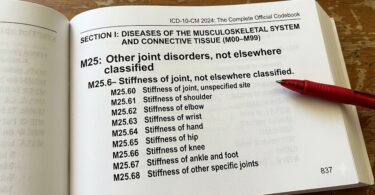
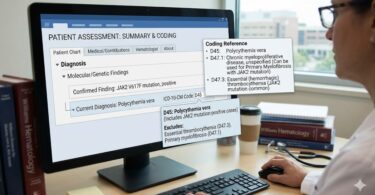
If you or a loved one has recently received a medical report mentioning “K83.1,” you might feel a bit lost. Medical codes can look like random numbers and letters, but they carry important meaning.
This guide is here to help you understand exactly what ICD-10 code K83.1 stands for. We will break down complex medical terms into simple, clear language. You will learn what causes this condition, how doctors diagnose it, and what treatment usually looks like.

What Exactly Is ICD-10 Code K83.1?
ICD-10 code K83.1 refers to a bile duct obstruction. In simple terms, this means one of the tubes that carry bile from your liver to your small intestine is blocked. Bile is a fluid your body uses to digest fats. When the tube gets blocked, bile builds up and causes problems.
The official medical description for this code is “obstruction of bile duct.” This blockage can happen at different points in the biliary tree, which is the network of ducts inside and outside the liver.
Important note: This specific code excludes several related conditions. For example, it does not cover obstructions of the gallbladder (that is K82.0) or congenital (present at birth) bile duct issues (that is Q44.3). It also does not include jaundice caused by a stone in the common bile duct without mention of obstruction (that is K80.5).
Where Does K83.1 Fit in the ICD-10 System?
To help you see the bigger picture, here is how the coding system organizes K83.1:
| Hierarchy Level | Code and Description |
|---|---|
| Chapter | K00-K95 – Diseases of the digestive system |
| Block | K80-K87 – Disorders of gallbladder, biliary tract, and pancreas |
| Category | K83 – Other diseases of biliary tract |
| Specific Code | K83.1 – Obstruction of bile duct |
This structure shows that K83.1 is one specific diagnosis within a larger family of digestive system disorders.
Common Causes of Bile Duct Obstruction (K83.1)
A blocked bile duct is rarely a disease by itself. Instead, it is usually a symptom of another underlying problem. Here are the most common causes doctors find:
Gallstones
Gallstones are the number one cause. Small, hard particles form inside the gallbladder. Sometimes, a stone travels out of the gallbladder and gets stuck in the common bile duct. When this happens, bile cannot flow freely.
Tumors or Growths
Both cancerous and non-cancerous tumors can press on the bile duct from the outside or grow inside the duct itself. Pancreatic cancer, bile duct cancer (cholangiocarcinoma), and liver tumors are common examples.
Strictures (Narrowing of the Duct)
Scar tissue can cause the bile duct to become narrower than normal. This scarring often happens after:
- Gallbladder removal surgery
- Other abdominal surgeries
- Inflammation from chronic pancreatitis
- Infections
Primary Sclerosing Cholangitis (PSC)
This is a chronic disease where the bile ducts become inflamed, scarred, and narrowed over time. Doctors do not fully understand what causes PSC, but it is linked to inflammatory bowel disease.
Other Less Common Causes
- Parasitic infections (more common in certain parts of the world)
- Enlarged lymph nodes pressing on the duct
- Liver cysts
- Blood clots in the arteries supplying the bile duct
Note for readers: Just because you have one of these conditions does not mean you will develop a bile duct obstruction. Many people with gallstones or tumors never experience a blockage. Your doctor will monitor your specific situation.
Signs and Symptoms You Might Notice
Symptoms of a bile duct obstruction can come on slowly or appear very suddenly. The severity also varies. Some people feel only mild discomfort, while others need emergency care.
The Most Common Symptoms
- Jaundice (yellowing of the skin and eyes): This happens when bilirubin builds up in your blood. It is often the first clear sign.
- Dark urine: Your urine may look like tea or cola.
- Pale or clay-colored stools: Without bile, your stool loses its normal brown color.
- Itchy skin (pruritus): This can be intense and is caused by bile salts accumulating under your skin.
- Pain in the upper right abdomen: The pain may come and go or stay constant.
- Nausea and vomiting
- Unexplained weight loss
- Fever and chills: These suggest an infection, which is a medical emergency.
When to See a Doctor Immediately
Do not wait if you experience:
- Severe abdominal pain that does not go away
- High fever with jaundice
- Confusion or extreme drowsiness
These can be signs of cholangitis, a dangerous infection of the bile duct that requires hospital treatment.
How Doctors Diagnose a Bile Duct Obstruction
If your doctor suspects a blocked bile duct based on your symptoms, they will order several tests. The goal is to confirm the blockage, find its location, and identify the cause.
Blood Tests
Blood work is usually the first step. Doctors look for:
- High bilirubin levels
- Elevated liver enzymes (ALP, ALT, AST)
- Signs of infection (high white blood cell count)
These results alone cannot diagnose an obstruction, but they point strongly in that direction.
Imaging Tests
This is where doctors get a clear picture of what is happening inside you.
| Imaging Test | What It Shows | Pros | Cons |
|---|---|---|---|
| Ultrasound | Enlarged bile ducts, gallstones | Quick, no radiation, inexpensive | Less detailed for lower ducts |
| CT Scan | Tumors, pancreas issues, enlarged ducts | Very detailed, good for cancer detection | Radiation exposure, more expensive |
| MRI/MRCP | Detailed view of bile ducts without invasive tools | No radiation, excellent duct images | Expensive, not for everyone (claustrophobia, metal implants) |
| ERCP | Direct view of ducts, allows treatment at same time | Can remove stones or place stents | Invasive, carries risks like pancreatitis |
| EUS | Close look at lower bile duct and pancreas | Very detailed for small tumors | Requires specialized equipment and training |
Other Diagnostic Procedures
In some cases, doctors may use a procedure called PTC (Percutaneous Transhepatic Cholangiography). A thin needle goes through your skin and into your liver to inject dye. This is usually done when ERCP is not possible.
Treatment Options for K83.1
Treatment depends entirely on what is causing your obstruction. The good news is that most bile duct blockages can be treated effectively.
Treating Gallstone Obstruction
If a gallstone is the culprit, doctors often perform an ERCP (Endoscopic Retrograde Cholangiopancreatography). During this procedure:
- You receive sedation or anesthesia.
- A flexible tube with a camera goes through your mouth to your small intestine.
- The doctor finds the opening of the bile duct.
- Small tools remove or break up the stone.
Afterward, many patients also need their gallbladder removed (laparoscopic cholecystectomy) to prevent future stones.
Treating Tumors
Cancerous tumors require a team approach. Options may include:
- Surgery to remove the tumor (if possible)
- Stent placement to hold the duct open (often done during ERCP)
- Chemotherapy or radiation for certain cancer types
- Palliative care to manage symptoms when a cure is not possible
For benign (non-cancerous) tumors, surgery may still be needed, but the outlook is much better.
Treating Strictures
Narrowed ducts from scar tissue can be treated with:
- Balloon dilation (inflating a small balloon inside the duct during ERCP)
- Stent placement to keep the duct open
- Surgery for complex or recurring strictures
Treating Primary Sclerosing Cholangitis (PSC)
There is no cure for PSC yet. Treatment focuses on:
- Managing symptoms (especially itching)
- Treating infections quickly
- ERCP with dilation or stenting for major blockages
- Liver transplantation in advanced cases
Possible Complications If Left Untreated
A bile duct obstruction is not something to ignore. Without proper treatment, serious complications can develop:
- Infection (cholangitis): This can spread to your bloodstream and cause sepsis.
- Liver damage: Prolonged blockage can lead to cirrhosis and liver failure.
- Malnutrition: Without bile, your body cannot absorb fats and fat-soluble vitamins (A, D, E, K).
- Biliary cirrhosis: Permanent scarring of the liver.
- Pancreatitis: Inflammation of the pancreas, which shares a common opening with the bile duct.
Early diagnosis and treatment dramatically reduce the risk of these complications.
Related ICD-10 Codes You Might See
Medical billing often includes multiple codes. Here are some related codes that may appear alongside or instead of K83.1:
| ICD-10 Code | Condition | How It Differs from K83.1 |
|---|---|---|
| K80.5 | Stone in common bile duct without obstruction | No blockage present |
| K82.0 | Gallbladder obstruction | Blockage in gallbladder, not bile duct |
| K83.0 | Cholangitis (infection of bile duct) | Infection with or without obstruction |
| C24.0 | Malignant neoplasm of bile duct (cancer) | Specific cancer diagnosis |
| K76.89 | Other specified diseases of liver | Different organ (liver vs. ducts) |
| Q44.3 | Congenital bile duct obstruction | Present from birth |
Your bill or medical record may show several of these codes. Do not worry if you see something unfamiliar. Ask your doctor or billing office for clarification.
Living with Bile Duct Issues: Practical Advice
If you have been diagnosed with a condition that causes recurrent bile duct obstructions, life may require some adjustments. Here are practical tips that can help:
Diet Modifications
- Eat smaller, more frequent meals to reduce the workload on your digestive system.
- Choose lean proteins (chicken, fish, beans) over fatty meats.
- Avoid fried foods, butter, cream, and heavy sauces.
- Increase fiber gradually (whole grains, vegetables, fruits).
- Stay hydrated with water and clear fluids.
Medication Management
Your doctor may prescribe:
- Ursodeoxycholic acid to help thin bile (especially for PSC)
- Vitamin supplements (A, D, E, K) if fat absorption is poor
- Anti-itch medications for pruritus
- Antibiotics at the first sign of infection
Monitoring Your Health
Keep a simple symptom diary. Note:
- Changes in skin or eye color
- Stool and urine color
- Abdominal pain intensity
- Itch severity
- Fever episodes
Share this diary with your healthcare team at each visit. It provides valuable information they cannot get from tests alone.
What to Expect During Recovery
Recovery time depends heavily on the treatment you received.
After ERCP with Stone Removal
- Most people go home the same day or after one night in the hospital.
- You can return to normal activities within 2 to 3 days.
- Mild sore throat or bloating is normal for 24 to 48 hours.
After Surgery (Tumor Removal or Bypass)
- Hospital stay ranges from 3 to 10 days.
- Full recovery takes 4 to 8 weeks.
- You will need follow-up imaging to ensure the duct remains open.
After Stent Placement
- Stents can stay in place for months.
- Some stents are temporary; others are permanent.
- You will need regular check-ups to monitor stent function.
A friendly reminder: Everyone heals differently. Do not compare your recovery timeline to someone else’s. Listen to your body and follow your doctor’s specific instructions.
Frequently Asked Questions (FAQ)
Q1: Is ICD-10 code K83.1 serious?
Yes, it can be serious because it represents a blocked bile duct. However, many causes are treatable. The seriousness depends on the underlying cause and how quickly you receive care.
Q2: Does K83.1 automatically mean I have cancer?
Not at all. Gallstones are a much more common cause than cancer. Your doctor will perform tests to determine the exact cause.
Q3: Can a bile duct obstruction heal on its own?
Rarely. Small gallstones may pass spontaneously. However, most obstructions require medical or surgical treatment. Do not wait hoping it will go away.
Q4: How long does treatment for K83.1 take?
It varies. Removing a gallstone by ERCP takes about one hour. Recovering from major surgery for a tumor takes months. Your doctor will give you a personalized timeline.
Q5: Will I need to change my diet permanently?
It depends. After a simple stone removal, you may return to a normal diet. For chronic conditions like PSC, long-term dietary changes help manage symptoms.
Q6: Can children have K83.1?
Yes, but it is less common. In children, causes include congenital abnormalities, gallstones (rarely), or post-surgical strictures. Pediatric gastroenterologists manage these cases.
Q7: Does insurance cover treatment for K83.1?
Most health insurance plans cover medically necessary treatment for bile duct obstruction. However, coverage varies. Contact your insurance provider before scheduled procedures.
Q8: What is the difference between K83.1 and K80.5?
K83.1 is a general code for any bile duct obstruction. K80.5 specifically refers to a stone in the common bile duct without mention of obstruction (meaning the stone is present but not causing a blockage).
Additional Resources
For more reliable information about bile duct disorders, visit the American College of Gastroenterology’s patient education center:
https://gi.org/patients/
This resource offers free, medically reviewed articles on liver, gallbladder, and bile duct conditions. It includes symptom checklists, treatment guides, and questions to ask your doctor.
Conclusion
ICD-10 code K83.1 represents a bile duct obstruction, a condition where bile cannot flow normally from the liver to the intestine. Common causes include gallstones, tumors, and scarred strictures. Symptoms like jaundice, dark urine, and abdominal pain require medical evaluation. Treatment varies from simple ERCP stone removal to major surgery or long-term management of chronic diseases. With prompt diagnosis and appropriate care, most people recover well or learn to manage their condition effectively.
Disclaimer: This article is for informational purposes only and does not constitute medical advice. Always consult a qualified healthcare provider for diagnosis, treatment, and answers to your personal medical questions. Do not delay seeking care based on information you read here.