In the intricate world of modern healthcare, a string of alphanumeric characters—I42.0, I42.2, I42.9—carries profound significance. These are not mere administrative tokens; they are the standardized lexicon through which the story of a patient’s heart disease is told, tracked, and treated. For the condition known as nonischemic cardiomyopathy, a complex and heterogeneous group of diseases affecting the heart muscle itself, mastering this lexicon is paramount. This article delves deep into the International Classification of Diseases, Tenth Revision, Clinical Modification ICD-10 codes for nonischemic cardiomyopathy, moving beyond a simple code lookup to explore the clinical nuances, documentation requirements, and critical thinking that underpin accurate classification. Our journey will unravel how a precise code can influence everything from individual patient care plans and hospital reimbursement to groundbreaking epidemiological research that shapes our understanding of heart disease. This is not just about assigning a label; it’s about capturing the essence of a life-altering diagnosis in a language that the entire healthcare ecosystem can understand.
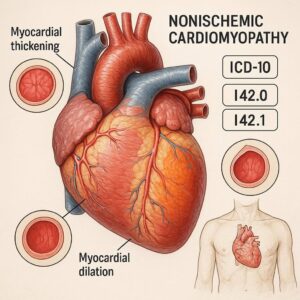
ICD-10 codes for nonischemic cardiomyopathy
2. Demystifying Cardiomyopathy: A Primer on the Diseased Heart Muscle
What is Cardiomyopathy?
Cardiomyopathy is a disease of the heart muscle (the myocardium) in which the muscle becomes enlarged, thickened, stiffened, or structurally abnormal in a way that impairs its ability to pump blood effectively. This dysfunction is intrinsic to the myocardium and is not the result of hypertension, congenital heart disease, valvular disorders, or coronary artery disease, though it can coexist with these conditions. Over time, cardiomyopathy can lead to heart failure, arrhythmias, valvular problems, and sudden cardiac arrest.
The Major Types of Cardiomyopathy: A Clinical Overview
Understanding the ICD-10 codes requires a fundamental grasp of the different types of cardiomyopathy. They are primarily classified based on the predominant structural and functional abnormality.
Dilated Cardiomyopathy (DCM)
This is the most common form. The hallmark of DCM is the enlargement and dilation of the left ventricle (the heart’s main pumping chamber), without a proportional increase in the thickness of the ventricular wall. This leads to systolic dysfunction—the ventricle cannot contract forcefully enough to eject a sufficient amount of blood into the circulation. The heart becomes a weak, flabby pump. Causes are varied and include genetic mutations, viral infections (myocarditis), toxins (like alcohol), and pregnancy (peripartum cardiomyopathy). In many cases, the cause remains unknown (idiopathic).
Hypertrophic Cardiomyopathy (HCM)
HCM is characterized by abnormal and excessive thickening (hypertrophy) of the heart muscle, particularly the left ventricle. This thickening is not caused by high blood pressure or aortic stenosis but is often a genetic condition. The hypertrophy can cause two primary problems: diastolic dysfunction, where the stiff ventricle cannot relax and fill with blood properly, and obstruction, where the thickened septum blocks the outflow of blood from the left ventricle (Hypertrophic Obstructive Cardiomyopathy, or HOCM). HCM is a leading cause of sudden cardiac death in young athletes.
Restrictive Cardiomyopathy (RCM)
This is the least common type. In RCM, the ventricles become stiff and rigid, losing their compliance. This restricts the filling of the ventricles with blood during diastole (the relaxation phase), leading to elevated pressures in the atria and the veins leading to the heart. The systolic function (pumping ability) may remain normal until the late stages. Causes include infiltrative diseases like amyloidosis (where abnormal proteins build up in the muscle) and sarcoidosis, and some storage diseases.
Arrhythmogenic Right Ventricular Cardiomyopathy (ARVC)
This is a rare, often inherited cardiomyopathy where the muscle tissue in the right ventricle is progressively replaced by fatty and fibrous tissue. This creates a substrate for life-threatening ventricular arrhythmias. The structural changes can lead to right ventricular dilation and dysfunction.
3. The Critical Divide: Ischemic vs. Nonischemic Cardiomyopathy
The single most important distinction in the world of cardiomyopathy coding—and indeed, in clinical management—is whether the condition is ischemic or nonischemic.
-
Ischemic Cardiomyopathy: This is not a primary disease of the heart muscle. It is a consequence of coronary artery disease (CAD). Widespread blockages in the coronary arteries lead to repeated, silent, or overt heart attacks (myocardial infarctions). This results in the death of heart muscle cells, which are replaced by scar tissue. The heart, now scarred and weakened, dilates and fails. The root cause is ischemia (inadequate blood supply).
-
Nonischemic Cardiomyopathy: This is a primary disorder of the myocardium itself. The heart muscle is directly damaged or diseased through mechanisms other than coronary artery blockage. The etiologies are diverse, as we’ve seen: genetic, toxic, infectious, inflammatory, infiltrative, etc. The coronary arteries are typically normal or have only minor, non-obstructive disease.
Why This Distinction Matters:
This divide dictates the entire treatment pathway. Ischemic cardiomyopathy may be treated with stents or bypass surgery to improve blood flow. Nonischemic cardiomyopathy treatments are aimed at the underlying cause (e.g., immunosuppressants for myocarditis, abstinence from alcohol for alcoholic cardiomyopathy) and managing the resulting heart failure and arrhythmias. Prognosis and risk stratification also differ significantly. In ICD-10, this distinction is absolute; ischemic cardiomyopathy is coded to I25.5, while all primary cardiomyopathies are coded to the I42 series.
4. The ICD-10-CM Coding System: A Language for Modern Medicine
Purpose and Structure: From Chapter to Code
The ICD-10-CM is the official system for assigning codes to diagnoses and procedures in the United States. Its purposes are multifold:
-
Reimbursement: It forms the foundation for medical billing, determining Diagnosis-Related Groups (DRGs) and justifying the medical necessity of services.
-
Epidemiology and Research: It allows for the tracking of disease prevalence, incidence, and outcomes on a local, national, and global scale.
-
Quality Measurement: It is used to assess the quality of care and patient safety.
-
Clinical Decision Support: Aggregated coded data can inform best practices and treatment guidelines.
The structure is hierarchical:
-
Chapters: Diseases are grouped into chapters based on etiology or body system. Chapter 9 is “Diseases of the Circulatory System” (codes I00-I99).
-
Categories: These are three-character codes representing a single disease or related group (e.g., I42 for Cardiomyopathy).
-
Subcategories and Codes: Fourth, fifth, and sixth characters add specificity regarding etiology, anatomy, severity, and other clinical details.
The Importance of Specificity in Diagnostic Coding
ICD-10’s expansion from its predecessor, ICD-9, was a quantum leap in specificity. Where ICD-9 had a single code for cardiomyopathy, ICD-10 has dozens. This specificity is not bureaucratic red tape; it is clinical precision translated into data. A code for “unspecified cardiomyopathy” (I42.9) tells a researcher very little. A code for “Alcoholic cardiomyopathy” (I42.6) or “Hypertrophic obstructive cardiomyopathy” (I42.1) provides a clear, actionable data point that can be used to study disease patterns, outcomes, and resource utilization for very specific patient populations.
5. Navigating the ICD-10-CM Code Set for Nonischemic Cardiomyopathy (I42)
An In-Depth Look at Category I42: Cardiomyopathy
The entire family of codes for nonischemic cardiomyopathy resides under category I42. It is crucial to note the instructional notes in the ICD-10 manual. The “Includes” note specifies that this category covers both primary myocardial involvement and myocardial disease secondary to other conditions, as long as it is not ischemic. The “Excludes1” note is critical: it states that I42 codes are NOT to be used for ischemic cardiomyopathy (I25.5). An Excludes1 note means the two conditions cannot be coded together; they are mutually exclusive.
Deconstructing the Fourth, Fifth, and Sixth Characters
The codes under I42 use subsequent characters to specify the type of cardiomyopathy. Here is the core code set:
-
I42.0 – Dilated cardiomyopathy
-
I42.1 – Obstructive hypertrophic cardiomyopathy
-
I42.2 – Other hypertrophic cardiomyopathy (e.g., non-obstructive)
-
I42.3 – Endomyocardial disease (which includes Loeffler’s endocarditis and endomyocardial fibrosis)
-
I42.4 – Endocardial fibroelastosis
-
I42.5 – Other restrictive cardiomyopathy
-
I42.6 – Alcoholic cardiomyopathy
-
I42.7 – Cardiomyopathy due to drugs and other external agents
-
I42.8 – Other cardiomyopathies (a catch-all for specified types not listed elsewhere)
-
I42.9 – Cardiomyopathy, unspecified
Further specificity is often required. For example, drug-induced cardiomyopathy (I42.7) requires an additional code from categories T36-T50 to identify the causative drug. This is a prime example of combination coding that paints a complete clinical picture.
6. A Practical Guide to Coding Common Nonischemic Cardiomyopathies
Coding Dilated Cardiomyopathy (I42.0)
This code is used when the medical documentation explicitly states “dilated cardiomyopathy,” “congestive cardiomyopathy,” or “idiopathic cardiomyopathy” in the context of a dilated heart. The coder must be vigilant. If the dilation is clearly stated to be a result of coronary artery disease, code I25.5 (Ischemic cardiomyopathy) is used instead.
Coding Hypertrophic Cardiomyopathy (I42.1-I42.2)
This is where clinical documentation is key.
-
Use I42.1 when the documentation specifies “obstructive,” “hypertrophic subaortic stenosis (HSS),” or “idiopathic hypertrophic subaortic stenosis (IHSS).” This indicates there is a dynamic obstruction to blood flow.
-
Use I42.2 for all other forms of HCM that are non-obstructive. If the documentation simply says “hypertrophic cardiomyopathy” without specifying obstructive or non-obstructive, the default is to I42.2.
Coding Restrictive and Other Specific Cardiomyopathies
-
I42.5 (Other restrictive cardiomyopathy) is used for restrictive physiology not covered by more specific codes like I42.3 or I42.4. The provider’s documentation must specify “restrictive cardiomyopathy.”
-
I42.6 (Alcoholic cardiomyopathy) is a direct causal code. The provider must link the cardiomyopathy to chronic, excessive alcohol use. It is not enough for the patient to have a history of alcohol use and cardiomyopathy separately; the causal relationship must be established in the record.
-
I42.7 (Cardiomyopathy due to drugs and other external agents) requires two codes: I42.7 and a code from T36-T50 with a fifth or sixth character of 5 to identify the drug (e.g., T45.1X5 for adverse effect of anthracyclines, a common chemotherapeutic agent known to cause cardiomyopathy).
The Critical Role of Documentation
The physician’s documentation is the bedrock of accurate coding. Coders cannot and must not infer a diagnosis. Vague terms like “cardiomyopathy” without further specification will result in an unspecified code (I42.9), which is clinically and financially less valuable. Physicians should be encouraged to document with precision:
-
Not: “Cardiomyopathy”
-
But: “Non-ischemic dilated cardiomyopathy, idiopathic”
-
Or: “Hypertrophic obstructive cardiomyopathy, familial”
-
Or: “Restrictive cardiomyopathy secondary to cardiac amyloidosis”
7. The Conundrum of “Unspecified” and “Other Specified” Codes
-
I42.8 – Other cardiomyopathies: This code is a “catch-all” for types of cardiomyopathy that are specified by the provider but do not have their own unique code in the I42 series. Examples might include “takotsubo cardiomyopathy” (stress-induced cardiomyopathy) or “inflammatory cardiomyopathy.” The documentation must name the specific type.
-
I42.9 – Cardiomyopathy, unspecified: This is the code of last resort. It is used when the provider’s documentation is non-specific and simply states “cardiomyopathy” without any further detail on the type (dilated, hypertrophic, etc.) or cause. While sometimes clinically necessary in the early stages of a workup, over-reliance on this code reflects poor documentation and hinders data quality.
8. Comorbidities and Complications: The Art of Combination Coding
Nonischemic cardiomyopathy rarely exists in a vacuum. It is crucial to code all associated conditions to fully capture the patient’s severity of illness.
Heart Failure (I50.-): The Most Common Companion
Heart failure is the most frequent complication of cardiomyopathy. The ICD-10 codes for heart failure are highly specific:
-
I50.2- : Systolic (congestive) heart failure – Common with DCM.
-
I50.3- : Diastolic (congestive) heart failure – Common with HCM and RCM.
-
I50.4- : Combined systolic and diastolic heart failure
-
I50.8- / I50.9- : Other/Unspecified heart failure
A patient with dilated cardiomyopathy and resulting systolic heart failure would be coded as I42.0 and I50.21 (if acute on chronic) or I50.22 (if chronic).
Atrial Fibrillation (I48.2-) and Other Arrhythmias
Arrhythmias are extremely common. Code the specific arrhythmia (e.g., I48.0 for paroxysmal atrial fibrillation, I47.2 for ventricular tachycardia) in addition to the cardiomyopathy code.
9. Case Studies: Applying ICD-10 Codes in Real-World Scenarios
Case Study 1: New-Onset Dilated Cardiomyopathy with Congestive Heart Failure
-
Scenario: A 48-year-old male presents with shortness of breath and lower extremity edema. Echocardiogram shows a dilated left ventricle with severely reduced ejection fraction of 25%. Coronary angiogram shows no significant obstructive coronary disease. The discharge summary diagnosis is “Idiopathic Dilated Cardiomyopathy with acute on chronic systolic heart failure.”
-
ICD-10 Codes:
-
I42.0 – Dilated cardiomyopathy
-
I50.23 – Acute on chronic systolic (congestive) heart failure
-
Case Study 2: Familial Hypertrophic Obstructive Cardiomyopathy
-
Scenario: A 22-year-old female college athlete, with a known family history of HCM, is evaluated for syncope. Echocardiogram reveals severe asymmetric septal hypertrophy with a significant left ventricular outflow tract gradient at rest. The final diagnosis is “Familial Hypertrophic Obstructive Cardiomyopathy.”
-
ICD-10 Codes:
-
I42.1 – Obstructive hypertrophic cardiomyopathy
-
Z84.89 – Family history of other specified conditions (to capture the familial component)
-
Case Study 3: Amyloidosis-Induced Restrictive Cardiomyopathy
-
Scenario: A 65-year-old male presents with fatigue and jugular venous distension. Cardiac MRI and biopsy confirm cardiac involvement from primary amyloidosis. The diagnosis is “Restrictive Cardiomyopathy due to Amyloidosis.”
-
ICD-10 Codes:
-
I42.5 – Other restrictive cardiomyopathy
-
E85.3 – Secondary systemic amyloidosis (This code would be used for the underlying amyloidosis causing the restrictive physiology)
-
10. The Impact of Accurate Coding: Beyond Reimbursement
While accurate coding is essential for appropriate reimbursement (a specific code like I42.1 may map to a higher-weighted DRG than I42.9), its impact is far greater.
-
Patient Care: Precise codes help identify patients for specialized clinics (e.g., an HCM program) or clinical trials for a specific cardiomyopathy subtype.
-
Research and Public Health: Accurate data allows researchers to study the true prevalence, natural history, and treatment outcomes of rare cardiomyopathies like ARVC or takotsubo.
-
Operational Efficiency and Compliance: Specific coding reduces claim denials and audit risks. Using unspecified codes when more specific information is available can be flagged as a documentation deficiency.
11. Future Directions: ICD-11 and the Evolution of Cardiovascular Coding
The World Health Organization has already released ICD-11, which will eventually be adopted in the US as ICD-11-CM. It offers even greater granularity and a more logical, digital-friendly structure. For cardiomyopathies, it introduces new entities and refinements, further emphasizing the trend towards molecular and genetic classification. The transition will require ongoing education for both clinicians and coders to maintain the high level of specificity that modern medicine demands.
12. Conclusion: Mastering the Code to Understand the Condition
Accurate ICD-10 coding for nonischemic cardiomyopathy is a critical bridge between clinical practice and the data-driven infrastructure of healthcare. It requires a symbiotic relationship between the clinician’s detailed documentation and the coder’s meticulous application of the classification rules. By moving beyond the unspecified and embracing the specific, we not only ensure proper reimbursement but, more importantly, we generate the high-fidelity data necessary to advance care, improve outcomes, and ultimately unlock the mysteries of these complex heart muscle diseases for the patients who live with them.
Frequently Asked Questions (FAQs)
Q1: What is the direct ICD-10 code for nonischemic cardiomyopathy?
There is no single code named “nonischemic cardiomyopathy.” This is a broad category. You must select a specific code from the I42 series (e.g., I42.0 for Dilated, I42.1 for Obstructive Hypertrophic) based on the physician’s documentation. The entire I42 category is, by definition, nonischemic.
Q2: When should I use code I25.5 (Ischemic cardiomyopathy) instead of an I42 code?
Use I25.5 only when the medical record explicitly states that the cardiomyopathy is caused by coronary artery disease, prior myocardial infarctions, or ischemic heart disease. If the record states the cardiomyopathy is idiopathic, genetic, toxic, etc., and the coronary arteries are clear, you must use an I42 code.
Q3: What is the difference between I42.8 and I42.9?
Use I42.8 (Other cardiomyopathies) when the physician documents a specific type of cardiomyopathy that is not represented by another code in the I42 series (e.g., “Takotsubo cardiomyopathy” or “inflammatory cardiomyopathy”). Use I42.9 (Cardiomyopathy, unspecified) only when the physician’s documentation is non-specific and simply states “cardiomyopathy” without any further detail.
Q4: How do I code a patient with both cardiomyopathy and heart failure?
You must code both conditions. Assign the appropriate cardiomyopathy code from the I42 series and the appropriate heart failure code from the I50 series (e.g., I50.21 for acute systolic heart failure, I50.32 for chronic diastolic heart failure). The heart failure is considered a manifestation of the cardiomyopathy.
Q5: Are there codes for the cause of the cardiomyopathy?
Yes, for some causes. For example, code I42.6 is specifically for Alcoholic cardiomyopathy. For drug-induced, you use I42.7 plus a T-code for the drug. For cardiomyopathy due to a disease like sarcoidosis, you would code the cardiomyopathy (e.g., I42.8 for “sarcoid heart disease”) and the underlying condition (D86.85 for sarcoidosis of the heart and other sites).
Date: October 18, 2025
Author: Dr. Eleanor Vance, MD, CPC
Disclaimer: The information contained in this article is intended for educational and informational purposes only. It is not a substitute for professional medical advice, diagnosis, or treatment. Always seek the advice of your physician or other qualified health provider with any questions you may have regarding a medical condition or medical coding. The author and publisher are not responsible for any errors or omissions or for any consequences from the application of the information presented.