Right knee pain is a universal human experience. It afflicts the young athlete after a misstep on the soccer field, the middle-aged office worker embarking on a new fitness regimen, and the elderly individual navigating the slow, steady progression of arthritis. It is a complaint so common that it can almost seem mundane within the bustling environment of a clinical practice. However, for the medical coder, the billing specialist, the insurance auditor, and the healthcare administrator, “right knee pain” is not a simple statement—it is the beginning of a complex puzzle. The solution to this puzzle is a precise, alphanumeric sequence from the International Classification of Diseases, Tenth Revision, Clinical Modification (ICD-10-CM): a code that transforms a patient’s subjective complaint into an objective, billable data point that drives the entire financial and analytical engine of modern healthcare.
This article delves deep into the world of ICD-10 coding for right knee pain, moving far beyond a simple code lookup. We will explore why accurately classifying this common symptom is a cornerstone of effective patient care, fair provider reimbursement, and robust public health data. A misplaced character, an overlooked laterality, or a default to a symptom code when a definitive diagnosis is available can trigger a chain reaction of consequences: claim denials, delayed payments, compliance flags, and a distorted picture of population health. By understanding the anatomy, the pathology, and the intricate rules of the ICD-10 system, we can ensure that every ache, twinge, and sharp pain in the right knee is translated into a code that tells its full, accurate story. This is not just about administrative accuracy; it is about building a data-driven foundation for high-quality healthcare.
ICD-10 codes for right knee pain
Chapter 1: Demystifying ICD-10 – A Primer on the World’s Most Detailed Medical Classification System
Before we can master the code for right knee pain, we must first understand the system that houses it. The ICD-10-CM is a diagnostic coding tool owned and maintained by the World Health Organization (WHO), with a clinical modification (CM) used in the United States. It is the successor to ICD-9 and represents a monumental leap in specificity and detail.
The primary purpose of ICD-10 is multifold:
-
Standardization: It provides a common language for reporting diseases, conditions, and symptoms across the globe.
-
Reimbursement: In the U.S., it is the foundation of the medical billing process. Insurance companies use ICD-10 codes to determine if a service (like an X-ray, physical therapy session, or surgery) was medically necessary based on the patient’s diagnosis.
-
Epidemiology and Public Health: Researchers and public health officials use aggregated ICD-10 data to track disease prevalence, identify outbreaks, allocate resources, and study health outcomes on a population level.
An ICD-10-CM code is not a random string of characters. It follows a logical structure:
-
Category: The first three characters. For example, M25 is the category for “Other joint disorders, not elsewhere classified.”
-
Etiology, Anatomic Site, Severity, and Other Details: Characters four through seven provide increasing levels of specificity. This is where ICD-10 shines. The code M25.561 breaks down as:
-
M25.5: Pain in joint
-
M25.56: Pain in knee
-
M25.561: Pain in right knee
-
This level of detail—specifying which knee—was often absent in the broader ICD-9 system. This specificity reduces ambiguity, leading to more accurate billing and richer data.
Chapter 2: The Anatomy of a Knee – Understanding the Complex Machinery to Understand the Code
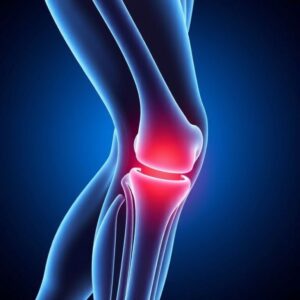
To code knee pain effectively, one must have a foundational understanding of what can go wrong. The knee is not a simple hinge; it is one of the largest and most complex joints in the human body, a marvel of engineering that bears tremendous weight while allowing for flexion, extension, and slight rotation.
Key structures include:
-
Bones: The femur (thigh bone), tibia (shin bone), and patella (kneecap).
-
Articular Cartilage: A smooth, slippery tissue that covers the ends of the bones, allowing them to glide effortlessly against each other.
-
Meniscus: Two C-shaped wedges of fibrocartilage (medial and lateral) that act as shock absorbers between the femur and tibia.
-
Ligaments: Tough, fibrous bands that connect bones to bones and provide stability. The four primary ligaments are the Anterior Cruciate Ligament (ACL), Posterior Cruciate Ligament (PCL), Medial Collateral Ligament (MCL), and Lateral Collateral Ligament (LCL).
-
Tendons: Connect muscles to bones. The quadriceps and patellar tendons are crucial for knee extension.
-
Bursae: Small, fluid-filled sacs that reduce friction between tissues, such as between skin and bone or between tendons and ligaments.
When a patient presents with “right knee pain,” the physician’s role is to play detective, using physical exams, patient history, and imaging to determine which of these structures is the culprit. The coder’s role is to accurately reflect the physician’s final diagnosis in the medical record using the appropriate ICD-10 code. Pain from worn-down cartilage (osteoarthritis) is coded differently from pain from a torn ligament (a sprain) or an inflamed bursa (bursitis).
Chapter 3: The Foundation Code – A Deep Dive into M25.561 (Pain in Right Knee)
The most direct code for right knee pain is M25.561. This code belongs to Chapter 13 of ICD-10-CM, which covers diseases of the musculoskeletal system and connective tissue.
When to Use M25.561
This code is appropriately used in specific clinical scenarios:
-
Initial Encounters with an Unclear Etiology: A patient presents with knee pain, but the physician has not yet determined the underlying cause after a history and physical. The pain itself is the reason for the visit and the justification for any initial evaluations, such as an X-ray.
-
Chronic Pain without a Definitive Structural Diagnosis: In some cases, a patient may have persistent pain despite normal imaging findings. The pain syndrome itself is the diagnosis.
-
Following a Ruled-Out Diagnosis: If the physician investigates for a specific condition like a fracture or infection and rules it out, but the pain persists, M25.561 may be the most accurate code until a new diagnosis is established.
The Critical Importance of Medical Necessity
The use of M25.561 is tightly linked to the principle of medical necessity. If a provider orders an X-ray of the right knee, the insurance company will ask, “Why?” The code M25.561 provides that justification. It demonstrates that the service was performed to evaluate a documented symptom. Using an unrelated or vague code would likely result in a claim denial.
When Not to Use M25.561: The “Signs and Symptoms” Duality
This is one of the most critical concepts in medical coding. The ICD-10-CM Official Guidelines for Coding and Reporting state: “Signs and symptoms that are integral to a disease process should not be assigned as additional codes.” More importantly, if a definitive diagnosis has been established, you must code the diagnosis, not the symptom.
-
Incorrect: A patient is diagnosed with primary osteoarthritis of the right knee after examination and X-ray. The coder uses M25.561 (Pain in right knee).
-
Correct: The coder uses M17.11 (Unilateral primary osteoarthritis, right knee). The pain is an integral part of osteoarthritis; coding it separately would be redundant and incorrect.
Using a symptom code when a definitive diagnosis is available is a common reason for denials, as it can be seen as “unbundling” or “upcoding” to justify unnecessary services.
Chapter 4: Beyond the Symptom – Specifying the Underlying Cause for Accurate Reimbursement
The true power of ICD-10 is unleashed when you can code the specific cause of the knee pain. This leads to more accurate reimbursement, better patient care tracking, and higher-quality data.
Osteoarthritis (M17.-): The Age-Related Wear and Tear
Osteoarthritis (OA) is the most common form of arthritis, characterized by the breakdown of articular cartilage.
-
ICD-10 Codes: The M17 category is specific to osteoarthritis of the knee.
-
M17.0: Bilateral primary osteoarthritis of knee
-
M17.11: Unilateral primary osteoarthritis, right knee
-
M17.2: Bilateral post-traumatic osteoarthritis
-
M17.31: Unilateral post-traumatic osteoarthritis, right knee
-
M17.5: Other unilateral secondary osteoarthritis of knee (requires a 5th digit for laterality)
-
Rheumatoid Arthritis (M05.361, M06.061, M06.861): The Autoimmune Assault
Rheumatoid arthritis (RA) is an autoimmune disorder that causes inflammation of the joint lining.
-
ICD-10 Codes:
-
M05.361: Rheumatoid arthritis of right knee with rheumatoid factor positive
-
M06.061: Rheumatoid arthritis of right knee without rheumatoid factor
-
M06.861: Other specified rheumatoid arthritis, right knee
-
Meniscus Tears (M23.20-): The Twisting Trauma
A meniscal tear is a common injury, often caused by twisting the knee while bearing weight.
-
ICD-10 Codes: The M23.2 category is for derangement of meniscus due to old tear or injury.
-
M23.201: Derangement of anterior horn of medial meniscus due to old tear or injury, right knee
-
M23.221: Bucket-handle tear of medial meniscus, right knee
-
M23.261: Peripheral tear of lateral meniscus, right knee
-
*Note: For a current acute injury, codes from the injury chapter (S83.2-) are used.*
-
Patellofemoral Pain Syndrome (M22.2X-): The Runner’s Knee
This refers to pain around the front of the knee and kneecap, common in athletes.
-
ICD-10 Code: M22.2X1 (Patellofemoral disorders, right knee). The ‘X’ is a placeholder for a future expansion.
Ligament Sprains (S83.41-): The Athlete’s Nemesis
Ligament injuries are coded from Chapter 19, which covers injury, poisoning, and certain other consequences of external causes.
-
ICD-10 Codes:
-
S83.411: Sprain of medial collateral ligament of right knee
-
S83.412: Sprain of medial collateral ligament of left knee
-
S83.514: Sprain of anterior cruciate ligament of right knee
-
*These codes require an additional 7th character to denote the encounter (A – initial, D – subsequent, S – sequela).*
-
Bursitis (M70.50-): The Inflamed Cushion
Bursitis is the inflammation of a bursa.
-
ICD-10 Code: M70.51 (Other bursitis of knee, right knee). Prepatellar bursitis (“housemaid’s knee”) has a more specific code: M70.41.
Gout (M10.071-, M10.9-1): The Crystal-Induced Fire
Gout is a form of inflammatory arthritis caused by uric acid crystal deposits.
-
ICD-10 Codes:
-
M10.071: Idiopathic gout, right ankle and foot (if the knee is affected but not specified as such, a less specific code may be needed, but for knee-specific gout, it would be M10.06-)
-
M10.061: Idiopathic gout, right knee
-
M10.961: Gout, unspecified, right knee
-
Postprocedural Pain (G89.18): Pain Following Surgery
Pain that is a direct consequence of a surgery is coded separately.
-
ICD-10 Code: G89.18 (Other acute postprocedural pain) or G89.28 (Other chronic postprocedural pain). This code is used in addition to the code for the underlying condition, not as a primary code.
Chapter 5: The Coding Process in Action – A Step-by-Step Walkthrough from Patient Encounter to Final Code
Let’s synthesize this knowledge into a practical workflow.
Scenario: A 55-year-old female presents to her orthopedist complaining of several months of progressive, aching pain in her right knee that is worse with weight-bearing and going down stairs.
Step 1: The Patient Encounter and Documentation
-
The physician takes a history and performs a physical exam, noting crepitus (a grinding sensation) and mild swelling.
-
A right knee X-ray is ordered, which shows “joint space narrowing, osteophyte formation, and subchondral sclerosis” in the medial compartment.
-
The physician’s final assessment is: “Primary osteoarthritis of the right knee.”
Step 2: The Coder’s Analysis
-
The coder reviews the entire medical record, focusing on the final diagnosis.
-
Key terms: “Primary osteoarthritis,” “right knee.”
-
The coder knows that “pain” is a symptom integral to osteoarthritis, so M25.561 is not the primary code.
Step 3: Code Selection and Sequencing
-
The coder navigates the ICD-10 index: Osteoarthritis -> Knee -> M17.1-.
-
In the tabular list, under M17.1 (Unilateral primary osteoarthritis of knee), the coder confirms the description and selects the 5th digit.
-
Final Code: M17.11 (Unilateral primary osteoarthritis, right knee).
Step 4: Claim Submission and Adjudication
-
The coder submits the claim with the primary diagnosis of M17.11 for the office visit and the X-ray.
-
The insurance payer’s system recognizes M17.11 as a valid and billable diagnosis that medically justifies the evaluation and X-ray of the knee. The claim is paid.
Chapter 6: Common Pitfalls and How to Avoid Them – Ensuring Clean Claims and Compliance
Even experienced coders can make mistakes. Awareness is the first step to prevention.
Pitfall 1: Defaulting to a Symptom Code When a Diagnosis is Known
-
The Mistake: Consistently using M25.561 because it’s easy and always seems to fit.
-
The Consequence: Claim denials for lack of medical necessity. Auditors will question why a definitive diagnosis wasn’t coded.
-
The Fix: Scrutinize the physician’s final assessment. If a specific condition is named, code that condition.
Pitfall 2: Ignoring Laterality
-
The Mistake: Using an unspecified code (e.g., M17.10 for unspecified knee OA) when the record clearly states “right.”
-
The Consequence: Many payers have policies that deny or downpay claims with unspecified codes to encourage specificity.
-
The Fix: Be meticulous. Always check for documentation of laterality (right, left, bilateral). If it’s documented, code it.
Pitfall 3: Incorrect Sequencing
-
The Mistake: For a patient with a sprained ACL (S83.511A) and pain (M25.561), listing the pain code first.
-
The Consequence: The primary diagnosis should be the reason for the encounter. The sprain is the cause of the pain.
-
The Fix: Sequence the code for the underlying etiology first. The symptom code may not even be necessary.
Pitfall 4: Overlooking External Cause Codes
-
The Mistake: Coding a knee sprain (S83.411A) but not indicating how it happened.
-
The Consequence: Missed opportunity for valuable public health data. While not always required for reimbursement, external cause codes (from Chapter 20) provide context (e.g., a fall on the soccer field, a car accident).
-
The Fix: Use external cause codes whenever the documentation provides the cause of an injury.
Chapter 7: The Future of Medical Coding – ICD-11 and the Role of AI
The world of medical classification is not static. The WHO has already released ICD-11, which features a more modern, digital-friendly structure and even greater detail. While the U.S. has not yet set a timeline for transitioning from ICD-10 to ICD-11, it is on the horizon.
Furthermore, Artificial Intelligence (AI) and Natural Language Processing (NLP) are beginning to transform coding. AI tools can now read clinical notes and suggest potential codes, reducing manual effort and potentially increasing accuracy. However, the human coder’s role will evolve rather than disappear, focusing on complex cases, auditing AI suggestions, and ensuring overall compliance. The fundamental knowledge of anatomy, pathophysiology, and coding guidelines will remain as vital as ever.
Conclusion
Accurately coding right knee pain with ICD-10 is a critical skill that bridges clinical care and healthcare administration. The journey from the generic M25.561 to a highly specific code like M17.11 represents a move from documenting a symptom to defining a diagnosis, which is essential for clean claims and accurate data. Mastery of this process requires a solid understanding of knee anatomy, common pathologies, and the ever-important coding guidelines. As healthcare continues to evolve, the precision demanded by ICD-10 ensures that every case of right knee pain is not just treated, but properly understood, reimbursed, and recorded for the betterment of individual patient outcomes and public health as a whole.
Common ICD-10 Codes for Right Knee Pain and Their Meanings
| ICD-10 Code | Code Description | Clinical Context / When to Use |
|---|---|---|
| M25.561 | Pain in right knee | Use for the symptom of pain when a definitive underlying cause has not been diagnosed. Justifies initial evaluation. |
| M17.11 | Unilateral primary osteoarthritis, right knee | The patient has age-related “wear and tear” arthritis confirmed in the right knee. |
| M23.201 | Derangement of medial meniscus, right knee | The patient has a chronic or old tear of the medial meniscus in the right knee. |
| S83.411A | Sprain of medial collateral ligament (MCL) of right knee, initial encounter | The patient has an acute injury to the MCL. The ‘A’ 7th character signifies the initial encounter for this injury. |
| M22.2X1 | Patellofemoral disorders, right knee | The patient has pain originating from the kneecap and its surrounding structures (e.g., “Runner’s Knee”). |
| M70.51 | Other bursitis of knee, right knee | The patient has inflammation of a bursa (fluid-filled sac) in the right knee, not specifically prepatellar. |
| M10.061 | Idiopathic gout, right knee | The patient has an acute gout flare in the right knee joint. |
| G89.18 | Other acute postprocedural pain | The patient is experiencing pain directly following a surgical procedure on the knee. Used as a secondary code. |
Frequently Asked Questions (FAQs)
1. What is the most accurate ICD-10 code for general right knee pain?
The most accurate code for unspecified right knee pain is M25.561. However, this should only be used when a more specific diagnosis for the cause of the pain has not been determined or is not available.
2. When should I not use the M25.561 code?
You should avoid using M25.561 when the physician’s documentation provides a definitive diagnosis for the pain. For example, if the diagnosis is osteoarthritis, a meniscus tear, or bursitis, you must code that specific condition instead. Using a symptom code when a diagnosis code is available is a coding error and can lead to claim denials.
3. What is the code for osteoarthritis in the right knee?
The code depends on the type and laterality. For the most common type, unilateral primary osteoarthritis, the code is M17.11. It is crucial to confirm the type (primary, post-traumatic, secondary) and whether one or both knees are affected.
4. Why is my claim for a right knee X-ray being denied when I used M25.561?
Denials can happen for several reasons. The most common is that the payer may require a more specific diagnosis to prove medical necessity. Review the patient’s record to see if a definitive diagnosis was established. Also, check that you used the full 5th or 6th character for laterality (M25.561, not M25.56). Finally, verify that there are no bundling issues or that the code was sequenced correctly on the claim form.
5. Are there codes for the cause of a knee injury?
Yes. Chapter 20 of ICD-10-CM contains External Cause codes. While often not required for reimbursement, they are highly recommended for providing context. For example, you can add a code to indicate that a knee sprain occurred during a soccer game (Y93.64) or in a fall from a ladder (W11.XXXA).
Additional Resources
-
The Official ICD-10-CM Guidelines: Published by the CDC and CMS, this is the definitive source for coding rules and conventions.
-
American Health Information Management Association (AHIMA): A premier association for health information professionals, offering certifications, webinars, and educational materials on coding best practices.
-
American Academy of Professional Coders (AAPC): A leading organization for medical coders, providing certification, local chapter meetings, and a wealth of coding resources and forums.
-
Centers for Disease Control and Prevention (CDC) ICD-10 Page: Provides access to the official code set and general information.
Date: September 30, 2025
Author: The Medical Coding Specialist Team
Disclaimer: The information contained in this article is for educational and informational purposes only and is not intended as a substitute for professional medical advice, diagnosis, or treatment. Always seek the advice of your physician or other qualified health provider with any questions you may have regarding a medical condition or coding practice. Medical coding guidelines are subject to change; always refer to the most current official ICD-10-CM code set and guidelines.