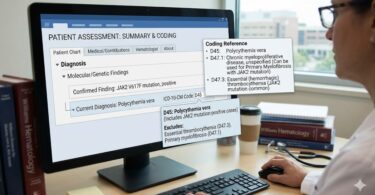
In the intricate ecosystem of modern healthcare, a single, alphanumeric sequence carries immense weight. It can dictate hospital reimbursement, influence public health statistics, shape national health policy, and even impact the quality rating of a medical institution. This sequence is an ICD-10 code. And when the diagnosis is pneumonia—a common yet potentially deadly respiratory infection—the act of assigning the correct code transforms from a mundane administrative task into a critical exercise in clinical translation and financial integrity. Pneumonia is not a monolithic entity; it is a family of diseases with diverse causes, presentations, and outcomes. To assign the code J18.9, “Pneumonia, unspecified organism,” is to paint a picture in shades of gray, missing the crucial details that define the patient’s story. But to accurately assign a code like J15.211, “Pneumonia due to Methicillin-resistant Staphylococcus aureus,” is to create a vivid, data-rich portrait that informs treatment, tracks epidemics, and ensures the healthcare system functions as intended.
This article is a deep dive into the world of ICD-10 codes for pneumonia. It is designed not only for medical coders and billing specialists but also for healthcare providers, nurses, and administrators who seek to understand the profound impact of accurate diagnostic documentation. We will journey from the basic structure of the ICD-10-CM system, through the complex clinical nuances of different pneumonias, and into the advanced application of official coding guidelines. We will dissect real-world case studies, unravel the financial implications of DRGs, and confront the legal perils of inaccurate coding. By the end of this comprehensive guide, you will view a pneumonia code not as a mere number, but as a precise clinical summary, a key to fair reimbursement, and a vital piece of the public health puzzle. Let us begin by understanding the very system that gives these codes their power.
ICD-10 codes for pneumonia
Table of Contents
ToggleChapter 1: Demystifying ICD-10 – More Than Just a Code
What is ICD-10-CM?
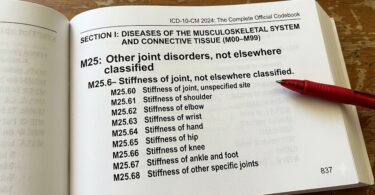
The International Classification of Diseases, Tenth Revision, Clinical Modification (ICD-10-CM) is the standardized system used in the United States to classify and code all diagnoses, symptoms, and procedures recorded in conjunction with hospital care. Maintained by the Centers for Disease Control and Prevention (CDC) and the National Center for Health Statistics (NCHS), its primary purpose is to translate the narrative of a patient’s condition into a universal, statistical language.
An ICD-10-CM code is more than a label; it is a multi-axial data point. A typical code structure can convey:
-
The Category: The first three characters (e.g., J18) represent the general category of the disease (e.g., Pneumonia, organism unspecified).
-
The Etiology, Anatomy, or Severity: Characters four through seven provide increasing levels of detail. These can specify the causative agent (e.g., bacterial vs. viral), the anatomical site, the severity of the condition, and other critical clinical details.
This hierarchical structure allows for an unprecedented level of specificity, which is paramount for accurate pneumonia coding.
The Evolution from ICD-9 to ICD-10: A Leap in Specificity
The transition from ICD-9-CM to ICD-10-CM in 2015 was a monumental shift in the U.S. healthcare system. For pneumonia coding, this change was particularly significant. ICD-9 offered a paltry handful of codes for pneumonia, often forcing coders to use nonspecific codes regardless of the clinical details available. ICD-10, by contrast, exploded this category into a highly detailed and logical framework.
For example, in ICD-9, bacterial pneumonia was largely grouped under a single code, 482.9. In ICD-10, we have an entire category (J15) for bacterial pneumonia, not elsewhere classified, with individual codes for specific pathogens like Klebsiella pneumoniae (J15.0) and Pseudomonas (J15.1). This expansion was not designed to complicate the coder’s life, but to capture the rich, nuanced data required for modern medicine.
Why Accurate Pneumonia Coding is Non-Negotiable
The consequences of inaccurate pneumonia coding ripple throughout the healthcare system:
-
Reimbursement: Diagnosis-Related Groups (DRGs) are the foundation of inpatient hospital reimbursement in the U.S. The principal diagnosis code assigned at discharge directly determines the DRG. An unspecified pneumonia code (J18.9) will typically map to a lower-paying DRG than a specific code for MRSA pneumonia (J15.212), which reflects the increased resource utilization and complexity of care. Inaccurate coding leads to lost revenue for the facility or, in cases of overcoding, allegations of fraud.
-
Public Health Surveillance: Accurate pneumonia codes are the raw data that public health officials use to track epidemics. A sudden spike in codes for influenza pneumonia (J10.0, J11.0) can signal the start of a severe flu season, prompting public health interventions. Tracking codes for drug-resistant organisms helps monitor the spread of antimicrobial resistance.
-
Quality Reporting and Outcomes Research: Healthcare quality measures, such as those used by The Joint Commission or CMS’s Hospital Compare, often rely on diagnosis codes. Pneumonia mortality rates, readmission rates, and core measure compliance are all analyzed using coded data. Inaccurate data skews these metrics, misrepresenting a facility’s performance and hindering genuine quality improvement efforts.
-
Clinical Decision Support: While primarily used for billing and statistics, coded data is increasingly feeding back into clinical systems to support population health management and predictive analytics.
Chapter 2: The Clinical Landscape of Pneumonia – A Primer for Coders
A proficient medical coder must be, in part, a clinical linguist. Understanding the basic pathophysiology and terminology of pneumonia is essential to accurately interpret physician documentation and assign the correct code.
What is Pneumonia? Pathophysiology in Brief
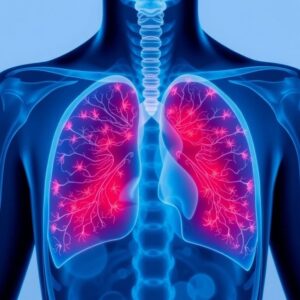
Pneumonia is an inflammatory condition of the lung primarily affecting the microscopic air sacs known as alveoli. It is typically caused by an infection with bacteria, viruses, or fungi. The infection triggers an immune response, causing the alveoli to fill with fluid and pus (consolidation). This process leads to the classic symptoms of pneumonia: cough, fever, chills, and difficulty breathing. The radiographic hallmark on a chest X-ray is the presence of opacities or “infiltrates.”
The Key Players: Bacterial, Viral, Fungal, and Aspiration Pneumonias
Pneumonias are classified by their causative agent and the setting in which they are acquired.
-
Bacterial Pneumonia: The most common type of community-acquired pneumonia (CAP) in adults is Streptococcus pneumoniae. It often presents suddenly with high fever, rigors, and a productive cough. Other significant bacterial causes include Haemophilus influenzae, Staphylococcus aureus (including MRSA), and “atypical” bacteria like Mycoplasma pneumoniae.
-
Viral Pneumonia: Viruses are a leading cause of pneumonia in young children. Influenza viruses, Respiratory Syncytial Virus (RSV), and SARS-CoV-2 (the virus that causes COVID-19) are common culprits. Viral pneumonias can be primary or can create a “superinfection” environment for a secondary bacterial pneumonia.
-
Fungal Pneumonia: Less common in the general population, fungal pneumonias (e.g., Pneumocystis jirovecii, Coccidioidomycosis) typically affect immunocompromised individuals, such as those with HIV/AIDS or those on chemotherapy.
-
Aspiration Pneumonia: This occurs when foreign material (commonly gastric contents, food, or saliva) is inhaled into the lungs, leading to a chemical pneumonitis and/or a secondary bacterial infection. It is common in patients with impaired gag reflexes, such as those following a stroke, under sedation, or with neurological disorders.
Clinical Presentation and Diagnostic Tools
Physicians diagnose pneumonia based on a combination of:
-
History and Physical Exam: Listening for crackles or decreased breath sounds with a stethoscope.
-
Chest X-ray (Radiograph): The gold standard for confirming the presence of an infiltrate.
-
Laboratory Tests: Complete Blood Count (CBC) to check for elevated white blood cells, and sputum cultures or blood cultures to identify the specific pathogen.
-
Pulse Oximetry/Arterial Blood Gas: To assess the severity of respiratory impairment.
The coder’s role is to scrutinize this documentation to find the specific terms that will lead to the most accurate code.
Chapter 3: Navigating the ICD-10-CM Index and Tabular List for Pneumonia
The ICD-10-CM manual is composed of two main sections: the Alphabetic Index and the Tabular List. The proper coding process always involves using both.
The Alphabetic Index: Your Starting Point
The Index is your roadmap. You start by looking up the main term, which is often the condition itself—”Pneumonia.” Under “Pneumonia,” you will find an extensive list of subterms describing the type, causative agent, and associated conditions.
Example Lookup:
-
Main Term: Pneumonia
-
Subterm: – bacterial -> see Pneumonia, bacterial
-
Subterm: – due to -> – Haemophilus influenzae -> see Pneumonia, Haemophilus influenzae
-
Subterm: – aspiration -> see Pneumonia, aspiration
The Index will provide a provisional code. You must never code directly from the Index. It is only a guide.
The Tabular List: The Final Authority
After finding a code in the Index, you must turn to the Tabular List to verify it. The Tabular List contains the official, legal codes along with all instructional notes, inclusions, exclusions, and requirements for additional characters.
Example Verification:
The Index leads you to J14 for Pneumonia due to Haemophilus influenzae. In the Tabular List, you find:
J14 Pneumonia due to Haemophilus influenzae
Use additional code to identify any associated abscess
Excludes1: Haemophilus influenzae meningitis (G00.0)
This confirms the code and provides critical instructions.
A Step-by-Step Guide to Code Lookup
-
Identify the main term in the physician’s documentation (e.g., Pneumonia).
-
Locate the main term in the Alphabetic Index.
-
Review all relevant subterms (e.g., bacterial, aspiration, due to S. pneumoniae).
-
Note the code provided by the Index.
-
Turn to that code in the Tabular List.
-
Read all instructional notes at the code, category, and chapter level.
-
Verify the code is complete (e.g., requires a 7th character?).
-
Assign the final, verified code.
Chapter 4: The Foundation Code – J18.9 and the Spectrum of Unspecified Pneumonia
The code block J18.-, “Pneumonia, unspecified organism,” is a foundational category in ICD-10-CM. It is used when the physician’s documentation does not specify the type of pathogen causing the pneumonia.
J18.0 – Bronchopneumonia, unspecified organism
J18.1 – Lobar pneumonia, unspecified organism
J18.2 – Hypostatic pneumonia, unspecified organism
J18.8 – Other pneumonia, unspecified organism
J18.9 – Pneumonia, unspecified
When is J18.9 Appropriate?
J18.9 is appropriate only when the documentation is truly nonspecific. Examples include:
-
The discharge summary states only “Pneumonia” or “Resolving pneumonia.”
-
The chest X-ray report confirms “Pneumonia” but the clinical notes do not specify a type or cause.
-
The physician documents “Community-acquired pneumonia” but does not specify if it is bacterial or viral.
The Clinical and Reimbursement Pitfalls of “Unspecified”
While sometimes necessary, reliance on unspecified codes is discouraged. It represents a failure of clinical documentation, which in turn leads to poor data quality. From a reimbursement perspective, J18.9 will typically group to a less complex and lower-paying DRG (e.g., DRG 195 – Simple Pneumonia & Pleurisy) compared to a specified bacterial pneumonia, which might group to a higher-paying DRG (e.g., DRG 177 – Respiratory Infections & Inflammations). The coder’s responsibility is to query the physician for clarification whenever possible to avoid using an unspecified code when more specific information is likely available.
Chapter 5: Decoding the Pathogen – Coding for Infectious Agent (J12-J16)
This is where ICD-10’s specificity shines. When the causative organism is identified, codes from categories J12 through J16 are used.
Viral Pneumonia (J12-J12.9)
-
J12.0 – Adenovirus pneumonia
-
J12.1 – Respiratory syncytial virus pneumonia
-
J12.2 – Parainfluenza virus pneumonia
-
J12.3 – Human metapneumovirus pneumonia
-
J12.89 – Other viral pneumonia (e.g., Rhinovirus)
-
J12.9 – Viral pneumonia, unspecified
Important Note: Influenza pneumonia is not coded here. It is coded in categories J10 and J11.
Pneumonia due to Streptococcus pneumoniae (J13)
This is a single, straightforward code for pneumonia caused by the most common bacterial pathogen. Documentation must explicitly state “pneumococcal” or “S. pneumoniae.”
Pneumonia due to Haemophilus influenzae (J14)
Another single code, used when H. influenzae is identified as the cause.
Bacterial Pneumonia, Not Elsewhere Classified (J15)
This is a critical category for many common bacterial pneumonias.
-
J15.0 – Pneumonia due to Klebsiella pneumoniae
-
J15.1 – Pneumonia due to Pseudomonas
-
J15.2 – Pneumonia due to Staphylococcus
-
J15.21 – Pneumonia due to Staphylococcus aureus
-
J15.211 – Pneumonia due to Methicillin susceptible Staphylococcus aureus
-
J15.212 – Pneumonia due to Methicillin resistant Staphylococcus aureus
-
-
J15.4 – Pneumonia due to other streptococci
-
J15.5 – Pneumonia due to Escherichia coli
-
J15.6 – Pneumonia due to other aerobic Gram-negative bacteria
-
J15.7 – Pneumonia due to Mycoplasma pneumoniae
-
J15.8 – Other specified bacterial pneumonia
-
J15.9 – Unspecified bacterial pneumonia
Pneumonia due to Other Infectious Organisms (J16)
This category is for organisms not classified elsewhere, such as Chlamydia (J16.0).
Chapter 6: The Silent Threat – Coding for Aspiration Pneumonia (J69.0)
Aspiration pneumonia is coded differently from infectious pneumonias. It is found not in Chapter 10 (Diseases of the Respiratory System) but in Chapter 17 (Diseases of the Digestive System), under the code J69.0 – Pneumonitis due to inhalation of food and vomit.
Distinguishing Aspiration Pneumonia from Aspiration Pneumonitis
This is a nuanced but important clinical distinction that impacts coding:
-
Aspiration Pneumonitis (Chemical): An acute lung injury from the inhalation of sterile gastric contents. The inflammation is primarily chemical, not infectious. It typically occurs immediately after aspiration.
-
Aspiration Pneumonia: An infectious process caused by the inhalation of oropharyngeal secretions colonized by pathogenic bacteria. The infection develops over days.
In practice, physicians often use the terms interchangeably. The official coding guideline states: “Code assignment for pneumonia due to aspiration requires that the documentation specify aspiration.” If the physician documents “aspiration pneumonia,” you code J69.0. Do not attempt to make the clinical distinction between pneumonitis and pneumonia.
Identifying the Underlying Cause: The Importance of Additional Codes
A crucial part of coding for aspiration pneumonia is identifying and coding the underlying cause of the aspiration. The ICD-10-CM instructional note under J69.0 directs: *”Use additional code to identify: associated foreign body in respiratory tract (T17.-), if applicable”* and to code the cause of the aspiration.
Common underlying causes and their codes:
-
Dysphagia: R13.1-
-
Acute CVA (Stroke): I63.-
-
Dementia (e.g., Alzheimer’s): F02.8-, G30.-
-
Parkinson’s Disease: G20
-
Seizure Disorder: G40.-
-
During a medical procedure (e.g., anesthesia): T81.89-
Example: A patient with advanced Alzheimer’s disease (G30.9) aspirates during a meal and develops aspiration pneumonia. The correct codes would be J69.0 and G30.9.
Chapter 7: Pneumonia in the Most Vulnerable – Coding for Specific Populations
Certain types of pneumonia are specific to newborns and are coded from Chapter 16.
Congenital Pneumonia (P23.9)
Congenital pneumonia is present at birth and is the result of an intrauterine infection. Codes in the P23.- category specify the infectious agent.
-
P23.0 – Congenital pneumonia due to viral agent
-
P23.1 – Congenital pneumonia due to Chlamydia
-
P23.2 – Congenital pneumonia due to staphylococcus
-
…and so on.
-
P23.9 – Congenital pneumonia, unspecified
Neonatal Pneumonia (P23.9)
This term is often used for pneumonia acquired during or shortly after birth. It is also coded from the P23.- category. The key distinction is that these codes are used only for newborn records, not for infants who are no longer considered neonates.
Chapter 8: The Art of Combination Coding – Comorbidities, Manifestations, and Severity
Patients are rarely admitted with a single, isolated condition. Pneumonia often leads to or occurs alongside other serious complications. Accurate coding requires capturing this complexity.
Sepsis and Septic Shock due to Pneumonia
When pneumonia progresses to sepsis, specific sequencing rules apply.
-
If the pneumonia is the underlying cause of sepsis: The sepsis code (e.g., A41.9) is sequenced first as the principal diagnosis, followed by the code for the specific pneumonia. This is because the reason for the admission and the focus of treatment is the systemic illness (sepsis).
-
Principal Diagnosis: A41.9 Sepsis, unspecified organism
-
Secondary Diagnosis: J15.212 Pneumonia due to MRSA
-
-
If septic shock is present: Code R65.21 is added as a secondary diagnosis.
Respiratory Failure due to Pneumonia
When a patient with pneumonia develops acute respiratory failure, the Official Coding Guidelines provide a clear directive: “If a patient is admitted with respiratory failure and another condition and both are equally responsible for occasioning the admission, and the Alphabetic Index or Tabular List does not provide sequencing direction, then the circumstance of the admission determines the principal diagnosis.”
In practice, if the respiratory failure is the primary reason for inpatient admission and the focus of care, it is often sequenced as the principal diagnosis.
-
Principal Diagnosis: J96.00 Acute respiratory failure
-
Secondary Diagnosis: J18.9 Pneumonia
Coding for MRSA and Other Resistant Organisms
As seen in J15.212, ICD-10-CM has built-in codes for infections due to methicillin-resistant Staphylococcus aureus (MRSA). For other resistant organisms, you must use a separate code from the Z16.- category to indicate resistance to antibiotics.
-
Example: A patient has pneumonia due to multidrug-resistant Klebsiella pneumoniae. The codes would be:
-
J15.0 Pneumonia due to Klebsiella pneumoniae
-
Z16.24 Resistance to multiple antibiotics
-
Chapter 9: The Official Coding Guidelines – Your Rulebook for Accuracy
The ICD-10-CM Official Guidelines for Coding and Reporting are the definitive rules that must be followed. Key guidelines for pneumonia include:
-
Section I.C.10.a.) – Chronic Obstructive Pulmonary Disease [COPD] and Bronchiectasis: Codes for pneumonia often cannot be assigned with codes for COPD. There are specific Excludes1 notes that prevent this.
-
Section I.C.10.b.) – Acute Respiratory Failure: As discussed above, provides the sequencing directive.
-
Section I.C.1.d.) – Sepsis, Severe Sepsis, and Septic Shock: Provides the sequencing rules for sepsis.
Consulting the AHA’s *Coding Clinic for ICD-10-CM* is also essential. This quarterly publication provides official advice on ambiguous or complex coding scenarios. For instance, a past issue clarified that “healthcare-associated pneumonia (HCAP)” is coded as a type of community-acquired pneumonia unless the physician specifically links it to a current inpatient hospitalization.
Chapter 10: Real-World Application – Case Studies and Scenarios
Let’s apply our knowledge to realistic patient scenarios.
Case Study 1: Community-Acquired Pneumonia in an Adult
-
Scenario: A 65-year-old female is admitted with a 3-day history of fever, productive cough, and shortness of breath. Chest X-ray shows a left lower lobe infiltrate. Sputum culture grows Streptococcus pneumoniae. She is treated with IV antibiotics and improves.
-
Documentation: “Admitted for community-acquired pneumococcal pneumonia.”
-
Coding Process:
-
Index: Pneumonia -> due to -> Streptococcus pneumoniae -> see Pneumonia, pneumococcal -> J13.
-
Tabular: J13 is a valid code with no additional characters required. No instructional notes prevent its use.
-
-
Final Code: J13 – Pneumonia due to Streptococcus pneumoniae
Case Study 2: Hospital-Acquired Pneumonia with Sepsis
-
Scenario: A patient post-hip replacement surgery (day 5 of admission) develops a high fever and hypoxia. Chest X-ray shows a new infiltrate. Blood cultures are positive for MRSA. The physician documents “Hospital-acquired MRSA pneumonia with septic shock.”
-
Documentation: “Sepsis secondary to hospital-acquired MRSA pneumonia. Patient in septic shock.”
-
Coding Process:
-
Sequencing: The guideline states that for sepsis due to a postprocedural infection, the code for the systemic infection (sepsis) is sequenced first.
-
Sepsis: Index: Sepsis -> A41.9. Tabular confirms.
-
Pneumonia: Index: Pneumonia -> due to -> Staphylococcus -> aureus -> methicillin resistant -> J15.212. Tabular confirms.
-
Septic Shock: Index: Shock -> septic -> R65.21. Tabular confirms.
-
Postprocedural Infection: Since the pneumonia was a complication of care, you would also assign T81.4- (Infection following a procedure), with an additional code to identify the specific infection (J15.212).
-
-
Final Codes:
-
A41.02 – Sepsis due to Methicillin resistant Staphylococcus aureus
-
R65.21 – Severe sepsis with septic shock
-
J15.212 – Pneumonia due to Methicillin resistant Staphylococcus aureus
-
T81.4XXA – Infection following a procedure, initial encounter
-
Case Study 3: Aspiration Pneumonia in a Patient with Alzheimer’s
-
Scenario: An 80-year-old male with a known history of severe Alzheimer’s dementia is found by his family to be coughing and choking during meals. He is brought to the ER, where a chest X-ray confirms aspiration pneumonia.
-
Documentation: “Aspiration pneumonia likely secondary to dysphagia from advanced Alzheimer’s dementia.”
-
Coding Process:
-
Aspiration Pneumonia: Index: Pneumonia -> aspiration -> J69.0. Tabular confirms and instructs to use an additional code for the cause.
-
Alzheimer’s Dementia: Index: Alzheimer’s -> G30.9. Tabular confirms.
-
Dysphagia: Index: Dysphagia -> R13.1-.
-
-
Final Codes:
-
J69.0 – Pneumonitis due to inhalation of food and vomit
-
G30.9 – Alzheimer’s disease, unspecified
-
R13.12 – Dysphagia, oropharyngeal phase
-
Chapter 11: The Financial and Legal Implications of Pneumonia Coding
DRGs and Reimbursement: How Codes Drive Payment
Under the Inpatient Prospective Payment System (IPPS), a patient’s stay is grouped into a Medicare Severity Diagnosis-Related Group (MS-DRG). The principal diagnosis is the primary driver. Consider the following table:
Table 1: Impact of Pneumonia Coding on MS-DRG Reimbursement (Hypothetical Examples)
| Principal Diagnosis Code | Description | Example MS-DRG | DRG Title | Relative Weight* | Approx. Reimbursement* |
|---|---|---|---|---|---|
| J18.9 | Pneumonia, unspecified | 195 | Simple Pneumonia & Pleurisy | 0.76 | $4,500 |
| J15.211 | Pneumonia due to MSSA | 177 | Respiratory Infections & Inflammations w MCC | 1.48 | $8,800 |
| J15.212 | Pneumonia due to MRSA | 177 | Respiratory Infections & Inflammations w MCC | 1.48 | $8,800 |
| J13 | Pneumonia due to S. pneumoniae | 178 | Respiratory Infections & Inflammations w CC | 1.05 | $6,200 |
| J69.0 (with MCC) | Aspiration Pneumonia | 189 | Pulmonary Edema & Respiratory Failure | 1.33 | $7,900 |
*Relative weight and reimbursement are hypothetical and for illustrative purposes only. Actual payment varies by geographic location, hospital wage index, and other factors.
As the table demonstrates, the specificity of the pneumonia code can dramatically impact hospital reimbursement. Coding J18.9 when the record supports J15.212 represents a significant financial loss.
The Role of Coding in Quality Metrics and Public Health
Pneumonia is a core measure for The Joint Commission and CMS. Measures include:
-
Pneumococcal Vaccination Status
-
Blood Cultures performed in the ED prior to first antibiotic received in hospital
-
Appropriate initial antibiotic selection
Accurate coding is essential to identify the patient population for these measures. Incorrect coding can lead to a facility failing its quality metrics, which can affect its reputation and, in some payment models, its reimbursement.
Compliance and Audit Risks
Inaccurate coding is a major compliance risk. Upcoding (using a more severe code than supported) can be construed as fraud, leading to hefty fines and penalties under the False Claims Act. Downcoding (using a less specific code), while less legally perilous, results in lost revenue and poor data quality. Both are targeted by Recovery Audit Contractors (RACs) and other audit entities.
Chapter 12: The Future of Pneumonia Coding – ICD-11 and Beyond
The World Health Organization (WHO) has already released ICD-11, which will eventually be adopted in a clinical modified form (ICD-11-CM) in the United States.
A Glimpse into ICD-11-CM
ICD-11 offers a more flexible, digital-friendly structure. For pneumonia, it allows for powerful “post-coordination,” where a coder can combine multiple codes to create a highly specific clinical concept.
Example: In ICD-10, we have a pre-coordinated code for “Pneumonia due to MRSA” (J15.212). In ICD-11, this might be represented as:
-
CA40.0 – Pneumonia (the base code)
-
+ XN?? – Staphylococcus aureus (the etiology code)
-
+ AB11 – Resistance to methicillin (the property code)
This system is more adaptable to new pathogens and resistance patterns.
The Role of AI and Computer-Assisted Coding
Artificial Intelligence (AI) and Natural Language Processing (NLP) are already transforming medical coding. These tools can scan clinical documentation in real-time, suggest potential codes, and highlight inconsistencies. For pneumonia, an AI could read a radiologist’s report (“left lower lobe infiltrate”), a lab report (“sputum culture positive for S. pneumoniae”), and a physician’s note (“treat for pneumococcal pneumonia”) and automatically suggest code J13, prompting the human coder for validation. The coder’s role will evolve from code-lookup to that of a clinical data analyst, ensuring the accuracy and integrity of the AI’s suggestions.
Conclusion: Mastering the Code to Paint a Clinical Picture
Accurate ICD-10 coding for pneumonia is a critical skill that bridges clinical care and healthcare administration. It requires a deep understanding of the coding system’s structure, the clinical nuances of the disease, and the strict application of official guidelines. By moving beyond unspecified codes and capturing the full specificity of the patient’s condition—the causative pathogen, the associated complications, and the underlying causes—coders ensure fair reimbursement, contribute to vital public health data, and support the delivery of high-quality patient care. The code is the story; make sure you tell it correctly.
Frequently Asked Questions (FAQs)
Q1: What is the default ICD-10 code for pneumonia if the type is not specified?
A1: The default code is J18.9 – Pneumonia, unspecified organism. However, this should only be used after thorough review of the medical record confirms that no more specific information (e.g., bacterial, viral, aspiration) is available. A physician query is recommended.
Q2: How do I code influenza with pneumonia?
A2: It depends on the documentation. If the physician links the pneumonia to the influenza virus, you would code from categories J10 or J11.
-
J10.0 – Influenza with pneumonia, influenza virus identified
-
J11.0 – Influenza with pneumonia, virus not identified
You would not assign an additional code from J12-J18 for the pneumonia.
Q3: What is the difference between “lobar pneumonia” and “bronchopneumonia,” and does it affect coding?
A3: These are histological/radiological descriptions. Lobar pneumonia affects an entire lobe of the lung, while bronchopneumonia is a patchy inflammation around the airways. In ICD-10-CM, if the physician specifies the type but not the organism, you would use J18.1 for lobar pneumonia and J18.0 for bronchopneumonia. The financial impact is usually minimal, but it does add a layer of clinical specificity.
Q4: When a patient has both pneumonia and sepsis, which one is the principal diagnosis?
A4: According to the Official Coding Guidelines, if the sepsis is due to the pneumonia, the sepsis code (A41.-) is sequenced as the principal diagnosis, followed by the code for the specific pneumonia. The reason is that the systemic infection (sepsis) is the condition that occasioned the admission.
Q5: Can I code a specific type of pneumonia based solely on a positive sputum culture?
A5: No. Coding must be based on physician documentation. A positive sputum culture could represent colonization, not active infection. The physician must state a diagnostic conclusion, such as “Patient is being treated for Pseudomonas pneumonia,” in the record for you to assign a code like J15.1. If there is a discrepancy, a query is necessary.
Additional Resources
-
Centers for Disease Control and Prevention (CDC) – ICD-10-CM: The official source for the code set and guidelines.
-
American Hospital Association (AHA) Coding Clinic: The definitive source for official advice and guidance on ICD-10-CM coding. A subscription-based service essential for professional coders.
-
American Health Information Management Association (AHIMA): The premier professional organization for health information management professionals, offering educational resources, certifications, and industry news.
-
Link: https://www.ahima.org/
-
-
American Academy of Professional Coders (AAPC): A leading professional organization for medical coders, providing certification, training, and local chapter networking.
-
Link: https://www.aapc.com/
-
-
National Center for Health Statistics (NCHS) – ICD-10-CM Official Guidelines: The direct link to the annual coding guidelines PDF.
Date: September 30, 2025
Author: The Medical Coding Team
Disclaimer: The information contained in this article is for educational and informational purposes only and is not intended as a substitute for professional medical coding advice, diagnosis, or treatment. Always consult official ICD-10-CM coding guidelines, payer-specific policies, and your facility’s coding manager for definitive coding direction. The author and publisher are not responsible for any errors or omissions or for any consequences resulting from the use of this information.