
In the intricate landscape of modern healthcare, few diagnostic tools have revolutionized our understanding of human pathology as profoundly as Magnetic Resonance Imaging (MRI). When focused on the brain, this non-invasive technology unveils the hidden architecture of our most complex organ, allowing clinicians to diagnose conditions ranging from tumors and strokes to demyelinating diseases like Multiple Sclerosis with astonishing clarity. However, the clinical brilliance of an MRI scan is only one part of the story. For the image to translate into actionable data, for the procedure to be properly reimbursed, and for the patient’s record to be accurately reflected in epidemiological data, a critical, behind-the-scenes process must occur: medical coding.
This article delves deep into the specialized world of ICD-10-PCS (International Classification of Diseases, Tenth Revision, Procedure Coding System) coding for MRI procedures of the brain. Unlike its diagnostic counterpart, ICD-10-CM, which classifies diseases and reasons for encounter, ICD-10-PCS is a procedural lexicon used exclusively in inpatient hospital settings in the United States. It is a system of remarkable granularity and logic, designed to capture the “what,” “how,” “where,” and “with what” of a medical procedure. For the aspiring or practicing medical coder, mastering the nuances of coding an MRI brain is not merely an academic exercise; it is a fundamental competency that ensures financial integrity, supports quality care, and contributes to the vast repository of data that drives medical research and health policy.
Our journey will begin by building a solid foundation in the structure and philosophy of ICD-10-PCS. We will then explore the science of MRI to empower coders with the clinical context necessary for accurate code assignment. The core of this guide is a meticulous, character-by-character breakdown of how to construct a complete and correct code for virtually any type of MRI brain study, illustrated with real-world clinical scenarios. We will confront common challenges and pitfalls, arming you with expert strategies to avoid them. Finally, we will gaze into the future, considering the evolving role of the coder in an era of increasing automation. By the end of this comprehensive exploration, you will possess not just the knowledge to code an MRI brain, but the deep understanding to do so with confidence and expertise.
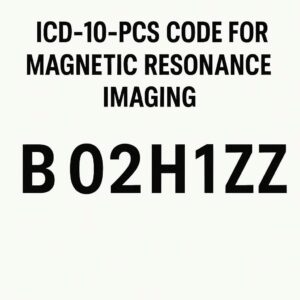
ICD-10-PCS Code for Magnetic Resonance Imaging
2. Section 1: Deconstructing ICD-10-PCS – The Foundation of Procedural Coding
2.1 The Philosophy Behind ICD-10-PCS: A Multi-Axial System
The transition from ICD-9-CM Volume 3 to ICD-10-PCS represented a paradigm shift in procedural coding. The older system was largely a list of procedures, often lacking a consistent structure and struggling to accommodate new technologies. ICD-10-PCS, developed by the Centers for Medicare & Medicaid Services (CMS), was designed from the ground up to be a logical, expandable, and multi-axial system.
The term “multi-axial” is key. It means that each character in a PCS code represents a distinct aspect, or axis, of the procedure. These axes are independent of one another. For example, the approach (how the procedure is performed) is separate from the device used. This structure eliminates the “code proliferation” problem of ICD-9 and allows for the precise description of new procedures by combining existing values in new ways. The system’s foundation is built on standardized definitions, ensuring that a term like “Plain Radiography” means the same thing to every coder, every physician, and every payer across the country.
2.2 The Anatomy of a PCS Code: Seven Characters, Endless Precision
Every ICD-10-PCS code is exactly seven characters long, and each character is either a letter or a number. The position of each character is fixed and conveys specific information. Let’s examine the general meaning of each character position before applying it specifically to MRI.
-
Character 1: Section. This is the broadest category, identifying the general type of procedure performed (e.g., Medical and Surgical, Obstetrics, Imaging, Administration).
-
Character 2: Body System. This specifies the general physiological system on which the procedure was performed (e.g., Central Nervous System, Heart and Great Vessels).
-
Character 3: Root Operation. This is the single most important conceptual element in many sections. It defines the objective of the procedure—what the provider did. In the Medical and Surgical section, this includes terms like “Excision,” “Resection,” and “Repair.” In the Imaging section, the root operation defines the type of energy used.
-
Character 4: Body Part. This character provides the specific anatomical site. The level of detail is extensive, allowing for coding of procedures on very specific structures.
-
Character 5: Approach. This describes the technique used to reach the procedure site (e.g., Open, Percutaneous, Via Natural or Artificial Opening). In the Imaging section, this character is repurposed for other uses, such as the use of contrast material.
-
Character 6: Device. This character identifies any device that remains in or on the patient after the procedure is completed (e.g., a stent, an implant). For many procedures, no device is used.
-
Character 7: Qualifier. This is a catch-all character that provides additional information about the procedure that is not captured elsewhere. It can specify a particular technique, a diagnostic or therapeutic intent, or other qualifying details.
This structured approach ensures that every code tells a complete story. For an MRI brain, the story is about using magnetic fields and radio waves (the root operation) to image the central nervous system (the body system), specifically the brain (the body part), with or without a contrast agent.
3. Section 2: The Marvel of MRI – A Primer for the Coder
A coder does not need to be a physicist, but a fundamental understanding of how MRI works is invaluable. It demystifies the radiology report, clarifies the difference between various MRI techniques, and ultimately leads to more accurate coding.
3.1 The Physics of Clarity: How MRI Creates Images Without Radiation
Unlike X-rays or CT scans, which use ionizing radiation, MRI employs a powerful combination of magnetic fields and radio waves to generate detailed images. The core components are:
-
A Superconducting Magnet: This creates an extremely strong, stable magnetic field around the patient. This field causes the protons in the hydrogen atoms of the body’s water and fat molecules to align with the magnetic field.
-
Radiofrequency (RF) Pulses: A short burst of RF energy is then directed at the area of interest (e.g., the head). This pulse knocks the aligned protons out of their equilibrium.
-
Signal Emission and Reception: When the RF pulse is turned off, the protons gradually “relax” back to their original alignment, releasing the absorbed energy as a faint RF signal. This signal is detected by receiver coils placed around the patient’s head.
-
Spatial Encoding and Computer Reconstruction: Complex magnetic gradients are applied to precisely locate where the signals are originating from within the body. A powerful computer analyzes the millions of received signals and reconstructs them into a detailed, cross-sectional image.
This process is why MRI excels at visualizing soft tissues. The brain, being composed largely of water and fat, provides an excellent signal, allowing for exceptional differentiation between gray matter, white matter, cerebrospinal fluid, and pathological tissues.
3.2 Key MRI Techniques Relevant to Coding
-
T1-Weighted and T2-Weighted Images: These are the fundamental “weightings” or sequences in MRI. T1-weighted images are good for anatomy, while T2-weighted images are highly sensitive to fluid, making them excellent for detecting edema, inflammation, and tumors. The coder does not code for specific sequences, but understanding these terms is part of clinical context.
-
Contrast-Enhanced MRI: A gadolinium-based contrast agent is injected intravenously. Gadolinium alters the magnetic properties of nearby tissues, causing them to appear brighter on T1-weighted images. This is crucial for identifying areas with a broken blood-brain barrier (e.g., tumors, infections, active inflammation in MS plaques).
-
Magnetic Resonance Angiography (MRA): This is a specialized technique designed to visualize blood vessels. It can be performed with or without contrast. Time-of-Flight (TOF) MRA is a common non-contrast technique that relies on the flow of blood to create a signal.
-
Functional MRI (fMRI): This measures brain activity by detecting changes in blood flow and oxygenation. When a brain area is more active, it consumes more oxygen, and blood flow to that region increases. This is used for pre-surgical mapping to locate critical areas like those controlling motor function or speech.
-
Diffusion-Weighted Imaging (DWI): This sequence measures the random motion of water molecules. In acute ischemic stroke, water movement becomes restricted within minutes of the event, making the affected area appear bright on DWI. It is a critical diagnostic tool.
4. Section 3: Navigating the ICD-10-PCS Index and Tables for the “MRI Brain”
4.1 The Central Role of the “Imaging” Section (B)
All ICD-10-PCS codes for an MRI of the brain will begin with the letter ‘B’, which designates the Imaging Section. The official definition of this section is: “Procedures involving the taking of pictures or images of anatomical structures for diagnostic purposes.”
It is vital to note that the root operations in this section are defined by the type of energy used, not the modality’s brand name. Therefore, “Magnetic Resonance Imaging (MRI)” is not a root operation in PCS. The root operations relevant to MRI are Plain Radiography and Computerized Tomography (CT Scan). This is one of the most common sources of confusion for new coders.
4.2 Step-by-Step: From Index Lookup to Building the Complete Code
The correct process for building a PCS code always involves two steps: using the Index as a starting point and then verifying the code in the appropriate Table.
-
Start with the Index: Look up the main term of the procedure. For an MRI, the main term is “Magnetic Resonance Imaging (MRI).”
-
Identify the Sub-term: Find the relevant anatomical site under the main term, which in this case is “Brain.”
-
Follow the Cross-Reference: The Index will provide a cross-reference to the relevant Table. For an MRI Brain, it will typically direct you to B23, which is the Table for the Central Nervous System and “Plain Radiography” (for non-contrast) or B30, which is the Table for the Central Nervous System and “Computerized Tomography” (for contrast).
-
Navigate to the Table: Turn to the specified Table (e.g., B23). This table is a grid where you will select the value for each character from the available options in the columns.
-
Build the Code: By reading across the row you have selected, you assemble the complete 7-character code.
5. Section 4: Building the Code – A Character-by-Character Deep Dive
Let’s now apply the general PCS structure specifically to an MRI Brain.
4.1 Character 1: Section (B) – Imaging
This is fixed. All codes for MRI will be in the Imaging section: B.
4.2 Character 2: Body System (2) – Central Nervous System
The brain is part of the Central Nervous System. The value for this body system is 2.
4.3 Character 3: Root Operation – The “Why” of the Procedure
This is the most critical and often misunderstood character for MRI coding.
4.3.1 Plain MRI: The Root Operation of “Plain Radiography”
The official definition of the root operation “Plain Radiography” is: “Taking of a single or multiple static pictures or images.”
Key Takeaway: A “plain” or non-contrast MRI of the brain is coded with the root operation “Plain Radiography” (value: 3). The term is a historical holdover but is defined by the absence of contrast, not the type of energy. It captures the fundamental act of capturing static images.
4.3.2 Contrast-Enhanced MRI: The Root Operation of “Computerized Tomography (CT Scan)”
The official definition of the root operation “Computerized Tomography (CT Scan)” is: “Taking of multiple planar images of a body part with computer reformatting into a three-dimensional image, with or without the use of contrast material.”
Key Takeaway: Any MRI study that involves the administration of an intravascular contrast agent is coded with the root operation “Computerized Tomography” (value: 4). This includes studies that are “with and without contrast,” as the use of contrast is the defining factor. The name is counterintuitive but must be accepted based on the formal definition.
4.4 Character 4: Body Part – Pinpointing the Anatomical Location
This character specifies the exact area imaged. The documentation in the radiology report is paramount here.
-
Brain (Value: 0): This is the most common value. It is used when the study is of the entire brain, cerebrum, and cerebellum. Documentation stating “MRI Brain” or “MRI of the head” typically refers to this.
-
Cerebral Hemisphere (Value: 1): Used for a focused study on one hemisphere. This is rare and requires explicit documentation.
-
Brainstem (Value: 2): Used for a focused study on the brainstem (midbrain, pons, medulla oblongata).
-
Cranial Nerves (Value: 3): Used for specific sequences or studies targeting the cranial nerves, such as an MRI for trigeminal neuralgia focusing on the cranial nerve V.
4.5 Character 5: Contrast – Enhancing the Image
In the Imaging section, the fifth character is used to specify the use of contrast, not the approach.
-
High Osmolar Contrast (Value: 1): Rarely used for MRI. Gadolinium-based agents are low osmolar.
-
Low Osmolar Contrast (Value: 2): This is the value used for gadolinium-based contrast agents used in MRI.
-
Other Contrast (Value: Y): For any contrast agent not classified as high or low osmolar.
-
Unenhanced/No Contrast (Value: Z): Used when no contrast material is administered.
4.6 Character 6: Qualifier – Specifying the Technique
This character provides further detail about the type of imaging study performed.
-
Unqualifed (Value: Z): A standard diagnostic MRI.
-
Intra-operative (Value: X): The MRI is performed during a surgical procedure.
-
Magnetic Resonance Angiography (MRA) (Value: 5): Used when the study is specifically an angiogram of the head vessels.
-
Fluid-attenuated inversion recovery (FLAIR) (Value: 6): This is a specific sequence, but it is almost never the sole technique and is not typically coded separately. The study is still coded as a standard MRI.
-
Functional MRI (Value: 7): Used specifically for functional MRI (fMRI) studies.
-
Other Qualifier (Value: Y): For other specified techniques not listed.
4.7 Character 7: Qualifier – Almost Always “Z”
For the vast majority of MRI brain studies, the seventh character is “Z” – No Qualifier. It is a placeholder to complete the 7-character requirement.
6. Section 5: Clinical Scenarios and Code Application – From Report to Code
Let’s apply our knowledge to realistic clinical documentation.
Scenario 1: The Routine Brain MRI for Headaches
Radiology Report Indication: Chronic headaches.
Technique: Multiplanar, multisequence MRI images of the brain were obtained without the administration of contrast.
Findings: The brain parenchyma is normal. No mass, hemorrhage, or acute infarction.
-
Analysis:
-
The procedure is Imaging (B).
-
The body system is Central Nervous System (2).
-
No contrast was used, so the root operation is Plain Radiography (3).
-
The body part is the Brain (0).
-
No contrast was used, so the contrast character is Unenhanced (Z).
-
This is a standard diagnostic study, so the qualifier is Unqualified (Z).
-
The final qualifier is No Qualifier (Z).
-
-
ICD-10-PCS Code: B023ZZZ – Plain Radiography of Central Nervous System, Brain, Unenhanced.
Scenario 2: MRI Brain with and without Contrast for Multiple Sclerosis
Radiology Report Indication: Known Multiple Sclerosis, evaluate for disease activity.
Technique: MRI of the brain was performed before and after the intravenous administration of 10 mL of gadolinium-based contrast.
Findings: Multiple periventricular white matter lesions, some of which demonstrate contrast enhancement, consistent with active demyelination.
-
Analysis:
-
The use of contrast, even in a “with and without” protocol, dictates the root operation. It is Computerized Tomography (4).
-
Body system is Central Nervous System (2).
-
Body part is Brain (0).
-
Low osmolar contrast (gadolinium) was used (2).
-
Standard diagnostic study (Z).
-
Final qualifier (Z).
-
-
ICD-10-PCS Code: B024ZZZ – Computerized Tomography of Central Nervous System, Brain, with Low Osmolar Contrast.
Scenario 3: MR Angiography of the Head for Aneurysm
Radiology Report Indication: Rule out cerebral aneurysm.
Technique: 3D Time-of-Flight MR Angiography of the intracranial circulation was performed without contrast.
Findings: Normal circle of Willis. No aneurysm or vascular malformation identified.
-
Analysis:
-
This is a specialized angiographic study, so the sixth character qualifier for technique is key.
-
Root Operation: No contrast was used, so it is Plain Radiography (3).
-
Body System: Central Nervous System (2). Note: Even though it’s imaging vessels, the body system is based on the anatomical location (head), not the structure type.
-
Body Part: The “intracranial circulation” is part of the brain, so Brain (0) is appropriate.
-
Contrast: Unenhanced (Z).
-
Qualifier: This is specifically an MRA (5).
-
-
ICD-10-PCS Code: B023Z5Z – Plain Radiography of Central Nervous System, Brain, Unenhanced, Magnetic Resonance Angiography.
Scenario 4: Functional MRI (fMRI) for Pre-Surgical Mapping
Radiology Report Indication: Pre-surgical mapping for a left frontal lobe tumor.
Technique: BOLD functional MRI was performed during motor tasks (finger tapping) to localize the primary motor cortex.
Technique: No contrast was administered for the functional sequences.
-
Analysis:
-
The primary purpose is functional mapping.
-
Root Operation: No contrast, so Plain Radiography (3).
-
Body System: Central Nervous System (2).
-
Body Part: The study is focused on the brain’s function, so Brain (0).
-
Contrast: Unenhanced (Z).
-
Qualifier: This is specifically a Functional MRI (7).
-
-
ICD-10-PCS Code: B023Z7Z – Plain Radiography of Central Nervous System, Brain, Unenhanced, Functional MRI.
ICD-10-PCS Code Building for Common MRI Brain Procedures
| Clinical Scenario | Char 1: Section | Char 2: Body System | Char 3: Root Operation | Char 4: Body Part | Char 5: Contrast | Char 6: Qualifier | Char 7: Qualifier | Final Code |
|---|---|---|---|---|---|---|---|---|
| MRI Brain without Contrast | B (Imaging) | 2 (Central Nervous) | 3 (Plain Radiography) | 0 (Brain) | Z (Unenhanced) | Z (Unqualified) | Z (None) | B023ZZZ |
| MRI Brain with Contrast | B | 2 | 4 (Computerized Tomography) | 0 (Brain) | 2 (Low Osmolar) | Z (Unqualified) | Z | B024ZZZ |
| MRA Head without Contrast | B | 2 | 3 (Plain Radiography) | 0 (Brain) | Z (Unenhanced) | 5 (MRA) | Z | B023Z5Z |
| fMRI Brain without Contrast | B | 2 | 3 (Plain Radiography) | 0 (Brain) | Z (Unenhanced) | 7 (fMRI) | Z | B023Z7Z |
| Focused MRI Brainstem w/ Contrast | B | 2 | 4 (Computerized Tomography) | 2 (Brainstem) | 2 (Low Osmolar) | Z (Unqualified) | Z | B0242ZZ |
7. Section 6: Common Pitfalls, Challenges, and Expert Tips
6.1 MRI vs. CT Coding: A Critical Distinction
The single biggest error is using the root operation “Computerized Tomography” only for CT scans. Remember: The root operation is defined by the use of contrast in the context of imaging, not the modality name. An MRI with contrast is always “Computerized Tomography” in PCS.
6.2 The Perils of Unspecified Body Parts
Always choose the most specific body part. If the report states “MRI of the head,” it is reasonable to code the brain (0). However, if the report is for “MRI Orbits,” you would need to use the appropriate body part value from the Sense Organs body system table, not the Central Nervous System. Relying on “unspecified” codes can lead to denials.
6.3 Documenting and Coding for Contrast Reactions
If a contrast injection is attempted but stopped due to a reaction, and only a non-contrast study is completed, how is it coded? The code should reflect the procedure that was actually performed. If only a non-contrast MRI was completed, it is coded as B023ZZZ. The attempted contrast administration is not coded separately in PCS but should be documented in the patient’s record.
6.4 The Importance of Clinical Indication in Guiding Code Selection
While the code is built from the procedure note, the clinical indication can sometimes clarify intent. For example, an order for “MRI Brain to r/o aneurysm” might result in an MRA. The coder must read the technique section of the radiology report to code accurately, not just the order.
8. Section 7: The Future of Coding: AI, Automation, and Continuous Learning
The field of medical coding is rapidly evolving. Computer-Assisted Coding (CAC) and Natural Language Processing (NLP) engines are already being used to read clinical documentation and suggest codes. For structured, predictable procedures like an MRI brain, automation is highly effective. However, the role of the human coder is shifting from data entry to that of a knowledge auditor. The coder’s expertise in PCS guidelines, anatomy, and clinical knowledge will be essential to validate AI suggestions, handle complex cases, and navigate ambiguous documentation. Continuous education, staying abreast of official coding guidelines updates, and deepening one’s clinical knowledge are no longer optional; they are the keys to remaining relevant and valuable in the healthcare ecosystem of tomorrow.
9. Conclusion
Accurate ICD-10-PCS coding for an MRI brain is a meticulous process that hinges on understanding the system’s logical structure. The coder must correctly identify the root operation based on contrast usage, select the precise body part from the radiology report, and apply the correct qualifier for specialized techniques. By moving beyond rote memorization to a principles-based understanding, coders can ensure precision, support quality patient care, and contribute to the financial and data-driven health of their institutions.
10. Frequently Asked Questions (FAQs)
Q1: Why is a contrast MRI coded as “Computerized Tomography”? It’s confusing.
A1: This is the most common question. In ICD-10-PCS, the root operation names are based on standardized definitions, not common terminology. “Computerized Tomography” is defined by the process of creating 3D images with computer reformatting, with or without contrast. Since an MRI with contrast meets this definition, it is assigned this root operation. You must follow the official definitions, not the modality names.
Q2: How do I code an MRI of the internal auditory canals (IACs)?
A2: The IACs are part of the temporal bone, which is part of the skull and face. You would use the Imaging table for the Head and Neck Body System (3). The root operation would be chosen based on contrast usage (3 for plain, 4 for with contrast), and the body part would be “Skull and Face” (7). The code for a non-contrast MRI of the IACs would be B037ZZZ.
Q3: What if the radiology report is unclear about whether contrast was used?
A3: You cannot assume. If the technique section does not explicitly state that contrast was administered, you must code it as an unenhanced study. If necessary, follow your facility’s query process to clarify with the radiologist.
Q4: Is there a separate code for each MRI sequence (T1, T2, FLAIR, DWI)?
A4: No. ICD-10-PCS codes for the entire imaging procedure on a specific body part. All the different sequences performed on the brain during a single session are included in one code. The only exception is when a completely separate and distinct type of study is performed, such as an MRA or fMRI, which have their own qualifiers.
Q5: How do I code a screening MRI brain?
A5: The ICD-10-PCS code itself does not indicate if a procedure was screening or diagnostic. That intent is captured by the diagnosis code (e.g., Z13.89 for encounter for screening for other specified disorders). The PCS code would be built exactly the same way based on the technique used (e.g., B023ZZZ for a non-contrast screening MRI).
11. Additional Resources
-
The Official ICD-10-PCS Guidelines: Published annually by the Centers for Medicare & Medicaid Services (CMS) and the National Center for Health Statistics (NCHS). This is the ultimate authority.
-
The ICD-10-PCS Code Tables and Index: The complete set of official tables.
-
American Health Information Management Association (AHIMA): Offers a wealth of resources, including practice briefs, webinars, and textbooks on advanced coding.
-
American Academy of Professional Coders (AAPC): Provides certification, training, and ongoing education for medical coders.
-
RadiologyInfo.org: A patient-friendly site from the ACR and RSNA that provides excellent explanations of imaging procedures, which can be very helpful for coders to understand the clinical context.


