
Imagine a patient struggling to breathe, their airways constricted, each inhalation a laborious effort. In moments like these, a nebulizer becomes a lifeline—a device that transforms liquid medication into a fine, inhalable mist, delivering relief directly to the lungs. For clinicians, it’s a vital tool in managing acute and chronic respiratory conditions. For healthcare administrators, billers, and medical coders, however, this simple act of care translates into a complex puzzle of alphanumeric characters: the ICD-10-PCS code.
In the intricate world of modern healthcare reimbursement, precision is not merely a virtue; it is an absolute necessity. The International Classification of Diseases, Tenth Revision, Procedure Coding System (ICD-10-PCS) is the language used to describe every procedure performed in a U.S. hospital inpatient setting. A single misplaced character in a code can mean the difference between accurate reimbursement and a costly claim denial, between clear data analytics and muddied operational insights. For respiratory therapies like nebulizer treatments, which are ubiquitous in hospitals for conditions ranging from asthma and COPD exacerbations to post-operative care and pneumonia, mastering this coding is essential.
This article serves as your definitive, exhaustive guide to ICD-10-PCS code for nebulizer treatments. We will move beyond a simple “cheat sheet” and delve deep into the why and how, building your expertise from the ground up. We will explore the architectural logic of PCS, dissect the relevant anatomical regions, debate the nuances of key root operations, and navigate the official tables. Through detailed case studies, we will confront ambiguous scenarios and learn to apply coding guidelines with confidence. Whether you are a seasoned coder seeking a refresher, a student entering the field, or a healthcare professional wanting to understand the administrative side of patient care, this journey through the “mist” of nebulizer coding will equip you with the knowledge to ensure accuracy, compliance, and clarity in one of healthcare’s most common procedures.
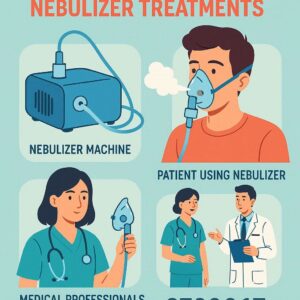
ICD-10-PCS Code for Nebulizer Treatments
Chapter 1: Foundational Concepts – Understanding ICD-10-PCS Structure
Before we can code a nebulizer treatment, we must understand the machine in which our code is a single cog. ICD-10-PCS is a completely different system from its diagnosis counterpart, ICD-10-CM. It is not a classification of diseases but a procedure coding system, meticulously built on a logical, multiaxial framework.
The Seven Characters: A Code’s Anatomy
Every ICD-10-PCS code is comprised of seven alphanumeric characters. Each character occupies a specific position and conveys a specific piece of information about the procedure. The meaning of a character is dependent on its position. This structure allows for immense specificity and scalability.
Let’s break down what each character position represents:
-
Character 1: Section. This is the broadest category, identifying the general type of procedure. For nebulizer treatments, we will almost exclusively operate within the “Medical and Surgical” section, denoted by the character 0.
-
Character 2: Body System. This character specifies the general physiological system or anatomical region on which the procedure was performed. For respiratory nebulizer treatments, this will be the “Respiratory System,” represented by B.
-
Character 3: Root Operation. This is the single most important concept for any PCS coder. The root operation defines the objective of the procedure—what the provider intended to do. It is the verb. For inhalation therapies, the common root operations are Introduction, Inhalation, and less frequently, Irrigation. We will devote an entire chapter to dissecting these.
-
Character 4: Body Part. This character identifies the specific anatomical site where the root operation was performed. For nebulizers, this is not just “lungs,” but specific regions like the upper airways, lower airways, or lungs and bronchi.
-
Character 5: Approach. This describes the technique used to reach the site of the procedure. For a nebulizer, the approach is always External (X), as the treatment is applied via a mask or mouthpiece without any incision or internal instrumentation.
-
Character 6: Device. The device character is crucial for identifying what substance or tool remains after the procedure. In the context of nebulizer treatments, this character is almost always a Qualifier (see below), as a nebulizer is a delivery device, not an implant. The substance administered is handled elsewhere.
-
Character 7: Qualifier. This character provides additional information to further specify the procedure. For Medical and Surgical section procedures involving nebulizers, this character is where we specify the substance or medication being introduced or inhaled (e.g., steroid, bronchodilator, mucolytic, anesthetic).
Anatomy of an ICD-10-PCS Code (Example: Introduction of Bronchodilator into Respiratory Tract)
| Character Position | What It Represents | Possible Values for Nebulizer Example | Our Example Code Value |
|---|---|---|---|
| 1 | Section | Medical and Surgical | 0 |
| 2 | Body System | Respiratory System | B |
| 3 | Root Operation | Introduction | 0 |
| 4 | Body Part | Respiratory Tract | 9 |
| 5 | Approach | External | X |
| 6 | Device | No Device (Qualifier used) | Z |
| 7 | Qualifier | Substance: Bronchodilator | 7 |
| FULL CODE | 0B978Z7 | Introduction of Bronchodilator into Respiratory Tract, External Approach |
This structured approach ensures that every code tells a complete story: Where was it done (Section, Body System, Body Part)? What was done (Root Operation)? How was it accessed (Approach)? And with what specific detail (Device/Qualifier)? With this foundation, we can now begin to apply this logic to the specific world of respiratory therapy.
Chapter 2: The Respiratory System – Anatomical Keys for Nebulizer Coding
Precision in coding requires precision in anatomy. The ICD-10-PCS manual does not use casual anatomical terms; it uses specific, defined values. For the Respiratory System (Body System B), the relevant Body Part (Character 4) choices for nebulizer treatments are critical.
The most common, and often most appropriate, value is:
-
Character 4: 9 – Respiratory Tract. This is a “catch-all” or general value that represents the entire respiratory tract, from the nose and mouth down to the alveoli. It is used when the documentation does not specify a more precise site or when the treatment is intended to affect the entire airway. For many routine nebulizer treatments for asthma or COPD, this is the default and correct choice.
However, for greater specificity, or in cases where the procedure is targeted, other body part values may be relevant:
-
Character 4: 0 – Upper Airway. This includes the nasal passages, pharynx, and larynx.
-
Character 4: 1 – Lower Airway. This includes the trachea and bronchi.
-
Character 4: 2 – Lungs and Bronchi. This is a more specific value for procedures targeting the lung parenchyma and the bronchial tree.
Why does this matter? While a nebulizer treatment inherently affects multiple areas, the coder must follow the documentation. If a procedure note states, “Nebulized epinephrine administered for upper airway edema,” the more accurate body part might be 0 – Upper Airway (code 0B907Z7 for Introduction of Other Therapeutic Substance). If a treatment is for a specific lung region (though rare for a standard nebulizer), the anatomy may shift. The golden rule: Code what is documented. When in doubt, or when documentation is generic (“albuterol nebulizer”), the general value 9 – Respiratory Tract is typically the safest and most supportable choice.
Chapter 3: The Heart of the Matter – Root Operations for Inhalation Therapy
This chapter addresses the core conceptual challenge in nebulizer coding: selecting the correct Root Operation (Character 3). The choice hinges on the intent and nature of the substance being delivered.
1. Root Operation: Introduction (Character 3 = 0)
-
Definition: “Putting in or on a therapeutic, diagnostic, nutritional, physiological, or prophylactic substance except blood or blood products.”
-
When to Use It: This is the most commonly used root operation for standard medication nebulizers. It applies when you are putting a substance (albuterol, ipratropium, budesonide, normal saline, mucolytics) into the respiratory tract for a localized therapeutic effect.
-
Conceptual Key: The substance is intended to act directly on the respiratory tract. Its primary effect is topical within the airway (e.g., relaxing bronchial smooth muscle, reducing local inflammation, thinning secretions).
-
Examples: Albuterol for bronchodilation, budesonide (Pulmicort) for inflammation, acetylcysteine for mucolysis, hypertonic saline for secretion clearance.
2. Root Operation: Inhalation (Character 3 = B)
-
Definition: “Taking in a gaseous or vaporous substance into the lungs by way of the nose or mouth through an airway.”
-
When to Use It: This root operation is more specific and is typically reserved for the administration of gaseous substances or vapors that are intended for systemic effect or for diagnostic purposes.
-
Conceptual Key: The substance is a gas or vapor (not a liquid mist), and it is absorbed through the lungs to affect the entire body. It is not primarily for a local airway effect.
-
Examples:
-
Inhalation Anesthesia: Nitrous oxide, sevoflurane, desflurane. (e.g., 0BB08Z0 – Inhalation of Anesthetic, Respiratory Tract, External).
-
Diagnostic Gases: Like nitric oxide for pulmonary hypertension testing.
-
Oxygen Therapy: Pure and simple oxygen administration is coded here (e.g., 0BB08ZX – Inhalation of Gas, Respiratory Tract, External).
-
-
Important Distinction: A nebulizer generates an aerosol mist, not a true gas or vapor. Therefore, nebulized medications (albuterol, steroids) are NOT coded with the Inhalation root operation. They are coded with Introduction.
3. Root Operation: Irrigation (Character 3 = 1)
-
Definition: “Putting in or on a cleansing substance by rinsing or washing.”
-
When to Use It: This is rare for standard nebulizers. It would apply if the explicit purpose is to cleanse the respiratory tract. An example might be the use of a sterile saline nebulizer specifically to lavage or wash out thick secretions, where the primary goal is mechanical cleansing rather than the pharmacological action of a drug. Most saline nebs used for hydration or to facilitate coughing are still coded as Introduction.
Decision Tree Summary:
-
Is it a gaseous anesthetic or oxygen for systemic use/diagnosis? -> INHALATION (B)
-
Is it a liquid medication mist for a local effect in the airways? -> INTRODUCTION (0)
-
Is it explicitly for washing/cleansing? -> IRRIGATION (1) (Rare)
For 95% of nebulizer treatments involving drugs like albuterol, ipratropium, or corticosteroids, the correct root operation is Introduction.
Chapter 4: Navigating the PCS Table – A Step-by-Step Walkthrough
Let’s put theory into practice by building a code from the official PCS table. We will code for: “Nebulizer treatment with Albuterol sulfate.”
-
Step 1: Identify the Section. We are performing a procedure that puts a therapeutic substance into the body. This is in the Medical and Surgical section. Find the table that starts with 0.
-
Step 2: Identify the Body System. The procedure targets the lungs and airways. This is the Respiratory System. So, we now look for the table 0B.
-
Step 3: Identify the Root Operation. Albuterol is a liquid medication mist for a local therapeutic effect (bronchodilation). This is Introduction. We find the row for Introduction within the 0B table. Our code now begins with 0B0.
-
Step 4: Identify the Body Part. The documentation does not specify upper or lower airway; it is a standard treatment. We use the general value Respiratory Tract, which is 9. Our code is now 0B09.
-
Step 5: Identify the Approach. The nebulizer is applied via a mask or mouthpiece. No incision. This is External, X. Code: 0B09X.
-
Step 6 & 7: Identify Device and Qualifier. In the Introduction table, Character 6 is for a device that remains. No device remains from a nebulizer treatment. Therefore, Character 6 is Z (No Device). Character 7 is our Qualifier, which specifies the substance. We look down the Qualifier column in the 0B09X row.
-
0 – Diagnostic Substance (Not this)
-
1 – Nutritional Substance (Not this)
-
2 – Therapeutic Substance (A general value)
-
7 – Bronchodilator (A specific value)
-
8 – Steroid (A specific value)
-
9 – Other Therapeutic Substance (A catch-all)
Albuterol is specifically a bronchodilator. We select Qualifier 7. Our complete code is 0B09XZ7 – Introduction of Bronchodilator into Respiratory Tract, External Approach.
-
If the treatment was with Budesonide (a steroid), we would select Qualifier 8, resulting in 0B09XZ8.
If the treatment was with a combination drug like Duoneb (albuterol and ipratropium), ipratropium is technically an anticholinergic, not purely a bronchodilator. Following coding guidelines for multiple substances, if one is a bronchodilator, the general “Other Therapeutic Substance” (Qualifier 9) is often used: 0B09XZ9.
Chapter 5: The Substance Dimension – Coding Medications and Substances
Character 7 (Qualifier) is where we specify the pharmacological agent. The PCS table provides broad categories:
-
7 – Bronchodilator: Short-acting beta-agonists (SABAs) like albuterol, levalbuterol. Long-acting beta-agonists (LABAs) like formoterol, salmeterol.
-
8 – Steroid: Inhaled corticosteroids (ICS) like budesonide, fluticasone, beclomethasone.
-
9 – Other Therapeutic Substance: This is a critical category. It includes:
-
Anticholinergics: Ipratropium, tiotropium.
-
Mucolytics: Acetylcysteine, dornase alfa.
-
Antibiotics: Tobramycin, aztreonam lysine (for cystic fibrosis).
-
Antifungals: Amphotericin B (nebulized).
-
Vasodilators: Epoprostenol (nebulized for pulmonary hypertension).
-
Combination Drugs: Albuterol-ipratropium (Duoneb), fluticasone-salmeterol (Advair Diskus, though typically dry powder, not nebulized).
-
Plain normal saline or hypertonic saline for hydration or secretion clearance.
-
Coding for Multiple Substances: A single nebulizer treatment may involve more than one medication, either sequentially or in a combined solution. ICD-10-PCS guidelines state that if multiple procedures are performed, code each separately. However, if multiple substances are administered via a single method (e.g., mixed in one nebulizer cup), the general rule is to code to the most specific qualifier. If the substances fall under different qualifiers, you may need to use the general “Other Therapeutic Substance” (9) or, in some cases, code the procedure only once using the qualifier for the primary/most significant substance, depending on payer-specific guidelines. Documentation and clinical intent are key.
Chapter 6: Common Clinical Scenarios and Case Studies
Let’s apply our knowledge to real-world documentation.
Case Study 1: The Asthma Exacerbation
-
Documentation: “Inpatient admitted for acute asthma exacerbation. Received albuterol 2.5mg nebulizer treatment Q4 hours via mask.”
-
Analysis:
-
Section: Medical/Surgical (0)
-
Body System: Respiratory (B)
-
Root Operation: Introduction of a therapeutic substance (0)
-
Body Part: Respiratory Tract, unspecified (9)
-
Approach: External (X)
-
Qualifier: Bronchodilator (7)
-
-
Code: 0B09XZ7 (Introduction of Bronchodilator into Respiratory Tract, External Approach). One code per encounter day for this repetitive procedure, unless documentation specifies a change in substance or frequency that necessitates a new code.
Case Study 2: The COPD Patient with Thick Secretions
-
Documentation: “Patient with COPD and bronchiectasis. Nebulized 3cc of 3% hypertonic saline followed by acetylcysteine 10% for difficult-to-expectorate secretions. Patient performed chest physiotherapy after.”
-
Analysis: Two substances were given, likely in sequence. Both are for a local therapeutic effect (hydration and mucolysis). They are not a combination drug in one cup.
-
Hypertonic Saline: Qualifier “Other Therapeutic Substance” (9). Code: 0B09XZ9
-
Acetylcysteine: Also Qualifier “Other Therapeutic Substance” (9). Code: 0B09XZ9
-
-
Coding Decision: Since they are two distinct substances administered during the same episode of care, and both map to the same qualifier, they would typically be coded only once. However, if the facility or payer requires capturing all distinct substances, you may list the code twice, though this is uncommon. The standard is to code the procedure once.
Case Study 3: Post-Operative Atelectasis
-
Documentation: “Post-op day 1 from laparotomy. Developed bibasilar atelectasis. Respiratory therapy given for incentive spirometer training and a nebulizer treatment with ipratropium bromide 0.5mg.”
-
Analysis:
-
Ipratropium is an anticholinergic, not a pure bronchodilator.
-
Qualifier: “Other Therapeutic Substance” (9).
-
-
Code: 0B09XZ9 (Introduction of Other Therapeutic Substance into Respiratory Tract, External Approach).
Case Study 4: The Critical Distinction – Oxygen vs. Medication
-
Documentation A: “Patient placed on 4L/min of oxygen via nasal cannula for SpO2 of 88%.”
-
Code: This is Inhalation of a gas. 0BB08ZX (Inhalation of Gas, Respiratory Tract, External).
-
-
Documentation B: “Patient on 2L/min O2 via NC. Also received racemic epinephrine nebulizer for stridor.”
-
Codes:
-
0BB08ZX for the continuous oxygen therapy (Inhalation).
-
0B09XZ9 for the racemic epinephrine nebulizer (Introduction of Other Therapeutic Substance). Note: Racemic epinephrine is coded as “Other Therapeutic Substance,” not a bronchodilator, in most contexts.
-
-
Chapter 7: Pitfalls and Pro Tips – Avoiding Common Coding Errors
-
Mistaking Inhalation for Introduction: The #1 error. Remember: Nebulized liquid drugs = Introduction. Gaseous anesthesia/O2 = Inhalation.
-
Overcomplicating the Body Part: Unless documentation explicitly states “upper airway” for croup or “for lower airway inflammation,” default to Respiratory Tract (9). Avoid unnecessary specificity that isn’t supported.
-
Misidentifying the Substance: Know your drug classes. Is levalbuterol a bronchodilator? Yes (7). Is ipratropium a bronchodilator? No, it’s an anticholinergic (9). Is budesonide a steroid? Yes (8).
-
Coding Each Individual Treatment: For recurring inpatient treatments (e.g., albuterol Q6H), you generally report the code once per hospital day that the service was provided, not for each individual treatment. This is per the ICD-10-PCS Official Guidelines for Coding and Reporting.
-
Ignoring the “Z” for Device: In the Introduction table, Character 6 is almost always Z (No Device). Do not mistakenly try to put the nebulizer machine here; the device value is for things that remain (like a catheter). The nebulizer is the approach mechanism.
-
Not Consulting the Index: Always start with the PCS Index. Look up “Introduction, Respiratory Tract” or “Inhalation” to guide you to the correct table.
Chapter 8: The Importance of Documentation – A Bridge Between Clinician and Coder
The coder’s world is built on the words of the clinician. Ambiguous documentation leads to inaccurate coding. What should providers document for a nebulizer treatment?
-
The Specific Medication: Name and dose (e.g., “Albuterol sulfate 2.5 mg”).
-
The Route/Modality: “Via nebulizer” or “nebulized.”
-
The Frequency/Reason (for inpatient coding context): “Started on Q4 hour treatments for wheezing.” This helps determine the duration of coding.
-
The Anatomical Focus (if unusual): “Nebulized epinephrine for upper airway edema.”
A note that just says “Nebulizer given” is insufficient. Collaboration between HIM/coding departments and respiratory therapy/pulmonology is essential to ensure documentation supports accurate code assignment.
Chapter 9: Beyond the Hospital – Coding in Different Settings
-
Hospital Inpatient: This is the only setting where ICD-10-PCS is used, as required for the UB-04 claim form.
-
Hospital Outpatient & Physician Office: ICD-10-PCS is not used. Procedures are coded using CPT® or HCPCS Level II codes.
-
CPT® for Nebulizer: 94640 (Pressurized or nonpressurized inhalation treatment for acute airway obstruction or for sputum induction for diagnostic purposes).
-
HCPCS for Drugs: J-codes for the medications themselves (e.g., J7611 for albuterol, concentrate for inhalation).
-
-
Long-Term Acute Care (LTAC) & Inpatient Rehabilitation: Use ICD-10-PCS, following the same rules as acute inpatient care.
Chapter 10: The Future of Procedure Coding – Looking Ahead
The world of medical coding is dynamic. While ICD-10-PCS is robust, it continues to evolve. Each year, the CDC and CMS release updates, adding, deleting, or revising codes. The future may bring even greater specificity for inhalation therapies or new qualifiers for emerging biologic and gene-based nebulized treatments. Staying current through continuing education, attending webinars, and reviewing annual coding updates is non-negotiable for the professional coder. The transition to potentially more automated, AI-assisted coding also emphasizes the need for coders to understand foundational logic more than ever—to be auditors and experts of the system, not just data entry clerks.
Conclusion
Accurately coding a nebulizer treatment in ICD-10-PCS requires understanding its seven-character logic, precisely identifying the root operation (Introduction vs. Inhalation), and correctly classifying the administered substance. By mastering the PCS table structure, adhering to official guidelines, and relying on clear clinical documentation, coders can ensure this common procedure is represented accurately, supporting appropriate reimbursement, valid health data, and, ultimately, the financial and operational health of their institutions.
Frequently Asked Questions (FAQs)
Q1: What is the ICD-10-PCS code for a plain normal saline nebulizer?
A: It is coded as Introduction of Other Therapeutic Substance. The code is 0B09XZ9. Saline is considered a therapeutic substance for hydration and secretion clearance.
Q2: How do I code a nebulizer treatment with a combination drug like Duoneb (albuterol/ipratropium)?
A: Since it contains a substance (ipratropium) that is not purely a bronchodilator, it is typically coded to the general qualifier “Other Therapeutic Substance.” Use code 0B09XZ9.
Q3: Do I code every single nebulizer treatment a patient gets in one day?
A: No. Per ICD-10-PCS guidelines, for procedures repeated multiple times during a single hospital day, you generally report the code only once for that day.
Q4: What is the code for continuous oxygen therapy?
A: Oxygen therapy is coded with the Inhalation root operation. The common code is 0BB08ZX (Inhalation of Gas, Respiratory Tract, External Approach).
Q5: Why isn’t the nebulizer machine itself coded as a device in Character 6?
A: In PCS, Character 6 is for devices that remain after the procedure (e.g., a central line, a stent). A nebulizer is a delivery mechanism, like a syringe. It is not implanted or left in the body, so it is not represented in the Device character. The external approach (X) captures its use.
Additional Resources
-
Official ICD-10-PCS Code Set and Guidelines: The Centers for Disease Control and Prevention (CDC) and CMS websites host the official files and guidelines. This is the ultimate authority.
-
American Health Information Management Association (AHIMA): Offers credentials (CCA, CCS), continuing education, journals, and practice resources specifically for inpatient coding.
-
American Academy of Professional Coders (AAPC): While more outpatient-focused, provides excellent foundational coding education and resources relevant to all settings.
Disclaimer: This article is for educational and informational purposes only and is intended for healthcare coding professionals. It does not constitute medical or coding advice. Always consult the official ICD-10-PCS code books, guidelines, and updates from the Centers for Medicare & Medicaid Services (CMS) and the American Hospital Association (AHA) for definitive coding guidance. The author and publisher are not responsible for any errors, omissions, or consequences resulting from the use of this information.
Date: December 04, 2025
Author: Healthcare Coding Insights


