
The rapid development and deployment of antiviral therapeutics like Paxlovid (nirmatrelvir and ritonavir) stand as one of the seminal medical achievements of the 21st century. It transformed the clinical management of COVID-19, offering a potent tool to reduce hospitalization and death among high-risk patients. Yet, behind every clinical miracle lies a complex infrastructure of healthcare administration, where the language spoken is not of biochemistry but of alphanumeric codes. For medical coders, billers, healthcare administrators, and even curious clinicians, a pressing question often arises: What is the ICD-10-PCS code for Paxlovid?
The answer, which forms the core thesis of this exhaustive exploration, is both simple and profoundly illustrative of modern healthcare systems: There is no single, direct ICD-10-PCS code for Paxlovid. This revelation is not a dead end but a gateway into understanding the sophisticated, multi-layered architecture of medical coding. This article will embark on a detailed journey—exceeding a mere surface explanation—to dissect exactly how a groundbreaking drug like Paxlovid is represented, tracked, and billed within the structured vocabularies of healthcare data. We will move from the molecular mechanism of the drug itself, through the intricate hierarchies of the ICD-10 coding systems, and into the practical scenarios that coders face daily. By the end, you will not only know what codes to use but, more importantly, why this system is designed as it is, and how accuracy within it impacts patient care, provider reimbursement, and global public health surveillance.
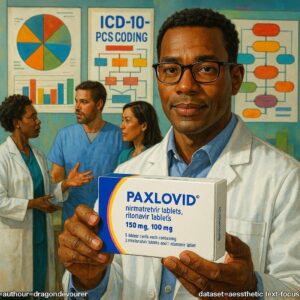
Paxlovid and the Complex World of ICD-10-PCS Coding
2. Understanding Paxlovid: Mechanism, Use, and Clinical Significance
Before a single code can be assigned, one must understand the clinical entity being coded. Paxlovid is an oral antiviral medication package consisting of two separate tablets: nirmatrelvir and ritonavir.
-
Nirmatrelvir is the primary active agent. It functions as a protease inhibitor, specifically designed to block the activity of the SARS-CoV-2-3CL protease, an enzyme the virus needs to replicate. By inhibiting this protease, nirmatrelvir prevents the virus from maturing and producing functional viral particles, effectively halting the infection’s progression within the body.
-
Ritonavir, a drug long used in HIV treatment, plays a supportive “boosting” role. It inhibits cytochrome P450 3A4, a liver enzyme responsible for metabolizing nirmatrelvir. By slowing nirmatrelvir’s breakdown, ritonavir increases and prolongs its therapeutic concentration in the bloodstream.
Paxlovid is authorized and recommended for the treatment of mild-to-moderate COVID-19 in adults and pediatric patients (12 years and older weighing at least 40 kg) who are at high risk for progression to severe COVID-19, including hospitalization or death. The critical nuance for coders is its indication: treatment of an active, diagnosed infection. It is not used for prophylaxis (prevention). This distinction directly influences the diagnosis codes required.
3. The World of Medical Coding: A Primer on ICD-10-PCS
To comprehend the absence of a Paxlovid code, we must define our terms. The International Classification of Diseases, 10th Revision, is actually comprised of two distinct coding systems:
-
ICD-10-CM (Clinical Modification): Used throughout the U.S. healthcare system to report diagnoses, symptoms, and reasons for encounters. This system answers the question “WHY?” Why did the patient seek care? The answer is a diagnosis code (e.g., U07.1 for COVID-19).
-
ICD-10-PCS (Procedure Coding System): Used exclusively in inpatient hospital settings to code procedures, services, and interventions. This system answers the question “WHAT WAS DONE?” What procedure did the physician perform? What device was implanted? What substance was administered? PCS codes are highly granular, built on a 7-character alphanumeric structure where each character specifies a particular aspect of the procedure (Section, Body System, Root Operation, Body Part, Approach, Device, Qualifier).
The Critical Distinction: ICD-10-PCS does not code drugs or medications by name. It codes the administration procedure and, in some sections, the general category or purpose of a substance used. The drug itself, as a pharmaceutical entity, is identified elsewhere.
4. The Core Challenge: Why There Is No “Paxlovid ICD-10-PCS Code”
This brings us to the heart of the common query. ICD-10-PCS is not a dictionary of brand-name drugs. Its philosophy is based on standardizing the description of procedures. When a healthcare professional administers a drug, the PCS system captures the action (e.g., Introduction, Irrigation), the route (e.g., Peripheral Vein, Oral), and sometimes the type of substance (e.g., Anti-infective, Nutritional Substance).
A direct code for “Paxlovid” would violate this structural principle. Instead, Paxlovid, as a pharmaceutical, falls under a broader category. When administered in an inpatient setting, it would be classified based on its pharmacotherapeutic purpose—in this case, as an Antiviral agent. The specific identification of “Paxlovid” is managed through the hospital’s chargemaster and billing systems using Healthcare Common Procedure Coding System (HCPCS) codes or National Drug Codes (NDCs), which are used for billing the actual drug product.
5. Navigating the Encounter: ICD-10-CM for Diagnosis and HCPCS for the Drug
Therefore, coding a Paxlovid encounter requires a multi-code framework:
A. The Foundation: ICD-10-CM Diagnosis Code
Every claim requires a valid reason for service. For Paxlovid, this is always a confirmed COVID-19 diagnosis.
-
U07.1 COVID-19: This is the principal code for a confirmed case. Additional codes must be used to specify:
-
Pulmonary Manifestations: e.g., J12.82 (Pneumonia due to COVID-19), J80 (Acute respiratory distress syndrome).
-
Other Manifestations: e.g., D68.8 (COVID-19 associated coagulopathy), R65.2 (Severe sepsis).
-
Underlying Comorbid Conditions: that justify Paxlovid use (e.g., E11.9 Diabetes mellitus, I10 Essential hypertension, J44.9 COPD).
-
B. Identifying the Drug: HCPCS Code (Outpatient/Professional Setting)
For outpatient pharmacy dispensing or physician-administered drugs, HCPCS Level II codes are used. Paxlovid has an assigned HCPCS code:
-
J0248 (Injection, levalbuterol hydrochloride, 0.5 mg) – Wait, that’s incorrect. Correction: As of the latest HCPCS updates, Paxlovid is represented by a code for the oral antiviral combination.
-
Important Note: HCPCS codes are updated quarterly. The specific code for Paxlovid’s packaging may change or be represented under a broader antiviral administration code in different contexts. Coders must always consult the current year’s HCPCS file. An example from a previous cycle was a code like Q0222 (Injection, remdesivir, 1 mg) for another antiviral; similar temporary or permanent codes are established for novel therapeutics. For the purpose of this article’s framework, we acknowledge the HCPCS code as the identifier for the drug product on an outpatient claim.
-
6. A Procedural Pathway: Coding the Administration of Antiviral Agents
This is where ICD-10-PCS enters the picture for inpatient care.
Inpatient Administration: If a patient is admitted to a hospital (inpatient) and receives Paxlovid as part of their treatment, the administration of that drug is coded in ICD-10-PCS. The relevant section is the “Introduction” section (Section 3), which includes putting in or on a therapeutic, diagnostic, nutritional, physiological, or prophylactic substance.
A coder would build a 7-character code in the 3E0 realm. Let’s construct a hypothetical example for the introduction of an antiviral substance via the gastrointestinal tract (oral administration):
-
3E0: Section (3=Administration), Body System (E=Physiological Systems and Anatomical Regions), Root Operation (0=Introduction)
-
3E0D: Character 4: Body Part/Region D = Gastrointestinal Tract
-
3E0D3: Character 5: Approach 3 = Via Natural or Artificial Opening (oral is a natural opening)
-
3E0D3C: Character 6: Substance C = Anti-infective
-
3E0D3C9: Character 7: Qualifier 9 = Other Substance
Therefore, 3E0D3C9 could represent the Introduction of an Anti-infective substance into the Gastrointestinal Tract, Via Natural or Artificial Opening. In the context of a confirmed COVID-19 case, this “anti-infective” would be specified in the medical record as the oral antiviral Paxlovid.
Coding Pathway for Paxlovid Administration by Setting
| Setting | Diagnosis (ICD-10-CM) | Procedure / Service Code | Drug Product Identifier | Key Documentation Need |
|---|---|---|---|---|
| Inpatient Hospital | U07.1 (COVID-19) + manifestation/comorbidity codes | ICD-10-PCS: e.g., 3E0D3C9 (Introduction of Anti-infective, GI) | Hospital Chargemaster/NDC Code | Physician order, Medication Administration Record (MAR), Progress notes linking drug to COVID-19 treatment. |
| Outpatient Clinic / ER | U07.1 (COVID-19) + manifestation/comorbidity codes | CPT/HCPCS: Administration code (if IV) or Evaluation & Management code for the visit. | HCPCS Code (e.g., specific Paxlovid code) | Prescription, clinical note confirming indication and patient risk factors. |
| Retail Pharmacy | U07.1 (COVID-19) – on physician’s prescription | N/A (Dispensing transaction) | NDC Code for specific Paxlovid package | Valid prescription with diagnosis. |
7. The Inpatient vs. Outpatient Divide: A Crucial Distinction
As Table 1 illustrates, the coding framework shifts dramatically based on the site of service.
-
Inpatient: ICD-10-PCS is king for procedures. The drug cost is typically bundled into the DRG (Diagnosis-Related Group) payment.
-
Outpatient: CPT® and HCPCS Level II codes dominate for procedures and drugs. Payment may be separate for the drug (under Medicare Part B or D) and the professional service.
8. A Complete Coding Scenario: From Patient Visit to Reimbursement
Scenario: A 68-year-old male with a history of type 2 diabetes and hypertension (both well-controlled) presents to his primary care physician with 3 days of fever, cough, and fatigue. A rapid antigen test is positive for SARS-CoV-2. The physician, noting his age and comorbidities, prescribes a 5-day course of Paxlovid to be picked up at the affiliated outpatient pharmacy.
Coding Path:
-
Diagnosis: U07.1 (COVID-19), E11.9 (Type 2 diabetes mellitus), I10 (Essential hypertension).
-
Physician Service: CPT code 99213 (Office outpatient E/M visit, established patient) linked to U07.1.
-
Drug Identification: The prescription sent to the pharmacy contains the appropriate HCPCS/NDC code for the Paxlovid dose pack.
-
Pharmacy Claim: The pharmacy dispenses the drug, billing the payer (e.g., Medicare Part D) using the NDC code for Paxlovid, with U07.1 as the reason for the prescription.
9. The Broader Landscape: Coding for COVID-19 and Its Complexities
Paxlovid coding does not exist in a vacuum. It is a subset of the larger, evolving challenge of COVID-19 coding. Coders must be vigilant about:
-
Sequencing: When COVID-19 meets a linkage requirement (e.g., causes pneumonia), U07.1 must be sequenced first, followed by the manifestation.
-
“Status” vs. “History”: Code Z86.16 (Personal history of COVID-19) is used after the acute illness has resolved, not during treatment.
-
Long COVID/Post-COVID Conditions: Codes like U09.9 (Post-COVID-19 condition, unspecified) are used for sequelae, not for the acute phase treated by Paxlovid.
-
Guideline Updates: The CDC and CMS issue official coding guidelines that are updated frequently; these are paramount.
10. The Importance of Accuracy: Compliance, Reimbursement, and Public Health
Precise coding is not bureaucratic red tape. It is the linchpin of:
-
Provider Reimbursement: Incorrect codes lead to claim denials, delays, and financial loss for healthcare entities.
-
Regulatory Compliance: Errors can trigger audits, penalties, and allegations of fraud.
-
Public Health Surveillance: Aggregated coded data is how we track disease prevalence, treatment patterns, and outcomes on a national scale. Accurate coding for Paxlovid administration helps answer vital questions about its real-world effectiveness and utilization.
11. The Future of Coding for Novel Therapeutics
The Paxlovid case study is a template for future novel agents. As mRNA therapeutics, gene therapies, and other advanced modalities emerge, the coding systems will adapt. We may see:
-
New, more specific qualifiers in ICD-10-PCS for “targeted antiviral” or “monoclonal antibody.”
-
Continued reliance on temporary HCPCS “Q” or “J” codes for new drugs prior to permanent placement.
-
Increased integration of NDCs into claims processing workflows.
The fundamental principle will remain: coding systems describe what is wrong (diagnosis) and what was done (procedure/service), while separate systems identify the specific therapeutic agent.
12. Conclusion
The search for a singular Paxlovid ICD-10-PCS code is a misdirected but enlightening endeavor. It reveals a sophisticated, multi-axial coding ecosystem where diagnosis (ICD-10-CM), procedure (ICD-10-PCS/CPT), and drug product (HCPCS/NDC) each play a distinct, vital role. Accurate coding for Paxlovid treatment hinges on a correct COVID-19 diagnosis, selection of the appropriate administration code based on setting, and precise identification of the drug itself. Mastering this framework is essential for ensuring compliant reimbursement, supporting clinical decision-making, and contributing to the invaluable public health data that guides our response to ongoing and future health challenges.
13. Frequently Asked Questions (FAQs)
Q1: Can I use a code from the “New Technology” section of ICD-10-PCS for Paxlovid?
A: While ICD-10-PCS has a “New Technology” section (X), it is typically reserved for specific, FDA-approved procedures or devices that have been granted a dedicated “X” code. Paxlovid, as a pharmaceutical administered via a standard route, does not qualify. Its administration is captured in the existing “Introduction” section.
Q2: What is the HCPCS code for Paxlovid? I’ve seen different answers.
A: HCPCS codes are updated annually and quarterly. The specific code for Paxlovid’s packaging (e.g., the dose pack) may be established, changed, or discontinued. For definitive, current information, you must consult the official CMS HCPCS code set files for the relevant calendar year and quarter. Never rely on static internet lists.
Q3: How do I code for a patient who experiences side effects from Paxlovid?
A: This requires a shift in coding focus. The principal diagnosis would be the adverse effect (e.g., T45.1X5A for adverse effect of antiviral drugs, or codes for dysgeusia [R43.2], diarrhea [R19.7], etc.). You would then use code U07.1 as a secondary code to indicate the condition for which the drug was being given. Additional codes from Chapter 20 (External Causes) may be needed.
Q4: If a patient is admitted because of Paxlovid complications, does the COVID-19 code still come first?
A: No. In this scenario, the reason for admission is the complication. The principal diagnosis would be the adverse effect (e.g., drug-induced hepatitis). U07.1 would be listed as a secondary diagnosis to provide context. Sequencing is always driven by the circumstances of the admission.
Q5: Where can I find the most up-to-date official coding guidelines for COVID-19?
A: The primary sources are:
-
The CDC’s ICD-10-CM Official Guidelines for Coding and Reporting.
-
The AHA’s *Coding Clinic for ICD-10-CM/PCS* (which provides quarterly advice).
-
CMS MedLearn Matters articles and interim final rules.
These are the authoritative resources for all coding professionals.
Author: Medical Coding & Health Information Specialist
Date: December 08, 2025
Disclaimer: This article is for educational and informational purposes only and does not constitute medical coding, billing, or legal advice. Official coding guidelines from the Centers for Medicare & Medicaid Services (CMS), the American Health Information Management Association (AHIMA), and the American Hospital Association (AHA) must be consulted for definitive guidance. Code information is current as of the 2025 coding cycle.


