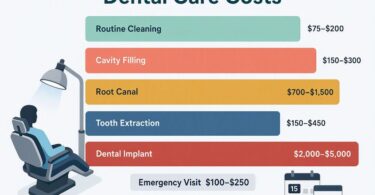
Taking your child to the dentist is a vital part of ensuring their long-term health. From the moment their first tooth appears, regular dental care helps prevent cavities, establishes good habits, and catches potential problems early. A pediatric dentist is a specialist who has dedicated their career to the unique needs of children, from infancy through adolescence.
If you are a parent, you know that planning for any healthcare expense is important. The cost of seeing a pediatric dentist can vary, but understanding what goes into the price can help you budget and make informed decisions. This guide will explore the typical costs of pediatric dental visits, the factors that influence pricing, and how you can manage these essential expenses.

What Is The Cost Of Seeing A Pediatric Dentist?
The Cost of a Routine Check-up
For most children, a visit to the pediatric dentist is a routine event. The American Academy of Pediatric Dentistry (AAPD) recommends that children see a dentist by their first birthday or within six months of their first tooth erupting.
A standard visit typically includes:
-
A thorough examination of the teeth, gums, and jaw
-
A professional cleaning to remove plaque and tartar
-
A fluoride treatment to strengthen enamel
-
X-rays (taken periodically, not at every visit)
Typical Cost Range
Without insurance, the cost of a routine check-up and cleaning for a child typically falls between $65 and $150. This price can increase if X-rays are needed.
-
Exam: $40 – $75
-
Cleaning: $50 – $100
-
Fluoride Treatment: $20 – $50
-
X-rays (bitewing): $30 – $80
If your child is having their first visit or it has been a while since their last X-rays, the dentist may recommend a full series of X-rays, which can cost more.
Why Pediatric Dentists May Cost More Than General Dentists
You might wonder why a pediatric dentist might charge slightly more than a general dentist for the same service. The answer lies in the specialization.
Specialized Training
After four years of dental school, a pediatric dentist completes an additional two to three years of residency training. This training focuses specifically on child psychology, growth and development, behavior management, and the treatment of children with special healthcare needs. You are paying for this advanced expertise.
Specialized Equipment and Environment
A pediatric dental office is designed for children. The chairs are smaller. The tools are sized for small mouths. The office is decorated to be welcoming and non-threatening. This specialized equipment and environment cost money to create and maintain.
Time and Patience
Working with children requires a different approach. A pediatric dentist and their staff are trained to be patient, to explain things in a child-friendly way, and to manage anxiety and fear. This often means appointments take a bit longer than an adult appointment. The cost of this extra time is built into the fee.
Behavior Management Techniques
Pediatric dentists are experts in techniques like “tell-show-do” and positive reinforcement. They know how to help a nervous child through a procedure. In some cases, they may use nitrous oxide (laughing gas) or sedation, which are additional services with their own costs.
Cost of Common Pediatric Dental Procedures
Beyond the routine check-up, your child may need specific treatments. Here is a breakdown of the typical costs for common procedures without insurance.
1. Dental Fillings
Cavities are one of the most common childhood health issues. The cost of a filling depends on the size and location of the cavity, and the material used.
-
Composite (Tooth-Colored) Filling: $150 – $300 per tooth. This is the most common choice for children’s teeth.
-
Amalgam (Silver) Filling: $100 – $200 per tooth. This is a durable and less expensive option, often used for back teeth.
2. Dental Sealants
Sealants are a protective plastic coating applied to the chewing surfaces of back teeth to prevent cavities. They are a very cost-effective preventive measure.
-
Cost per Tooth: $30 – $60
3. Tooth Extraction
Sometimes a baby tooth is too decayed to save, or it needs to be removed for orthodontic reasons.
-
Simple Extraction: $100 – $250 per tooth
-
Surgical Extraction: $200 – $400 per tooth (for a tooth that is impacted or broken)
4. Pulpotomy (Baby Root Canal)
If decay reaches the nerve of a baby tooth, a pulpotomy may be needed to save the tooth.
-
Cost: $200 – $450 per tooth. This is usually followed by a crown.
5. Stainless Steel Crowns
These are the standard choice for restoring badly decayed baby teeth. They are pre-made, durable, and cost-effective.
-
Cost: $250 – $500 per tooth
6. Space Maintainers
If a baby tooth is lost too early, a space maintainer holds the space open so the permanent tooth can come in properly.
-
Cost: $200 – $400 per appliance
| Procedure | Typical Cost Range (Without Insurance) |
|---|---|
| Routine Exam & Cleaning | $65 – $150 |
| Composite Filling | $150 – $300 |
| Dental Sealant (per tooth) | $30 – $60 |
| Simple Extraction | $100 – $250 |
| Pulpotomy (Baby Root Canal) | $200 – $450 |
| Stainless Steel Crown | $250 – $500 |
| Space Maintainer | $200 – $400 |
The Impact of Dental Insurance
Most dental insurance plans cover pediatric dental care at a high rate, recognizing the importance of prevention.
-
Preventive Care: Check-ups, cleanings, fluoride, and sealants are often covered at 100%, meaning you pay nothing out of pocket.
-
Basic Procedures: Fillings and simple extractions are typically covered at 70-80%.
-
Major Procedures: Crowns and pulpotomies are typically covered at 50%.
However, you must be aware of your plan’s annual maximum. This is the total dollar amount the insurance company will pay for your child’s care in a year. It is often between $1,000 and $1,500. If your child needs extensive work, you can hit this maximum quickly and be responsible for the rest.
Managing the Cost of Pediatric Dental Care
If you are concerned about the cost of your child’s dental care, there are several strategies you can use.
1. Prioritize Prevention
The most effective way to save money on dental care is to avoid the need for it. Encourage good brushing and flossing habits at home. Limit sugary drinks and snacks. Ensure your child sees the dentist regularly for check-ups. Sealants and fluoride are wise investments that prevent much more costly fillings.
2. Utilize Dental Insurance Benefits
If you have insurance, understand your benefits. Schedule your child’s appointments early in the year before the annual maximum is used up. For planned treatments, ask the dental office to submit a pre-authorization to your insurance so you know exactly what will be covered.
3. Consider a Dental Discount Plan
If you do not have insurance, a dental discount plan can help. You pay an annual fee and receive a card that gives you discounts of 20-50% at participating dentists. This can make a significant difference for a family.
4. Look for Community Resources
Many communities offer low-cost dental clinics or programs for children. Some are run by the local health department or non-profit organizations. Medicaid and the Children’s Health Insurance Program (CHIP) provide comprehensive dental coverage for children in low-income families.
5. Ask About Payment Plans
Most pediatric dental offices are used to working with families. They may offer in-house payment plans that allow you to spread the cost of treatment over several months.
Important Note: The costs provided here are national averages and can vary based on your geographic location and the specific dental practice. Always ask for a written treatment plan with all costs itemized before your child begins any treatment.
Choosing a Pediatric Dentist vs. a General Dentist
Many parents take their children to a general dentist who treats the whole family. This can be convenient and cost-effective. A general dentist is qualified to treat children and can provide excellent care.
However, a pediatric dentist offers a unique level of specialization. If your child is very young, has significant anxiety, has special needs, or has complex dental issues, the expertise of a pediatric dentist can be invaluable. The slightly higher cost may be worth it for the peace of mind and the quality of the experience for your child.
Conclusion
The cost of seeing a pediatric dentist varies. A routine check-up will typically cost between $65 and $150 without insurance. Procedures like fillings, crowns, and extractions will add to that cost. While pediatric dentists may charge slightly more than general dentists due to their specialized training and environment, the investment in your child’s oral health is a lasting one. By prioritizing prevention, understanding your insurance, and exploring your options, you can ensure your child receives the high-quality dental care they need at a cost you can manage.
Frequently Asked Questions (FAQ)
1. At what age should my child first see a pediatric dentist?
The American Academy of Pediatric Dentistry recommends a first visit by age one, or within six months of the first tooth erupting. This early visit is mostly about education for the parents and getting the child comfortable with the dental office.
2. Is a pediatric dentist necessary for a simple cleaning?
No, a general dentist is fully capable of cleaning a child’s teeth. However, a pediatric dentist’s office is specifically designed for children. The staff is trained to handle children’s anxieties, making the experience more positive, especially for young or nervous children.
3. Does Medicaid cover pediatric dental care?
Yes. The Early and Periodic Screening, Diagnostic and Treatment (EPSDT) benefit requires that Medicaid provide comprehensive dental care for all enrolled children. This includes check-ups, cleanings, fillings, and other necessary treatments. Coverage is generally very comprehensive.
4. What is the difference between a pulpotomy and a root canal?
A pulpotomy is sometimes called a “baby root canal.” It involves removing the infected tissue from the crown (top) portion of the tooth’s nerve, but leaving the tissue in the roots intact. A full root canal removes all the tissue from the crown and the roots. A pulpotomy is typically performed on baby teeth, while a full root canal is more common for permanent teeth.
5. Are dental sealants really worth the cost?
Yes. Sealants are one of the most effective preventive treatments in dentistry. They can reduce the risk of decay in the grooves of back teeth by up to 80%. The small cost of a sealant is far less than the cost of a filling for a cavity that could have been prevented.
Additional Resource:
For more information on children’s oral health and finding a pediatric dentist near you, you can visit the American Academy of Pediatric Dentistry (AAPD) website at www.aapd.org.