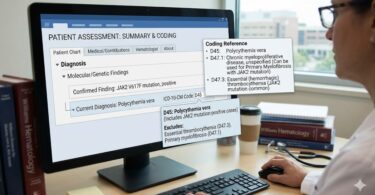
Skin lesions are a common reason for dermatological consultations, ranging from benign moles to malignant melanomas. Proper diagnosis and coding are essential for accurate medical billing, treatment planning, and statistical tracking. The International Classification of Diseases, 10th Revision (ICD-10) provides specific codes for different types of skin lesions, ensuring uniformity in healthcare documentation.
This guide explores ICD-10 codes for abnormal skin lesions, their clinical significance, and best practices for accurate coding. Whether you’re a healthcare provider, medical coder, or student, this article will help you navigate the complexities of skin lesion classification.

ICD-10 Code for Abnormal Skin Lesion
Understanding Abnormal Skin Lesions
Definition and Types
An abnormal skin lesion refers to any atypical growth, discoloration, or change in the skin’s structure. These can be:
-
Benign lesions (e.g., moles, seborrheic keratosis)
-
Premalignant lesions (e.g., actinic keratosis)
-
Malignant lesions (e.g., basal cell carcinoma, melanoma)
Common Causes
-
Genetic factors (e.g., familial melanoma)
-
Sun exposure (UV radiation leading to actinic damage)
-
Infections (viral warts, bacterial abscesses)
-
Autoimmune conditions (e.g., psoriasis, lupus)
ICD-10 Coding System Overview
Purpose and Structure
The ICD-10-CM (Clinical Modification) system is used in the U.S. for diagnostic coding. Each code consists of:
-
3 to 7 alphanumeric characters
-
Category (first 3 digits) → Specifies the condition
-
Subcategory (next 2 digits) → Provides more detail
-
Extension (final digits) → Indicates laterality, severity, or episode
Importance in Medical Billing
-
Ensures insurance reimbursement
-
Facilitates epidemiological research
-
Helps in tracking disease prevalence
ICD-10 Codes for Abnormal Skin Lesions
Benign vs. Malignant Lesions
| Type of Lesion | ICD-10 Code | Description |
|---|---|---|
| Unspecified Lesion | R23.9 | Unspecified skin changes |
| Benign Neoplasm | D23.9 | Benign skin neoplasm, unspecified |
| Actinic Keratosis | L57.0 | Premalignant sun-induced lesion |
| Melanoma | C43.9 | Malignant melanoma of skin, unspecified |
Specific Codes and Descriptions
-
L82.1 – Seborrheic keratosis
-
D04.9 – Carcinoma in situ of skin, unspecified
-
L98.9 – Disorder of the skin and subcutaneous tissue, unspecified
Clinical Documentation and Coding Best Practices
-
Detailed descriptions (size, location, morphology)
-
Biopsy confirmation when malignancy is suspected
-
Avoid unspecified codes (e.g., R23.9) unless necessary
Differential Diagnosis of Skin Lesions
-
Dermoscopy – Visual examination with magnification
-
Biopsy – Histopathological analysis
-
Imaging – Ultrasound or MRI for deep lesions
Treatment and Management
-
Topical treatments (5-fluorouracil for actinic keratosis)
-
Surgical excision (for malignant lesions)
-
Cryotherapy (for benign warts)
Case Studies
Case 1: A 60-year-old male presents with a scaly lesion on the face. Biopsy confirms actinic keratosis (L57.0).
Case 2: A 45-year-old female with a changing mole diagnosed as melanoma (C43.9).
Conclusion
Accurate ICD-10 coding for abnormal skin lesions ensures proper diagnosis, treatment, and billing. Understanding the differences between benign and malignant lesions helps in selecting the correct code. Always document thoroughly and use specific codes when possible.
FAQs
1. What is the ICD-10 code for an unspecified skin lesion?
-
R23.9 (Unspecified skin changes).
2. How do I code a suspicious mole?
-
If benign: D23.9
-
If malignant: C43.9 (melanoma)
3. Can actinic keratosis turn into cancer?
-
Yes, it is considered premalignant (L57.0).