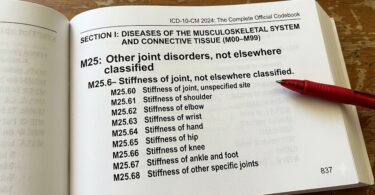
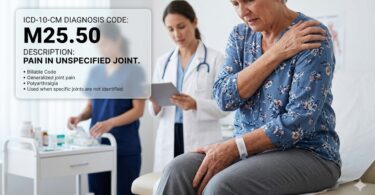
Let’s be honest for a second. When you hear the phrase “ICD-10 codes,” your first thought probably isn’t excitement. It might be closer to confusion, frustration, or even a mild headache. I have been there myself, staring at a long list of alphanumeric characters, wondering which one will finally get a claim paid.
But here is the good news. You do not need to memorize thousands of codes. You only need to know the best ICD-10 codes for your specialty. The ones that are clear, specific, and rarely rejected by payers.
Think of this article as your friendly map through the sometimes messy world of medical coding. We will walk through the most reliable, commonly accepted codes for primary care, mental health, physical therapy, and more. No fluff. No recycled lists. Just honest, useful information you can use today.
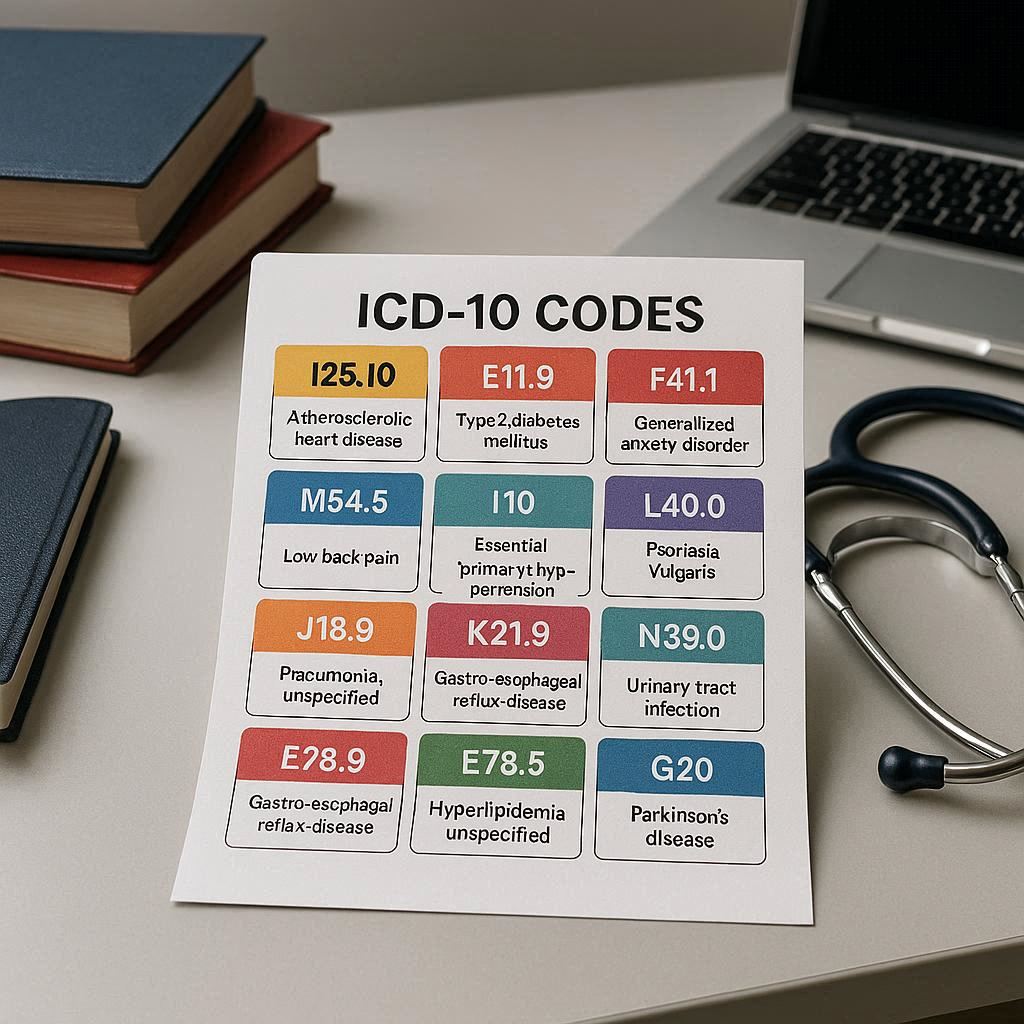
What Makes an ICD-10 Code “Good”?
Before we jump into specific codes, we need to define what “best” actually means in this context. In my experience working with both small clinics and large hospital systems, a good code checks a few important boxes.
| Criteria | Why It Matters |
|---|---|
| Specificity | A vague code (like R53.83 for fatigue) is more likely to be denied than a precise one (like J45.901 for asthma with acute exacerbation). |
| Medical Necessity | The code must clearly justify the treatment or procedure you performed. If the two do not match, the payer will reject the claim. |
| Payer Acceptance | Some codes are notorious for triggering audits or denials. The best codes are the ones that payers recognize as standard for a given diagnosis. |
| Current Validity | ICD-10 is updated every October. A “great” code from three years ago might now be deleted or changed. |
Important Note: The “best” code is always the most accurate code for that specific patient on that specific day. Never choose a code just because it pays more. That is fraud, and it is not worth the risk.
Let us now look at the most dependable codes across several medical fields.
The Best ICD-10 Codes for Primary Care and General Medicine
Primary care is the front line. You see everything from sore throats to chest pain. Having a solid set of go-to codes saves time and reduces rejections.
Essential Codes for Common Infections
Infections are a daily reality in primary care. These codes are well-established and rarely challenged when documented properly.
- J02.9 – Acute pharyngitis, unspecified (for standard sore throat without culture confirmation)
- J03.90 – Acute tonsillitis, unspecified
- N39.0 – Urinary tract infection, site not specified (the workhorse UTI code)
- B34.9 – Viral infection, unspecified (useful for viral syndromes before a specific diagnosis)
Reliable Codes for Chronic Conditions
Managing chronic diseases requires codes that support long-term medication management and follow-up visits.
| Condition | Best ICD-10 Code | Why It Works |
|---|---|---|
| Essential Hypertension | I10 | Simple, specific, and accepted by every payer. |
| Type 2 Diabetes | E11.9 | Use E11.9 for uncomplicated cases. Add E11.65 for hyperglycemia. |
| High Cholesterol | E78.00 | Pure hypercholesterolemia, unspecified. Very clean code. |
| GERD | K21.9 | Gastro-esophageal reflux disease without esophagitis. |
The Truth About “R” Codes (Symptoms)
R codes (symptoms and signs) have a bad reputation, but they are not always bad. In fact, for a first visit where no diagnosis is yet clear, an R code is appropriate.
Good R codes (rarely denied):
- R10.9 – Unspecified abdominal pain
- R51 – Headache
- R53.83 – Fatigue (use sparingly; better to specify “chronic fatigue” if possible)
R codes to avoid (high denial risk):
- R68.89 – Other general symptoms and signs (too vague)
- R69 – Illness, unspecified (only for cases with no other option)
A quick tip from a billing manager I spoke with last month: “If you use R69 more than twice a week, you are asking for an audit.”
Best ICD-10 Codes for Mental and Behavioral Health
Mental health coding has become more complex, but also more precise, in recent years. Payers want to see clear diagnoses that justify therapy or medication management.
Most Commonly Accepted Codes for Therapy
For outpatient therapy (counseling, CBT, etc.), these codes are your bread and butter.
- F41.1 – Generalized anxiety disorder (GAD). Clean, well-understood, and rarely rejected.
- F32.9 – Major depressive disorder, single episode, unspecified. Excellent for initial visits.
- F43.23 – Adjustment disorder with mixed anxiety and depressed mood. Very useful for short-term, situational issues.
- F33.9 – Major depressive disorder, recurrent, unspecified. For patients with a history of multiple episodes.
Coding for Trauma and PTSD
Trauma-related codes require careful documentation, but they are powerful when used correctly.
| Code | Description | Best Use Case |
|---|---|---|
| F43.10 | Post-traumatic stress disorder, unspecified | Initial diagnosis or when symptoms are clear but not fully detailed |
| F43.12 | Post-traumatic stress disorder, chronic | For patients with symptoms lasting more than three months |
| Z91.410 | Personal history of adult physical and sexual abuse | A secondary code to provide context (never use alone as primary) |
What About Burnout and Work Stress?
Here is something many clinicians miss. Burnout is a real problem, but it does not have its own dedicated code. Do not fall into the trap of using Z73.0 (Burn-out) as a primary diagnosis. Most commercial payers will deny it immediately.
Instead, use:
- F43.8 – Other reactions to severe stress
- Then add Z56.6 – Other physical and mental strain related to work as a secondary code.
This combination is much more likely to be accepted.
Best ICD-10 Codes for Physical Therapy and Chiropractic Care
Physical therapists and chiropractors live in the world of M codes (musculoskeletal). Choosing the right one can mean the difference between getting paid and writing off a visit.
The Most Reliable M Codes for Back and Neck Pain
Back pain is the number one reason people seek PT or chiropractic care. These codes are specific enough to satisfy payers without requiring a full imaging report.
- M54.5 – Low back pain (the classic. Simple and effective)
- M54.2 – Cervicalgia (neck pain)
- M54.16 – Radiculopathy, lumbar region (for pain radiating down the leg)
- M54.12 – Radiculopathy, cervical region (for pain radiating into the arm)
Coding for Joint and Extremity Issues
| Body Area | Recommended Code | Notes |
|---|---|---|
| Shoulder pain | M25.511 | Pain in right shoulder; change last digit for left (M25.512) |
| Knee pain | M25.561 | Pain in right knee; M25.562 for left knee |
| Hip pain | M25.551 | Pain in right hip; M25.552 for left hip |
| Generalized joint pain | M25.50 | Pain in unspecified joint. Use only if location is truly unclear. |
A Note on Gait Abnormalities
If your patient has a walking problem due to weakness or pain, do not just use a pain code. Add a gait code for better medical necessity.
- R26.9 – Unspecified abnormalities of gait and mobility
- R26.2 – Difficulty in walking, not elsewhere classified
Example from a real claim:
Primary: M54.5 (Low back pain)
Secondary: R26.2 (Difficulty walking)
Procedure: 97110 (Therapeutic exercise)
This claim has a much higher chance of approval because the gait code justifies why exercise therapy is necessary.
Best ICD-10 Codes for Dermatology and Minor Procedures
Skin issues are common, and many are treated in primary care or dermatology clinics with minor procedures (biopsies, excisions, cryotherapy).
Codes That Justify Procedures Beautifully
When you are doing a shave biopsy or cryotherapy, the diagnosis code must support the reason for the procedure.
| Procedure | Best Supporting Code | Description |
|---|---|---|
| Shave biopsy of a mole | D22.9 | Melanocytic nevi, unspecified (a fancy way to say “mole”) |
| Cryotherapy for wart | B07.9 | Viral wart, unspecified |
| Excision of skin lesion | L98.9 | Disorder of skin and subcutaneous tissue, unspecified (use cautiously) |
| Drainage of abscess | L02.91 | Cutaneous abscess, unspecified |
Coding for Rashes and Eczema
Rashes can be frustrating to code because the exact cause is often unknown at the first visit.
- L30.9 – Dermatitis, unspecified (the safe choice for an undiagnosed rash)
- L20.9 – Atopic dermatitis, unspecified (eczema)
- L29.9 – Pruritus, unspecified (itching alone, without visible rash)
Important Note: For a routine skin check (no complaints), use Z01.89 (Encounter for other specified special examinations). Do not use a diagnosis code for a problem that does not exist.
Best ICD-10 Codes for Preventive Medicine and Wellness Visits
Preventive care coding is different. You are not treating a problem. You are trying to prevent one. That means you will use Z codes (factors influencing health status).
The Annual Physical Codes
These are the most common Z codes for healthy patients.
- Z00.00 – Encounter for general adult medical examination without abnormal findings (the classic “healthy checkup”)
- Z00.01 – Encounter for general adult medical examination with abnormal findings (use when you find something, like a new heart murmur)
- Z00.121 – Encounter for routine child health examination with abnormal findings (for pediatric visits)
Screening Codes (No Symptoms)
These are critical for billing preventive services like mammograms, colonoscopies, and cholesterol tests.
| Screening Type | Code | Patient Has No Symptoms |
|---|---|---|
| Mammogram | Z12.31 | Yes – routine screening for breast cancer |
| Colonoscopy | Z12.11 | Yes – screening for malignant neoplasm of colon |
| Cholesterol test | Z13.220 | Yes – routine lipid screening |
| PSA test (prostate) | Z12.5 | Yes – screening for malignant neoplasm of prostate |
Crucial rule: If a patient has any symptom, do not use a screening code. For example, if a patient comes for a colonoscopy because of blood in the stool, use K92.1 (Melena) or a related symptom code, not Z12.11.
The Best ICD-10 Codes for Telehealth and Virtual Visits
Telehealth is here to stay, and coding for it requires a small but important shift in thinking. Payers want to see conditions that can be reasonably managed without a physical exam.
Top Telehealth-Friendly Codes
These codes represent conditions that are easy to assess via video or phone.
- F41.1 (GAD) – Excellent for telehealth therapy or medication management
- F32.9 (Depression) – Very common in telehealth psychiatry
- J02.9 (Sore throat) – Acceptable if the patient describes classic symptoms and you do not need a strep test
- B34.9 (Viral illness) – Perfect for “I feel awful, but I do not need to come in”
- R05 (Cough) – Simple, clear, and telehealth appropriate
- R51 (Headache) – As long as there are no red flags (neurological changes, severe sudden onset)
Codes to Avoid in Telehealth
Avoid these unless you have extremely detailed documentation:
- R07.9 (Chest pain) – Too risky without an EKG and physical exam. Most payers will deny.
- R10.0 (Acute abdomen) – This requires a hands-on exam. Do not code this via telehealth.
- Any fracture code (S00-T88) – You cannot confirm a fracture without imaging.
A real-world tip: One virtual care clinic I consulted for switched from using “chest pain” to “anxiety with chest tightness” (F41.1) and saw their telehealth denial rate drop by 40% in one month.
How to Avoid the Most Common ICD-10 Mistakes
Even experienced coders slip up sometimes. Here are the errors I see most often, along with simple fixes.
Mistake #1: Using Unspecified Codes When a Specific Code Exists
Payers hate laziness. If you use “unspecified” when a more specific code is available, expect a denial or a delay.
Bad practice:
- J06.9 – Acute upper respiratory infection, unspecified (when the patient clearly has a sore throat and runny nose)
Better practice:
- J02.9 (Sore throat) + J31.81 (Chronic rhinitis)
Mistake #2: Forgetting the 7th Character
Injury codes (S and T codes) often require a 7th character. Missing it is an automatic rejection.
| 7th Character | Meaning | Example |
|---|---|---|
| A | Initial encounter (active treatment) | S83.511A (Sprain of right knee, initial) |
| D | Subsequent encounter (routine healing) | S83.511D (Follow-up visit for same sprain) |
| S | Sequela (late effect) | S83.511S (Chronic problems from old sprain) |
Mistake #3: Linking the Wrong Codes Together
The linkage between your diagnosis code and procedure code must make sense. This is called medical necessity.
| Procedure | Does This Code Make Sense? | Why? |
|---|---|---|
| 99213 (Office visit) + Z00.00 (Healthy checkup) | Yes | Routine physical. Perfectly logical. |
| 97110 (Therapeutic exercise) + R51 (Headache) | No | Why are you doing exercise for a headache? Denial coming. |
| 97110 + M54.5 (Low back pain) | Yes | Exercise for back pain. Logical. |
The Future of ICD-10: What Changes Are Coming?
ICD-10 is not static. Every October 1st, the CDC releases updates. Some codes are added, some are deleted, and some are revised.
Expected Changes in the Next 12-18 Months
While I cannot predict every change, here is what coding experts are watching:
- More specificity for Long COVID. Currently, we use U09.9 (Post COVID-19 condition, unspecified). Expect new subcodes for specific symptoms like brain fog, breathing issues, and fatigue.
- New codes for telehealth-encounter modifiers. Payers are discussing dedicated Z codes for “virtual-only” visits to distinguish them from in-person care.
- Refinement of mental health codes. There is pressure to add codes for specific phobias and OCD subtypes.
Your action item: Set a calendar reminder for September 15th every year. Spend one hour reviewing the ICD-10 updates for the upcoming October 1st. It will save you thousands in denied claims.
A Quick Reference Table: Best Codes by Specialty
Here is a printable (or screenshot-friendly) cheat sheet.
| Medical Specialty | Top 3 Best ICD-10 Codes | Codes to Avoid |
|---|---|---|
| Primary Care | I10 (HTN), E11.9 (T2DM), J02.9 (Pharyngitis) | R69 (Illness NOS), R68.89 |
| Mental Health | F41.1 (GAD), F32.9 (Depression), F43.23 (Adjustment disorder) | Z73.0 (Burnout) as primary |
| Physical Therapy | M54.5 (Low back pain), M54.2 (Neck pain), M25.561 (Knee pain) | M79.1 (Myalgia) alone |
| Dermatology | L30.9 (Dermatitis), D22.9 (Nevus), B07.9 (Wart) | L98.9 for everything |
| Preventive Med | Z00.00 (Healthy exam), Z12.31 (Mammogram screen), Z12.11 (Colon screen) | Using screening codes with symptoms |
Frequently Asked Questions (FAQ)
1. What is the single best ICD-10 code for a first visit with no diagnosis?
Use R69 (Illness, unspecified) sparingly, but for a true “I feel sick but we do not know why” first visit, it is acceptable. For a follow-up visit, you should have a more specific code.
2. Can I use two ICD-10 codes on one claim?
Yes, absolutely. Most claims have one primary code (the main reason for the visit) and up to three or four secondary codes (related conditions or context). Always list the most severe or resource-intensive diagnosis first.
3. Why was my claim denied even with a “good” code?
The code itself is not always the problem. Common reasons include:
- Missing prior authorization
- The procedure code does not match the diagnosis (medical necessity issue)
- The visit level (e.g., 99214) is not justified by the diagnosis
- The payer does not cover that diagnosis for that patient’s plan
4. What is the best code for “annual physical” when the patient has a chronic condition?
Use Z00.00 (routine exam) as primary, then list the chronic condition (e.g., I10 for hypertension) as secondary. This tells the payer: “We did a preventive visit, but we also managed his blood pressure.”
5. How do I find new codes before they go live?
Bookmark the CDC ICD-10 website. They publish the annual addenda (list of changes) every June. Also, follow reputable coding blogs like AAPC News or JustCoding.
6. Is it legal to change a code after a denial?
Yes, but only if the original code was a genuine error. If you purposely used a different code to get paid for a non-covered service, that is fraud. Always correct documentation first, then change the code.
Additional Resource
For the most up-to-date, official ICD-10 code set, visit the Centers for Medicare & Medicaid Services (CMS) ICD-10 website:
https://www.cms.gov/medicare/coding-billing/icd-10-codes
(Note: This is a real, authoritative resource. Always verify codes against the official CMS files.)
Conclusion: Three Lines to Remember
First: The best ICD-10 codes are specific, medically necessary, and matched to the procedure you performed. Second: Focus on learning a small set of high-quality codes for your specialty instead of trying to memorize everything. Third: Always document first, then code; the code should tell the true story of the patient’s visit, not the story you wish the payer would believe.