Jaw pain is a common complaint affecting millions of people worldwide. It can arise from various causes, including dental problems, temporomandibular joint (TMJ) disorders, nerve conditions, trauma, or systemic illnesses. Proper diagnosis and accurate medical coding are essential for effective treatment and insurance reimbursement.
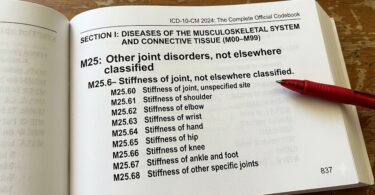
The International Classification of Diseases, 10th Revision (ICD-10) provides standardized codes for jaw pain, ensuring consistency in medical documentation. This guide explores the relevant ICD-10 codes, associated conditions, diagnostic approaches, treatment options, and billing best practices.

ICD-10 Code for Jaw Pain
Understanding Jaw Pain: Causes and Symptoms
Jaw pain can manifest as:
-
Dull aches or sharp, stabbing sensations
-
Difficulty chewing or speaking
-
Clicking or popping sounds in the jaw
-
Headaches or earaches
Common Causes:
-
Temporomandibular Joint Disorders (TMD) – Misalignment, arthritis, or muscle strain.
-
Dental Issues – Tooth decay, abscesses, or impacted wisdom teeth.
-
Neuralgias – Trigeminal or occipital neuralgia.
-
Trauma – Fractures or dislocations.
-
Systemic Conditions – Osteomyelitis, sinusitis, or heart disease (referred pain).
ICD-10 Coding System: An Overview
The ICD-10-CM (Clinical Modification) is used for diagnosis coding in the U.S. It categorizes diseases, symptoms, and medical conditions for billing and statistical purposes.
Structure of ICD-10 Codes:
-
First 3 Characters – General category (e.g., M26 for dentofacial anomalies).
-
Next 3 Characters – Specific diagnosis (e.g., M26.60 for temporomandibular joint disorder, unspecified).
-
Final Characters – Indicate laterality, severity, or complications.
ICD-10 Codes for Jaw Pain
Primary Codes for Jaw Pain
| ICD-10 Code | Description |
|---|---|
| M26.60 | Temporomandibular joint disorder, unspecified |
| M26.62 | Arthralgia of temporomandibular joint |
| K10.9 | Disease of jaw, unspecified |
| R68.84 | Jaw pain (if no specific diagnosis is confirmed) |
Secondary and Related Codes
| ICD-10 Code | Associated Condition |
|---|---|
| K08.8 | Other specified disorders of teeth and supporting structures |
| G50.0 | Trigeminal neuralgia |
| S02.6XXA | Fracture of mandible, initial encounter |
| K12.2 | Cellulitis and abscess of mouth |
Common Conditions Associated with Jaw Pain
1. Temporomandibular Joint Disorders (TMD)
-
Symptoms: Clicking, locking, pain with movement.
-
ICD-10 Codes: M26.60, M26.62.
2. Dental Issues
-
Symptoms: Toothache, swelling, sensitivity.
-
ICD-10 Codes: K08.8, K12.2.
3. Neuralgias and Nerve-Related Pain
-
Symptoms: Electric-shock-like pain.
-
ICD-10 Codes: G50.0 (Trigeminal neuralgia).
4. Trauma and Fractures
-
Symptoms: Bruising, misalignment.
-
ICD-10 Codes: S02.6XXA (Mandible fracture).
Diagnosing Jaw Pain: Clinical Approaches
-
Patient History – Duration, triggers, associated symptoms.
-
Physical Examination – Palpation, range of motion tests.
-
Imaging – X-rays, MRI, CT scans.
-
Dental Evaluation – Rule out infections or decay.
Treatment Options for Jaw Pain
-
Medications – NSAIDs, muscle relaxants, anticonvulsants (for neuralgia).
-
Dental Interventions – Fillings, extractions, root canals.
-
Physical Therapy – Jaw exercises, posture correction.
-
Surgical Options – TMJ arthroscopy, joint replacement.
Billing and Documentation Tips
-
Specify Laterality (e.g., M26.621 for right TMJ arthralgia).
-
Link to Underlying Cause (e.g., K12.2 for abscess-related pain).
-
Use Additional Codes for complications (e.g., pain management codes).
Preventive Measures and Self-Care
-
Avoid excessive gum chewing.
-
Use a nightguard for bruxism.
-
Practice stress-reduction techniques.
Conclusion
Jaw pain can stem from multiple causes, necessitating accurate ICD-10 coding for proper diagnosis and treatment. Key codes include M26.60 (TMD), K10.9 (jaw disease), and R68.84 (unspecified jaw pain). Proper documentation ensures effective care and reimbursement.
FAQs
1. What is the most common ICD-10 code for jaw pain?
-
M26.60 (Temporomandibular joint disorder, unspecified).
2. Can jaw pain be a sign of a heart attack?
-
Yes, referred pain from cardiac issues may present as jaw discomfort.
3. How do I code jaw pain with no confirmed diagnosis?
-
Use R68.84 (Jaw pain, unspecified).