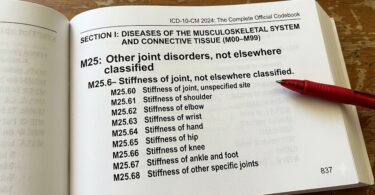
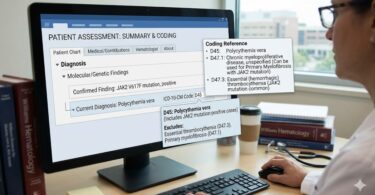
Leg pain is a common complaint affecting millions of people worldwide, with causes ranging from minor muscle strains to serious vascular or neurological conditions. Proper diagnosis and treatment depend on accurate medical coding, which ensures correct billing, insurance reimbursement, and patient care.
The International Classification of Diseases, 10th Revision (ICD-10) provides specific codes for leg pain based on etiology, location, and laterality. This guide explores the most relevant ICD-10 codes for leg pain, documentation best practices, and common coding pitfalls.

icd 10 code for leg pain
2. Understanding Leg Pain: Causes and Symptoms
Leg pain can stem from multiple sources, including:
-
Musculoskeletal causes (muscle cramps, fractures, arthritis)
-
Vascular issues (deep vein thrombosis, peripheral artery disease)
-
Neurological conditions (sciatica, peripheral neuropathy)
-
Infections or inflammatory disorders (cellulitis, osteomyelitis)
Symptoms may include:
-
Dull ache or sharp stabbing pain
-
Swelling, redness, or warmth
-
Numbness or tingling
-
Weakness or difficulty walking
3. Importance of Accurate ICD-10 Coding for Leg Pain
Correct ICD-10 coding is crucial for:
✔ Insurance Reimbursement – Ensures claims are processed without delays.
✔ Clinical Research – Helps track prevalence and treatment outcomes.
✔ Legal Compliance – Reduces audit risks and billing errors.
4. ICD-10 Codes for Leg Pain: A Detailed Breakdown
4.1. General Leg Pain (M79.609)
-
M79.609 – Pain in unspecified leg
-
Used when the exact cause or laterality is unknown.
4.2. Leg Pain Due to Injury (S80-S89)
| ICD-10 Code | Description |
|---|---|
| S80.0XXA | Contusion of knee, initial encounter |
| S82.101A | Fracture of upper end of tibia, unspecified |
| S89.92XA | Unspecified injury of lower leg, initial encounter |
4.3. Leg Pain from Musculoskeletal Disorders (M70-M79)
-
M76.80 – Other specified enthesopathies of lower limb, unspecified site
-
M79.605 – Pain in left leg
-
M79.606 – Pain in right leg
4.4. Leg Pain Related to Circulatory Issues (I70-I79)
-
I73.9 – Peripheral vascular disease, unspecified
-
I87.1 – Chronic venous insufficiency with ulcer
4.5. Neuropathic Leg Pain (G57-G58)
-
G57.80 – Other mononeuropathies of lower limb, unspecified
-
G58.9 – Peripheral neuropathy, unspecified
4.6. Bilateral vs. Unilateral Leg Pain Codes
-
Bilateral leg pain requires separate codes for each side or a bilateral code if available.
-
Unilateral pain must specify left (M79.605) or right (M79.606).
5. How to Document Leg Pain for Accurate Coding
-
Specify location (thigh, calf, knee).
-
Note laterality (left, right, bilateral).
-
Document underlying cause (injury, neuropathy, vascular disease).
6. Common Mistakes in Coding Leg Pain
❌ Using unspecified codes when details are available.
❌ Ignoring laterality (left vs. right).
❌ Failing to link pain to an underlying condition.
7. ICD-10-CM Guidelines for Leg Pain Coding
-
Follow Chapter 13 (M00-M99) for musculoskeletal pain.
-
Use Chapter 19 (S00-T88) for injury-related pain.
-
Refer to Chapter 9 (I00-I99) for circulatory causes.
8. Legal and Reimbursement Implications
Incorrect coding can lead to:
-
Claim denials
-
Audit flags
-
Legal penalties
9. Case Studies
Case 1: A 45-year-old with sciatica (G57.0) and left leg pain (M79.605).
Case 2: A diabetic patient with peripheral neuropathy (G58.9) causing bilateral leg pain.
10. Frequently Asked Questions (FAQs)
Q1: What is the ICD-10 code for unspecified leg pain?
A: M79.609 (Pain in unspecified leg).
Q2: How do I code bilateral leg pain?
A: Use M79.605 (left) and M79.606 (right) or a bilateral code if specified.
Q3: Can leg pain be coded with a symptom code only?
A: Yes, but if a definitive diagnosis exists, use that instead.
11. Conclusion
Accurate ICD-10 coding for leg pain ensures proper diagnosis, billing, and patient care. Always document laterality, underlying causes, and specific locations. Avoid unspecified codes when possible to prevent claim denials.