Knee arthroscopy is a minimally invasive surgical procedure that allows orthopedic surgeons to diagnose and treat various knee joint conditions using a small camera (arthroscope) and specialized instruments. This technique reduces recovery time, minimizes scarring, and lowers the risk of complications compared to traditional open surgery.
With the increasing prevalence of knee injuries and degenerative joint diseases, understanding the correct CPT (Current Procedural Terminology) codes for knee arthroscopy is crucial for accurate billing, insurance claims, and reimbursement. This guide provides an in-depth analysis of CPT Code for Knee Arthroscopy, ensuring medical coders, surgeons, and healthcare administrators have the latest and most accurate information.
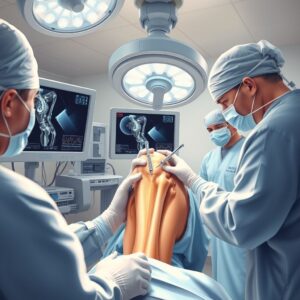
CPT Code for Knee Arthroscopy
2. Common Knee Conditions Requiring Arthroscopy
Knee arthroscopy is used to diagnose and treat multiple conditions, including:
-
Meniscal Tears (Medial or Lateral)
-
Anterior Cruciate Ligament (ACL) Tears
-
Posterior Cruciate Ligament (PCL) Injuries
-
Cartilage Damage (Chondromalacia, Osteochondral Defects)
-
Synovitis (Inflammation of the Joint Lining)
-
Loose Bodies (Bone or Cartilage Fragments in the Joint)
-
Patellar (Kneecap) Misalignment
Each condition may require different surgical approaches, influencing the CPT code selection.
3. CPT Codes for Knee Arthroscopy: An Overview
The American Medical Association (AMA) maintains CPT codes to standardize medical billing. Below is a summary of the most commonly used knee arthroscopy codes:
Common CPT Codes for Knee Arthroscopy
| CPT Code | Description | Typical Procedures |
|---|---|---|
| 29870 | Diagnostic knee arthroscopy | Inspection of joint without surgical repair |
| 29871 | Arthroscopy with debridement/shaving of articular cartilage | Chondroplasty, synovial resection |
| 29873 | Lateral release | Realignment of the patella |
| 29874 | Removal of loose body or foreign body | Extraction of bone/cartilage fragments |
| 29877 | Chondroplasty (knee) | Smoothing damaged cartilage |
| 29880 | Meniscectomy (medial OR lateral) | Partial or total meniscus removal |
| 29881 | Meniscectomy (medial AND lateral) | Both menisci treated |
| 29888 | ACL reconstruction | Graft placement for ligament repair |
4. Detailed Breakdown of CPT Codes for Knee Arthroscopy
A. Diagnostic Knee Arthroscopy (CPT 29870)
-
Used when the surgeon only examines the knee joint without performing any therapeutic procedures.
-
Documentation Tip: Must clearly state that no surgical intervention was performed.
B. Surgical Knee Arthroscopy (CPT 29871, 29873, 29874, etc.)
-
CPT 29871 – Debridement of articular cartilage (chondroplasty).
-
CPT 29873 – Lateral retinacular release for patellar instability.
-
CPT 29874 – Removal of loose bodies (e.g., bone chips).
C. Meniscectomy (CPT 29880, 29881)
-
CPT 29880 – Medial or lateral meniscectomy.
-
CPT 29881 – Medial and lateral meniscectomy (higher reimbursement).
D. ACL Reconstruction (CPT 29888)
-
Includes graft harvesting (autograft/allograft) and fixation.
-
Modifier -51 may apply if multiple procedures are performed.
5. Modifiers and Their Importance in Knee Arthroscopy Coding
Modifiers provide additional information about the procedure. Common modifiers include:
-
-RT / -LT (Right/Left Knee)
-
-59 (Distinct Procedural Service)
-
-51 (Multiple Procedures)
Example:
-
29880-RT (Right knee meniscectomy)
-
29877-LT-59 (Left knee chondroplasty, distinct from other services)
6. Documentation Requirements for Accurate Coding
Proper documentation must include:
-
Preoperative diagnosis (e.g., meniscal tear, ACL rupture).
-
Intraoperative findings (e.g., cartilage damage, loose bodies).
-
Detailed procedure notes (instruments used, surgical steps).
-
Postoperative plan (rehabilitation, follow-up).
7. Insurance Coverage and Reimbursement Challenges
-
Medicare & Private Payers: Reimbursement varies based on medical necessity.
-
Prior Authorization: Often required for ACL reconstruction (29888).
-
Denial Prevention: Ensure accurate coding and thorough documentation.
8. Common Coding Errors and How to Avoid Them
-
Unbundling: Reporting separate codes for bundled services (e.g., 29870 + 29877 is incorrect if performed together).
-
Upcoding: Using a more complex code than justified.
-
Missing Modifiers: Leading to claim denials.
9. Advances in Knee Arthroscopy Techniques
-
Robotic-Assisted Arthroscopy (Precision-guided repairs).
-
Biologic Treatments (PRP, stem cell therapy).
-
3D Imaging (Enhanced visualization).
10. FAQs on Knee Arthroscopy CPT Codes
Q1: Can CPT 29870 and 29877 be billed together?
A: No, 29870 is diagnostic only. If a chondroplasty is performed, only 29877 should be billed.
Q2: What is the difference between CPT 29880 and 29881?
A: 29880 is for one meniscus, while 29881 covers both medial and lateral menisci.
Q3: Does Medicare cover knee arthroscopy for osteoarthritis?
A: Only if conservative treatments fail and surgery is deemed medically necessary.
11. Conclusion
Understanding CPT codes for knee arthroscopy ensures accurate billing and optimal reimbursement. Proper documentation, correct modifier usage, and staying updated with coding changes are essential. Advances in arthroscopic techniques continue to improve patient outcomes, making precise coding even more critical.
12. Additional Resources
-
AMA CPT Codebook (www.ama-assn.org)
-
CMS Medicare Guidelines (www.cms.gov)
-
AAOS Coding Resources (www.aaos.org)