A hip fracture is not merely a broken bone; it is a life-altering event that carries significant morbidity and mortality, particularly for the elderly population. In the high-stakes world of orthopedic trauma, the procedure known as Open Reduction and Internal Fixation (ORIF) stands as a cornerstone intervention, offering patients a chance to regain mobility, alleviate pain, and reclaim their independence. At the heart of this complex surgical service lies a five-digit code: CPT 27236. This code is far more than a billing tool; it is a precise linguistic representation of a highly skilled, multi-faceted procedure that involves meticulous planning, expert execution, and comprehensive postoperative care. This article delves deep into the world of CPT code 27236, unpacking the anatomy, the surgery, the coding nuances, and the financial implications. It is designed to be an indispensable resource for orthopedic surgeons, medical coders, healthcare administrators, and anyone seeking to understand the intricate dance between clinical medicine and healthcare economics in the treatment of hip fractures.
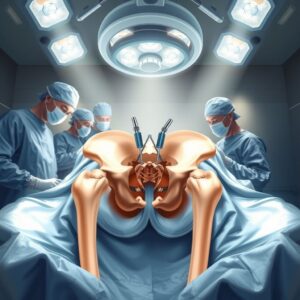
CPT Code 27236
2. Anatomical Primer: Understanding the Hip’s Complex Architecture
To fully appreciate the ORIF procedure, one must first understand the anatomy it seeks to repair. The hip is a classic ball-and-socket synovial joint, renowned for its remarkable stability and wide range of motion.
-
The Socket (Acetabulum): A deep, cup-shaped cavity formed by the fusion of three pelvic bones: the ilium, ischium, and pubis. The acetabular labrum, a ring of fibrocartilage, deepens the socket and enhances stability.
-
The Ball (Femoral Head): The spherical proximal end of the femur (thigh bone) that articulates seamlessly within the acetabulum.
-
The Femoral Neck: A critical, tapered region of bone that connects the femoral head to the femoral shaft. It is a common site of fracture, especially in osteoporotic bone, as it is a biomechanical point of high stress.
-
The Greater and Lesser Trochanters: These are prominent bony protuberances at the top of the femoral shaft. They serve as crucial attachment points for the powerful gluteal and thigh muscles that control hip movement.
-
The Blood Supply: This is perhaps the most critical anatomical consideration. The femoral head’s blood supply is tenuous and can be easily disrupted by a fracture, leading to avascular necrosis (AVN), a devastating complication where the bone tissue dies.
The proximal femur is functionally divided into regions where fractures occur, each with its own implications for treatment and prognosis:
-
Femoral Neck: Intracapsular (within the joint capsule).
-
Intertrochanteric: Between the greater and lesser trochanters, extracapsular.
-
Subtrochanteric: From the lesser trochanter down approximately 5 cm of the femoral shaft.
3. When is ORIF of the Hip Necessary? Indications and Fracture Types
ORIF is the treatment of choice for displaced fractures where the broken bone ends have moved out of their anatomical position. The goal is to achieve a stable, anatomical reduction to allow for immediate postoperative mobilization, which is crucial for preventing complications like pneumonia, deep vein thrombosis, and deconditioning.
Femoral Neck Fractures
These fractures occur within the joint capsule. Their key risk is disrupting the blood supply to the femoral head. Treatment depends on displacement and patient factors:
-
Non-displaced or Valgus impacted fractures: Often treated with percutaneous screw fixation (CPT 27235).
-
Displaced fractures in young, healthy patients: ORIF (CPT 27236) is mandatory to preserve the native hip joint.
-
Displaced fractures in elderly patients: Often treated with Hemiarthroplasty or Total Hip Arthroplasty (CPT 27125, 27130) due to the high risk of AVN and non-union.
Intertrochanteric Fractures
These occur between the trochanters, are extracapsular, and have a rich blood supply, making non-union and AVN less common. ORIF is the gold standard for nearly all intertrochanteric fractures. They are often classified by their stability (e.g., Stable vs. Unstable, Evans Classification).
Subtrochanteric Fractures
These occur in a region of high mechanical stress, subject to strong deforming muscle forces. They are notoriously challenging to treat and almost always require ORIF with specialized, load-bearing implants.
4. The Surgical Journey: A Step-by-Step Breakdown of the ORIF Procedure
The performance of an ORIF is a symphony of precision, each step critical to the overall success.
Preoperative Planning and Imaging
The process begins long before the incision. Surgeons rely on:
-
Radiographs (X-rays): Anteroposterior (AP) and cross-table lateral views of the hip are the initial standard.
-
Computed Tomography (CT) Scan: Provides detailed 3D reconstructions of the fracture pattern, essential for understanding fracture comminution and planning reduction and implant placement.
-
Medical Optimization: The patient’s cardiac, pulmonary, and nutritional status is assessed and optimized to reduce surgical risk.
Anesthesia and Patient Positioning
The procedure is performed under general or spinal anesthesia. The patient is positioned on a fracture table, which allows for traction and manipulation of the limb under fluoroscopic (live X-ray) guidance. Precise positioning is paramount for obtaining a good reduction.
The Surgical Approach: Gaining Access to the Fracture
The most common approach for intertrochanteric and subtrochanteric fractures is the direct lateral approach (Hardinge approach). This involves:
-
A longitudinal incision over the lateral aspect of the hip.
-
Careful dissection through the subcutaneous tissue and fascia lata.
-
Elevation of the vastus lateralis muscle to expose the femoral shaft and trochanters.
Reduction: Restoring Anatomical Alignment
This is the most critical step. The fracture fragments are manually manipulated back into their correct anatomical position (closed reduction) using traction and rotation. If this is unsuccessful through closed means, the surgeon will open the fracture site to directly visualize and reduce the fragments (open reduction). Reduction is continuously verified using fluoroscopy.
Internal Fixation: Implants and Stabilization Techniques
Once a satisfactory reduction is achieved, it is stabilized with implants. The choice of implant is dictated by the fracture type and location.
-
Sliding Hip Screw (SHS) with Side Plate: A classic implant for many intertrochanteric fractures. A large screw is placed up the femoral neck into the head. This screw can slide within a barrel attached to a side plate fixed to the femoral shaft. This allows for compression at the fracture site as the patient bears weight.
-
Cephalomedullary Nail (CMN): An intramedullary rod inserted into the canal of the femur. It is locked distally with screws and proximally with one or two screws into the femoral head. This is often the preferred implant for unstable intertrochanteric and subtrochanteric fractures as it is a load-sharing device with a biomechanical advantage.
Closure and Immediate Postoperative Care
After fixation is confirmed to be stable under live imaging, the wound is irrigated, and the surgical site is closed in layers. The patient is transferred to the recovery room. Mobilization is initiated almost immediately—often on postoperative day one—with physical therapy assistance for gait training with a walker, underscoring the procedure’s goal of restoring function.
5. The Central Code: A Deep Dive into CPT Code 27236
The American Medical Association’s Current Procedural Terminology (CPT) code 27236 is defined as: “Open treatment of femoral fracture, proximal end, neck, internal fixation or prosthetic replacement.”
However, this official definition requires significant unpacking and clarification to be used correctly.
Code Definition and Procedural Bundling
CPT 27236 is a “comprehensive” code. It includes all the work of:
-
The surgical approach (incision, dissection)
-
The fracture reduction (open or closed)
-
The internal fixation (application of the implant)
-
The surgical closure
-
All intraoperative fluoroscopy used to guide the procedure
It is critical to understand that you cannot separately report codes for the reduction or the fluoroscopy. They are bundled into 27236.
Distinguishing 27236 from Other Hip Procedure Codes
Accurate coding hinges on selecting the correct code based on the specific procedure performed.
| CPT Code | Procedure Description | Key Differentiator from 27236 |
|---|---|---|
| 27235 | Percutaneous skeletal fixation of femoral fracture, proximal end, neck | No open incision for fracture reduction. Fixation is done through small stab incisions under imaging guidance. |
| 27244 | Treatment of intertrochanteric, peritrochanteric, or subtrochanteric femoral fracture; with plate/screw implant… | Requires that an intramedullary implant was NOT used. This is for plates like the SHS. |
| 27245 | …with intramedullary implant | Specifically for procedures using a cephalomedullary nail. |
| 27125 | Hemiarthroplasty | The femoral head is replaced with a prosthesis, but the acetabulum is not. |
| 27130 | Total Hip Arthroplasty | Both the femoral head and acetetabulum are replaced. |
Crucial Note: The AMA’s CPT manual notes that 27236 is for femoral neck fractures. For the more common intertrochanteric and subtrochanteric fractures, the correct codes are 27244 (with plate) or 27245 (with intramedullary nail). Despite its definition mentioning “neck,” 27236 is sometimes inappropriately used as a catch-all. Coders and surgeons must be precise. The code selection must match the anatomical location of the fracture and the implant used.
Modifiers and Their Critical Application
Modifiers provide additional information about the service performed.
-
Modifier -58 (Staged Procedure): Used if the ORIF is performed during a postoperative period of a previous, related procedure (e.g., initial external fixation followed by definitive ORIF).
-
Modifier -62 (Two Surgeons): Used if two surgeons of different specialties (e.g., an orthopedic surgeon and a vascular surgeon) are both required to perform distinct parts of the procedure due to its complexity.
-
Modifier -80 (Assistant Surgeon): Used to report the services of an assistant surgeon who actively helped in the operation.
6. The Financial Landscape: Reimbursement, RVUs, and Payer Policies
Reimbursement for medical services in the U.S. is largely based on the Resource-Based Relative Value Scale (RBRVS).
Understanding Relative Value Units (RVUs)
A procedure’s worth is quantified by Total RVUs, which are the sum of:
-
Work RVU (wRVU): Reflects the physician’s time, skill, effort, and stress.
-
Practice Expense RVU (peRVU): Covers the cost of the clinical staff, equipment, and supplies.
-
Malpractice RVU (mpRVU): Accounts for the cost of professional liability insurance.
The total reimbursement is calculated as: Total RVU x Conversion Factor ($). The conversion factor is set by Medicare and other payers.
For example, as of recent data:
-
CPT 27236 has a Total RVU of approximately 28.00.
-
CPT 27245 (IM nail) has a Total RVU of approximately 30.00.
This higher valuation for 27245 reflects the increased technical complexity and practice expense associated with intramedullary nailing systems.
Navigating Payer-Specific Guidelines and Medical Necessity
Reimbursement is not automatic. Payers have specific Local Coverage Determinations (LCDs) that outline the documentation requirements for medical necessity. The operative report must clearly document:
-
The medical necessity for an open procedure.
-
The specific fracture type and location (e.g., “unstable intertrochanteric femur fracture”).
-
The implants used.
-
The complexity of the reduction.
Failure to provide detailed documentation can lead to claim denials or audits.
7. The Road to Recovery: Postoperative Rehabilitation and Long-Term Outcomes
The success of the surgery is ultimately determined by the recovery.
The Phased Rehabilitation Protocol
-
Phase I (Acute Hospitalization): Focus on pain control, preventing infection and DVT, and initiating mobilization with weight-bearing as tolerated (WBAT) for most intertrochanteric fractures (may be restricted for femoral neck fractures).
-
Phase II (Subacute Rehabilitation – 2-6 weeks): Often occurs in an inpatient rehab facility or with home health. Focus on improving transfer status, gait training, and activities of daily living (ADLs).
-
Phase III (Outpatient Therapy – 6 weeks to 6+ months): Focus on restoring strength, endurance, balance, and a return to prior functional levels.
Potential Complications and Mitigation Strategies
-
Medical: DVT, Pulmonary Embolism (PE), Pneumonia, Delirium. Mitigated with prophylaxis, early mobilization, and multidisciplinary care.
-
Surgical: Infection, Non-union (failure of bone to heal), Malunion (healing in a incorrect position), Implant Failure (screw cut-out, breakage), Avascular Necrosis. Mitigated with strict sterile technique, precise surgical execution, and appropriate implant selection.
8. The Future of Hip Fracture Management: Innovations and Trends
The field is continuously evolving to improve patient outcomes.
-
Advanced Implant Technology: Newer nail designs with integrated cephalocervical screws and augmented plating systems offer greater stability for osteoporotic bone.
-
Minimally Invasive Surgical Techniques: Smaller incisions and specialized instruments reduce soft tissue damage, leading to less pain and faster recovery. This blurs the line between “open” and “percutaneous” procedures.
-
Enhanced Recovery After Surgery (ERAS) Protocols: Multidisciplinary, evidence-based pathways that optimize the patient’s journey from admission to discharge, focusing on nutrition, pain management, and early mobilization to reduce complications and length of stay.
9. Conclusion: Summarizing the Content of the Article in Three Lines
CPT code 27236 and its relatives (27244, 27245) represent a complex, life-restoring orthopedic procedure for hip fractures, demanding precise surgical skill and equally precise coding. Accurate code selection hinges on a clear understanding of the fracture’s anatomical location and the specific implant utilized for fixation. Ultimately, successful patient outcomes depend on a seamless integration of expert surgery, meticulous documentation, compliant coding, and dedicated postoperative rehabilitation.
10. Frequently Asked Questions (FAQs)
Q1: Can CPT 27236 and 27245 be billed together?
A: No. They are mutually exclusive codes. 27236 is for femoral neck fractures, while 27245 is for intertrochanteric/subtrochanteric fractures treated with an intramedullary nail. The coder must choose the single code that accurately describes the procedure performed.
Q2: Why is early mobilization so critical after an ORIF?
A: Prolonged bed rest dramatically increases the risk of deadly complications in an elderly population, namely pneumonia, blood clots (DVT/PE), muscle wasting, and pressure sores. Early mobilization is the primary strategy to prevent these issues and is a key goal of the surgery.
Q3: What is the difference between “open reduction” and “closed reduction” in the context of 27236?
A: The code 27236 includes both. A closed reduction is performed by manipulating the leg without opening the fracture site, using traction and live X-ray guidance. If this fails, the surgeon performs an open reduction by making an incision to directly visualize and align the bones. The CPT code is the same regardless of which reduction technique was successful.
Q4: How long does it typically take for the bone to fully heal?
A: Radiographic evidence of bone healing (bridging callus seen on X-ray) typically takes 6 to 12 weeks. However, full recovery of strength, balance, and function can take 6 months to a year or more, especially in older adults with other health conditions.
Q5: What is the most common complication after a successful ORIF?
A: While infection and non-union are serious concerns, some of the most common complications are medical rather than surgical, including delirium post-operation and failure to return to prior levels of function due to deconditioning. Among surgical complications, implant-related issues (like screw cut-through in weak bone) are common.
11. Additional Resources
-
American Academy of Orthopaedic Surgeons (AAOS): Clinical Practice Guidelines on Management of Hip Fractures in Older Adults.
-
American Medical Association (AMA): CPT® Professional Edition codebook and network.
-
Centers for Medicare & Medicaid Services (CMS): For LCDs and policy updates.
-
National Institutes of Health (NIH) Osteoporosis and Related Bone Diseases National Resource Center.
Disclaimer
The information contained in this article is for educational and informational purposes only and is not intended as a substitute for professional medical advice, diagnosis, or treatment. Always seek the advice of your physician or other qualified health provider with any questions you may have regarding a medical condition or procedure. The coding information provided is based on current guidelines but is subject to change. Always consult the most current, official CPT codebook and payer-specific policies for accurate, compliant medical coding and billing. The author and publisher disclaim any liability, loss, or risk incurred as a consequence, directly or indirectly, of the use and application of any of the contents of this article.