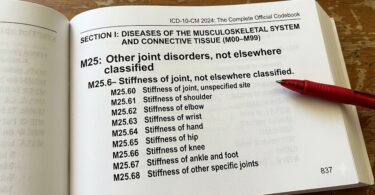
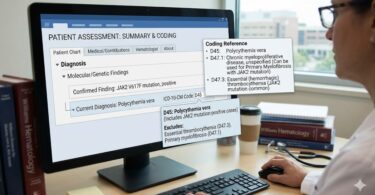
To the uninitiated, it looks like a cryptic, inscrutable language. A jumble of letters and numbers that seems designed to confuse. S42.231A – What could this possibly mean? Is it a product SKU? A license plate number? A password for a secret server?
In reality, this code is one of the most powerful and important phrases in modern healthcare. It is an ICD-10 code, and it translates a complex medical story into a universal, standardized dialect. S42.231A specifically tells a precise story: “Displaced oblique fracture of shaft of right humerus, initial encounter for closed fracture.”
This code, and the hundreds of thousands like it, form the backbone of the global healthcare system. They are the language spoken between doctors and insurance companies, between hospitals and public health researchers, between a nation’s health ministry and the World Health Organization. The process of finding and assigning this code—the ICD-10 code lookup—is therefore not a mere administrative task. It is a critical function that impacts patient care, dictates financial reimbursement, drives public health policy, and fuels medical research.
This ultimate guide is designed to demystify this process. Whether you are a medical student, a new coder, a practicing physician, a healthcare administrator, or simply a curious patient, this article will equip you with a deep understanding of how to navigate the complex world of ICD-10. We will move beyond simple definitions and explore the philosophy behind the system, provide a practical, step-by-step methodology for accurate code lookup, and examine the future of medical classification. Welcome to the language of health.

ICD-10 Code Lookup
Table of Contents
ToggleChapter 1: The Foundation – What is ICD-10 and Why Does It Exist?
Before we can master the lookup process, we must understand what we are looking at and why the system was created.
A Brief History: From Bertillon to the World Health Organization
The desire to classify disease is not new. In the 17th and 18th centuries, individuals like John Graunt attempted to create numerical bills of mortality to track causes of death in London. However, the true precursor to the ICD was the International List of Causes of Death, first introduced by French statistician Jacques Bertillon in 1893.
The system was adopted internationally and revised approximately every decade. In 1948, the newly formed World Health Organization (WHO) took over its maintenance and, critically, expanded its scope to include morbidity (non-fatal diseases and conditions), not just mortality. This was the birth of the International Classification of Diseases as we know it.
The ninth revision (ICD-9) was implemented in the United States in 1979. For its time, it was sufficient, but by the 2000s, its limitations were glaringly obvious. It was running out of codes, its structure was outdated, and it lacked the specificity needed for modern medicine. After years of delay, the US finally adopted the tenth revision, ICD-10, on October 1, 2015. This was not merely an update; it was a monumental leap in healthcare data infrastructure.
The Purpose: Beyond Billing to a Global Health Language
While many associate ICD-10 primarily with medical billing—and indeed, accurate reimbursement is a primary function—its purposes are far more vast and profound:
-
Standardization of Language: It provides a common vocabulary that allows healthcare providers, insurers, and researchers to communicate clearly and unambiguously about diagnoses and procedures.
-
Reimbursement and Revenue Cycle Management: Insurance companies (payers) use ICD-10 codes to determine whether a service or procedure is medically necessary and to justify payment. An incorrect code can lead to claim denials, delays, and significant financial loss for providers.
-
Epidemiology and Public Health: Governments and organizations like the WHO use aggregated ICD-10 data to track disease prevalence, monitor outbreaks (as was crucial with COVID-19), identify emerging health threats, and allocate resources effectively. The data answers questions like: Are diabetes rates rising? Where are trauma centers most needed?
-
Clinical Research: Researchers use coded data to study treatment outcomes, identify patient populations for clinical trials, and analyze the effectiveness of different drugs and procedures on specific conditions.
-
Quality Measurement and Patient Safety: Codes are used to track quality metrics, hospital readmission rates, complications, and patient outcomes. This data helps institutions improve the quality and safety of the care they provide.
ICD-10-CM vs. ICD-10-PCS: Understanding the Critical Difference
This is a crucial distinction for users in the United States.
-
ICD-10-CM (International Classification of Diseases, 10th Revision, Clinical Modification): This is the diagnosis classification system used in all healthcare settings—outpatient clinics, doctor’s offices, inpatient hospitals, etc. It is used to code a patient’s diseases, conditions, symptoms, and reasons for encounter. ICD-10-CM is what this article primarily focuses on.
-
ICD-10-PCS (International Classification of Diseases, 10th Revision, Procedure Coding System): This system is used only in inpatient hospital settings in the US to classify procedures, services, and therapies. It is a completely different, much more complex system with a multi-axis 7-character alphanumeric structure. Outpatient procedures are coded with CPT®/HCPCS Level II codes.
* Key Differences Between ICD-10-CM and ICD-10-PCS*
| Feature | ICD-10-CM (Diagnoses) | ICD-10-PCS (Procedures – Inpatient Only) |
|---|---|---|
| Used For | Diseases, conditions, symptoms, encounters | Hospital procedures, services, therapies |
| Setting | All healthcare settings | Only inpatient hospital settings |
| Number of Codes | ~68,000 | ~78,000 |
| Code Structure | 3-7 characters, alphanumeric | Always 7 characters, alphanumeric |
| First Character | Always a letter (except V, W, X, Y, which can be 1st or 2nd) | Always a letter (specifies section, e.g., Medical/Surgical) |
| Maintained By | CDC (Centers for Disease Control) and NCHS (National Center for Health Statistics) | CMS (Centers for Medicare & Medicaid Services) |
Chapter 2: The Anatomy of an ICD-10-CM Code
Understanding the logic behind the code’s structure is the first step to mastering the lookup process. An ICD-10-CM code can be anywhere from three to seven characters long. Each character adds a layer of specificity.
The Code Structure: Deciphering the Alphanumeric Pattern
Let’s break down the code from the introduction: S42.231A
-
S42: The category. The first three characters indicate the general type of injury or disease.
-
S – Chapter 19: Injury, poisoning and certain other consequences of external causes (Injuries to the shoulder and upper arm)
-
S42 – Injury of shoulder and upper arm
-
-
S42.2: The etiology or anatomic site. The character after the decimal provides more detail.
-
S42.2 – Fracture of shaft of humerus
-
-
S42.23: The anatomic detail. This specifies the exact part of the bone.
-
S42.23 – Fracture of shaft of humerus, oblique
-
-
S42.231: The severity or type. This indicates a specific type of that fracture.
-
S42.231 – Displaced oblique fracture of shaft of humerus
-
-
S42.231A: The 7th character extension. This is a mandatory placeholder that provides information about the encounter.
-
A – Initial encounter for closed fracture
-
The 7th character is one of the most important and commonly missed components of ICD-10-CM coding.
The Importance of the 7th Character: Extending the Narrative
The 7th character extension is required for all codes in certain chapters (e.g., Chapter 19: Injury; Chapter 15: Pregnancy). It provides crucial context about the phase of treatment. The most common extensions are:
-
A: Initial encounter. Use for active treatment (e.g., surgical treatment, emergency department encounter, evaluation and management).
-
D: Subsequent encounter. Use for routine care during the healing or recovery phase (e.g., cast change, removal of external or internal fixation device, medication adjustment).
-
S: Sequela. Use for complications or conditions that arise as a direct result of an injury (e.g., scar tissue, chronic pain, paralysis after the acute injury has healed).
Using the wrong 7th character is a common cause of claim denials, as it misrepresents the type of care being provided.
Chapter 3: The Art and Science of the ICD-10 Code Lookup
The lookup process is a blend of analytical skill, meticulous attention to detail, and clinical knowledge.
When and Why a Lookup is Necessary: The Many Users of ICD-10
The process is not exclusive to professional coders.
-
Medical Coders and Billers: Their primary function is to translate physician documentation into accurate codes for claims submission.
-
Physicians and Providers: They often select codes themselves in Electronic Health Record (EHR) systems for office visits and must ensure their documentation supports the codes chosen.
-
Clinical Documentation Integrity (CDI) Specialists: They review medical records concurrently to ensure provider documentation is specific enough to support the most appropriate codes.
-
Researchers and Public Health Officials: They may look up codes to categorize data or understand the parameters of a specific condition.
-
Patients: Increasingly, patients review their explanation of benefits (EOB) forms and may look up codes to understand what was billed and why.
The Official Tools: ICD-10-CM Code Books and the CDC’s Code Browser
There are two primary ways to perform a lookup:
-
The Traditional Code Book: A physical, published volume updated annually. It contains two main sections:
-
The Alphabetic Index: An A-Z list of terms (diseases, injuries, symptoms, eponyms). This is where you start your lookup, but you never, ever code directly from the Index.
-
The Tabular List: The numerical listing of all codes, organized by chapter. This is where you must always go to verify the code from the Index and apply all official coding conventions and instructions.
-
-
The Digital Tool: The CDC hosts the official ICD-10-CM code browser online, which is free to use. Most professional coders, however, use sophisticated (and expensive) software integrated into their EHR or billing systems. These tools offer search functionality, cross-referencing, and automatic updates, but the underlying principles of the lookup remain the same.
Chapter 4: A Step-by-Step Methodology for Accurate Code Lookup
This is the core of the coder’s craft. Follow these steps religiously to ensure accuracy.
Step 1: Locate the Main Term in the Alphabetic Index
Begin with the physician’s diagnosis. Identify the main term—this is usually the condition or disease itself (e.g., Fracture, Diabetes, Hypertension), but it can sometimes be a noun like “Pain” or “Encounter.” Don’t code from here! The Index is a roadmap to the correct code, not the final destination.
Step 2: Verify the Code in the Tabular List
Once you have a potential code from the Index, immediately turn to (or navigate to) that code in the Tabular List. This is non-negotiable. The Tabular List contains essential instructions that are not present in the Index.
Step 3: Follow All Instructional Notes (A Non-Negotiable Rule)
The Tabular List is filled with instructions. Ignoring them is the fastest way to an incorrect code. Pay attention to:
-
“Use additional code”: Tells you to list another code to identify a related manifestation or cause.
-
“Code first”: Instructs you to sequence the underlying disease code before the manifestation code.
-
“Excludes1” and “Excludes2”: Critical notes that define the boundaries of the code.
-
Excludes1: A “not coded here” note. The two conditions cannot occur together. Do not use the code if the patient has the condition described in the Excludes1 note.
-
Excludes2: A “not included here” note. The condition in the Excludes2 note is not part of the condition represented by the code, but the patient may have both conditions concurrently. You may use both codes if the patient has both conditions.
-
-
“Code also”: Similar to “use additional code,” providing further instruction.
Step 4: Assign the Most Specific Code Possible
ICD-10 is built on specificity. You must code to the highest level of detail documented by the provider. If a code is available with five characters, you cannot use a four-character one. If the documentation says “type 2 diabetes mellitus with diabetic chronic kidney disease,” you must find the combination code that represents that exact clinical picture (E11.22), not just “diabetes” (E11.9).
Step 5: Confirm Medical Necessity
The final check is to ensure the code you’ve selected accurately justifies the service or procedure performed. This links the diagnosis to the CPT procedure code for billing purposes.
Chapter 5: Navigating Common Pitfalls and Challenges
Even with a good methodology, certain areas are notoriously tricky.
Specificity: The Single Greatest Challenge
The transition from ICD-9 to ICD-10 was a 500% increase in codes, largely due to specificity. Coders must now know:
-
Which episode of care? (Initial vs. subsequent)
-
Right, left, or bilateral?
-
What specific type? (e.g., Stable vs. unstable angina; displaced vs. nondisplaced fracture)
-
What is the cause? (e.g., Psoriatic arthritis vs. rheumatoid arthritis)
This requires excellent documentation from providers. The coder can only code what is documented.
Laterality: Right, Left, Bilateral, and Unspecified
Many codes require a character to indicate which side of the body is affected.
-
Right: Often indicated by a “1” (e.g., M25.511 Pain in right shoulder)
-
Left: Often indicated by a “2” (e.g., M25.512 Pain in left shoulder)
-
Bilateral: Some codes have a specific character for bilateral (e.g., H16.33 Keratoconus, bilateral). If no bilateral code exists, you code each side separately.
-
Unspecified: Used only when the documentation does not specify laterality (e.g., M25.519 Pain in unspecified shoulder). Overuse of “unspecified” codes can lead to claim denials or reduced reimbursement.
The “Unspecified” Code: When to Use It and When to Avoid It
“Unspecified” codes are valid and necessary, but they have a specific purpose. They should be used only when:
-
The information in the medical record is insufficient to assign a more specific code.
-
The condition is undiagnosed or unknown.
They should not be used as a default because it’s easier. If the provider’s documentation is specific, the coder is obligated to use the specific code. If a provider documents “asthma,” but the coder knows it’s “mild persistent asthma,” they cannot code the more specific type unless it is documented.
Chapter 6: Real-World Code Lookup Walkthroughs
Let’s apply our methodology to three common scenarios.
Case Study 1: A Routine Office Visit for Diabetes
-
Documentation: “Patient presents for follow-up of type 2 diabetes. He is on metformin. His blood sugar is well-controlled. He also has stage 3 chronic kidney disease, which we are monitoring, and hypertension.”
-
Step 1 (Index): Look up Diabetes, type 2. The index will lead you to a range of codes under E11.-.
-
Step 2 (Tabular): Go to category E11. You see many subcodes.
-
Step 3 (Notes): You see an instructional note: “Use additional code to identify any associated complications.”
-
Step 4 (Specificity): The diabetes is stated to be with CKD. Look for a more specific code. You find E11.22 – Type 2 diabetes mellitus with diabetic chronic kidney disease. This is a combination code.
-
Step 5 (Necessity): This code justifies the management of diabetes. You also need to code the hypertension (I10). The CKD is already included in the combination code E11.22.
-
Final Codes: E11.22 (Type 2 diabetes with diabetic CKD), I10 (Essential hypertension).
Case Study 2: A Hospital Encounter for a Fracture
-
Documentation (ED Note): “Patient slipped on ice and fell onto an outstretched hand. X-ray reveals a closed, comminuted fracture of the distal radius, right wrist. Placed in a splint and referred to ortho.”
-
Step 1 (Index): Look up Fracture, radius, distal. This leads you to S52.5-
-
Step 2 (Tabular): Go to S52.5. You see it requires a 7th character.
-
Step 3 (Notes): Read the Excludes2 notes to ensure this is the right category.
-
Step 4 (Specificity): The documentation is specific: comminuted, distal, right. The code is S52.531A – Displaced comminuted fracture of shaft of radius, right arm, initial encounter for closed fracture.
-
Step 5 (Necessity): The 7th character ‘A’ correctly identifies this as an initial encounter for active treatment.
-
Final Code: S52.531A
Case Study 3: A Complex Scenario with Multiple Conditions
-
Documentation: “Patient with known COPD, admitted for acute bronchitis, likely infectious. She is also being treated for sepsis due to a UTI.”
-
Step 1-4: This requires multiple lookups.
-
Sepsis: The underlying cause is a UTI. You must code first the systemic infection (Sepsis – A41.9), then the localized infection (UTI – N39.0). You also need a code for the acute bronchitis (J20.9).
-
COPD: This is a chronic condition that is being treated and is relevant to the current admission (J44.9).
-
-
Final Codes: A41.9 (Sepsis, unspecified organism), N39.0 (Urinary tract infection, site not specified), J20.9 (Acute bronchitis, unspecified), J44.9 (COPD, unspecified). Note: A coder would seek more specific documentation for the organisms involved if possible.
Chapter 7: The Future of Coding: ICD-11 and the Role of AI
The world of medical classification does not stand still.
A Glimpse at ICD-11: What’s Changing?
The WHO released ICD-11 in 2018, and it came into effect in January 2022. The US is years away from adoption, but it’s on the horizon. Key changes include:
-
A Fully Digital Structure: It is designed for use in an electronic environment with APIs and linking to other terminologies.
-
Enhanced Detail: New chapters on traditional medicine and sexual health.
-
A New Coding Structure: Moves to a stem-code system that allows for more flexible clustering of information.
Artificial Intelligence and Machine Learning in Code Lookup
AI is already transforming the field:
-
Computer-Assisted Coding (CAC): Software scans clinical documentation (notes, reports) and suggests potential codes for the human coder to review and validate. This improves efficiency but does not replace the coder’s critical thinking.
-
Natural Language Processing (NLP): Advanced systems can understand the context and meaning within unstructured physician notes, improving the accuracy of CAC suggestions.
-
Automated Auditing: AI can analyze vast datasets of claims to predict denials and identify patterns of coding errors.
The Enduring Role of the Human Coder
Despite these advances, the human coder remains irreplaceable. AI can suggest codes, but it cannot:
-
Interpret ambiguous documentation.
-
Apply clinical judgment.
-
Interact with providers to clarify documentation (a key CDI function).
-
Understand the intricate rules and conventions that govern the coding guidelines.
The future coder will be less of a data-entry clerk and more of a data analyst, auditor, and consultant, working alongside AI tools to ensure the highest degree of accuracy and integrity in healthcare data.
Conclusion: Empowering Precision in Healthcare
The ICD-10 code lookup is a critical bridge between clinical care and the administrative and analytical functions of medicine. Mastering its principles ensures accurate reimbursement, fuels vital public health research, and ultimately contributes to a data-driven healthcare system where every code tells a patient’s story with precision and clarity. By embracing a meticulous, rule-based methodology and understanding the profound purpose behind each alphanumeric character, we empower a more efficient, effective, and intelligent future for healthcare.
Frequently Asked Questions (FAQs)
1. Can I just use a free online code lookup tool and trust the result?
While free tools like the CDC’s browser are accurate for code definitions, they lack the clinical logic and cross-referencing of professional-grade software. Most importantly, they do not absolve the user from the responsibility of following all instructional notes in the Tabular List. For professional use, they are a starting point, not a final authority.
2. What happens if I use the wrong ICD-10 code?
The consequences can be severe. For providers, it can lead to claim denials, delayed payments, audits, and allegations of fraud (if the error is systematic and results in overpayment). For researchers, it corrupts data. For public health officials, it can lead to misallocated resources.
3. How often are ICD-10 codes updated?
The ICD-10-CM code set is updated annually by the CDC and NCHS. The changes take effect every October 1st. It is mandatory for providers and coders to use the most current version of the code set. Updates can include new codes, revised codes, and deleted codes.
4. As a patient, how can I find out what my ICD-10 codes mean?
You can ask your provider’s office for a copy of your superbill or claim form, which will list the codes they submitted. You can then look up the codes using the CDC’s free online browser or other reputable medical websites. If a code seems incorrect, discuss it with your provider.
5. What is the biggest mistake beginners make when looking up codes?
The most common and critical mistake is coding directly from the Alphabetic Index. The Index is a guide that often provides incomplete or non-specific codes. Failing to go to the Tabular List to verify the code, read the includes/excludes notes, and apply the mandatory 7th character will almost always result in an error.
Additional Resources
-
CDC ICD-10-CM Official Guidelines for Coding and Reporting: https://www.cdc.gov/nchs/icd/icd-10-cm.htm – The absolute essential rulebook for coding.
-
CMS ICD-10 Provider Resources: https://www.cms.gov/medicare/coding-billing/icd-10-codes – Information and resources from the Centers for Medicare & Medicaid Services.
-
American Health Information Management Association (AHIMA): https://www.ahima.org/ – The premier association for health information management professionals, offering education, certifications, and resources.
-
American Academy of Professional Coders (AAPC): https://www.aapc.com/ – The leading organization for medical coding professionals, offering certifications, training, and local chapters.
-
World Health Organization (WHO) ICD-11 Website: https://icd.who.int/ – Explore the future of disease classification.
Date: September 17, 2025
Disclaimer: The information contained in this article is for educational and informational purposes only and is not intended as medical advice, diagnosis, or treatment. Always seek the advice of your physician or other qualified health provider with any questions you may have regarding a medical condition or code assignment. The author and publisher are not responsible for errors or omissions or for any consequences from application of the information in this article.