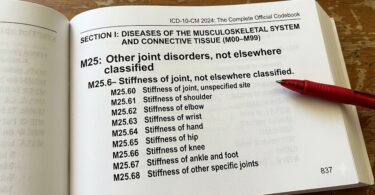
An ankle sprain is often dismissed as a simple, mundane injury—a misstep off a curb, an awkward landing in a pickup basketball game, a stumble on an uneven sidewalk. It’s an injury so common that it rarely commands the same respect or concern as a fracture or a rupture. However, for medical coders, healthcare providers, billers, and the patients themselves, an ankle sprain is anything but simple. It represents a complex diagnostic and coding challenge that sits at the intersection of clinical medicine, administrative precision, and financial reimbursement. The International Classification of Diseases, Tenth Revision, Clinical Modification (ICD-10-CM) system, with its granular specificity, has transformed how we classify this seemingly straightforward injury. A generic “ankle sprain” code no longer exists. Instead, coders must navigate a detailed hierarchy that demands precise anatomical and laterality specificity. This article serves as an exhaustive guide to mastering ICD-10 codes for ankle sprains. We will dissect the relevant code family, explore the essential anatomical knowledge required for accuracy, illuminate the critical documentation needed from providers, and highlight common pitfalls that can lead to claim denials, compliance issues, and an inaccurate portrayal of patient health. Understanding this topic is not merely an academic exercise; it is a fundamental component of efficient revenue cycle management, quality patient care, and robust data analytics.

ICD-10 Codes for Ankle Sprains
2. The Critical Role of Precise Medical Coding
Before delving into the specific codes for ankle sprains, it is vital to understand the profound importance of accurate medical coding. It is the linchpin of the modern healthcare ecosystem, serving multiple critical functions far beyond mere billing.
-
Financial Reimbursement: This is the most direct application. Codes determine the diagnosis-related group (DRG) for inpatients and the level of service justification for outpatients. An inaccurate or insufficiently specific code can lead to claim denials, underpayments, or delays in reimbursement, directly impacting a healthcare organization’s financial stability.
-
Patient Care and Outcomes: Accurate coding creates a precise and longitudinal record of a patient’s health history. This information is crucial for future treatment decisions. Knowing that a patient had a severe “high ankle sprain” (syndesmotic) years prior is clinically very different from knowing they had a mild lateral sprain. This data informs a provider’s approach to rehabilitation, prevention of re-injury, and management of chronic instability.
-
Population Health and Research: Aggregated coded data is the bedrock of epidemiological research, public health tracking, and health outcomes analysis. Researchers use this data to identify injury trends, assess the effectiveness of different treatment protocols, and allocate public health resources. Inaccurate coding corrupts this data, leading to flawed conclusions and ineffective health policies.
-
Regulatory Compliance and Audits: Healthcare providers are subject to rigorous audits from both government payers (like Medicare and Medicaid) and private insurers. Using incorrect codes can be construed as fraud or abuse, resulting in significant financial penalties, legal repercussions, and damage to an institution’s reputation.
In the context of an ankle sprain, selecting S93.401A (Unspecified sprain of right ankle, initial encounter) when the provider’s note clearly describes a lateral ligament tear is a failure on all these fronts. It provides a poor picture for care, weakens research data, and increases the risk of an audit finding.
3. Anatomical Primer: The Complex Architecture of the Ankle Joint
To code ankle sprains correctly, one must first understand what is being injured. The ankle is a sophisticated mechanical structure, not a simple hinge. Its stability comes from the intricate interplay of bones and ligaments.
The Bony Architecture:
-
Tibia: The main shin bone; its distal end forms the medial malleolus (the inside bump of the ankle).
-
Fibula: The smaller, parallel bone to the tibia; its distal end forms the lateral malleolus (the outside bump of the ankle).
-
Talus: The critical “keystone” bone that sits between the tibia and fibula above and the calcaneus (heel bone) below. The tibia and fibula form a socket (mortise) into which the talus fits.
The Ligamentous Structures (The Keys to Coding):
Ligaments are strong, fibrous tissues that connect bone to bone. The specific ligament injured defines the ICD-10 code.
-
Lateral Ligament Complex: Most commonly injured (85-90% of sprains). Includes three ligaments:
-
Anterior Talofibular Ligament (ATFL): The most frequently sprained ligament.
-
Calcaneofibular Ligament (CFL): Often involved in more severe sprains.
-
Posterior Talofibular Ligament (PTFL): Rarely injured in isolation.
-
-
Medial Ligament Complex (Deltoid Ligament): A strong, fan-shaped ligament complex on the inside of the ankle. Sprains here are less common and often associated with fractures.
-
Syndesmotic Ligament Complex: A series of ligaments (e.g., anterior inferior tibiofibular ligament – AITFL) that hold the tibia and fibula together at their distal ends. An injury here is called a “high ankle sprain” and is often more severe and takes longer to heal than a lateral sprain.
This anatomical knowledge is non-negotiable for a coder. You must be able to read a provider’s note and translate terms like “ATFL tear,” “inversion injury,” or “syndesmosis sprain” into the correct ICD-10 code.
4. Demystifying the ICD-10-CM Code Set: Structure and Logic
The ICD-10-CM system is organized hierarchically, moving from general to specific. Understanding this structure is key to finding the right code.
-
Chapter: Injuries, poisoning and certain other consequences of external causes (S00-T88)
-
Block: Injuries to the knee and lower leg (S80-S99)
-
Category: S93 – Dislocation, sprain and strain of joints and ligaments at ankle, foot and toe level.
-
S93.4 – Sprain of ligament of ankle
-
S93.41 – Sprain of lateral ligament of ankle
-
S93.42 – Sprain of medial ligament of ankle
-
S93.43 – Sprain of syndesmosis of ankle
-
The code requires a 7th character extension to define the encounter type (e.g., A for initial, D for subsequent). We will explore this in detail next.
5. The Ankle Sprain Code Family: A Deep Dive into S93.4-
The entire classification for ankle sprains falls under category S93.4. The fourth, fifth, and sixth digits provide the necessary specificity.
S93.4 – Sprain of ligament of ankle
This parent code includes avulsions, lacerations, sprains, tears, traumatic hemarthrosis, ruptures, and stretches of the ligaments of the ankle joint. It excludes strain of muscle and tendon of ankle and foot (S96.-).
The codes break down as follows:
-
S93.40 – Unspecified sprain of ankle
-
S93.401 – Unspecified sprain of right ankle
-
S93.402 – Unspecified sprain of left ankle
-
S93.409 – Unspecified sprain of unspecified ankle
-
Use Case: This is a “default” code and should be used sparingly. It is only appropriate when the physician’s documentation is truly non-specific and does not identify the injured ligament complex (lateral, medial, or syndesmotic) or if the specific ligament is not documented.
-
-
S93.41 – Sprain of lateral ligament of ankle
-
S93.411 – Sprain of lateral ligament of right ankle
-
S93.412 – Sprain of lateral ligament of left ankle
-
S93.419 – Sprain of lateral ligament of unspecified ankle
-
Use Case: This is for classic “inversion” sprains involving the ATFL, CFL, and/or PTFL. Documentation keywords: “inversion injury,” “rolled ankle outward,” “ATFL sprain/tear,” “lateral ankle sprain.”
-
-
S93.42 – Sprain of medial ligament of ankle
-
S93.421 – Sprain of medial ligament of right ankle
-
S93.422 – Sprain of medial ligament of left ankle
-
S93.429 – Sprain of medial ligament of unspecified ankle
-
Use Case: This is for “eversion” sprains involving the deltoid ligament. Documentation keywords: “eversion injury,” “deltoid ligament sprain/tear,” “medial ankle sprain.”
-
-
S93.43 – Sprain of syndesmosis of ankle
-
S93.431 – Sprain of syndesmosis of right ankle
-
S93.432 – Sprain of syndesmosis of left ankle
-
S93.439 – Sprain of syndesmosis of unspecified ankle
-
Use Case: This is for “high ankle sprains.” Documentation is key here. Keywords: “high ankle sprain,” “syndesmotic sprain,” “injury to the tibiofibular syndesmosis,” “AITFL tear.” This injury is frequently associated with fractures.
-
6. The Foundation: Understanding the 7th Character Extension
ICD-10-CM requires a 7th character for all codes in the S93.4- category. This character provides crucial information about the stage of patient care. The choice is not arbitrary and must reflect the encounter’s purpose as documented by the provider.
-
A – Initial encounter: Use this for the first time the patient is receiving active treatment for the ankle sprain. This applies to emergency department visits, initial office evaluations, and even the encounter where a decision for surgery is made. “Active treatment” can include diagnosis, setting a treatment plan, performing surgery, or other therapeutic interventions.
-
D – Subsequent encounter: Use this for all follow-up visits after the active phase of treatment is complete. This includes routine healing, receiving physical therapy, cast change or removal, and other aftercare. The patient is in the recovery and healing phase.
-
S – Sequela: Use this for encounters related to a late effect or complication of the initial sprain, where the condition itself is no longer present. Examples include chronic ankle instability, persistent pain, or arthritis that is a direct result of the old sprain. The current problem is a consequence of the past injury.
Example: A patient sees their PCP for a new right ankle sprain. The coder uses S93.411A (initial encounter). The patient returns one week later for a re-check and to begin physical therapy. The coder uses S93.411D (subsequent encounter). Two years later, the patient needs surgery for chronic ankle instability stemming from that original sprain. The coder uses S93.411S (sequela).
7. Lateral Ankle Sprains: The Inversion Injury (S93.41-)
As the most common type, lateral ankle sprains deserve special attention. The mechanism of injury is typically an inversion or plantar flexion-inversion motion, where the sole of the foot turns inward, placing excessive stress on the lateral ligaments.
Clinical Grading (Important for Documentation):
-
Grade I (Mild): Microscopic tearing of the ATFL fibers. Mild tenderness, slight swelling, minimal functional loss, no instability.
-
Grade II (Moderate): A partial macroscopic tear of the ATFL, often involving the CFL. Moderate pain, swelling, bruising, some loss of motion and function, mild to moderate instability.
-
Grade III (Severe): A complete rupture of the ATFL and CFL (and possibly PTFL). Severe pain, significant swelling and bruising, substantial functional loss and mechanical instability.
Coding Implications: While ICD-10-CM does not have unique codes for different grades of sprains, the severity is critical for selecting the correct CPT procedure code (e.g., strapping vs. casting vs. surgery) and for justifying the level of medical decision-making. The provider’s note should always indicate the grade or severity.
8. Medial Ankle Sprains: The Eversion Injury (S93.42-)
Medial sprains are far less common due to the inherent strength of the deltoid ligament complex. The injury mechanism is eversion, where the sole of the foot is forced outward. The deltoid ligament is so strong that an eversion force often results in an avulsion fracture (where the ligament pulls a piece of bone off) rather than a pure ligamentous sprain. Coders must be vigilant to ensure the provider has ruled out a fracture (which would be coded from Chapter 19, not S93.42-) before using this code.
9. Syndesmotic Sprains: The High Ankle Sprain (S93.43-)
This is a distinct and often more debilitating injury. It involves the ligaments connecting the tibia and fibula just above the ankle joint. The mechanism is often a hyper-dorsiflexion with external rotation of the foot (e.g., a football player being tackled on the outside of their planted foot).
Key Differentiators:
-
Pain Location: Pain is specifically above the ankle joint, between the tibia and fibula, rather than below the malleoli.
-
Special Tests: Physicians will perform tests like the “squeeze test” (compressing the fibula to tibia mid-calf causes distal pain) and the “external rotation test.”
-
Healing Time: Can take twice as long or more to heal compared to a standard lateral sprain.
Accurate coding with S93.43- is critical as it directly impacts expected treatment timelines, physical therapy protocols, and, from a reimbursement perspective, the medical necessity for more advanced imaging (like MRI) and longer periods of care.
10. Documenting for Specificity: The Physician’s Crucial Role
The coder’s ability to be specific is entirely dependent on the physician’s documentation. Vague notes lead to unspecified codes, which can hinder patient care and reimbursement. Physicians should be educated to document the following elements clearly:
-
Laterality: Always specify right, left, or bilateral.
-
Specific Ligament/Complex: Use precise anatomical terms: “lateral ligament complex,” “ATFL,” “deltoid ligament,” “syndesmosis.”
-
Injury Type: “Sprain,” “tear,” “complete rupture,” “partial tear.”
-
Severity/Grade: Grade I, II, or III.
-
Mechanism of Injury: “Inversion,” “eversion,” “plantar flexion,” “dorsiflexion with external rotation.”
-
Encounter Type: The medical decision-making should make it clear if this is an initial evaluation, a follow-up, or care for a sequela.
A note that says “ankle sprain” will result in an S93.40- code. A note that says “Grade II sprain of the anterior talofibular ligament on the right ankle due to inversion injury” allows for the precise code S93.411A.
11. Common Pitfalls and Coding Errors to Avoid
-
Using Unspecified Codes by Default: This is the most common error. Always query the provider for more specificity if the documentation is lacking.
-
Confusing Sprains and Strains: Remember, S93.4- is for ligaments. Injuries to muscles or tendons around the ankle are coded from category S96.- (Injury of muscle and tendon at ankle and foot level).
-
Miscoding Associated Fractures: If a fracture is present (e.g., an avulsion fracture or a fibula fracture), it typically takes coding precedence over the sprain. The sprain may not be coded separately unless it is addressed and treated independently of the fracture care. The fracture codes are found in Chapter 19 (S82.- for fractures of lower leg, including ankle).
-
Incorrect 7th Character: Using “A” for a follow-up physical therapy session or “D” for a brand-new injury. This is a frequent audit target.
-
Overlooking External Cause Codes: While not part of the diagnosis code itself, Chapter 20 of ICD-10-CM provides External Cause codes (X-codes) to describe how the injury occurred (e.g., W03.XXXA – Fall on same level from slipping, tripping, and stumbling, initial encounter). These are crucial for data tracking and are often required for complete billing.
12. The Clinical Picture: Diagnosis, Grading, and Treatment
Understanding the clinical workflow helps coders understand the documentation they see.
-
Diagnosis: Relies on history (mechanism of injury), physical exam (palpation for tenderness, assessing range of motion, and stability tests like the anterior drawer test for the ATFL), and imaging. X-rays are used to rule out fractures. MRI or ultrasound may be used for severe sprains or to evaluate the extent of ligament damage.
-
Treatment:
-
Grade I/II: RICE protocol (Rest, Ice, Compression, Elevation), functional support with braces or tape, physical therapy.
-
Grade III: Often requires a walking boot or short-leg cast for immobilization. Physical therapy is essential. Surgery is sometimes considered for high-performance athletes or cases of persistent instability that fails conservative management.
-
13. Linking Diagnosis to Procedure: The CPT Code Connection
The precise ICD-10 code justifies the medical necessity of the procedure code (CPT) used. For example:
| ICD-10-CM Code (Diagnosis) | CPT Code (Procedure) | Rationale for Linkage |
|---|---|---|
| S93.411A (Rt lat lig sprain, init) | 29540 (Strapping; ankle) | A Grade I sprain may be treated with supportive strapping. |
| S93.411A (Rt lat lig sprain, init) | 97161 (PT eval: low complexity) | The sprain justifies the need for physical therapy evaluation. |
| S93.431D (Rt syndesmosis sprain, subseq) | 97760 (Orthotic management) | A severe high ankle sprain may require a custom ankle orthotic. |
| S93.411S (Rt lat lig sprain, sequela) | 27695 (Ligament reconstruction, ankle) | Chronic instability (a sequela) justifies surgical reconstruction. |
14. Conclusion: Precision for Patient Care and Financial Health
Mastering ICD-10 coding for ankle sprains transcends mere administrative duty. It demands a foundational understanding of ankle anatomy and injury mechanics to correctly interpret clinical documentation. The system’s granularity, from specifying the injured ligament complex to defining the encounter stage, is a powerful tool for ensuring accurate reimbursement, supporting quality patient care through detailed record-keeping, and contributing to valuable public health data. Ultimately, the collaboration between precise clinical documentation and meticulous coding is what ensures the financial and clinical health of both the patient and the healthcare provider.
15. Frequently Asked Questions (FAQs)
Q1: What is the default ICD-10 code for an ankle sprain if the physician doesn’t specify the type?
A: The default code is from the S93.40- category (e.g., S93.401A for an unspecified sprain of the right ankle, initial encounter). However, best practice is to query the provider for more specific documentation before resorting to an unspecified code.
Q2: How do I code a bilateral ankle sprain?
A: ICD-10-CM does not have a single code for bilateral ankle sprains. You must code each injury separately. If both ankles have the same type of sprain (e.g., lateral), you would assign both S93.411A (right) and S93.412A (left).
Q3: What is the difference between a sprain (S93.4-) and a strain (S96.-)?
A: A sprain is an injury to a ligament (bone-to-bone connective tissue). A strain is an injury to a muscle or tendon (muscle-to-bone connective tissue). They are coded in different categories.
Q4: When should I use the 7th character ‘S’ for sequela?
A: Use ‘S’ when the patient is being treated for a long-term consequence of the healed sprain, not the acute injury itself. The most common example is chronic ankle instability requiring surgical reconstruction. The current problem is the instability, not the original tear.
Q5: Are external cause codes required for ankle sprains?
A: While not always mandatory for reimbursement, they are highly recommended for complete and accurate data reporting. They provide valuable information about how the injury occurred (e.g., during sports, in a fall, in a traffic accident).
16. Additional Resources
For the most accurate and up-to-date information, always consult these primary sources:
-
The Official ICD-10-CM Guidelines: https://www.cms.gov/medicare/icd-10/2025-icd-10-cm (Check for the current year’s version)
-
The CDC’s ICD-10-CM Browser Tool: https://www.cdc.gov/nchs/icd/icd-10-cm.htm
-
American Academy of Professional Coders (AAPC): https://www.aapc.com/ (Provides education, certifications, and resources for medical coders).
-
American Health Information Management Association (AHIMA): https://www.ahima.org/ (Another premier association for health information management professionals).
Date: September 18, 2025
Author: The MedCodex Team
Disclaimer: This article is intended for informational and educational purposes only. It is not a substitute for professional medical coding advice, clinical guidance, or medical treatment. Always consult the most current, official ICD-10-CM coding guidelines, code sets, and your facility’s compliance officer for accurate coding. Medical coding is complex and subject to change.