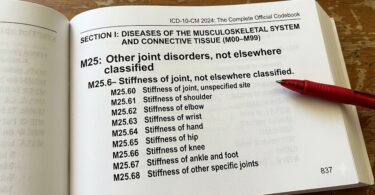
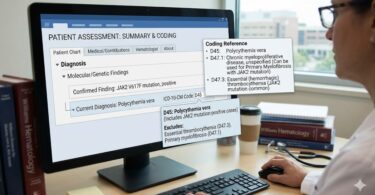
In the intricate ecosystem of modern healthcare, two seemingly disparate fields—clinical medicine and medical coding—are inextricably linked. Nowhere is this connection more critical, and more complex, than in the coding of severe infections. Bacteremia, the presence of bacteria in the bloodstream, represents a life-threatening condition that demands rapid diagnosis, aggressive treatment, and precise documentation. For the medical coder, translating this high-stakes clinical scenario into the alphanumeric language of the International Classification of Diseases, Tenth Revision, Clinical Modification (ICD-10-CM) is a task of immense responsibility.
The accuracy of a bacteremia code is far more than an administrative formality. It is the linchpin that connects patient care to the financial and analytical engines of the healthcare system. An accurately coded case of bacteremia ensures appropriate reimbursement for the intensive resources required for treatment—lengthy hospital stays, powerful intravenous antibiotics, and sophisticated laboratory testing. Perhaps even more importantly, it contributes to vital public health data. These codes are aggregated to track infection rates, identify emerging resistant pathogens, evaluate the effectiveness of treatments, and inform public health policies aimed at combating sepsis and other bloodstream infections.
This article serves as a definitive guide to navigating the nuanced and often challenging world of ICD-10 codes for bacteremia. We will move beyond simple code assignment and delve into the clinical context that gives each code its meaning. We will explore the structure of the ICD-10-CM manual, master the coding of both unspecified and specifically identified pathogens, tackle the complexities of Present-on-Admission indicators, and emphasize the paramount importance of clinical documentation. Through detailed case studies and a forward-looking perspective, this guide aims to empower coders, auditors, students, and healthcare providers with the knowledge to ensure accuracy, compliance, and ultimately, a true reflection of the patient’s story within the medical record.
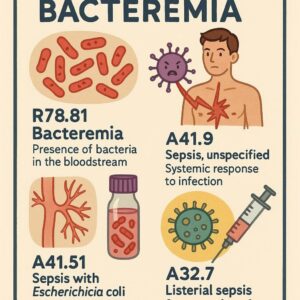
ICD-10 Codes for Bacteremia
Table of Contents
Toggle2. Understanding Bacteremia: A Clinical Primer for the Coder
To code a condition effectively, one must first understand it. For medical coders, a foundational grasp of bacteremia’s clinical aspects is not just beneficial—it is essential for making informed coding decisions and querying providers when documentation is unclear.
What is Bacteremia?
At its simplest, bacteremia is the presence of viable bacteria in the bloodstream. It can be a transient, asymptomatic event (e.g., after brushing teeth or a dental procedure) that the immune system quickly clears. However, when bacteria proliferate in the blood, it can trigger a catastrophic systemic inflammatory response.
From Bacteremia to Sepsis and Septic Shock: A Clinical Continuum
This is where coding terminology and clinical terminology must be perfectly aligned. The modern clinical definitions, as per the Third International Consensus Definitions for Sepsis and Septic Shock (Sepsis-3), are as follows:
-
Bacteremia (or Fungemia): A laboratory finding. It is the detection of bacteria (or fungi) in the blood via a positive blood culture. A patient can have bacteremia without having sepsis (e.g., a temporary, low-grade bacteremia).
-
Sepsis: A life-threatening condition. It is defined as a dysregulated host response to infection leading to organ dysfunction. Clinically, this is identified by an increase of 2 or more points in the SOFA (Sequential Organ Failure Assessment) score. A quick, bedside version is qSOFA (quick SOFA), which looks for altered mental status, low systolic blood pressure (≤100 mm Hg), and high respiratory rate (≥22/min).
-
Septic Shock: A subset of sepsis. It is defined as persisting hypotension requiring vasopressor medications to maintain a mean arterial pressure (MAP) of 65 mm Hg or higher, and a serum lactate level greater than 2 mmol/L (>18 mg/dL) despite adequate fluid resuscitation. This carries a significantly higher mortality rate.
How is Bacteremia Diagnosed?
The gold standard for diagnosis is the blood culture. Typically, two or more sets of cultures are drawn from different venipuncture sites to confirm the presence of a true pathogen and help rule out skin contaminants. Once a culture is positive, microbiological techniques are used to identify the specific genus and species of the bacteria (e.g., Staphylococcus aureus) and to perform antibiotic susceptibility testing (AST) to determine which antibiotics will be effective.
Common Sources of Bacteremia:
Bacteria don’t spontaneously appear in the blood. They originate from a primary source of infection. Common sources include:
-
Pneumonia (lung infection)
-
Urinary Tract Infections (UTI)
-
Intra-abdominal infections (e.g., appendicitis, diverticulitis)
-
Skin and Soft Tissue infections (e.g., cellulitis, infected wounds)
-
Central Venous Catheters (line-associated bloodstream infections)
-
Bone and Joint infections (osteomyelitis, septic arthritis)
Understanding this pathway is crucial for coding, as the coder will often need to code both the bacteremia/sepsis and the underlying infection that caused it.
3. The Foundation: Navigating the ICD-10-CM Manual Structure
The ICD-10-CM manual is organized with a logical, if sometimes complex, hierarchy. For infectious and parasitic diseases, the primary section is Chapter 1: Certain Infectious and Parasitic Diseases (A00-B99).
Within this chapter, codes for bacterial infections are primarily found in blocks A30-A49: Other bacterial diseases. This is the home for the codes we will be focusing on most intently.
Key Coding Guidelines for Sepsis and Bacteremia:
The official ICD-10-CM Coding Guidelines provide specific instructions that must be followed. The most critical guidelines from Section I.C.1.d. are:
-
Coding of Sepsis and Severe Sepsis: The coding of sepsis requires a minimum of two codes:
-
a code from category A40 or A41 to identify the systemic infection (e.g., A41.9 Sepsis, unspecified organism).
-
a code from subcategory R65.2- (Severe sepsis) to identify the associated acute organ dysfunction. *Note: As of the Sepsis-3 definitions, the term “severe sepsis” is now redundant and simply referred to as “sepsis.” However, the ICD-10-CM coding structure still uses the R65.2- codes to represent the organ dysfunction component.*
-
-
Infections with Sepsis: If the reason for admission is both the underlying infection (e.g., pneumonia) and sepsis, the underlying infection should be sequenced first, followed by the appropriate sepsis code (A40.-, A41.-). The R65.2- code is added as an additional code.
-
Positive Blood Culture without Sepsis: If a blood culture is positive for an organism but the patient does not meet clinical criteria for sepsis, this is not coded as sepsis. It may be coded as a positive finding (R78.81, Bacteremia) or as the specific infection related to the organism, if applicable. This is a critical distinction.
-
Sepsis and Septic Shock: Septic shock is not coded separately from sepsis. The code for sepsis (A41.9, etc.) includes septic shock. An additional code from R65.21 may be used to identify the organ dysfunction present in septic shock.
-
Present-on-Admission (POA): As we will discuss in detail later, all codes for sepsis and the underlying infection must be reported with the correct POA indicator.
4. The Cornerstone Code: A41.9 – Sepsis, unspecified organism
A41.9 – Sepsis, unspecified organism is one of the most commonly used, and often misused, codes in the ICD-10-CM system. Understanding its proper application is fundamental.
When to Use A41.9:
This code is used when a physician has documented a diagnosis of “sepsis” or “septicemia” but has not yet identified the specific causative organism OR has chosen not to specify it in their diagnostic statement. This is typical in the first 24-48 hours of a hospital admission, while blood culture results are still pending.
Clinical Scenario: A patient presents to the ER with fever, tachycardia, tachypnea, and confusion. The physician’s assessment is “Urosepsis with acute encephalopathy and hypotension.” The urine culture is cloudy and pending, and blood cultures have been drawn but are not yet positive. In this scenario, before the cultures return, the coder would use:
-
N39.0 – Urinary tract infection, site not specified (first, as the underlying infection)
-
A41.9 – Sepsis, unspecified organism
-
R65.20 – Severe sepsis without septic shock (to capture the organ dysfunction – encephalopathy)
-
(Plus codes for encephalopathy and hypotension, if required)
When NOT to Use A41.9:
Once a specific organism is identified and documented by the physician (e.g., “E. coli sepsis,” “Sepsis due to MRSA”), the coder must abandon A41.9 and use a more specific code from categories A40 or A41. Using A41.9 when a more specific code is available is inaccurate and can impact reimbursement and data tracking.
5. Specificity is King: Coding for Identified Pathogens (A40.-, A41.-)
When the causative organism is identified, coding moves to a higher level of specificity. The codes are divided based on the type of bacteria.
Category A40 – Streptococcal sepsis: This category is for sepsis caused by various streptococci.
-
A40.0 – Sepsis due to streptococcus, group A
-
A40.1 – Sepsis due to streptococcus, group B
-
A40.3 – Sepsis due to Streptococcus pneumoniae
-
A40.8 – Other streptococcal sepsis
-
A40.9 – Streptococcal sepsis, unspecified
Category A41 – Other sepsis: This is a larger category for all other bacterial sepsis.
-
A41.0 – Sepsis due to Staphylococcus aureus
-
A41.1 – Sepsis due to other specified staphylococcus
-
A41.2 – Sepsis due to unspecified staphylococcus
-
A41.3 – Sepsis due to Haemophilus influenzae
-
A41.4 – Sepsis due to anaerobes
-
A41.5 – Sepsis due to other Gram-negative organisms
-
A41.50 – Gram-negative sepsis, unspecified
-
A41.51 – Sepsis due to Escherichia coli [E. coli]
-
A41.52 – Sepsis due to Pseudomonas
-
A41.53 – Sepsis due to Serratia
-
A41.59 – Sepsis due to other Gram-negative organisms
-
A41.81 – Sepsis due to Enterococcus
-
A41.89 – Other specified sepsis
-
A41.9 – Sepsis, unspecified organism
The following table provides a quick-reference guide to common pathogens and their corresponding ICD-10-CM codes.
| Causative Organism | Common Scenario | ICD-10-CM Code | Notes |
|---|---|---|---|
| Not yet identified | Sepsis with pending cultures | A41.9 | Used only until organism is known. |
| Escherichia coli (E. coli) | Often associated with UTI or GI source | A41.51 | One of the most common causes of gram-negative sepsis. |
| Pseudomonas aeruginosa | Common in hospital-acquired infections, CF patients, burns | A41.52 | Notoriously antibiotic-resistant. |
| Staphylococcus aureus | Can be from skin infection, IV drug use, endocarditis | A41.01 or A41.02 | Crucial distinction: A41.01 for Methicillin-susceptible (MSSA), A41.02 for Methicillin-resistant (MRSA). |
| Streptococcus pneumoniae | Common cause of community-acquired pneumonia with bacteremia | A40.3 | |
| Enterococcus | Can be associated with abdominal sources or endocarditis | A41.81 | Further speciated as faecalis or faecium (VRE is a resistant strain). |
| Anaerobic bacteria | Often from abdominal or pelvic sources (e.g., Bacteroides) | A41.4 | |
| Candida species | Fungemia, not bacteremia. In immunocompromised patients or on broad-spectrum antibiotics. | B37.7 | Candidal sepsis. Remember, this is in Chapter 1, but not in A41. |
* Common Bacteremia Pathogens and Corresponding ICD-10-CM Codes*
6. The Gram-Negative Challenge: Coding for E. coli, Pseudomonas, and More
Gram-negative bacteria are a frequent cause of serious healthcare-associated infections and community-onset sepsis. Their coding requires careful attention.
A41.51 – Sepsis due to Escherichia coli [E. coli]
E. coli is a leading cause of sepsis, often originating from a urinary tract infection or an intra-abdominal source like a perforated diverticulum. The code is straightforward: when the physician documents “E. coli sepsis” or “Sepsis due to E. coli,” A41.51 is assigned. It is essential to code the underlying infection as well (e.g., N39.0 for UTI, K57.32 for diverticulitis with perforation).
A41.52 – Sepsis due to Pseudomonas
Pseudomonas aeruginosa is an opportunistic pathogen known for its resistance to many antibiotics. It is a common cause of ventilator-associated pneumonia, infections in burn wounds, and catheter-associated UTIs. When these infections lead to bacteremia and sepsis, code A41.52 is used. Documentation must specify Pseudomonas; it cannot be assumed from a source like pneumonia.
A41.59 – Sepsis due to other Gram-negative organisms
This code is a catch-all for other identified Gram-negative rods that do not have their own specific code. This includes organisms like:
-
Klebsiella pneumoniae
-
Proteus mirabilis
-
Enterobacter cloacae
-
Acinetobacter baumannii
-
Serratia marcescens (Note: A41.53 is specifically for Serratia, so A41.59 would not be used for this organism.)
Coding Tip: If the lab report identifies Klebsiella pneumoniae and the physician documents “sepsis due to Klebsiella,” the correct code is A41.59. The coder should never “upspecify” to a more general code like A41.50 if the organism is known.
7. The Gram-Positive Spectrum: From Staphylococcus to Streptococcus
Gram-positive bacteria are another major class of pathogens causing bacteremia.
The Critical Distinction: A41.01 vs. A41.02 (MSSA vs. MRSA)
This is one of the most important specificity distinctions in all of infectious disease coding.
-
A41.01 – Sepsis due to Methicillin susceptible Staphylococcus aureus: Used for sepsis caused by a strain of Staph aureus that is susceptible to methicillin and similar antibiotics.
-
A41.02 – Sepsis due to Methicillin resistant Staphylococcus aureus: Used for sepsis caused by the resistant MRSA strain.
Why it matters: MRSA infections are associated with worse patient outcomes, longer hospital stays, higher costs, and require more expensive, last-line antibiotics. Reimbursement rates and quality metrics often differentiate between MSSA and MRSA. The coder must review the antibiotic susceptibility test (AST) results in the lab report and confirm the physician’s documentation matches. If the lab confirms MRSA but the physician only documents “Staph aureus sepsis,” a query is absolutely necessary to clarify.
A41.1 – Sepsis due to other specified staphylococcus
This code is for non-aureus staphylococci, most commonly Coagulase-negative Staphylococci (CoNS) like Staphylococcus epidermidis. These are common skin contaminants. Coding sepsis due to CoNS requires very clear physician documentation that it is a true pathogen and not a contaminant, often supported by multiple positive cultures or its association with an infected device like a central line.
A40.- – Streptococcal sepsis
This category covers sepsis from various streptococci. A40.3 for Streptococcus pneumoniae is common in cases of bacterial pneumonia progressing to bacteremia. Group A Strep (A40.0) and Group B Strep (A40.1) have their own codes for specific clinical contexts (e.g., Group B Strep in newborns).
8. The Special Cases: Anaerobes, Fungemia, and Other Organisms
A41.4 – Sepsis due to anaerobes
Anaerobic bacteria thrive without oxygen. Sepsis from these organisms often originates from deep abdominal abscesses, perforated bowels, or pelvic infections. Common anaerobic pathogens include Bacteroides fragilis and Clostridium species. Code A41.4 is used when the documentation specifies an anaerobic organism or simply “anaerobic sepsis.”
B37.7 – Candidal sepsis
While not bacteremia (it’s fungemia), candidemia is a critical bloodstream infection. It is coded with B37.7, not a code from the A41 category. It is common in critically ill patients, those on long-term antibiotics, or those with central venous catheters.
R78.81 – Bacteremia
This code from Chapter 18 (R00-R99) is for asymptomatic bacteremia or a positive blood culture that does not meet the criteria for a systemic infection (sepsis). For example, a patient with a fever has blood cultures drawn. One culture grows Staphylococcus epidermidis (a common contaminant), the patient has no signs of systemic illness, and the physician diagnoses “likely contaminated blood culture” or “bacteremia” without sepsis. R78.81 would be appropriate. It is not a substitute for a sepsis code when the clinical criteria for sepsis are met.
9. Beyond the Bug: The Crucial Role of Present-On-Admission (POA) Indicators
The Present-on-Admission (POA) indicator is a critical data element for billing and quality reporting. It indicates whether a diagnosis was present at the time the patient was admitted to the hospital.
POA Indicators:
-
Y – Yes (present at the time of inpatient admission)
-
N – No (not present at the time of inpatient admission)
-
U – Unknown (documentation is insufficient to determine)
-
W – Clinically undetermined (provider is unable to clinically determine)
-
1 – Unreported/Not used (exempt from POA reporting)
Why POA Matters for Bacteremia/Sepsis:
Medicare and other payers use POA data to identify hospital-acquired conditions (HACs). If a patient develops sepsis after being admitted to the hospital (POA = N), it may be considered a preventable complication. This can have significant financial implications, as hospitals may not receive additional payment for the increased cost of care associated with that condition under the HAC payment policy.
Coding Example:
-
A patient is admitted for elective knee surgery (POA = Y for knee problem). On hospital day 3, they develop a high fever and hypotension. Blood cultures are positive for E. coli from a UTI related to a Foley catheter.
-
The UTI and sepsis would be coded with POA = N (No, not present on admission).
-
This flags it as a potentially hospital-acquired condition.
-
Accurate POA assignment requires careful review of the admission note, emergency department record, and history & physical to determine the patient’s clinical status upon arrival.
10. Documentation is Everything: Bridging the Gap between Clinician and Coder
The medical coder is wholly dependent on the quality of the physician’s documentation. Vague, inconsistent, or missing information leads to coding inaccuracies, queries, and potential revenue cycle delays.
Common Documentation Pitfalls:
-
Using “sepsis” and “bacteremia” interchangeably: As we’ve established, they are not synonymous. A query may be needed: “Can you clarify if the patient has clinical sepsis or only bacteremia?”
-
Documenting an organism without linking it to the sepsis: The lab report may show “E. coli,” and the problem list may have “sepsis,” but if the physician hasn’t explicitly linked them as “E. coli sepsis,” the coder may be forced to use A41.9. A query can resolve this.
-
Not specifying MSSA vs. MRSA: Documenting only “Staph aureus sepsis” is insufficient. A query is necessary to confirm susceptibility based on the AST.
-
Unclear timing: Not documenting when symptoms of sepsis began makes POA assignment difficult.
The Art of the Physician Query:
A query is a formal, non-leading communication to a provider to request clarification of documentation in the health record. It must be compliant and never suggest a specific diagnosis.
-
Bad Query (Leading): “Did the patient have MRSA sepsis?” This suggests the answer.
-
Good Query (Non-Leading): “The lab report indicates MRSA was isolated from the blood cultures. Can you please specify the type of Staphylococcus aureus causing the patient’s sepsis?”
Effective queries improve documentation accuracy, support appropriate code assignment, and ensure the record reflects the true clinical picture.
11. Case Studies: Applying Knowledge to Real-World Scenarios
Case Study 1: Community-Acquired Pneumonia with Progression
-
Presentation: A 68-year-old male is admitted through the ER with high fever, cough with green sputum, and shortness of breath. Chest X-ray confirms right lower lobe pneumonia. He is tachycardic and hypotensive. The ER physician documents “Sepsis secondary to community-acquired pneumonia.”
-
Day 1: Blood cultures are drawn. He is started on broad-spectrum IV antibiotics.
-
Day 3: Blood cultures finalize, growing Streptococcus pneumoniae. The antibiotic is narrowed accordingly. The physician updates the assessment to “Pneumococcal sepsis due to pneumonia.”
-
Coding:
-
First-listed diagnosis: J18.9 (Pneumonia, unspecified organism) – the reason for admission.
-
Additional codes: A40.3 (Sepsis due to Streptococcus pneumoniae), R65.20 (Severe sepsis without septic shock – for hypotension), and any codes for hypoxemia or other dysfunction.
-
POA: All would be POA = Y (Yes), as the sepsis was present on admission.
-
Case Study 2: Hospital-Acquired Catheter-Associated UTI
-
Presentation: A 45-year-old female is admitted for a traumatic femur fracture (S72.301A). She has surgery on day 1 and has a Foley catheter placed.
-
Day 5: She develops a new fever of 102°F. Urine culture is obtained and is cloudy. She becomes lethargic. Blood cultures are drawn.
-
Day 6: Urine culture preliminarily shows >100,000 CFU/ml of Gram-negative rods. The physician documents “Hospital-acquired UTI with associated sepsis.”
-
Day 7: Blood cultures and final urine culture both confirm Escherichia coli. The AST shows it is a multi-drug resistant strain. The diagnosis is updated to “Sepsis due to ESBL E. coli from catheter-associated UTI.”
-
Coding:
-
First-listed diagnosis: S72.301A (Fracture of femur) – the reason for the original admission.
-
Additional codes: T83.511A (Infection and inflammatory reaction due to urinary catheter), N39.0 (Urinary tract infection), A41.51 (Sepsis due to E. coli), R65.20 (Severe sepsis).
-
POA: The fracture is POA = Y. The UTI, sepsis, and complication codes are POA = N (No, they were not present on admission).
-
Case Study 3: The Challenge of Contamination
-
Presentation: An 80-year-old female is admitted for weakness and dehydration (E86.0). During her workup, she has a low-grade fever. Two sets of blood cultures are drawn.
-
Day 2: One of the four culture bottles grows Staphylococcus epidermidis. The patient has no other signs of infection (no tachycardia, normal blood pressure, alert). The physician reviews the case and documents, “Positive blood culture likely representing skin contaminant. No evidence of sepsis. Will not treat.”
-
Coding: This is not sepsis. The appropriate code would be R78.81 (Bacteremia). No codes from A41.1 or A41.2 are used. The primary code remains E86.0.
12. The Future of Coding: ICD-11 and Beyond
The World Health Organization (WHO) has already released the International Classification of Diseases, Eleventh Revision (ICD-11), which will eventually replace ICD-10-CM (though a US clinical modification, ICD-11-CM, is likely years away).
ICD-11 offers a more conceptually structured approach to sepsis coding. Rather than finding sepsis codes scattered under organism categories, there is a dedicated chapter for sepsis. The codes are built using a combination of:
-
Primary site of infection (e.g., 1G41.0 Sepsis following urinary tract infection)
-
Causative organism (using extension codes from Chapter 22: Categories of Causes of Disease)
-
Organ dysfunction (inherent in the definition).
This post-coordinated structure aims to capture the complexity of sepsis more accurately. For now, US coders must remain experts in ICD-10-CM, but keeping an eye on the future of classification is always a best practice.
13. Conclusion
Accurate ICD-10 coding for bacteremia is a complex but essential skill that sits at the intersection of clinical knowledge, meticulous documentation review, and strict adherence to coding guidelines. It requires moving beyond simply assigning a code from the manual to understanding the pathophysiology of sepsis, the significance of identified pathogens, and the financial and quality implications of Present-on-Admission status. By mastering these elements and fostering clear communication with providers through compliant queries, medical coders ensure that this life-threatening condition is accurately represented, supporting optimal patient care, appropriate reimbursement, and invaluable public health surveillance.
14. Frequently Asked Questions (FAQs)
Q1: Can I code sepsis based solely on a positive blood culture result?
A: No. Coding must always be based on physician documentation. A positive blood culture is a lab finding. The physician must interpret that finding and provide a diagnosis of “sepsis” or “bacteremia.” If the physician documents only “positive blood culture” without a clinical diagnosis of sepsis, you cannot code sepsis.
Q2: What is the difference between A41.2 (Sepsis due to unspecified staphylococcus) and A41.9 (Sepsis, unspecified organism)?
A: Use A41.2 when the physician specifies that the sepsis is caused by Staphylococcus but does not specify the species (e.g., “staph sepsis”). Use A41.9 when the physician does not identify any specific type of bacteria at all (e.g., just “sepsis”).
Q3: When should I use a code from R65.2- (Severe sepsis)?
A: You should assign a code from R65.2- when the physician documents associated acute organ dysfunction (e.g., acute kidney failure, encephalopathy, hypotension requiring pressors, acute respiratory failure) in a patient with sepsis. The code R65.20 is for severe sepsis without septic shock, and R65.21 is for severe sepsis with septic shock.
Q4: How do I code a patient with septic shock?
A: According to ICD-10-CM guidelines, the code for the systemic infection (e.g., A41.51) includes septic shock. You do not code a separate shock code. You would add a code from R65.21 to identify the organ dysfunction.
Q5: A patient was admitted with pneumonia and developed sepsis on day 3 of the stay. What is the POA indicator for the sepsis?
A: The POA indicator for the sepsis would be N (No), because it was not present on admission. It developed after the patient was admitted to the hospital. This would be considered a hospital-acquired condition.
15. Additional Resources
-
Official ICD-10-CM Guidelines: https://www.cms.gov/medicare/icd-10/2025-icd-10-cm (Check for the most current fiscal year)
-
CDC ICD-10-CM Browser Tool: https://www.cdc.gov/nchs/icd/icd10cm.htm
-
American Health Information Management Association (AHIMA): https://www.ahima.org/ (Provides resources, webinars, and practice guidance on coding)
-
The Third International Consensus Definitions for Sepsis and Septic Shock (Sepsis-3): JAMA Network (Essential reading for understanding modern clinical definitions)
-
Society of Critical Care Medicine (SCCM): https://www.sccm.org/ (Provides clinical resources on sepsis care)
Date: September 20, 2025
Disclaimer: This article is intended for informational and educational purposes only. It is not a substitute for professional medical advice, diagnosis, or treatment. Always seek the advice of your physician or other qualified health provider with any questions you may have regarding a medical condition or coding practice. The codes and guidelines referenced are subject to change; always refer to the most current official ICD-10-CM manuals and payer-specific policies for accurate coding.