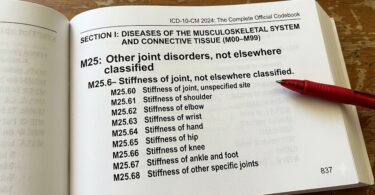
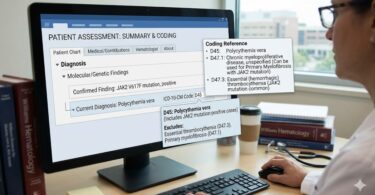
In the intricate world of modern healthcare, where patient care, administrative function, and scientific progress intersect, lies a language of precision and specificity: medical coding. At first glance, an ICD-10 code might seem like a mere alphanumeric sequence, a bureaucratic requisite for insurance billing. But to those who speak this language, it is a powerful tool—a concise story that captures a patient’s diagnosis, its cause, and its manifestations. Few conditions exemplify the critical importance of precise coding more than Vitamin B12 deficiency. This is not a simple, monolithic diagnosis. It is a complex clinical syndrome with a myriad of causes, a spectrum of presentations, and potentially devastating neurological consequences if missed or miscoded.
This article delves deep into the world of ICD-10 codes for Vitamin B12 deficiency (categorized under codes D50-D53). We will move beyond the basic code assignment to explore the “why” behind the “what.” Our journey will encompass the fundamental physiology of vitamin B12, the diverse etiologies that lead to its deficiency, and the nuanced clinical pictures it can present. We will then meticulously deconstruct the ICD-10-CM coding framework, exploring each subcategory, its clinical correlates, and the vital instructions that ensure accuracy. Through detailed case studies, we will illuminate common pitfalls and establish best practices for both clinicians and coders. The goal is to transform this coding exercise from a mechanical task into a clinically informed process, ensuring that every code tells an accurate and complete patient story, ultimately contributing to better patient outcomes, robust data analytics, and the seamless function of the healthcare ecosystem.
ICD-10 Codes for Vitamin B12 Deficiency
Table of Contents
Toggle2. Understanding the Clinical Beast: What is Vitamin B12 Deficiency?
Before a single code can be assigned, one must first understand the clinical entity it represents. Vitamin B12, also known as cobalamin, is a water-soluble vitamin that plays a quintessential role in human physiology. Its deficiency is far more common than once believed, affecting a significant portion of the elderly population and other at-risk groups.
The Vital Roles of Cobalamin
Vitamin B12 is a cofactor for two crucial enzymatic reactions:
-
Methionine Synthase: This enzyme is essential for the conversion of homocysteine to methionine. Methionine is then used to form S-adenosylmethionine (SAMe), a universal methyl donor for numerous reactions, including the methylation of myelin sheath phospholipids and neurotransmitters. An impairment here leads to elevated homocysteine levels and defective myelination, which is the primary cause of the neurological symptoms of B12 deficiency.
-
Methylmalonyl-CoA Mutase: This enzyme converts methylmalonyl-CoA to succinyl-CoA, which enters the Krebs cycle for energy production. A deficiency in B12 causes methylmalonic acid (MMA) to accumulate, which is also toxic to the nervous system. Both elevated homocysteine and MMA are highly sensitive and specific metabolic markers for B12 deficiency.
The Spectrum of Causes: From Diet to Digestion
The journey of B12 from plate to cell is complex and vulnerable to disruption at multiple points. The causes of deficiency are broadly categorized as follows:
-
Inadequate Dietary Intake: Primarily seen in strict vegans and severely malnourished individuals, as B12 is naturally found only in animal products (meat, dairy, eggs).
-
Malabsorption (The Most Common Cause): This is where the complexity lies.
-
Pernicious Anemia: An autoimmune disorder where the body produces antibodies against parietal cells in the stomach (destroying them) and/or against intrinsic factor (IF) itself. IF is a glycoprotein essential for B12 absorption in the terminal ileum.
-
Gastric Causes: Surgical procedures like gastrectomy or bariatric surgery (especially Roux-en-Y) reduce the acid and pepsin needed to liberate B12 from food and eliminate the cells that produce IF.
-
Intestinal Causes: Conditions affecting the absorption site in the terminal ileum, such as Crohn’s disease, celiac disease, surgical resection, or bacterial overgrowth (which competes for B12).
-
-
Other Causes: Including long-term use of metformin or proton-pump inhibitors, congenital transport deficiencies, and nitrous oxide abuse (which inactivates B12).
Recognizing the Signs and Symptoms: A Chameleon of Clinical Presentations
B12 deficiency is a great masquerader. Its presentation can be hematological, neurological, psychiatric, or a subtle mix of all three.
-
Hematological: Megaloblastic anemia (large, immature red blood cells), macrocytosis (elevated MCV), pancytopenia, glossitis (inflamed tongue), fatigue, weakness, and pallor.
-
Neurological: The most feared complications, as they can be irreversible. Include symmetric paresthesia (numbness and tingling) in hands and feet, sensory loss, ataxia (gait imbalance), weakness, spasticity, and vision changes. The classic presentation is subacute combined degeneration of the spinal cord.
-
Psychiatric: Irritability, depression, apathy, cognitive slowing, “brain fog,” and in severe cases, psychosis or dementia.
Crucially, neurological symptoms can occur in the absence of anemia or macrocytosis. This is a critical point for coders to understand, as it dictates the need for specific codes.
Diagnosis: Connecting Clinical Suspicion to Laboratory Confirmation
Diagnosis relies on a combination of clinical suspicion and laboratory testing:
-
Initial Tests: Complete Blood Count (CBC) may show macrocytosis and anemia. Serum B12 level is the initial screening test, but it has limitations (it can be low-normal or normal in functional deficiency).
-
Confirmatory Tests: Elevated levels of Methylmalonic Acid (MMA) and Homocysteine are metabolic markers of functional B12 deficiency, even when serum B12 is borderline.
-
Etiological Tests: For suspected pernicious anemia, tests for intrinsic factor antibodies and anti-parietal cell antibodies are key. The Schilling test (historical) is no longer used.
3. The World of Medical Coding: Why ICD-10 Matters
Beyond Reimbursement: The Power of Data
While accurate reimbursement is a primary driver of coding, the value of ICD-10 codes extends far beyond payment. They are the foundation of:
-
Epidemiology and Public Health: Tracking the prevalence of diseases, identifying outbreaks, and allocating health resources.
-
Clinical Research: Identifying patient cohorts for studies, analyzing treatment outcomes, and developing new therapies.
-
Quality Measurement and Reporting: Assessing the performance of hospitals and providers, and supporting pay-for-performance initiatives.
-
Operational Planning: Informing healthcare organizations about patient populations and service line demands.
An inaccurate code for B12 deficiency, such as using an unspecified code when a cause is known, corrupts this valuable data ecosystem.
The Structure of the ICD-10-CM System
ICD-10-CM is organized hierarchically:
-
Chapters: Codes are grouped into 22 chapters based on etiology or body system (e.g., Chapter 3: Diseases of the blood…).
-
Categories: The first three characters designate the category (e.g., D51: Vitamin B12 deficiency anemia).
-
Subcategories and Codes: The fourth, fifth, and sometimes sixth characters provide increasing specificity regarding etiology, anatomical site, or other clinical details.
This structure demands clinical precision from documentation to enable accurate code assignment.
4. Navigating the ICD-10-CM Chapter for B12 Deficiency
Chapter 3: Diseases of the Blood and Blood-Forming Organs and Certain Disorders Involving the Immune Mechanism (D50-D89)
Vitamin B12 deficiency is found in this chapter, specifically within the block D50-D53: Nutritional anemias. This placement is important but can be slightly misleading, as we have established that B12 deficiency is not always anemogenic.
The Parent Code: D51 – Vitamin B12 Deficiency Anemia
This is the umbrella category. Note the official title includes the word “anemia,” which, as we know, is not always present. The ICD-10-CM Official Guidelines for Coding and Reporting provide a crucial instruction to resolve this conflict: “Code only the confirmed diagnosis… If the deficiency is not documented as associated with anemia, the code is for the deficiency alone.” This means if there is no anemia, you still use a code from the D51 series. The word “anemia” in the category title is a historical artifact; the codes are used for the deficiency itself.
5. A Deep Dive into the Fourth and Fifth Characters: Specifying the Cause
This is the heart of accurate B12 coding. The fourth and fifth characters pinpoint the underlying etiology.
D51.0 – Vitamin B12 Deficiency Anemia Due to Intrinsic Factor Deficiency
-
Clinical Correlation: This is the code for classic pernicious anemia. The defining feature is the autoimmune loss of intrinsic factor.
-
Documentation Requirements: The physician’s documentation should explicitly state “pernicious anemia” or note the presence of “intrinsic factor deficiency” or a positive intrinsic factor antibody test.
-
Coding Note: This is the most specific code for this autoimmune etiology.
D51.1 – Vitamin B12 Deficiency Anemia Due to Selective Vitamin B12 Malabsorption with Proteinuria
-
Clinical Correlation: This is a very rare autosomal recessive disorder known as Imerslund-Gräsbeck syndrome. It involves a defect in the receptor sites in the ileum that absorb the B12-IF complex, and it is associated with proteinuria.
-
Documentation Requirements: This will almost always be documented by a specialist (e.g., hematologist, geneticist) by name. Do not assign this code for common malabsorption issues like Crohn’s disease.
D51.2 – Vitamin B12 Deficiency Anemia Due to Dietary Deficiency (Inadequate Intake)
-
Clinical Correlation: This code is for pure nutritional deficiency. The patient is not absorbing B12 poorly; they are simply not consuming enough. This is typical in strict vegans who do not supplement, individuals with very poor diets, or rarely, in breastfed infants of B12-deficient mothers.
-
Documentation Requirements: The record should indicate inadequate dietary intake, veganism, or nutritional deficiency as the cause.
D51.3 – Other Vitamin B12 Deficiency Anemias Due to Dietary Deficiency
-
Clinical Correlation: This code is used for a specific type of dietary deficiency caused by excessive intake of nitrous oxide (N2O). Nitrous oxide irreversibly oxidizes and inactivates vitamin B12, causing a functional deficiency. This is often seen in recreational users (“laughing gas”) or in healthcare workers with occupational exposure.
-
Documentation Requirements: History of nitrous oxide use must be documented.
D51.8 – Other Vitamin B12 Deficiency Anemias
-
Clinical Correlation: This is a crucial code for all other causes of malabsorption not covered by D51.0 or D51.1. This is a catch-all for secondary B12 deficiencies.
-
Common Use Cases:
-
Malabsorption due to GI surgery (gastrectomy, bariatric surgery, ileal resection).
-
Malabsorption due to GI diseases (Crohn’s disease, celiac disease, chronic pancreatitis, bacterial overgrowth).
-
Drug-induced malabsorption (e.g., long-term PPI use, though metformin is often coded elsewhere).
-
-
Documentation Requirements: The physician should link the B12 deficiency to the underlying condition (e.g., “B12 deficiency due to status post gastric bypass,” “malabsorption secondary to Crohn’s ileitis”).
D51.9 – Vitamin B12 Deficiency Anemia, Unspecified
-
Clinical Correlation: This code should be used only when the medical record does not specify the cause of the deficiency. It is a default code when the documentation is incomplete.
-
Coding Note: This code should be avoided whenever possible. It provides little value for data analytics and may be subject to audit scrutiny if a more specific code is warranted by the clinical picture. It is not appropriate if the cause is known but simply not documented by the provider; in such cases, the coder should query the provider.
ICD-10-CM Code Set for Vitamin B12 Deficiency
| ICD-10 Code | Code Description | Clinical Correlation & Documentation Tips |
|---|---|---|
| D51.0 | Vitamin B12 deficiency anemia due to intrinsic factor deficiency | Pernicious Anemia. Look for: “Pernicious anemia,” “intrinsic factor deficiency,” or positive IF antibody test. |
| D51.1 | Vitamin B12 deficiency anemia due to selective vitamin B12 malabsorption with proteinuria | Imerslund-Gräsbeck Syndrome. A rare genetic disorder. Documented by name. |
| D51.2 | Vitamin B12 deficiency anemia due to dietary deficiency | Inadequate Intake. Look for: “Vegan,” “nutritional deficiency,” “poor dietary intake.” |
| D51.3 | Other vitamin B12 deficiency anemias due to dietary deficiency | Nitrous Oxide (N2O) Induced. History of recreational or occupational N2O use must be documented. |
| D51.8 | Other vitamin B12 deficiency anemias | Malabsorption from Other Causes. The most common code for secondary deficiency. Look for links to: GI surgery (gastrectomy, bariatric), GI disease (Crohn’s, celiac), bacterial overgrowth. |
| D51.9 | Vitamin B12 deficiency anemia, unspecified | Cause Unknown/Undocumented. Use only as a last resort when the etiology is not stated in the record. |
6. The Critical “Code Also” and “Use Additional Code” Instructions
The ICD-10 manual includes essential instructions that mandate the reporting of additional codes to paint a complete clinical picture.
Documenting the Neurological Sequelae
A pivotal note under category D51 states: “Code also any associated neurological complications.”
This is non-negotiable. If the patient has neurological manifestations due to the B12 deficiency, you MUST assign an additional code from the nervous system chapter (G00-G99) to describe it.
-
Common Neurological Codes:
-
G31.2 – Degeneration of nervous system due to vitamin B12 deficiency: This is the code for subacute combined degeneration (SCD) of the spinal cord, the classic neurological complication.
-
G62.9 – Polyneuropathy, unspecified: Often used for the peripheral neuropathy (numbness, tingling).
-
G60.9 – Hereditary and idiopathic neuropathy, unspecified: Sometimes used.
-
R20.2 – Paresthesia of skin: For documenting tingling.
-
F02.80 – Dementia in other diseases classified elsewhere without behavioral disturbance: For cognitive decline linked to B12 deficiency.
-
-
Example: A patient with pernicious anemia presenting with numbness and tingling in their feet and gait instability would be coded as:
-
D51.0 (Pernicious anemia)
-
G31.2 (SCD due to B12 deficiency) – This is the most accurate neurological code for this presentation.
-
Documenting the Underlying Cause
For codes in the D51.8 category (Other B12 deficiency anemias), there is often a “Use additional code” note to identify the underlying condition.
-
Example: A patient with B12 deficiency due to Crohn’s disease of the ileum would be coded as:
-
D51.8 (Other B12 deficiency anemia)
-
K50.011 (Crohn’s disease of small intestine with complications)
-
This linkage is vital for data tracking the burden of B12 deficiency in specific patient populations.
7. Case Studies: Applying Knowledge to Real-World Scenarios
Let’s apply our knowledge to realistic patient encounters.
Case Study 1: The Classic Pernicious Anemia
-
Presentation: A 65-year-old female presents with progressive fatigue, generalized weakness, a sore, red tongue, and a feeling of “pins and needles” in her hands and feet for the past 6 months. CBC shows macrocytic anemia. Serum B12 is low. Intrinsic factor antibodies are positive.
-
Documentation: “Patient diagnosed with pernicious anemia. She has associated peripheral neuropathy.”
-
Correct Coding:
-
D51.0 (Vitamin B12 def anemia due to intrinsic factor deficiency)
-
G62.9 (Polyneuropathy, unspecified) or more specifically G31.2 if SCD is documented.
-
-
Rationale: The positive IF antibody confirms the etiology for D51.0. The neurological symptoms must be coded separately.
Case Study 2: The Bariatric Surgery Patient
-
Presentation: A 45-year-old male, status post Roux-en-Y gastric bypass 3 years ago, is seen for routine follow-up. He reports no specific symptoms. Routine labs reveal a low serum B12 level. MMA is elevated. He is not anemic.
-
Documentation: “Asymptomatic B12 deficiency, likely secondary to malabsorption from previous gastric bypass surgery.”
-
Correct Coding:
-
D51.8 (Other vitamin B12 deficiency anemias)
-
Z98.84 (Bariatric surgery status)
-
-
Rationale: The cause is malabsorption from surgery, so D51.8 is appropriate. The code for the status of the surgery is added. Note: The word “anemia” in the code title is ignored as the deficiency is documented without anemia.
Case Study 3: The Strict Vegan
-
Presentation: A 28-year-old vegan presents with mild fatigue and cognitive “fogginess.” They have been a strict vegan for 10 years and do not take supplements. B12 level is low. CBC is normal (no anemia).
-
Documentation: “Vitamin B12 deficiency due to inadequate dietary intake in the context of a strict vegan diet.”
-
Correct Coding: D51.2 (Vitamin B12 def anemia due to dietary deficiency)
-
Rationale: The cause is clearly documented as dietary. No anemia is present, but D51.2 is still the correct code for the deficiency.
Case Study 4: The Elderly Patient with Non-Specific Symptoms
-
Presentation: An 80-year-old male with a history of dementia is found to have a low B12 level on a metabolic panel. The physician’s note simply states: “Vitamin B12 deficiency. Will start supplementation.”
-
Documentation: The cause is not investigated or documented.
-
Correct Coding: D51.9 (Vitamin B12 deficiency anemia, unspecified)
-
Rationale: Although the patient is elderly (a common cause is food-bound malabsorption) and has dementia (a potential symptom), the physician did not specify an etiology. Without clinical documentation of a cause, the coder must assign the unspecified code. A query to the provider would be appropriate to see if further investigation is planned.
8. Common Coding Pitfalls and How to Avoid Them
-
Pitfall 1: Confusing B12 with Folate Deficiency. These are distinct entities with different codes (Folate deficiency is D52.-). They can present similarly hematologically, but their causes and neurological impacts differ. Always code based on the confirmed diagnosis.
-
Pitfall 2: Assuming Anemia is Always Present. Remember the guideline: code the deficiency with a D51 code even if anemia is absent. Rely on the documented diagnosis, not just the CBC results.
-
Pitfall 3: Overlooking the “Code Also” for Neurological Complications. This is a major source of incomplete coding. Always review the record for any mention of neuropathy, paresthesia, ataxia, or cognitive changes and assign the appropriate G-code.
-
Pitfall 4: The Perils of “Unspecified.” Overusing D51.9 degrades data quality. If the clinical picture strongly suggests a cause (e.g., history of Crohn’s disease, vegan diet) but it is not explicitly linked by the provider, initiate a physician query to obtain the necessary documentation.
9. The Role of Documentation: A Partnership Between Clinician and Coder
Accurate coding is a collaborative effort.
What Clinicians Need to Document
-
The specific type of deficiency: “Vitamin B12 deficiency”
-
The etiology: “due to pernicious anemia,” “due to dietary insufficiency in a vegan,” “secondary to ileal Crohn’s disease,” “post-gastrectomy.”
-
Associated conditions: “with associated peripheral neuropathy,” “with subacute combined degeneration,” “with cognitive decline.”
-
Relevant social history: “History of nitrous oxide use.”
Questions Coders Should Ask
-
Is the cause of the deficiency documented?
-
Are there any neurological symptoms documented that need an additional code?
-
Is there an underlying condition (like Crohn’s disease or status post surgery) that needs to be coded?
-
If the documentation is unclear, is a physician query warranted?
10. The Future of Coding: A Glimpse Beyond ICD-10
The world is preparing for ICD-11, which was adopted by the World Health Assembly in 2019 and is coming into implementation. In ICD-11, Vitamin B12 deficiency is found under code 5B55.0 (Dietary vitamin B12 deficiency). The structure allows for greater detail through extension codes (e.g., specifying severity, presence of anemia, neurological complications, and underlying cause) in a more flexible, digital-friendly format. While the US has not yet set a timeline for transitioning to ICD-11, its increased specificity will further enhance the ability to capture the rich clinical narrative of conditions like B12 deficiency.
11. Conclusion
ICD-10 coding for Vitamin B12 deficiency is a powerful example of how precision in administrative language directly impacts clinical understanding and healthcare quality. Moving beyond the basic code to capture the specific etiology—be it autoimmune pernicious anemia, dietary lack, or surgical malabsorption—and diligently adding codes for neurological sequelae transforms a simple billing tool into a rich data point. This accuracy fuels research, informs public health strategies, ensures appropriate reimbursement, and, most importantly, contributes to a medical record that truly reflects the patient’s complete story. In the nuanced landscape of B12 deficiency, a code is never just a code; it is a detailed clinical snapshot.
12. Frequently Asked Questions (FAQs)
Q1: What code do I use if a patient has a low B12 level but no symptoms and no anemia?
A: You would still use a code from the D51 series based on the documented cause. For example, if the cause is dietary, use D51.2. The presence or absence of anemia does not change the code selection for the deficiency itself.
Q2: How do I code a patient with both folate and B12 deficiency?
A: You would assign both codes (e.g., D51.9 for unspecified B12 def and D52.9 for unspecified folate def) if both are documented. It is crucial to code both as they are distinct diagnoses. The physician will need to determine and document the primary driver of the patient’s symptoms.
Q3: The physician documents “megaloblastic anemia.” Is this a B12 deficiency code?
A: Not necessarily. Megaloblastic anemia can be caused by either B12 or folate deficiency. Code D53.1 (Other megaloblastic anemias, not elsewhere classified) should only be used if the physician has ruled out both B12 and folate deficiency as the cause. If the cause is known, you must use the specific code for that deficiency (D51.- or D52.-).
Q4: A patient has a history of pernicious anemia but is currently being seen for an unrelated sprained ankle. The B12 deficiency is stable on treatment. Do I still code it?
A: According to ICD-10 guidelines, you code all documented conditions that require clinical care, affect patient management, or have implications for future care. A chronic condition like pernicious anemia, even if stable, generally meets this criteria and should be coded.
Q5: What is the code for nitrous oxide-induced B12 deficiency?
A: This is coded to D51.3 (Other vitamin B12 deficiency anemias due to dietary deficiency). You would also use an additional code from the T-section (T40.x) or F-section (F18.-) to specify the abuse of nitrous oxide, if applicable.
13. Additional Resources
-
CDC ICD-10-CM Official Guidelines for Coding and Reporting (FY 2025): The definitive source for coding rules and conventions. https://www.cdc.gov/nchs/icd/icd-10-cm.htm
-
American Hospital Association (AHA) Coding Clinic for ICD-10-CM: Provides official advice and guidance on specific coding scenarios. Subscription-based.
-
National Institutes of Health (NIH) – Office of Dietary Supplements – Vitamin B12 Fact Sheet: Excellent clinical resource on B12. https://ods.od.nih.gov/factsheets/VitaminB12-HealthProfessional/
-
World Health Organization (WHO) ICD-11 Website: To explore the future of coding. https://icd.who.int/en
Date: September 20, 2025
Author: The Health Archives Editorial Team
Disclaimer: *The information contained in this article is intended for educational and informational purposes only and does not constitute medical advice, diagnosis, or treatment. Always seek the advice of your physician or other qualified health provider with any questions you may have regarding a medical condition. Never disregard professional medical advice or delay in seeking it because of something you have read in this article. The codes and guidelines referenced are for informational use and are subject to change. Medical coders should always consult the most current, official ICD-10-CM coding guidelines and manuals for accurate coding.*