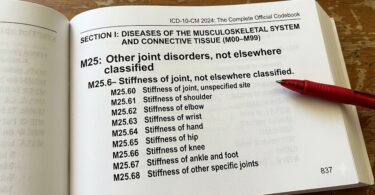
Chronic pain is a silent epidemic, affecting an estimated 1.5 billion people worldwide. It is not merely a symptom but a complex, debilitating disease state that profoundly impacts physical function, mental health, and overall quality of life. In the clinical setting, managing this condition is a monumental task. In the administrative and financial realms of healthcare, accurately representing it is equally challenging. This is where the International Classification of Diseases, 10th Revision, Clinical Modification (ICD-10-CM) enters the picture.
ICD-10 codes are the universal language of diagnosis. They are the critical link between a patient’s lived experience of pain and the systems that govern treatment, research, and reimbursement. A correctly assigned code tells a precise story: not just that a patient is in pain, but why, where, for how long, and under what circumstances. An inaccurate or nonspecific code, on the other hand, can lead to claim denials, hinder clinical research, and create a distorted picture of a patient’s health status. This article serves as a detailed map through the labyrinthine world of ICD-10 codes for chronic pain. We will move beyond simplistic solutions, unpack the official guidelines, and provide a robust framework for healthcare providers, coders, and administrators to capture the true complexity of chronic pain, ensuring that patients receive the care and recognition they deserve.

ICD-10 Codes for Chronic Pain
Table of Contents
Toggle2. Understanding the Foundation: What is ICD-10-CM?
The Purpose and Importance of a Universal Classification System
The ICD-10-CM is more than just a billing tool; it is a foundational component of modern healthcare infrastructure. Managed by the World Health Organization (WHO) and modified for clinical use in the United States by the Centers for Disease Control and Prevention (CDC) and the Centers for Medicare & Medicaid Services (CMS), its purposes are multifold:
-
Standardization: It provides a consistent way to classify diseases, health conditions, and reasons for encounters across all healthcare settings.
-
Reimbursement: It is essential for submitting claims to insurance payers. Codes justify medical necessity—the reason a specific test, procedure, or treatment was performed.
-
Epidemiology and Public Health: Aggregated code data helps track disease prevalence, identify outbreaks, and allocate public health resources.
-
Research: Researchers use coded data to study treatment outcomes, disease patterns, and the effectiveness of interventions.
Structure of an ICD-10 Code: Beyond the Alphanumeric Sequence
An ICD-10-CM code is not a random string of characters. Its structure is logical and hierarchical:
-
Category (Characters 1-3): The first three characters represent the category of the disease or condition. For example, M54 is the category for “Dorsalgia” (back pain).
-
Subcategory (Character 4): The fourth character provides further clinical detail. M54.5 specifies “Low back pain.”
-
Subclassification (Characters 5-7): The fifth, sixth, and sometimes seventh characters offer the highest level of specificity, indicating laterality, etiology, or other specific details. While M54.5 does not have a 7th character, other codes do (e.g., S83.211A for a lateral tear of the meniscus in the right knee, initial encounter).
Understanding this structure is the first step toward accurate coding. The system is designed to force specificity, moving from a general concept (“back pain”) to a more precise one (“chronic low back pain with sciatica, right side”).
3. The Clinical Challenge: Defining and Diagnosing Chronic Pain
Acute vs. Chronic Pain: A Temporal and Pathophysiological Distinction
The most fundamental distinction in pain medicine is between acute and chronic pain.
-
Acute Pain acts as an alarm system. It is directly related to tissue damage (e.g., a cut, a fracture, surgery), is typically of sudden onset, and lasts for a limited time (usually less than 3 months). It resolves as the underlying injury heals.
-
Chronic Pain is the alarm that continues to sound long after the fire is out. The IASP (International Association for the Study of Pain) defines it as pain that persists or recurs for longer than three months. It is a maladaptive state where the pain itself becomes the disease. The original cause may have healed, or the pain may be associated with a chronic health condition (e.g., arthritis). The nervous system undergoes changes (central sensitization), leading to amplified and persistent pain signals.
The Biopsychosocial Model of Chronic Pain
Modern medicine rejects the outdated Cartesian dualism that separates mind and body. Chronic pain is the epitome of a biopsychosocial condition. This model acknowledges that pain is influenced by an intricate interplay of:
-
Biological Factors: Nerve damage, inflammation, genetics.
-
Psychological Factors: Emotions (depression, anxiety, anger), coping mechanisms, catastrophizing, fear-avoidance behaviors.
-
Social Factors: Work environment, family support, socioeconomic status, cultural beliefs about pain.
This holistic understanding is crucial for treatment and is increasingly reflected in coding requirements, particularly with codes like F45.41.
Common Etiologies and Syndromes
Chronic pain is not monolithic. It is categorized based on the presumed underlying mechanism:
-
Nociceptive Pain: Arising from actual or threatened damage to non-neural tissue (e.g., osteoarthritis, mechanical low back pain).
-
Neuropathic Pain: Caused by a lesion or disease of the somatosensory nervous system (e.g., diabetic neuropathy, postherpetic neuralgia).
-
Nociplastic Pain: Arising from altered nociception despite no clear evidence of actual or threatened tissue damage causing the activation of peripheral nociceptors or evidence for disease or lesion of the somatosensory system causing the pain (e.g., fibromyalgia, irritable bowel syndrome).
4. The Core Conundrum: Why Coding Chronic Pain is Uniquely Difficult
The “Unspecified” Pitfall: G89.2- and Its Limited Utility
Many coders and providers initially gravitate toward code G89.29 (Other chronic pain). This code, from the “Symptoms” chapter, seems like a catch-all solution. However, its use is heavily restricted by the official ICD-10-CM coding guidelines.
The Guideline States (Section I.C.6.b.1):
“Codes from category G89 may be used in conjunction with codes from other categories and chapters if the pain is not associated with a definitive diagnosis, or if the pain is acute or chronic and the definitive underlying cause is known.
-
*When the reason for the encounter is pain control or pain management, assign a code from category G89 as the first-listed (principal) diagnosis, followed by the code for the underlying cause of the pain, if known.*
-
When the reason for the encounter is management of the underlying condition, code the underlying condition as the principal diagnosis. A code from category G89 may be assigned as an additional code if the pain is acute or chronic and associated with the underlying condition.”
The critical takeaway is that G89.29 is not a substitute for a more specific code. It is primarily reserved for encounters where pain control is the primary focus of treatment, such as in a pain management clinic. Even then, a code for the underlying cause (e.g., M54.16 for radiculopathy) must be included if known. Using G89.29 alone for a patient with documented lumbar spinal stenosis is incorrect and will likely lead to denials.
The Mandate for Specificity: Linking Pain to its Underlying Cause
The overarching principle of ICD-10 is specificity. The coding system is designed to answer: “What is the specific disease causing the pain?” Therefore, the goal is always to code the etiology first. “Chronic low back pain due to degenerative disc disease at L4-L5” should be coded as M51.36 (Other intervertebral disc degeneration, lumbar region), not just M54.59 (Other low back pain). The pain is implied by the diagnosis.
Documentation Dilemmas
The single greatest barrier to accurate chronic pain coding is often clinical documentation. Vague terms like “pain,” “hurt,” or “ache” without qualifiers like “chronic,” “severe,” or “refractory” are insufficient. The documentation must clearly state:
-
The specific diagnosis (e.g., “lumbar spinal stenosis,” not just “back problem”).
-
The chronic nature (“patient has had this pain for 4 years”).
-
The location and laterality (“right-sided lumbosacral radiculopathy”).
-
The type of pain, if relevant (“burning neuropathic pain in the feet”).
5. Decoding the Codes: A Deep Dive into Relevant ICD-10-CM Chapters
Chronic pain codes are scattered across multiple chapters, reflecting its diverse causes.
Chapter 6: Diseases of the Nervous System (G00-G99)
This chapter is home to codes for neuropathic pain and central pain syndromes.
-
G89.0 Central pain syndrome: Used for pain due to a primary lesion or dysfunction in the central nervous system (e.g., post-stroke pain, pain from multiple sclerosis).
-
G89.4 Chronic pain syndrome: This code is a direct link to the biopsychosocial model. It should be used when the pain condition is associated with significant cognitive, behavioral, and psychosocial factors. It is often used in conjunction with other pain codes.
-
G54.- Nerve root and plexus disorders: Codes like G54.1 (Lumbosacral plexus disorders) are essential for radicular pain.
-
G56.-/G57.- Mononeuropathies of upper/lower limb: For conditions like carpal tunnel syndrome (G56.01) or tarsal tunnel syndrome (G57.51).
-
G63.- Polyneuropathy in diseases classified elsewhere: This code is used with a code from Chapter 4 (e.g., E10-E14) to indicate diabetic polyneuropathy.
Chapter 13: Diseases of the Musculoskeletal System and Connective Tissue (M00-M99)
This is one of the most frequently used chapters for chronic pain.
-
M25.5- Pain in joint: This code is for when pain is the symptom reported, but a definitive diagnosis (like osteoarthritis) has not been established. For example, “pain in right knee” would be M25.561.
-
M54.- Dorsalgia: This category is for back pain. Key codes include:
-
M54.5- Low back pain: Use this when a more specific cause (like herniated disc or stenosis) is not diagnosed.
-
M54.1- Radiculopathy: For pain radiating along a nerve root.
-
M54.2 Cervicalgia: Neck pain.
-
M54.41 / M54.42 Lumbago with sciatica / Lumbago with sciatica, left side.
-
-
M79.6- Pain in limb: Analogous to M25.5-, but for arm or leg pain without a specific diagnosis.
Chapter 5: Mental, Behavioral and Neurodevelopmental Disorders (F00-F99)
This chapter addresses the psychological dimension.
-
F45.41 Chronic pain syndrome with psychological factors: This code is used when psychological factors are judged to have a major role in the severity, exacerbation, or maintenance of the pain. It is not a code for “the pain is all in your head,” but rather a recognition of the powerful mind-body connection. Its use requires careful clinical assessment.
-
F54 Psychological and behavioral factors associated with disorders or diseases classified elsewhere: This code can be used to indicate that psychological factors (e.g., anxiety) are adversely affecting a physical condition like chronic back pain.
Common Chronic Pain Scenarios and Corresponding ICD-10 Codes
| Pain Scenario | Clinical Description | Primary ICD-10 Code(s) | Important Notes & Secondary Codes |
|---|---|---|---|
| Chronic Low Back Pain | Persistent pain in lumbar region, cause unspecified. | M54.59 (Other low back pain) | Use only if a more specific spinal condition (e.g., spondylosis) is not diagnosed. |
| Lumbar Spinal Stenosis | Narrowing of spinal canal causing nerve compression. | M48.06 (Spinal stenosis, lumbar region) | The pain is inherent to the diagnosis. Code the stenosis, not M54.59. |
| Diabetic Peripheral Neuropathy | Burning, tingling pain in feet due to diabetes. | E11.42 (Type 2 diabetes with polyneuropathy) | The combination code includes the neuropathy. G63 is NOT used with E11.42. |
| Postherpetic Neuralgia (PHN) | Nerve pain following a shingles outbreak (herpes zoster). | B02.29 (Postherpetic neuralgia) | This is a combination code for the viral etiology and the neuralgia. |
| Chronic Migraine | Headache occurring on 15+ days/month for >3 months. | G43.709 (Chronic migraine, not intractable) | Specify intractable (G43.719) if it resists usual medications. |
| Fibromyalgia | Widespread nociplastic pain with fatigue and tenderness. | M79.7 (Fibromyalgia) | This is the definitive code for this syndrome. |
| Chronic Pain Management Encounter | Patient sees pain specialist primarily for pain control. | G89.29 (Other chronic pain) as 1st listed. | Must be followed by the code for the underlying cause (e.g., M54.16). |
6. The Algorithmic Approach: A Step-by-Step Guide to Accurate Code Selection
Following a logical sequence can prevent errors.
-
Interrogate the Documentation: What specific diagnosis is recorded? Is it “low back pain” or “lumbar spondylolisthesis”? Always search for the most definitive etiological diagnosis first.
-
Is the Pain Chronic and the Focus? Confirm the pain is documented as chronic (>3 months). Determine the reason for the encounter. Is it to manage the underlying disease (e.g., adjust diabetes medication) or specifically to manage the pain (e.g., epidural injection)? This determines code sequencing.
-
Determine the Pain Type: Is it musculoskeletal (M54.-), neuropathic (G56.-, G57.-, G63.-), or a specific syndrome (M79.7 for fibromyalgia)? This directs you to the correct chapter.
-
Apply Official Guidelines: Consult the ICD-10-CM guidelines for the current year. Pay special attention to the instructions for Chapters 6, 13, and 18 (Symptoms).
-
Sequence Codes Correctly:
-
Principal/First-Listed Diagnosis: The reason for the encounter after study.
-
If pain control is the reason: G89.2- is listed first, followed by the etiology code.
-
If managing the underlying disease is the reason: The etiology code is listed first, and G89.2- may be added as a secondary code.
-
7. Real-World Scenarios: Case Studies in Chronic Pain Coding
Case Study 1: Diabetic Peripheral Neuropathy
-
Scenario: A 65-year-old patient with type 2 diabetes presents for a follow-up. His chief complaint is worsening burning pain in both feet, which has been constant for the past year, interfering with sleep.
-
Documentation: “Type 2 diabetes with poorly controlled chronic diabetic peripheral neuropathy. Patient here for management of neuropathic pain.”
-
Incorrect Coding: E11.9 (Type 2 diabetes without complications), G89.29 (Other chronic pain). This misses the specific complication.
-
Correct Coding: E11.42 (Type 2 diabetes with diabetic polyneuropathy). This single combination code accurately captures the entire clinical picture. G89.29 is not necessary as the pain is integral to the polyneuropathy diagnosis.
Case Study 2: Post-Laminectomy Syndrome with Chronic Pain Syndrome
-
Scenario: A patient presents to the pain clinic 2 years after a lumbar laminectomy that failed to relieve their pain. They have significant depression and anxiety related to their ongoing disability.
-
Documentation: “Post-laminectomy syndrome with chronic low back and radicular pain. Patient exhibits significant pain catastrophizing and depressive symptoms consistent with a chronic pain syndrome.”
-
Coding:
-
Primary: G89.29 (Other chronic pain) – because the reason for the encounter is pain management.
-
Secondary: M96.1 (Postlaminectomy syndrome, not elsewhere classified) – the underlying etiology.
-
Additional: F45.41 (Chronic pain syndrome with psychological factors) – to capture the significant psychological component.
-
8. Beyond the Code: The Critical Link Between Documentation and Reimbursement
Accurate coding is impossible without precise documentation. Physicians must be educated to document like coders think. The note must paint a complete picture. Phrases like “chronic pain” are good, but “chronic severe axial low back pain secondary to degenerative disc disease at L4-L5 and L5-S1, with radiation to the right buttock” is perfect. This level of detail supports the medical necessity of advanced imaging, physical therapy, and interventional procedures. In an audit, robust documentation is the only defense against recoupments and denials.
9. The Future of Pain Coding: ICD-11 and a New Paradigm
The World Health Organization’s ICD-11, which is gradually being adopted globally, introduces a revolutionary approach to chronic pain coding. It features a dedicated chapter on chronic pain with a parent code, MG30 Chronic pain, which is then subclassified into seven categories:
-
Chronic primary pain (e.g., fibromyalgia, chronic migraine)
-
Chronic cancer-related pain
-
Chronic post-surgical or post-traumatic pain
-
Chronic neuropathic pain
-
Chronic secondary headache or orofacial pain
-
Chronic secondary visceral pain
-
Chronic secondary musculoskeletal pain
This system is more logical and clinically relevant than the scattered approach in ICD-10. It explicitly recognizes chronic pain as a health condition in its own right, while still allowing for linkage to underlying causes. This will likely improve the accuracy of epidemiological data and refine reimbursement models focused on pain management.
10. Conclusion: Mastering the Language to Improve Patient Care
Navigating ICD-10 coding for chronic pain requires a shift from seeing pain as a simple symptom to understanding it as a complex, multi-faceted condition. Accurate coding hinges on precise clinical documentation that identifies the underlying etiology, chronicity, and contributing factors. By moving beyond nonspecific codes and adhering to a structured, guideline-based approach, healthcare professionals can ensure that the story of the patient’s suffering is accurately told. This precision is not merely an administrative exercise; it is fundamental to justifying medical necessity, securing appropriate reimbursement for comprehensive care, and contributing to the data that will shape future pain management strategies. Ultimately, mastering this language is a critical step in advocating for and effectively treating the millions of individuals living with chronic pain.
11. Frequently Asked Questions (FAQs)
Q1: Can I use both a pain code (like M54.59) and a causative code (like M51.36) together?
A: Generally, no. This is considered “unbundling” or coding both the symptom and the definitive diagnosis, which is redundant. The official coding guidelines instruct you to code the definitive diagnosis. The pain is inherent in the diagnosis of the condition. Only use the pain code if no more specific diagnosis is available.
Q2: When is it mandatory to use a code from the G89 category?
A: The primary indication is when the reason for the encounter is pain control or pain management. In this specific scenario, a G89 code (e.g., G89.21, G89.29) is sequenced as the principal diagnosis. It is also allowed as a secondary code when the pain is acute or chronic and associated with a known underlying condition being treated.
Q3: What is the difference between F45.41 (Chronic pain syndrome) and G89.4 (Chronic pain syndrome)?
A: This is a nuanced but important distinction. G89.4 is used when the chronic pain syndrome is documented but psychological factors are not specified as being predominant. F45.41 is used specifically when the clinician’s documentation states that psychological factors are a major component in the severity or maintenance of the pain. The F45.41 code requires more explicit clinical judgment.
Q4: How do I code for a patient whose chronic pain is due to a past injury?
A: First, code the current chronic pain condition (e.g., M25.561 for chronic pain in the right knee). Then, you can use a secondary code from Chapter 20 (External Causes) to indicate the cause, such as a code for a past fall (e.g., W19.XXXA) or a car accident. Use the appropriate 7th character (e.g., “S” for sequela) for the injury code if the acute injury phase is over.
12. Additional Resources
-
Official CDC ICD-10-CM Page: https://www.cdc.gov/nchs/icd/icd-10-cm.htm (Provides the official guidelines and files)
-
American Medical Association (AMA): Offers coding resources and education.
-
American Academy of Professional Coders (AAPC): A leading organization for certified coders, offering certifications, training, and forums.
-
American Pain Society (APS): Provides clinical resources on pain assessment and management.
-
ICD-11 Browser: https://icd.who.int/browse11/l-m/en (To explore the future of pain classification).
Disclaimer: This article is for informational and educational purposes only. It is not a substitute for professional medical coding, billing, or legal advice. The author and publisher are not responsible for any errors or omissions, or for any outcomes resulting from the use of this information. Medical coding is complex and constantly evolving. Always consult the most current, official ICD-10-CM coding guidelines, payer-specific policies, and a certified professional coder for accurate code assignment.
Date: September 23, 2025
Author: Medical Content Specialist